
If you need high-quality, detailed scans of large drawings, a CCD scanner is the better choice due to its superior color accuracy and ability to handle complex, high-resolution images. However, CCD units tend to cost more and are less practical if you’re on a tight budget or need a quick, simple scan. CIS scanners are affordable, compact, and fast but may sacrifice some detail and color fidelity. Keep exploring to find out how to choose the best option for your needs.

Get business pricing on monitors, keyboards and dev gear
- Business-only prices and quantity discounts
- Tax-exempt purchasing
- Multiple users, one account, clear invoices
Key Takeaways
- CCD scanners provide superior color accuracy and detail, ideal for high-fidelity reproduction of large, complex drawings.
- CIS scanners are more affordable, compact, and energy-efficient, suitable for less demanding large-format scans.
- CCD handles detailed, high-resolution images better, maintaining sharpness across large artworks.
- CIS scanners may struggle with sharpness and color fidelity in large, complex images, affecting overall quality.
- The choice depends on prioritizing either top-quality, detailed scans (CCD) or cost-effective, quick solutions (CIS).
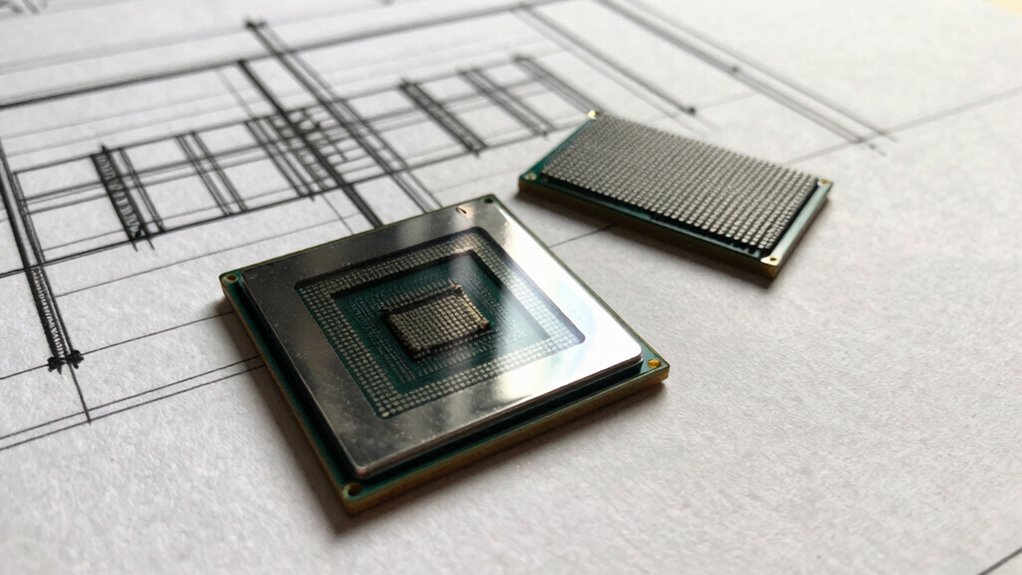
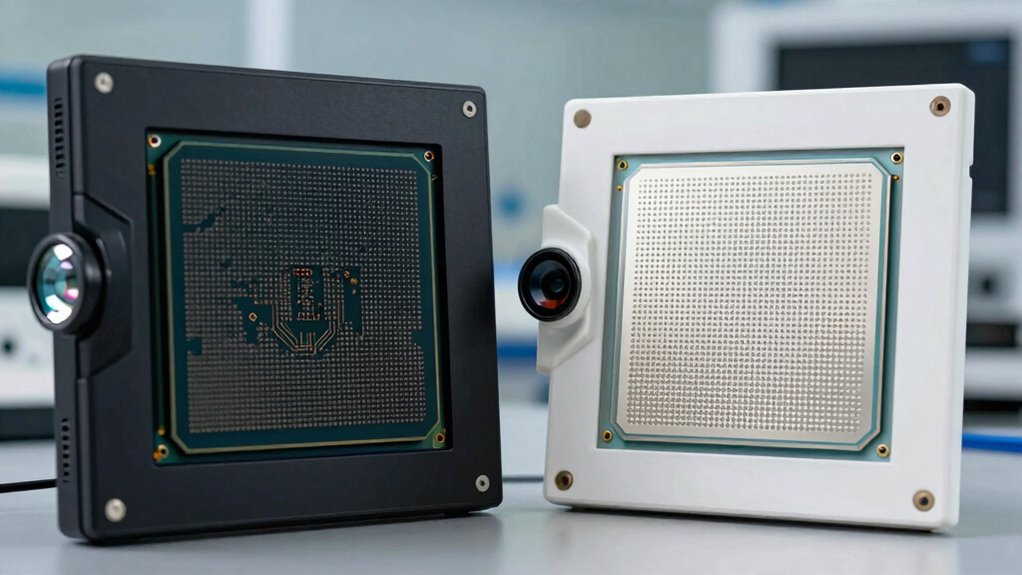
Are CCD and CIS scanners equally effective for large drawings? Not exactly. While both technologies can scan large-format artwork, they each have distinct strengths and limitations that influence their suitability depending on your needs. One of the key factors you should consider is color accuracy. CCD (Charge-Coupled Device) scanners generally excel in this area. They capture a broader color spectrum with greater precision, which is especially important if your large drawings contain subtle gradations or require high fidelity for digital reproduction. If color fidelity is critical, CCD scanners tend to produce richer, more accurate results, ensuring that your digital copies closely match the original artwork.
CCD scanners deliver superior color accuracy, capturing subtle gradations crucial for high-fidelity digital reproductions of large drawings.
On the other hand, CIS (Contact Image Sensor) scanners are often more cost-effective, which makes them appealing if you’re working within a limited budget. When considering cost considerations, CIS scanners typically have a lower purchase price and consume less power, making them a practical choice for those who need to scan frequently but don’t require the highest color accuracy. They’re also more compact, lighter, and easier to set up, which can save you space and reduce setup time. However, their lower cost usually comes with compromises in image quality, particularly in color accuracy and resolution. If your large drawings are complex or rely heavily on precise color representation, you might find that CIS scanners don’t quite meet your expectations. Additionally, the sensor size plays a significant role in the overall image quality, especially for large-scale scans.
Another aspect to keep in mind is the way these scanners handle large drawings. CCD scanners, because of their larger sensors and superior color capture capabilities, tend to handle detailed, high-resolution scans more effectively. They can produce sharp, detailed images even in challenging lighting conditions. Additionally, CCD scanners often have better image quality over the entire scan, especially for large-format artwork. Conversely, CIS scanners are often faster and more straightforward to operate, but they can struggle with large, detailed images, sometimes resulting in less sharpness or color fidelity across the entire scan.
Ultimately, your choice hinges on balancing these factors. If color accuracy and detailed reproduction are your top priorities, investing in a CCD scanner might be worth the extra cost. But if your large drawings are more straightforward, and budget constraints are tight, a CIS scanner can still deliver decent results with less investment. Understanding these practical trade-offs helps you select the right scanner that aligns with your specific needs, ensuring you get the best possible scans for your large-format artwork.
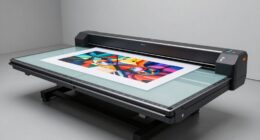
large format CCD scanner for artwork
As an affiliate, we earn on qualifying purchases.
As an affiliate, we earn on qualifying purchases.
Frequently Asked Questions
How Do CCD and CIS Compare in Overall Cost?
You’ll find that CIS cameras generally have a lower initial investment compared to CCDs, making them more budget-friendly upfront. However, when considering long-term costs, CCDs tend to be more durable and may require less maintenance, possibly balancing out their higher initial expense. So, for large drawings, your choice depends on whether you prioritize lower initial costs or long-term reliability, with CIS offering a more affordable starting point.
Which Sensor Type Offers Better Longevity and Durability?
You’ll find that CCD sensors generally offer better longevity and durability due to their higher resilience to physical stress. During durability testing, CCDs tend to withstand harsher conditions, making them more reliable over time. Their robust sensor resilience means they’re less prone to damage from environmental factors. If long-term durability is a priority, CCD sensors are often the better choice, especially for applications involving large drawings where consistent performance matters.
Are There Specific Industries Favoring One Over the Other?
You’ll find that certain industry applications prefer CCD sensors, especially in fields like astronomy and scientific imaging, due to their superior image quality and low noise. Meanwhile, CIS sensors are favored in consumer electronics, like large-format scanners, thanks to their cost-effectiveness and faster processing. As technological advancements continue, both sensor types are evolving, but industry-specific needs still drive the choice, balancing performance, durability, and budget considerations.
How Do Environmental Factors Affect CCD Vs CIS Performance?
Environmental factors considerably impact CCD and CIS performance. You’ll find CCD sensors typically offer higher sensor sensitivity, excelling in low-light conditions, but they consume more power, which can be a drawback in power-sensitive environments. Conversely, CIS sensors are more power-efficient and perform better in bright conditions but may struggle in low-light or dusty environments. Consider these factors based on your specific needs to choose the best sensor type.
Can Hybrid Systems Combine CCD and CIS Advantages?
Yes, hybrid systems can combine CCD and CIS advantages through sensor integration, which allows you to leverage both sensors’ strengths. By integrating these sensors, you can optimize image processing for large drawings, balancing resolution and speed. This approach helps you achieve better image quality, especially in challenging environments, by utilizing the high sensitivity of CCDs alongside the fast readout of CIS sensors.
high resolution CIS scanner for large drawings
As an affiliate, we earn on qualifying purchases.
As an affiliate, we earn on qualifying purchases.
Conclusion
Choosing between CCD and CIS for large drawings isn’t just about resolution or cost—it’s about balancing clarity with practicality. While CCD offers sharp, detailed images that reveal every nuance, CIS provides faster, more compact solutions suited for quick workflows. You might think sharpness always wins, but sometimes, adaptability and speed are more essential. In the end, it’s a dance between precision and efficiency, where understanding your project’s unique needs will guide you to the right choice.
color accurate large document scanner
As an affiliate, we earn on qualifying purchases.
As an affiliate, we earn on qualifying purchases.
As an affiliate, we earn on qualifying purchases.
Halloween Picks
halloween
As an affiliate, we earn on qualifying purchases.