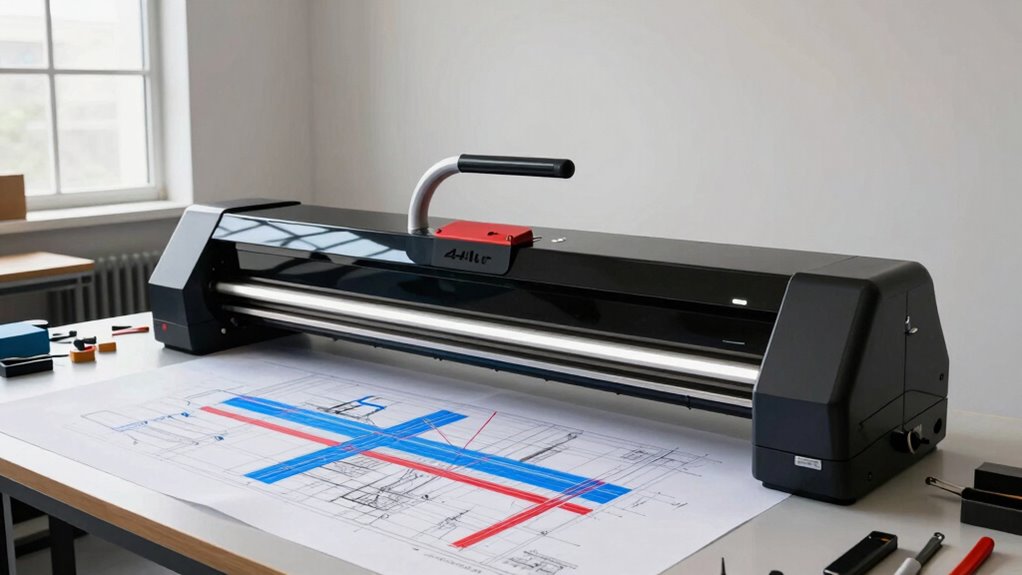

A 44-inch plotter is worth the extra space if you often handle large-format, high-quality projects like blueprints, posters, or banners that need vibrant detail and minimal seams. It allows you to produce professional results efficiently, reducing the need for piecing smaller prints together. Proper media handling and regular maintenance keep the printer performing at its best, ensuring consistent, sharp output. Want to learn more about maximizing your large-format printing? Keep going for helpful tips and insights.

Get business pricing on monitors, keyboards and dev gear
- Business-only prices and quantity discounts
- Tax-exempt purchasing
- Multiple users, one account, clear invoices
Key Takeaways
- When producing large-format prints like banners, posters, or blueprints that require full-width media without seams.
- If your projects demand high-resolution, detailed images that benefit from wider media for impactful visuals.
- To improve workflow efficiency by reducing the need for multiple smaller prints and minimizing material waste.
- When maintaining high print quality and color accuracy across wide media is essential for professional results.
- If your operation involves frequent large-scale printing, ensuring faster production speeds for higher productivity.
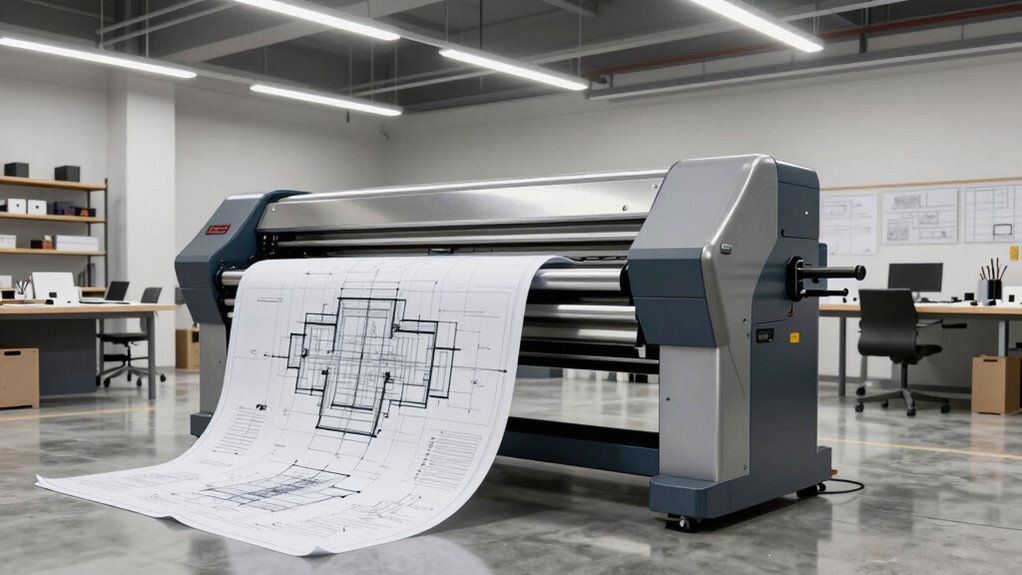
If you’re considering a 44-inch plotter, it’s because you need more than just basic printing—you’re aiming for high-quality, large-format output. This size is ideal for professionals who work with detailed blueprints, posters, banners, or intricate digital printing projects that demand precision and clarity. But before you invest, it’s important to evaluate whether the extra space and capabilities justify the cost and setup. Larger plotters often come with the benefits of faster production speeds and higher resolution, making them indispensable for busy environments where time and quality are critical.
One of the main advantages of a 44-inch plotter is its ability to handle wider media, allowing you to produce larger, more impactful visuals without the need to piece together smaller prints. This is especially useful for architectural firms, design studios, or print shops that need to deliver professional-grade output consistently. The larger format means fewer seams and a cleaner final product, which can substantially elevate your work’s presentation. Plus, with digital printing technology integrated into these plotters, you get sharp, vibrant images that can be customized with ease, streamlining your workflow.
A 44-inch plotter produces larger, seamless visuals with vibrant digital printing for professional, impactful results.
However, owning a larger plotter comes with responsibilities, particularly regarding machine maintenance. Regular upkeep is essential to keep your equipment running smoothly and to avoid costly downtimes. This includes cleaning the print heads, checking for ink clogs, and ensuring the media feeds correctly. Neglecting maintenance can lead to poor print quality, wasted materials, and even damage to the machine over time. Since a 44-inch plotter often involves more complex mechanisms than smaller models, staying on top of maintenance routines is indispensable to preserving its performance and longevity.
Digital printing on a larger scale also demands attention to machine calibration. Proper calibration ensures that colors are accurate, lines are sharp, and details are preserved across the entire width of the media. Maintaining calibration standards becomes even more important with larger prints, where any misalignment or color inconsistency is more noticeable. Investing time in routine maintenance and calibration not only extends the life of your plotter but also guarantees consistent, high-quality output that meets your professional standards. Additionally, understanding the media handling capabilities of your plotter can help optimize print quality and reduce material waste over time.
Products Worth Considering

Apple MacBook Air 13-inch Laptop with M5 Chip, 16GB Memory, 512GB SSD, 12MP Center Stage Camera, and Wi-Fi 7, Sky Blue

Amazon Kindle Paperwhite (2024, 12th Generation), 16 GB, 7-Inch Display, Black

LG UltraGear 25G590B-B 25-Inch Full HD 1000Hz Gaming Monitor
As an affiliate, we earn on qualifying purchases.
Frequently Asked Questions
How Much Does a 44-Inch Plotter Typically Cost?
A 44-inch plotter typically costs between $1,500 and $5,000, depending on features and brand. When considering cost comparison, you’ll find that larger plotters often have a higher price tag but offer better productivity for bigger projects. Budget considerations are essential; if you frequently work with large-format designs, investing in a 44-inch plotter makes sense. Otherwise, a smaller model might save you money while still meeting your needs.
What Are the Maintenance Requirements for Larger Plotters?
You’ll need to keep up with regular maintenance routines, like cleaning the print heads and checking for ink or toner levels, to guarantee your larger plotter runs smoothly. Calibration procedures are also essential; you should routinely calibrate the device to maintain accuracy and print quality. Additionally, monitor for wear on moving parts, lubricate when necessary, and update firmware to keep everything functioning efficiently, preventing costly repairs down the line.
Can a 44-Inch Plotter Handle Multiple Media Types?
Yes, a 44-inch plotter can handle multiple media types thanks to its media versatility and material compatibility. You can print on various materials like vinyl, heavyweight paper, or specialty films, making it ideal for diverse projects. Just guarantee you select the right settings for each media type, and your plotter will deliver high-quality results across different materials, maximizing its capabilities and your productivity.
Is There a Significant Power Difference Compared to Smaller Plotters?
Ever wonder if a 44-inch plotter uses considerably more power? The answer is yes, it generally consumes more energy due to its larger motors and components. However, newer models focus on power efficiency, balancing performance with energy consumption. While the power difference exists, it often isn’t drastic, especially if you prioritize energy-efficient features. So, if you need the extra size, the trade-off in power consumption might be worth it.
How Does Size Affect the Plotter’s Longevity and Durability?
Size can impact your plotter’s longevity and durability, especially when considering material compatibility and environmental factors. Larger plotters often have sturdier build quality, making them more resistant to wear and tear. However, they require a stable environment to prevent damage from dust, humidity, or temperature fluctuations. Proper maintenance, a suitable workspace, and selecting a model compatible with your materials guarantee your plotter stays reliable over time.
Conclusion
If you’re considering a 44-inch plotter, remember that its extra space can boost productivity and quality. Did you know that larger plotters can print up to 30% faster than smaller models? That speed can save you hours each week, making it worth the investment in the long run. So, if your projects demand bigger, faster output, going for that extra space is a smart move—you’ll see the benefits every day.