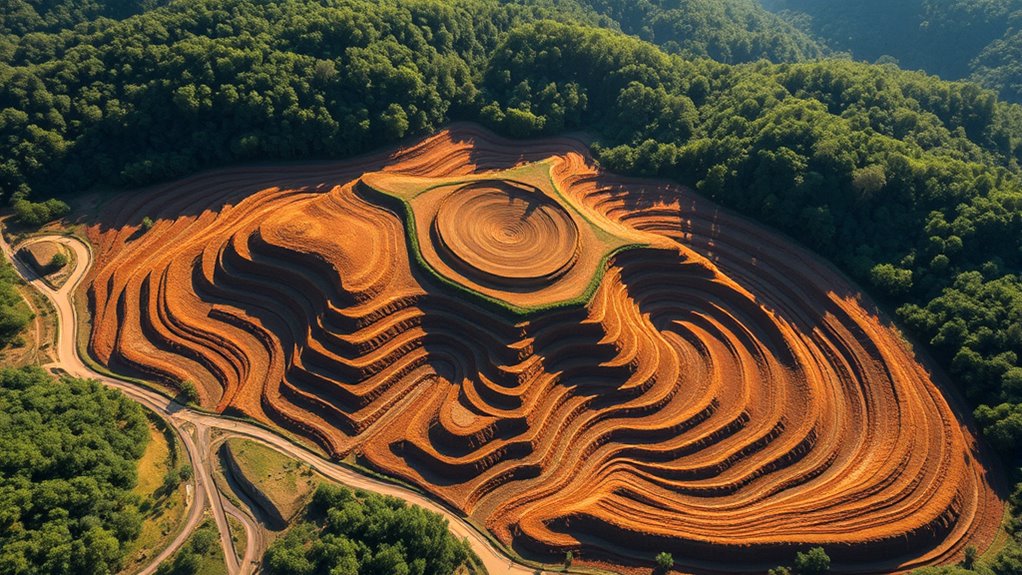

Land art is experiencing a vibrant revival today, blending environmental sustainability with artistic innovation. Modern artists use natural and recycled materials to create temporary or biodegradable works that connect deeply with landscapes. They incorporate new technologies, explore scale, and emphasize eco-consciousness to push artistic boundaries while minimizing ecological impact. This resurgence aims to transform landscapes into living, evolving statements of ecological harmony. Keep exploring to discover how this movement continues to shape the future of art and environmental awareness.
Key Takeaways
- Modern land art emphasizes environmental sustainability, using biodegradable and recycled materials to minimize ecological impact.
- Artists integrate digital tools and technology to create immersive, participatory, and dynamic site-specific installations.
- The resurgence highlights a focus on ecological consciousness, promoting awareness and activism through innovative land-based works.
- Contemporary practices often involve temporary, ephemeral art that blends seamlessly with natural landscapes, reducing long-term disturbance.
- Land art today fosters a dialogue between art and nature, emphasizing sustainability, innovation, and the evolving relationship with the environment.
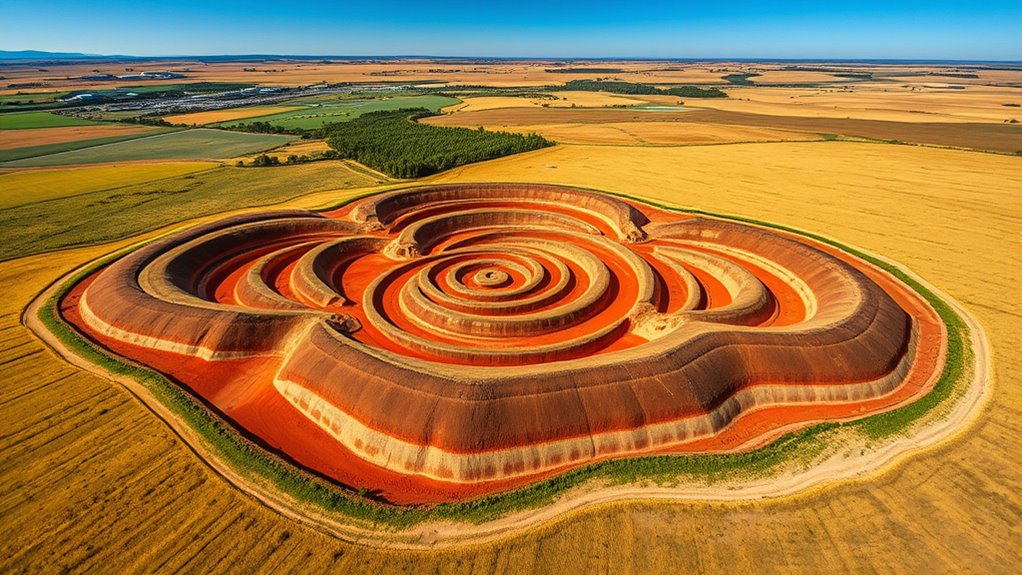
Have you noticed how land art is making a powerful comeback? It’s not just a nostalgic nod to the past; it’s a vibrant movement that’s reshaping how you see and interact with the environment. Land art, once primarily associated with the 1960s and 70s, has evolved into a contemporary form that emphasizes both environmental impact and artistic innovation. This resurgence is driven by a desire to reconnect with nature in a meaningful way while pushing the boundaries of traditional art forms. Today, artists are using natural materials and site-specific creations to craft works that blend seamlessly with the landscape. This approach minimizes environmental disturbance, making the art both sustainable and impactful. Instead of creating massive sculptures in galleries, land artists work directly within ecosystems, *contemplating* the land’s natural features and rhythms. By doing so, they challenge you to think differently about your relationship with nature and the footprint human activity leaves behind. Additionally, many land artists are taking steps to prevent environmental damage during their projects, such as using biodegradable materials and ensuring their work can naturally degrade over time. The environmental impact of land art during its revival is a key factor that sets it apart from other forms of artistic expression. Artists are more conscious than ever about how their work interacts with the environment. They aim to create pieces that are temporary or that can naturally biodegrade, reducing waste and ecological disruption. This eco-conscious approach encourages you to view art as a tool for environmental awareness rather than exploitation. It’s about fostering a dialogue between art and nature, inspiring you to consider sustainability in your own life. Land artists often incorporate recycled materials or natural elements like rocks, soil, and plants, which not only enhances the authenticity of their work but also underscores a commitment to environmental preservation. These pieces often serve as a reminder that art can be a catalyst for positive change, emphasizing harmony rather than harm.
Artistic innovation is at the heart of this land art revival. Modern artists are exploring new techniques, digital integrations, and conceptual frameworks that challenge traditional notions of sculpture and installation. They’re experimenting with scale, perspective, and ephemeral forms that change over time, engaging you in a dynamic experience. This push for innovation encourages you to see land art as a living, breathing conversation with the environment rather than static displays. By blending technology with natural elements, artists create immersive experiences that invite your participation. Such creative approaches inspire you to rethink what art can be and how it can serve as a catalyst for environmental activism. The resurgence of land art demonstrates that, when crafted thoughtfully, art can transform landscapes into powerful statements of innovation and ecological consciousness. Furthermore, the use of natural and biodegradable materials aligns with the goal of reducing environmental impact, highlighting how environmental impact is a crucial consideration in contemporary land art practices.
Frequently Asked Questions
How Do Land Artists Acquire Permits for Large-Scale Projects?
You need to navigate the permitting process by contacting local authorities and submitting detailed plans of your land art project. Be prepared to comply with land use regulations, which may require environmental assessments or community approval. It’s essential to communicate clearly your project’s scope and impact, ensuring all permits are secured before starting. This proactive approach helps you avoid legal issues and aligns your work with local regulations.
What Are the Environmental Impacts of Land Art Installations?
Imagine planting a seed that grows into a giant sculpture—you’re altering the land, and with that, environmental impacts unfold. Land art can cause soil erosion and disrupt wildlife habitats, affecting ecosystems. For example, heavy machinery might compact soil, making it harder for plants to grow, while animals might abandon disturbed areas. Being mindful of these impacts helps preserve natural balance while creating awe-inspiring art.
How Do Land Artists Fund Their Large-Scale Works?
You can fund your large-scale land art projects through artistic collaborations, grants, and sponsorships, which provide essential financial support. Public engagement also plays a key role, as community involvement often attracts funding and awareness. By partnering with local organizations and encouraging public participation, you create a shared sense of ownership, increasing the project’s visibility and chances for financial backing. These strategies help turn your ambitious vision into reality.
Are Land Art Pieces Protected by Any Legal Statutes?
Think of land art as a fleeting whisper of nature’s voice. Yes, some pieces enjoy legal protections through statutes that shield them from vandalism or destruction, like guardians watching over a sacred flame. However, many works rely on artistic licensing, making their protection a delicate dance between law and the artist’s intent. You should always check local regulations to understand how these monumental creations are safeguarded in your area.
How Do Land Art Artists Choose Their Locations?
You select a site for land art by considering natural features that enhance your concept, like terrain, vegetation, and landscape contours. You look for locations that allow for meaningful integration with the environment, ensuring your work interacts with the natural setting. Your goal is to choose a site where the natural features amplify your artistic message, creating a harmonious relationship between your piece and its surroundings, making the experience more impactful.
Conclusion
As you walk through this renewed land art movement, imagine the earth as a blank canvas, waiting for your touch. Each sculpture and installation becomes a seed of creativity planted in nature’s soil, blossoming into a dialogue between human spirit and the environment. Feel the wind carry your ideas, like whispers of ancient stories reborn. This resurgence isn’t just art; it’s a symbol of harmony, growth, and your role in shaping a sustainable future.