
TL;DR

Get business pricing on monitors, keyboards and dev gear
- Business-only prices and quantity discounts
- Tax-exempt purchasing
- Multiple users, one account, clear invoices
IBM, Oak Ridge National Laboratory’s Quantum Science Center and AMD have launched a co-design platform connecting IBM quantum computers with ORNL’s AMD-powered Umbra high-performance computing system. Researchers will use it to test quantum error-correction methods and the classical computing workflows needed to scale them; the announcement does not report new performance results from the platform.
IBM, Oak Ridge National Laboratory’s Quantum Science Center and AMD announced a co-design platform that connects IBM quantum computers with ORNL’s Umbra high-performance computing system to study quantum error correction. The joint deployment gives researchers a way to test how quantum processors and classical computing resources can work together as they develop methods for more reliable quantum computation.
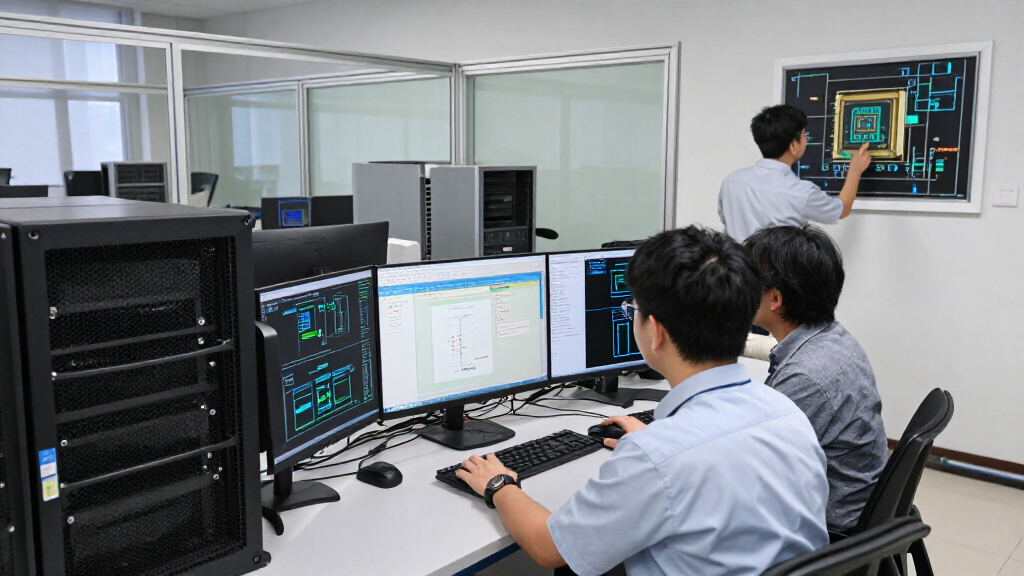
The initial deployment places IBM quantum computers, including its 120-qubit IBM Quantum Nighthawk processor, alongside Umbra, which is powered by AMD Instinct MI355X GPUs and fifth-generation AMD EPYC CPUs. The partners say the AMD systems will supply classical computing capacity for research into error-correction decoding, optimization and software orchestration. The announcement describes a research platform, not a completed fault-tolerant quantum computer.
Researchers are expected to compare error-correction approaches and assess the resources each requires, including qubits, time, samples and classical computing. IBM says Nighthawk’s square-lattice connectivity, circuit speed and real-time pulse control can support those tests. IBM’s Quantum System API also provides pulse-level access; the source material says researchers can measure qubits during a calculation and respond to results in real time, though the supplied description ends before detailing the full capability.
The work is linked to the U.S. Department of Energy’s Quantum Genesis Mission and its Q Competition target: 100 logical qubits performing 100,000 hard operations by late 2028. The announcement says IBM has demonstrated experiments involving as many as 70 logical qubits and 438 hard operations, and that closing the gap to the stated target would require roughly a 230-fold increase in hard-operation count. These are figures and targets cited by the partners, not results produced by the newly announced platform.
Scaling Error Correction With HPC
Quantum error correction is intended to protect quantum information from noise, a major obstacle to running useful calculations reliably. The platform addresses a practical research question: how much classical computing is needed to decode errors and coordinate operations quickly enough to support quantum hardware. The partners’ approach brings those resources together for joint testing rather than treating quantum processors and supercomputers as separate systems.
That matters because progress toward the DOE’s stated 100-logical-qubit, 100,000-operation goal depends not only on quantum hardware but also on the software and classical systems that process measurement data and manage workflows. If the platform helps researchers identify more efficient combinations of hardware and methods, it could inform later system designs. The announcement, however, provides no benchmark showing that it has already improved error correction or achieved the DOE target.
The deployment also creates a research connection between IBM quantum hardware and ORNL computing infrastructure, with AMD supplying the GPUs and CPUs used by Umbra. The partners say the work will connect with the Oak Ridge Leadership Computing Facility, opening a path to study quantum computing alongside broader AI and scientific-computing resources. Any practical benefits remain dependent on the results of future testing.
Products Worth Considering

DJI Mic 3 Wireless Microphone Kit (2 Transmitters, 1 Receiver, Charging Case)

Bose SoundLink Flex Bluetooth Speaker (2nd Gen), Black

Logitech MX Master 4 Ergonomic Wireless Mouse with Haptic Feedback, Graphite
As an affiliate, we earn on qualifying purchases.
From Error-Correction Tests to DOE Goals
The announcement frames the platform as a response to a scaling challenge. It says researchers have made earlier advances, including demonstrations aimed at protecting quantum information from noise and work combining quantum and classical computers. The next step, according to the partners, is to determine how those approaches can scale with greater classical computing support.
ORNL’s Quantum Science Center is funded by the U.S. Department of Energy, and the lab already operates high-performance computing resources. The newly described deployment pairs IBM’s quantum systems with Umbra, rather than announcing a standalone quantum machine or a new processor. The DOE’s Q Competition sets a late-2028 target, while the platform is presented as one research effort supporting work toward it.
IBM’s cited current point of comparison—up to 70 logical qubits and 438 hard operations—falls short of the competition target of 100 logical qubits and 100,000 hard operations. The announcement characterizes the required increase in hard operations as roughly 230-fold. That comparison describes the scale of the stated goal; it does not establish how quickly researchers can close the gap.
““With Umbra, we will now test new ideas, evaluate approaches at scale, and build the foundation for more reliable quantum computers.””
— Travis Humble, director of the Quantum Science Center at ORNL
Performance Results Still Pending
The announcement does not provide measured results from the new platform, including error-correction improvements, decoding speed, resource use or comparisons between methods. It also does not specify when researchers will publish initial findings, which workflows will be tested first, or what milestones will mark progress.
The DOE target is a goal for late 2028, not a forecast that the platform will meet it. The supplied material does not explain how the cited 230-fold increase was calculated beyond relating IBM’s reported 438 hard operations to the 100,000-operation target, nor does it state whether that figure accounts for changes in logical-qubit counts or other experimental conditions. The scale and timing of any contribution from Umbra remain unreported.
Details about the platform’s full operating arrangement are also limited. The announcement says IBM quantum computers and Umbra are co-located and that the platform will connect with the Oak Ridge Leadership Computing Facility, but it does not lay out the schedule, access arrangements or technical limits of that connection.
Researchers Begin Platform Testing
The next stated step is for the teams to use the deployment to evaluate error-correction methods, decoding optimization and software orchestration across quantum and classical systems. Researchers will compare what different approaches require in qubits, time, samples and classical resources, including where GPU acceleration may be useful.
The partners have not announced a date for the first results or a schedule of public milestones. Further reporting will depend on data from those tests and on whether the work produces findings that can be compared with the DOE’s late-2028 Q Competition target. For now, the confirmed development is the launch of the joint research platform, not evidence that fault-tolerant quantum computing has been achieved.
Key Questions
What did IBM, ORNL and AMD announce?
They announced a co-design platform for quantum error-correction research, pairing IBM quantum computers with ORNL’s AMD-powered Umbra high-performance computing system.
What is the IBM Quantum Nighthawk processor?
Nighthawk is the IBM quantum processor included in the initial deployment. The announcement identifies it as a 120-qubit processor and cites its connectivity, circuit speed and real-time pulse control as features researchers can use in tests.
Does the platform mean quantum error correction is solved?
No. The announcement describes infrastructure for testing and optimizing error-correction approaches. It reports no new platform performance results and does not claim that fault-tolerant quantum computing has been achieved.
What goal is the research intended to support?
The work is linked to the DOE’s Quantum Genesis Mission and Q Competition target of 100 logical qubits running 100,000 hard operations by late 2028. That is a stated target, not a result or guarantee from the platform announcement.
Source: thequantuminsider.com