
TL;DR
A 2026 buying guide from Thorsten Meyer AI ranks the MINISFORUM AI X1 Pro as the best overall AI mini PC, citing its AMD Ryzen AI 9 HX370 processor and Radeon 890M graphics. The GEEKOM A9 Max is highlighted for high-end AI productivity, while the GEEKOM IT15 earns praise for balancing Intel-based performance and connectivity. The guide says the right choice depends on how buyers weigh raw power, expandability, connectivity, and price.
The MINISFORUM AI X1 Pro has been named the best overall AI mini PC for 2026 in a new buying guide published by Thorsten Meyer AI, which compared ten models across three brands. The ranking gives buyers a current snapshot of a fast-moving market in which compact desktops are increasingly marketed around their ability to run local AI workloads rather than relying on cloud services.
According to the guide, the MINISFORUM AI X1 Pro earns the top spot on the strength of its AMD Ryzen AI 9 HX370 processor — 12 cores and 24 threads with boost speeds up to 5.1 GHz — paired with Radeon 890M integrated graphics. The barebone version supports up to 128GB of DDR5 memory and three PCIe 4.0 SSDs for as much as 12TB of total storage, with independent cooling fans for the CPU and SSD.
The GEEKOM A9 Max is singled out for high-end professional AI workloads. In its Ryzen AI 9 HX470 configuration, the vendor rates the system at up to 86 TOPS of AI performance, with the XDNA 2 NPU accounting for up to 55 TOPS of that figure. The guide also highlights the GEEKOM IT15, built around an Intel Ultra 9 285H with 16 cores running up to 5.4 GHz, as the strongest option for buyers who want a balance of power and connectivity, including WiFi 7 and 8K display support.
Other models in the ten-unit comparison include the GMKtec EVO-X1 and EVO-X2 — the latter shipping with up to 128GB of LPDDR5X memory and support for four 8K displays — plus the GEEKOM A7 Max and IT13 MAX, which the guide positions as creator, office, and data-visualization options. Storage across the ranked machines ranges from 1TB to 2TB of PCIe 4.0 SSD capacity in standard configurations.
Which AI Mini PC Tops The List In 2026?
Ten models from three brands were compared — and the MINISFORUM AI X1 Pro takes the crown as the best overall AI mini PC of 2026, powered by the AMD Ryzen AI 9 HX370 and Radeon 890M graphics. The right choice, though, depends on how you weigh raw power, expandability, connectivity, and price.
Three Machines Lead The 2026 Class
Compact desktops are now sold as credible platforms for on-device AI inference, video editing, 3D rendering, and multi-display productivity. These three picks define the top of the ranking.
MINISFORUM AI X1 Pro
- 12 cores / 24 threads, boost up to 5.1 GHz
- Barebone supports up to 128GB DDR5
- 3× PCIe 4.0 SSDs — up to 12TB total storage
- Independent cooling fans for CPU and SSD
GEEKOM A9 Max
- Up to 86 TOPS system AI performance (vendor-rated)
- XDNA 2 NPU contributes up to 55 TOPS
- Singled out for high-end professional AI productivity
- Multiple HX370/HX470-class configurations
GEEKOM IT15
- Boost clocks up to 5.4 GHz
- WiFi 7 and USB4 connectivity
- 8K display output support
- Best balance of Intel performance and I/O
The 2026 Field, Side By Side
Two processor families power the entire class: AMD’s Ryzen AI line (HX370, HX470) and Intel’s Core Ultra chips (285H, 185H) — each pairing CPU and GPU cores with a dedicated NPU for local AI acceleration.
| Model | Processor | AI Rating | Max Memory | Std. Storage | NPU | Positioning |
|---|---|---|---|---|---|---|
| AI X1 ProWinner | Ryzen AI 9 HX370 AMD | HX370-class NPU | 128GB DDR5 (socketed) | 1–2TB · up to 12TB | ✓ | Best overall — power + expandability |
| GEEKOM A9 Max | Ryzen AI 9 HX470 AMD | Up to 86 TOPS system | High-capacity DDR5 | 1–2TB PCIe 4.0 | ✓ XDNA 2 · 55 TOPS | High-end professional AI work |
| GEEKOM IT15 | Core Ultra 9 285H Intel | Core Ultra NPU | High-capacity DDR5 | 1–2TB PCIe 4.0 | ✓ | Balanced power + WiFi 7 + 8K |
| GMKtec EVO-X2 | Ryzen AI Max+ 395 AMD | Max-class NPU | 128GB LPDDR5X (soldered) | 1–2TB PCIe 4.0 | ✓ | Heavy AI · quad 8K displays |
| GMKtec EVO-X1 | HX370-class AMD | ~ Unverified vs. peers | 64–128GB class | 1–2TB PCIe 4.0 | ✓ | Compact AI, dual-fan cooling |
| A7 Max / IT13 MAX | Ryzen / Core Ultra Mixed | ~ Mid-tier | 32GB+ baseline | 1TB class | ✓ | Creator, office, value end |
Storage across ranked machines: 1TB–2TB PCIe 4.0 SSD in standard configs · ✓ yes · ~ partial/unverified · ✗ no
Memory Headroom & AI Throughput
Expandability is central to future-proofing: AI model sizes and memory demands keep growing, so RAM and SSD slots matter as much as the chip inside.
Memory Ceiling — Max RAM Supported
32GB DDR5 is the common baseline; heavy-AI systems ship 64–128GB. Socketed slots leave room to grow.
AI Throughput — Vendor-Rated TOPS
GEEKOM A9 Max (HX470 config). TOPS = trillions of operations per second — vendor figures, not standardized across chipmakers.
Where The Picks Sit — Value To Premium Spectrum
Premium models offer headroom for future AI workloads; budget options cover essential tasks. Match the machine to your actual workload.
What The Rankings Do Not Yet Settle
The guide is a current snapshot of a fast-moving market — not a final verdict. Four caveats apply before treating any spec sheet as gospel.
TOPS ≠ Apples-To-Apples
TOPS figures are vendor ratings, and measurement methods are not standardized across chipmakers — do not read them as direct AMD-vs-Intel comparisons.
No Independent Benchmarks
The guide publishes no independent test results. Real-world gaps between similarly specced HX370-class models remain unverified.
Fluid Pricing
Cost varies widely between premium and budget tiers and shifts with retailer promotions and configuration choices — no fixed prices are published.
Soldered vs. Socketed RAM
How Ryzen AI Max+ 395 systems with soldered LPDDR5X hold up against socketed-DDR5 rivals over multi-year ownership is still an open question.
“The MINISFORUM AI X1 Pro stands out as the best overall choice, thanks to its robust AMD Ryzen AI 9 HX370 and Radeon 890M.”
— Thorsten Meyer AI · 2026 AI Mini PC Buying Guide
From Workload To The Right Machine
The decision has moved beyond raw processor speed. Follow the chain: match your workload first, then weigh the tradeoffs in order.
Your Workload
Local AI models, creative work, or everyday productivity? Start here — not with the spec sheet.
Chip + NPU
Ryzen AI (HX370/HX470) or Core Ultra (285H/185H) — both accelerate AI tasks on-device.
Expandability
RAM and SSD slots are critical for future-proofing as AI model sizes keep growing.
Connectivity
WiFi 7, USB4, and quad 8K output are now common across top-tier models.
Your Pick
Balance processing needs, expandability, connectivity, and budget constraints.
Watch · Benchmarks
Independent testing of HX470 and Ryzen AI Max+ 395 systems will confirm or challenge vendor performance figures.
Watch · Value Tier
Lighter needs? Expandability-focused models like the GEEKOM A7 Max should remain the value end of the market.
Watch · 2026 Refreshes
Further updates from MINISFORUM, GEEKOM, and GMKtec are expected as AMD and Intel roll out next chip revisions.
Why Compact AI Desktops Matter Now
The ranking reflects a broader shift in the PC market: machines small enough to sit behind a monitor are now being sold as credible platforms for on-device AI inference, video editing, 3D rendering, and multi-display productivity. Features that were rare a generation ago — WiFi 7, USB4, quad 8K output, and NPUs rated in tens of TOPS — are now common across top-tier models, according to the guide.
For buyers, the practical consequence is that the decision has moved beyond raw processor speed. The guide frames the real tradeoffs as a choice between processing power, memory and storage expandability, and price — with premium models offering more headroom for future AI workloads and budget options covering essential tasks. Expandability in particular is described as central to future-proofing, since AI model sizes and memory demands continue to grow.
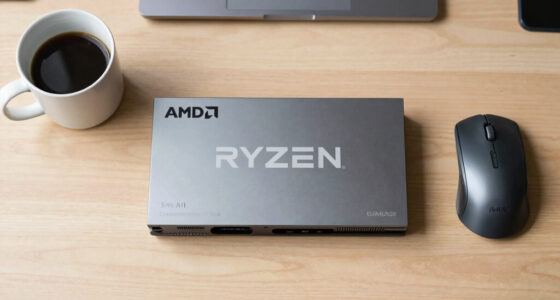
AI mini PC with AMD Ryzen AI 9 HX370
As an affiliate, we earn on qualifying purchases.
As an affiliate, we earn on qualifying purchases.
How Ryzen AI and Core Ultra Drove This Class
The current generation of AI mini PCs is built almost entirely around two processor families: AMD’s Ryzen AI line, led in this ranking by the HX370 and the newer HX470, and Intel’s Core Ultra chips, represented here by the Ultra 9 285H and Ultra 9 185H. Both families integrate a neural processing unit alongside conventional CPU and GPU cores, which is what allows these compact systems to accelerate AI tasks locally.
Mini PCs were once associated mainly with basic office duty and media streaming. The models in this 2026 comparison instead ship with 32GB to 128GB of memory, dedicated NPU silicon, and cooling systems — such as GEEKOM’s IceBlast 3.0 and dual-fan designs from MINISFORUM and GMKtec — built to sustain heavier loads. That hardware trajectory, the guide suggests, is what makes a ranked buying guide useful rather than premature: the category now has meaningful differences worth comparing.
“The MINISFORUM AI X1 Pro stands out as the best overall choice, thanks to its robust AMD Ryzen AI 9 HX370 and Radeon 890M.”
— Thorsten Meyer AI, 2026 AI mini PC buying guide
As an affiliate, we earn on qualifying purchases.
What the Rankings Do Not Yet Settle
Several caveats apply. The TOPS figures cited for NPU and system-level AI performance are vendor ratings, and TOPS measurements are not standardized across chipmakers, so they should not be read as direct apples-to-apples comparisons between AMD and Intel systems. The guide does not publish independent benchmark results, so real-world performance differences between similarly specced models — for example, the two GEEKOM A9 Max configurations and the GMKtec EVO-X1, all using HX370-class chips — remain unverified.
Pricing is also fluid. The guide notes that cost varies widely between premium and budget tiers but does not fix exact prices, which shift with retailer promotions and configuration choices. It is also not yet clear how the Ryzen AI Max+ 395 systems, with their soldered LPDDR5X memory, will hold up against socketed-DDR5 rivals over a multi-year ownership period.
As an affiliate, we earn on qualifying purchases.
What Buyers Should Watch Next
The guide advises buyers to match their purchase to their actual workload rather than chasing the highest spec sheet. Those running local AI models or heavy creative work should watch for independent benchmark testing of the HX470 and Ryzen AI Max+ 395 systems, which would confirm or challenge the vendor-supplied performance figures. Shoppers with lighter needs can expect the expandability-focused models, such as the GEEKOM A7 Max, to remain the value end of the market.
On the product side, further 2026 refreshes from MINISFORUM, GEEKOM, and GMKtec are expected as AMD and Intel roll out their next chip revisions. Updated rankings are likely to follow as those models reach retailers and as real-world AI benchmarks become available.
As an affiliate, we earn on qualifying purchases.
Key Questions
Which AI mini PC is ranked best overall for 2026?
According to the Thorsten Meyer AI buying guide, the MINISFORUM AI X1 Pro is the best overall pick, based on its AMD Ryzen AI 9 HX370 processor, Radeon 890M graphics, support for up to 128GB of DDR5 RAM, and storage expansion to 12TB.
What does TOPS mean, and can I compare it across brands?
TOPS stands for trillions of operations per second and measures AI compute throughput. The figures quoted in the guide are vendor claims, and because measurement methods differ between chipmakers, TOPS numbers should be treated as rough indicators rather than precise cross-brand comparisons.
How much RAM do I need for local AI workloads?
The guide positions 32GB of DDR5 as the common baseline among ranked models, while systems aimed at heavier AI and multitasking work — such as the GMKtec EVO-X2 — ship with 64GB to 128GB. Models with user-upgradeable memory slots offer more room to grow.
Are these mini PCs suitable for gaming and content creation?
Several ranked models are marketed for exactly that. Configurations of the GEEKOM A9 Max and the GMKtec EVO-X2 are positioned for gaming, 8K video editing, and 3D rendering, with the EVO-X2 supporting up to four 8K displays. These uses reflect vendor positioning rather than independent testing.
Should I wait for newer models before buying?
The guide treats the current lineup as mature enough to buy from, but notes the market moves quickly. Buyers who do not need a machine immediately may benefit from waiting for independent benchmarks of the newest chips, while those buying now should prioritize expandability to extend the machine’s useful life.
Source: Thorsten Meyer AI