
Finding the right label applicator for bags depends on your production volume, label size, and level of automation needed. The U.S. Solid Electronic Handheld Label Applicator stands out as the best overall choice for its cordless design and versatility. The Target Paster Label Applicator Gun offers a simpler, manual option suitable for small batches, while the Towa APN-60 provides a more automated solution for higher-volume needs. Each option balances ease of use, speed, and cost differently, making the decision complex. Keep reading to see detailed comparisons and find the best fit for your bag labeling setup.

Get business pricing on monitors, keyboards and dev gear
- Business-only prices and quantity discounts
- Tax-exempt purchasing
- Multiple users, one account, clear invoices
Key Takeaways
- Automation level significantly impacts speed and consistency, with manual options suited for low volume and automatic machines for high throughput.
- Label size flexibility varies; some models handle multiple widths easily, while others are limited to specific sizes.
- Build quality and durability are critical for long-term use, especially in busy packaging environments.
- Cost ranges widely, and investing in a more expensive model often pays off in reliability and speed for larger operations.
- Ease of operation and maintenance can make or break day-to-day efficiency, especially for users with limited technical experience.
| U.S. Solid Electronic Handheld Label Applicator, Cordless Wide Shipping Sticker Dispenser for 15-80mm Pre-Printed Rolls |  | Best Overall for Versatile, Automated Labeling | Label Width Support: 15mm to 80mm | Label Height Support: 15mm to 60mm | Power Source: Removable 12V lithium battery | VIEW ON AMAZON | See Our Full Breakdown |
| Target Paster Label Applicator Gun, YH-30, 22-35mm Label Width |  | Best for Manual Precision and Portability | Model Number: Yh-30 | Label Width Range: 22-35mm | Dimensions: 3.35″ x 4.41″ x 2.36″ | VIEW ON AMAZON | See Our Full Breakdown |
| Towa APN-60 Label Applicator |  | Best for Precise, Adjustable Handheld Labeling | Label Width Range: 1.0 to 2.33 inches | Maximum Outside Diameter: 4 inches | Core Size: 1 inch | VIEW ON AMAZON | See Our Full Breakdown |
| Manual Bottle Labeling Machine, Applicator for Round Bottles |  | Best for Manual, Consistent Round Bottle Labeling | Suitable for: Round bottles, glass, cans, plastic | Diameter range: 0.6″ – 4″ | Label width: 1″ – 5.1″ | VIEW ON AMAZON | See Our Full Breakdown |
| Label Applicator for Jars Bottles & Candles, Adjustable Manual Labeling Tool |  | Best for Small Studios and Home Workshops | Adjustable Container Size: 0.5–5 inches | Material: Powder-coated steel | Storage Height: 2 inches | VIEW ON AMAZON | See Our Full Breakdown |
| Label Applicator Machine for Flat Plane Square Labels, Top Labeling for Boxes, Cases, and Bags |  | Best for Integrated Labeling and Printing in Small to Large Operations | Application: Flat plane square labels, boxes, cases, bags | Functionality: Labeling and printing with integrated date coder | Design: Tabletop, space-saving | VIEW ON AMAZON | See Our Full Breakdown |
More Details on Our Top Picks
U.S. Solid Electronic Handheld Label Applicator, Cordless Wide Shipping Sticker Dispenser for 15-80mm Pre-Printed Rolls
This cordless, battery-powered applicator stands out for handling a wide range of label sizes from 15mm to 80mm in width, making it ideal for shipping and inventory environments where automation boosts efficiency. Compared to manual options like the Target Paster YH-30, it reduces hand fatigue and speeds up high-volume tasks, but it requires managing batteries and charging cycles, adding a layer of maintenance. Its automated feeding and adjustable output make it suitable for fast-paced workflows, although it’s limited to pre-printed rolls, which might restrict customization options.
Pros:- Cordless and portable for flexible workspace movement
- Supports a broad range of label sizes for diverse applications
- Automated feeding and adjustable speed reduce manual effort
Cons:- Requires regular battery management and charging
- Learning curve for optimal calibration
Best for: Businesses that need quick, consistent application of large quantities of pre-printed shipping labels across different sized packages.
Not ideal for: Small home workshops or occasional labelers who do not require automated features or wide-format support.
- Label Width Support:15mm to 80mm
- Label Height Support:15mm to 60mm
- Power Source:Removable 12V lithium battery
- Features:Automated feeding, adjustable speed, customizable output length
Our verdict“This pick is best for busy shipping operations that value automation and versatility over simplicity or lower upfront cost.”
Target Paster Label Applicator Gun, YH-30, 22-35mm Label Width
The YH-30 offers a manual, ergonomic solution for applying labels from 15 to 45mm wide, making it ideal for retail or e-commerce setups where precision and portability are key. Unlike the U.S. Solid model, it doesn’t need power, which means it can be used anywhere, but manual operation can become tiring during high-volume tasks. Its automatic label separation boosts efficiency for small batches, yet it’s limited to a narrower width range, making it less flexible for larger labels or bulk applications.
Pros:- Ergonomic handle reduces hand fatigue
- Automatic label separation improves workflow
- No power source needed for easy portability
Cons:- Limited to labels within 15-45mm width range
- Manual operation can be tiring for large tasks
Best for: Small retail or home-based businesses that prioritize portability and manual control for occasional labeling needs.
Not ideal for: High-volume warehouses or shipping centers requiring automated, rapid application of large quantities of labels.
- Model Number:Yh-30
- Label Width Range:22-35mm
- Dimensions:3.35″ x 4.41″ x 2.36″
- Material:Wear-resistant, pressure-resistant PP
Our verdict“This tool suits small-scale users who need precise, manual label application without dependence on power outlets.”
Towa APN-60 Label Applicator
The Towa APN-60 is designed for precise, sensor-assisted label application on various surfaces, making it suitable for industrial or office environments. Compared with manual tools like the Target YH-30, it offers more accuracy thanks to its patented sensor, but its setup and calibration requirements mean it’s less convenient for quick or occasional use. Its versatility with different label sizes is a plus, but it’s not suited for very high-volume labeling due to its manual nature.
Pros:- Precise application with patented edge sensor
- Adjustable carriage for versatility
- Compatible with various label sizes
Cons:- Requires calibration and setup
- Limited for high-volume use
Best for: Industrial or office users needing accuracy and adjustable settings for moderate labeling tasks on varied surfaces.
Not ideal for: High-speed packaging operations or small-scale home use where automation or simplicity is preferred.
- Label Width Range:1.0 to 2.33 inches
- Maximum Outside Diameter:4 inches
- Core Size:1 inch
- Stroke Length:1.8-2.5 inches
Our verdict“Ideal for users requiring accurate, adjustable handheld labeling in moderate volumes, but not for fast-paced production lines.”
Manual Bottle Labeling Machine, Applicator for Round Bottles
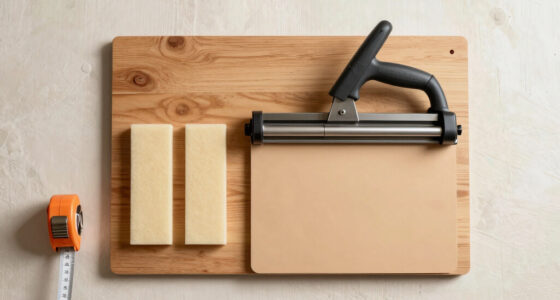
This manual machine excels at applying labels evenly on round bottles, such as glass or cans, with adjustable settings for different sizes. Compared to handheld applicators like the Target YH-30, it delivers more consistent results on curved surfaces thanks to its sturdy metal construction and pressing bar, but it demands manual effort and is limited strictly to round containers. It’s a solid choice for small-scale bottling operations but not suited for irregularly shaped items or high-volume production.
Pros:- Compatible with various round bottles and label sizes
- Sturdy metal build for durability
- Easy manual operation with adjustable settings
Cons:- Requires manual effort for operation
- Limited to round bottles only
Best for: Small breweries or home bottlers seeking reliable, manual label application on round containers.
Not ideal for: Large-scale manufacturing lines or bottles with irregular shapes that require more adaptable systems.
- Suitable for:Round bottles, glass, cans, plastic
- Diameter range:0.6″ – 4″
- Label width:1″ – 5.1″
- Label length:1″ – 10″
Our verdict“This machine is best for small operations focused on manual, consistent labeling of round bottles without automation.”
Label Applicator for Jars Bottles & Candles, Adjustable Manual Labeling Tool
The manual applicator for jars, bottles, and candles offers precise, straight, and centered labels, making it perfect for craft studios or small workshops. Unlike automated models, it relies entirely on manual handling, which makes it slower but allows for meticulous placement on various container sizes. Its heavy-duty steel construction ensures stability and durability, but the manual effort required can be a drawback for larger batches or busy environments. Its ability to disassemble for storage adds to its appeal for space-conscious users.
Pros:- Ensures professional, straight, and centered labels
- Adjustable for a wide range of container sizes
- Heavy-duty construction and disassemblable for storage
Cons:- Manual operation can be slow for larger batches
- Requires tabletop space for stable use
Best for: Small-scale crafters or home-based businesses needing precise, consistent labeling on containers with varied diameters.
Not ideal for: High-volume production or fast-paced environments where automation or speed is critical.
- Adjustable Container Size:0.5–5 inches
- Material:Powder-coated steel
- Storage Height:2 inches
Our verdict“This tool is ideal for small studios or hobbyists prioritizing accuracy and neatness over speed in their labeling process.”
Label Applicator Machine for Flat Plane Square Labels, Top Labeling for Boxes, Cases, and Bags
This label applicator stands out for combining both labeling and printing functions into a single, space-efficient machine. Compared with handheld options like the U.S. Solid Electronic Handheld Label Applicator, it offers a more automated approach suited for higher volume tasks. Its integrated printing with a date coder reduces the need for separate equipment, streamlining workflows. The compact tabletop design makes it adaptable for environments ranging from small workshops to large production lines, but it requires some training to operate efficiently and has limited customization options. Its reliability across diverse materials and labels makes it a versatile choice, though the lack of detailed pricing and advanced features might deter those seeking extensive flexibility.Pros:- Combines labeling and printing in one machine, saving space and time
- User-friendly controls facilitate quick learning
- Compact design fits easily into various workspaces
- Reliable print quality across different materials
Cons:- Limited customization options for labels and print styles
- Requires some training to operate efficiently
- No detailed information on pricing makes budgeting difficult
Best for: Small to medium-sized food packaging, retail stores, or workshops needing combined labeling and printing capabilities.
Not ideal for: High-volume, fully automated manufacturing plants that require fully customizable, high-speed solutions with extensive integration options.
- Application:Flat plane square labels, boxes, cases, bags
- Functionality:Labeling and printing with integrated date coder
- Design:Tabletop, space-saving
- Performance:Reliable, durable prints
- Suitable For:Food packaging, retail, small workshops, large-scale production
Our verdict“This pick is ideal for users who need a compact, all-in-one labeling and printing solution for moderate production needs.”

How We Picked
These products were evaluated based on performance, ease of use, build quality, adaptability to different bag sizes, and overall value. We prioritized models that offer a good balance of automation and manual control, considering the typical needs of small businesses through large-scale operations. The ranking reflects how well each product performs relative to its price, with a focus on durability, versatility, and user-friendliness. Products that excel in one aspect but fall short in others were rated accordingly, ensuring that each pick serves a specific buyer profile best.Factors to Consider When Choosing Label Applicator For Bags
Choosing the right label applicator for bags involves several key considerations. Understanding your production volume, label dimensions, and desired level of automation will help narrow down options. It’s also important to think about how easy the device is to operate and maintain, as well as its durability in busy environments. Below, I outline critical factors to keep in mind to make an informed purchase that aligns with your specific needs.Automation and Speed
Deciding between manual, semi-automatic, and fully automatic applicators depends on your volume and efficiency goals. Manual models are affordable and simple but slow, suitable for small batches. Semi-automatic options balance speed and control, ideal for medium workloads. Fully automatic machines offer the highest throughput but come with higher costs and complexity, making them better suited for large-scale operations.
Label Size Compatibility
Ensure the applicator can handle your typical label widths. Some models are adjustable across a range of sizes, offering flexibility if your labels vary. Fixed-width machines might be less versatile but can be more reliable for specific label types. Consider future needs; investing in an adjustable model can save money and hassle later.
Ease of Use and Maintenance
A user-friendly interface reduces training time and minimizes errors. Look for intuitive controls and easy access for cleaning and repairs. More complex machines may require technical support, which adds to ongoing costs. Simpler models often require less upkeep but might sacrifice some precision or speed.
Build Quality and Durability
Machines built with high-quality materials withstand busy environments and frequent use. Cheaper plastic models may break or wear out quickly, leading to downtime and higher replacement costs. Investing in robust construction can actually lower long-term expenses, especially for high-volume labeling tasks.
Cost and Value
Price varies widely based on automation level, build quality, and features. While lower-cost options are attractive, they might lack durability or speed. Conversely, premium models offer better performance but may be overkill for small-scale needs. Balance your budget with the anticipated return on investment, considering long-term reliability and efficiency.
Frequently Asked Questions
Can I use a manual label applicator for high-volume bag labeling?
Manual applicators are generally not suitable for high-volume operations, as they require hand application for each label. They are best for small batches or occasional use. For larger quantities, investing in semi-automatic or automatic machines will significantly improve speed and consistency, reducing labor costs and increasing throughput.
What label sizes are compatible with most applicators for bags?
Many applicators are designed to accommodate a range of label widths, typically from 15mm to 80mm. However, some models are fixed for specific sizes, so it’s important to verify compatibility with your labels before purchasing. Adjustable models provide more flexibility if your label sizes vary frequently.
How important is build quality for a bag label applicator?
Build quality directly impacts the machine’s longevity and reliability, especially in busy packaging environments. Well-constructed machines made from durable materials withstand frequent use and reduce downtime. Cheaper models may save money upfront but often require replacement or repairs sooner, increasing total cost of ownership.
Are automatic label applicators difficult to operate and maintain?
Most automatic applicators are designed for straightforward operation, but they do require some initial setup and calibration. Maintenance involves regular cleaning and occasional part replacement. Choosing a model with accessible parts and clear instructions can simplify ongoing upkeep, making automation more manageable even for less technically experienced users.
Should I prioritize speed or precision when choosing a label applicator?
It depends on your specific needs. For high-volume production where speed is critical, an automatic machine with rapid application capabilities makes sense. If your labels require precise placement or your batch sizes are smaller, a manual or semi-automatic model with fine adjustment features might be more appropriate. Balancing speed and accuracy is key to choosing the right device.
Conclusion
For small businesses or occasional labeling needs, a manual or semi-automatic applicator like the Target Paster makes sense, offering affordability and ease of use. Larger operations benefit from investing in a robust automatic machine like the U.S. Solid Electronic Handheld Label Applicator, which delivers speed and consistency. Beginners should focus on models with simple controls and minimal maintenance, while experienced users aiming for efficiency should consider premium options with greater automation. Ultimately, selecting the right applicator depends on your volume, budget, and desired level of automation, ensuring your bag labeling process is both efficient and reliable.
Fall Picks
fall essentials
As an affiliate, we earn on qualifying purchases.