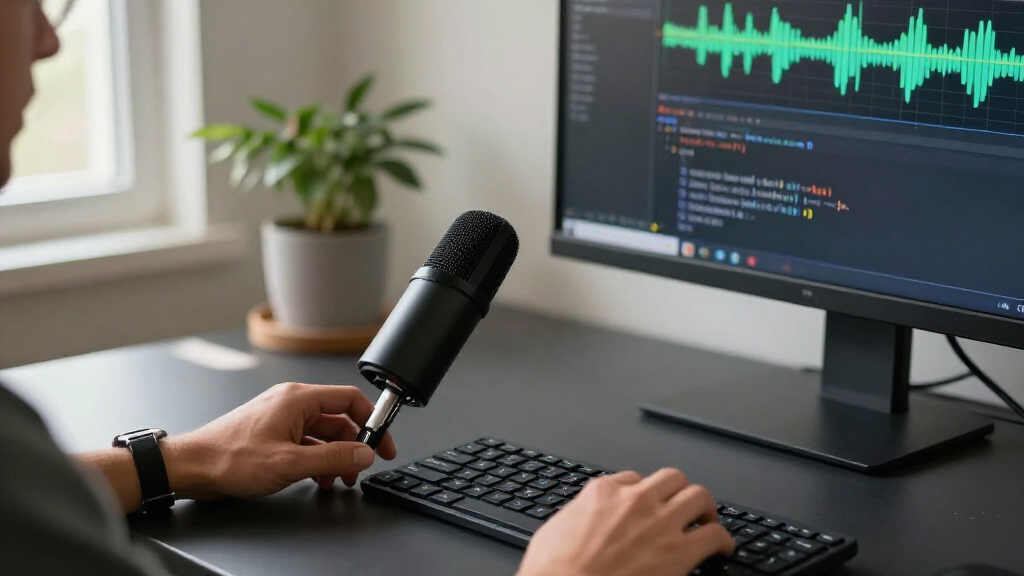
The best USB microphone for developers depends on whether you need clear daily call audio, a compact desk setup, or a mic that can grow into streaming and recording. I’d put the Elgato Wave:3 MK.2 first for a feature-rich desk setup, while the RØDE NT-USB Mini suits developers who want a simpler, smaller condenser mic, and the FIFINE AmpliGame AM8 adds an XLR upgrade path. The main tradeoffs are convenience versus control, condenser sensitivity versus room-noise rejection, and desk footprint versus placement flexibility. A mute button and reliable positioning can matter more during back-to-back calls than recording specifications alone. Read on for the full breakdown, including picks for different rooms, workflows, and budgets.

Get business pricing on monitors, keyboards and dev gear
- Business-only prices and quantity discounts
- Tax-exempt purchasing
- Multiple users, one account, clear invoices
Complete the kit


Key Takeaways
- The Elgato Wave:3 MK.2 leads for feature-rich desk use: it is the strongest fit for developers who want more control over calls and recordings than a basic plug-and-play mic offers.
- The RØDE NT-USB Mini favors simplicity: its compact design makes it a better match for a crowded workstation than larger recording-focused setups.
- The FIFINE AmpliGame AM8 is the flexibility pick: USB works for a straightforward computer connection, while XLR gives the setup room to expand later.
- Mute access separates practical call mics from recording-first options: the JOUNIVO JV-601 and CMTECK G009 put a physical mute control at the center of everyday desk use.
- Specialty designs involve real compromises: lavaliers such as the MAONO UL10 and NewTH clip to clothing for placement freedom, while tiny and low-cost desktop mics trade richer voice control for minimal setup.
| JOUNIVO JV-601 USB Gooseneck Microphone with Mute Button and LED Indicator |  | Best for Desk-Side Calls | Microphone type: Omnidirectional condenser | Connectivity: USB | Form factor: Adjustable gooseneck | VIEW LATEST PRICE | See Our Full Breakdown |
| RØDE NT‑USB+ Professional-Grade USB Condenser Microphone |  | Best for Developer Podcasts and Demos | Connectivity: USB Type-C | Polar pattern: Unidirectional | Form factor: Large-diaphragm condenser | VIEW LATEST PRICE | See Our Full Breakdown |
| DUNGZDUZ Mini USB Microphone for Laptop and Desktop |  | Best Compact Pick for Multi-OS Developers | Model: CGS-M3 | Connectivity: USB 2.0, USB Type-A | Microphone type: Condenser | VIEW LATEST PRICE | See Our Full Breakdown |
| ZealSound K66 USB Podcast Microphone |  | Best for Hands-On Call Controls | Microphone type: Condenser | Pickup pattern: Cardioid | Frequency response: 40 Hz–18 kHz | VIEW LATEST PRICE | See Our Full Breakdown |
| Elgato Wave:3 MK.2 USB Condenser Microphone |  | Best for Streamlined Voice Processing | Connectivity: USB Type-C | Polar pattern: Super Cardioid | Form factor: Studio condenser | VIEW LATEST PRICE | See Our Full Breakdown |
| Shure MV6 Gen 2 USB-C Microphone for Gaming, Streaming, and Recording |  | Best for Software-Assisted Voice Control | Connectivity: USB-C | Form factor: Desktop | Channels: 1 | VIEW LATEST PRICE | See Our Full Breakdown |
| CMTECK G009 USB Desktop Microphone with Mute Button |  | Best for Simple Windows and Mac Calls | Connectivity: USB | Microphone type: Condenser | Form factor: Adjustable gooseneck | VIEW LATEST PRICE | See Our Full Breakdown |
| Sennheiser Profile USB Cardioid Condenser Microphone with Table Stand |  | Best for Hands-On Desk Controls | Connectivity: USB | Connector and included cable: USB; 1.2 m USB-C cable | Microphone type: Cardioid condenser | VIEW LATEST PRICE | See Our Full Breakdown |
| FIFINE AmpliGame AM8 USB/XLR Dynamic Microphone for Gaming Streaming |  | Best for a USB-to-XLR Upgrade Path | Connectivity: USB and XLR | Microphone type: Dynamic | Polar pattern: Unidirectional | VIEW LATEST PRICE | See Our Full Breakdown |
| Razer Seiren V3 Mini USB Microphone | 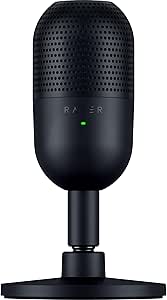 | Best Compact Pick for a Crowded Desk | Connectivity: USB | Connector: USB Type-A | Microphone type: Condenser | VIEW LATEST PRICE | See Our Full Breakdown |
| MAONO UL10 USB Lavalier Microphone, 192 kHz/24-bit |  | Best for Hands-Free Calls and Interviews | Model: UL10 | Connectivity: USB | Polar pattern: Omnidirectional | VIEW LATEST PRICE | See Our Full Breakdown |
| FIFINE K669B USB Condenser Microphone |  | Best Value Desk Setup | Connectivity: USB Type-A and USB Type-C | Cable: USB-B to USB-A/C, 6.5 ft | Polar pattern: Unidirectional (cardioid) | VIEW LATEST PRICE | See Our Full Breakdown |
| RØDE NT-USB Mini USB Condenser Microphone |  | Best for Polished Desk Recording | Connectivity: USB-C | Polar pattern: Unidirectional | Frequency response: 20 Hz–20 kHz | VIEW LATEST PRICE | See Our Full Breakdown |
| NewTH USB Type-A Lavalier Microphone with 2 m Cable |  | Best for Lightweight Laptop Portability | Connector: USB Type-A | Directionality: Omnidirectional | Cable length: 2 m (6.58 ft) | VIEW LATEST PRICE | See Our Full Breakdown |
| 2 Pcs USB 2.0 Mini Microphone for Laptop/Desktop PC Plug and Play – Skype, MSN, Yahoo Recording, YouTube, Google Voice Search & Games |  | Best for Pocket-Sized Backup Audio | Connectivity: USB 2.0 | Connector type: USB | Polar pattern: Omnidirectional | VIEW LATEST PRICE | See Our Full Breakdown |
| USB microphones for developer | Connectivity | Signal-to-noise ratio | Polar pattern | Weight |
|---|---|---|---|---|
| JOUNIVO JV-601 USB Gooseneck M | USB | 76 dB | — | 7.06 oz |
| RØDE NT‑USB+ Professional-Grad | USB Type-C | 59 dB | Unidirectional | 540 g (1.19 lbs) |
| DUNGZDUZ Mini USB Microphone f | USB 2.0, USB Type-A | 60 dB | Omnidirectional | 50 g |
| ZealSound K66 USB Podcast Micr | USB plug-and-play | — | — | — |
| Elgato Wave:3 MK.2 USB Condens | USB Type-C | 110 dB | Super Cardioid | 7.52 oz |
| Shure MV6 Gen 2 USB-C Micropho | USB-C | — | — | — |
| CMTECK G009 USB Desktop Microp | USB | 76 dB | — | — |
| Sennheiser Profile USB Cardioi | USB | — | Unidirectional | 350 g |
| FIFINE AmpliGame AM8 USB/XLR D | USB and XLR | 80 dB | Unidirectional | — |
| Razer Seiren V3 Mini USB Micro | USB | 110 dB | — | — |
| MAONO UL10 USB Lavalier Microp | USB | 78 dB | Omnidirectional | 80 g |
| FIFINE K669B USB Condenser Mic | USB Type-A and USB Type-C | 78 dB | Unidirectional (cardioid) | — |
| RØDE NT-USB Mini USB Condenser | USB-C | 82 dB | Unidirectional | 585 g |
| NewTH USB Type-A Lavalier Micr | — | 84 dB | — | 37 g (also listed as 18 g) |
| 2 Pcs USB 2.0 Mini Microphone | USB 2.0 | 96 dB | Omnidirectional | — |
More Details on Our Top Picks
JOUNIVO JV-601 USB Gooseneck Microphone with Mute Button and LED Indicator
The JOUNIVO JV-601 suits developers who want a simple, positionable mic for stand-ups, pair programming, and support calls rather than a recording setup. Its 360-degree gooseneck lets me place the capsule near my mouth without rearranging a laptop, while the mute button and LED make call controls easy to check at a glance. Unlike the RØDE NT‑USB+, it does not offer headphone monitoring or studio-oriented processing; the tradeoff is a simpler, less involved desk setup. The omnidirectional pickup and noise-reduction feature may help with ordinary room sound, but they are not a substitute for a tightly focused pickup in a noisy shared office. I would also rule it out for Raspberry Pi, Android, or Xbox setups, which the supplied compatibility details exclude.
Pros:- Adjustable gooseneck helps place the mic close to the speaker.
- One-touch mute and LED indicator make call status easy to check.
- Plug-and-play USB connection requires no driver installation.
- Noise-reduction technology is intended to reduce background noise and echo.
Cons:- Not compatible with Xbox, Raspberry Pi, or Android.
- Omnidirectional pickup can capture sound from around the desk.
- Single-channel design lacks the monitoring features of the RØDE NT‑USB+.
Best for: Developers using a Windows or macOS computer who want an adjustable mic with a visible mute status for daily video calls.
Not ideal for: Raspberry Pi, Android, and Xbox users, or developers seeking focused directional pickup and headphone monitoring.
- Microphone type:Omnidirectional condenser
- Connectivity:USB
- Form factor:Adjustable gooseneck
- Cable length:1.8 m (6 ft)
- Frequency range:20 Hz–20 kHz
- Signal-to-noise ratio:76 dB
- Compatibility:Windows 7, 8, 10, 11 and macOS
- Weight:7.06 oz
Our verdict“Choose the JV-601 for straightforward Windows or Mac calls where flexible placement and visible mute status matter more than studio controls.”
RØDE NT‑USB+ Professional-Grade USB Condenser Microphone
For developers recording tutorials, conference talks, or a technical podcast, the RØDE NT‑USB+ offers more recording control than a basic call mic. Its unidirectional condenser capsule focuses capture toward the speaker, and zero-latency headphone monitoring lets me hear the mic signal while recording rather than discovering problems afterward. The included pop filter and desktop stand also make it a more ready-to-record package than the JOUNIVO JV-601, which is better suited to quick desk calls. APHEX processing adds software-based tone options, but this is still a USB-only microphone: there is no XLR or analog output for a later studio upgrade. Its larger desktop footprint and recording-oriented extras make it a less tidy choice for someone who only needs a quick stand-up microphone.
Pros:- Unidirectional condenser capsule is suited to focused voice recording.
- Zero-latency headphone output supports live monitoring.
- Detachable pop filter and desktop stand are included.
- APHEX processing provides additional voice-shaping options through RØDE Central.
Cons:- USB-only connectivity offers no XLR or analog output.
- Larger studio-oriented setup is more than many routine developer calls require.
- Requires a desktop position for its stand rather than offering the JV-601’s flexible gooseneck.
Best for: Developers making screencasts, tutorials, livestreams, or podcasts who want directional capture and live headphone monitoring over USB.
Not ideal for: Developers seeking a compact call-only mic, a gooseneck for flexible positioning, or an XLR connection for an expandable audio setup.
- Connectivity:USB Type-C
- Polar pattern:Unidirectional
- Form factor:Large-diaphragm condenser
- Signal-to-noise ratio:59 dB
- Frequency response:20 Hz
- Power source:Corded electric
- Weight:540 g (1.19 lbs)
- Dimensions:7.24 × 2.48 × 1.97 inches
Our verdict“Pick the NT‑USB+ if you record polished developer content and want monitoring and included setup accessories, but skip it for basic calls or analog expansion.”
DUNGZDUZ Mini USB Microphone for Laptop and Desktop
The DUNGZDUZ CGS-M3 is the portability pick for developers who move between a laptop, Chromebook, Linux machine, or Raspberry Pi and need basic voice capture without a desk stand. At 50 g, it is far easier to pack than the RØDE NT‑USB+, and its listed compatibility spans more operating systems than the Windows-and-macOS-focused JOUNIVO JV-601. Plug-and-play operation suits quick calls and classes, while the metal carrying case helps keep the tiny mic protected in a bag. The tradeoff is modest ambition: its 50–15,000 Hz range and omnidirectional pickup make it a practical voice tool, not a studio microphone for finished narration. The 10-foot pickup-distance claim may help with flexible placement, but room noise can also reach an omnidirectional mic.
Pros:- Compact 50 g body and included metal case suit travel and hot-desk use.
- Listed compatibility includes Windows, Mac, Linux, Chromebook, and Raspberry Pi.
- Plug-and-play USB Type-A setup requires no extra driver.
- Noise reduction is included for everyday voice capture.
Cons:- Omnidirectional pickup can capture surrounding room sound.
- Frequency range tops out at 15,000 Hz and is not aimed at studio-grade recording.
- Single-channel design does not provide the monitoring features found on the RØDE NT‑USB+.
Best for: Developers who travel with a laptop or use Linux, Chromebook, or Raspberry Pi and need a tiny USB mic for calls and webinars.
Not ideal for: Developers recording polished narration in a noisy room or wanting directional pickup, live monitoring, and studio controls.
- Model:CGS-M3
- Connectivity:USB 2.0, USB Type-A
- Microphone type:Condenser
- Polar pattern:Omnidirectional
- Frequency range:50–15,000 Hz
- Signal-to-noise ratio:60 dB
- Pickup distance:Up to 10 ft
- Weight:50 g
- Warranty:12 months
Our verdict“Choose the CGS-M3 when portability and broad computer compatibility matter more than focused pickup or recording controls.”
ZealSound K66 USB Podcast Microphone
The ZealSound K66 is a practical middle ground for developers who want more on-mic control than the JOUNIVO JV-601 provides, without moving up to the recording-focused RØDE NT‑USB+. Its cardioid pickup favors sound from the front, while the headphone jack offers zero-latency monitoring for checking voice levels during a call or recording. Dedicated mic and headphone volume, echo adjustment, and mute controls reduce reliance on software menus when switching between meetings and demos. The listed USB-C and Lightning adapters also broaden its device options. However, the product details do not specify cable length or stand construction, making desk fit harder to judge before buying. Its noise-reduction mode is described as reducing background sound, not removing it, so a quiet room still matters.
Pros:- Cardioid pickup is more front-focused than the omnidirectional JOUNIVO JV-601.
- Zero-latency monitoring works through a 3.5 mm headphone jack.
- Dedicated mic volume, monitoring volume, echo, and mute controls.
- USB-C and Lightning adapters support a range of listed devices.
Cons:- Noise reduction is described as lowering, not eliminating, background sounds.
- Cable length and stand details are not specified in the supplied product information.
- Its multiple controls may be unnecessary for developers who only need a simple call mic like the JV-601.
Best for: Developers who want on-mic mute, level, echo, and headphone controls for calls, demos, or casual podcasting across computer and mobile devices.
Not ideal for: Buyers who need a clearly documented stand and cable setup, or expect noise reduction to isolate speech in a loud workspace.
- Microphone type:Condenser
- Pickup pattern:Cardioid
- Frequency response:40 Hz–18 kHz
- Sampling rate:46 kHz
- Sensitivity:−45 dB ±3 dB
- Monitoring:Zero-latency via 3.5 mm headphone jack
- Connectivity:USB plug-and-play
- Included adapters:USB-C and Lightning
Our verdict“Pick the K66 for hands-on monitoring and mute controls across calls and recordings, provided its unspecified cable and stand details fit your desk.”
Elgato Wave:3 MK.2 USB Condenser Microphone
The Elgato Wave:3 MK.2 makes the most sense for developers who stream coding sessions or record technical tutorials and want voice processing close at hand. Its super-cardioid capsule focuses pickup more tightly than the omnidirectional DUNGZDUZ CGS-M3, while built-in DSP effects, Auto Gain, and Clipguard 2.0 are aimed at keeping speech controlled when delivery or input level changes. The multifunction dial provides quick access to adjustment, and USB-C plug-and-play keeps the connection straightforward on compatible PCs and Macs. Compared with the RØDE NT‑USB+, the Wave:3 emphasizes onboard processing and clipping protection; the tradeoff is that it remains a single-channel, USB-only microphone with no XLR output. Its USB-C requirement may also call for an adapter on older machines.
Pros:- Super-cardioid pickup focuses more tightly than the omnidirectional DUNGZDUZ CGS-M3.
- Clipguard 2.0 is designed to prevent clipping and distortion.
- Auto Gain and onboard DSP effects reduce the need for manual level and voice adjustments.
- Multifunction dial offers direct control from the microphone.
Cons:- Single-channel recording does not support multitrack capture.
- No XLR output for analog or expandable recording setups.
- USB-C connection may require an adapter for older USB ports.
Best for: Developers who stream, record tutorials, or present demos on a PC or Mac and want focused pickup with onboard voice processing and level protection.
Not ideal for: Developers with older USB ports and no adapter, or anyone who needs XLR, multichannel recording, or an analog upgrade path.
- Connectivity:USB Type-C
- Polar pattern:Super Cardioid
- Form factor:Studio condenser
- Signal-to-noise ratio:110 dB
- Number of channels:1
- Weight:7.52 oz
- Dimensions:3.9 × 3.9 × 8.4 inches
- Warranty:2-year manufacturer warranty
Our verdict“Choose the Wave:3 MK.2 for developer content where focused voice pickup and automatic level safeguards matter more than XLR or multichannel flexibility.”
Shure MV6 Gen 2 USB-C Microphone for Gaming, Streaming, and Recording
The Shure MV6 Gen 2 suits developers who want help keeping spoken audio consistent during remote meetings, screen recordings, or streams. Voice Isolation, adjustable noise reduction, and Auto Level Mode address common desk-audio problems without requiring constant manual gain adjustments. Its included stand and USB-C cable make initial placement simple, while the MOTIV apps add a 5-band EQ for shaping voice tone. Compared with the Sennheiser Profile, which puts gain and mix controls directly on the microphone, the MV6 leans more on app-based adjustment and automatic processing. That can be useful when the room or speaking level varies, but first-time setup requires a MOTIV app for firmware updates and performance optimization. Choose it for its speech-focused controls; skip it if you want a strictly plug-and-play setup with no app step.
Pros:- Voice Isolation and adjustable noise reduction help reduce distracting room sound.
- Auto Level Mode helps keep speech volume more consistent.
- MOTIV app includes a 5-band EQ for voice customization.
- USB-C cable and desktop stand are included for a straightforward desk setup.
Cons:- Initial setup requires a MOTIV app for firmware updates and optimization.
- App-based controls may be less convenient than the Sennheiser Profile’s on-mic adjustments.
Best for: Developers recording tutorials or joining calls in a variable-noise workspace who want automatic level control and software-based voice tuning.
Not ideal for: Buyers who want to avoid companion apps or prefer all sound adjustments directly on the microphone.
- Connectivity:USB-C
- Form factor:Desktop
- Channels:1
- Model:MV6G2-K
- Included items:Desktop stand, USB-C cable
- Special features:Voice Isolation, adjustable noise reduction, Auto Level Mode, digital pop filter
- App controls:MOTIV apps with 5-band EQ
- Dimensions:12.15 × 8.45 × 2.85 inches
Our verdict“Choose the MV6 Gen 2 if you want software-assisted speech control for calls and recordings and do not mind an app-based setup.”
CMTECK G009 USB Desktop Microphone with Mute Button
The CMTECK G009 is a basic desk-call option for developers who want a physical mute control and adjustable mic position without managing audio software. Its gooseneck design makes it easy to move the microphone toward the speaker, and the mute button with LED indicator gives a visible cue during meetings. It connects by USB without drivers or external power, a simpler approach than the Shure MV6 Gen 2 and its MOTIV app setup. The tradeoff is less confidence about pickup behavior: the description calls the pattern omnidirectional, while the specifications call it unidirectional. Compatibility is also limited to listed Windows versions, Mac OS, and PS4; Linux, Raspberry Pi, and Android are excluded. I’d pick it for straightforward supported-PC calls, not for a flexible multi-device developer setup.
Pros:- USB connection works without drivers or a separate power supply.
- Mute button and LED indicator make microphone status easy to check.
- Adjustable gooseneck allows flexible positioning on a desk.
- Includes a pop filter and a stated noise-cancellation feature.
Cons:- Not compatible with Raspberry Pi, Linux, or Android.
- Product information conflicts on whether the pickup pattern is omnidirectional or unidirectional.
- Offers less audio adjustment than the Shure MV6 Gen 2’s app controls.
Best for: Developers using a supported Windows PC or Mac who want a low-complexity desk mic with an easy-to-see mute status.
Not ideal for: Linux, Raspberry Pi, or Android users, and anyone who needs a clearly documented pickup pattern or broad platform support.
- Connectivity:USB
- Microphone type:Condenser
- Form factor:Adjustable gooseneck
- Pickup pattern:Conflicting listing: omnidirectional in description, unidirectional in specifications
- Operating systems:Windows 7, 8, and 10; Mac OS
- Signal-to-noise ratio:76 dB
- Channels:1
- Features:Mute button with LED indicator, pop filter, noise cancellation
- Dimensions:2.68 × 4.21 × 4.41 inches
Our verdict“Choose the G009 for supported Windows or Mac desk calls where a physical mute and flexible neck matter more than broad compatibility.”
Sennheiser Profile USB Cardioid Condenser Microphone with Table Stand
The Sennheiser Profile fits developers who want to make quick audio adjustments without opening an app. Its on-mic gain, mix, and volume controls, plus a mute button and headphone jack, give calls and recordings a direct control surface at the desk. The cardioid pattern focuses pickup toward the speaker, a more clearly defined arrangement than the CMTECK G009’s conflicting pattern information. It is also a simple plug-and-play choice, unlike the app-dependent Shure MV6 Gen 2. The included metal table stand and USB-C cable make a compact setup, though the stand offers less placement freedom than a boom arm and the USB connection will not suit devices without USB support. Developers who want quick, tactile adjustments should favor it; those needing flexible arm mounting may prefer another setup.
Pros:- On-microphone gain, mix, and volume controls allow quick adjustments.
- Mute button and headphone jack support practical call and recording workflows.
- Cardioid pickup pattern focuses on sound from the front.
- Metal housing, table stand, and USB-C cable are included.
Cons:- The table stand offers less placement flexibility than a boom arm.
- USB connectivity limits use with devices that lack USB support.
- Provides less automatic noise and level assistance than the Shure MV6 Gen 2.
Best for: Developers who regularly switch between meetings, calls, and recordings and want gain, mix, volume, and mute controls within reach.
Not ideal for: Buyers who need boom-arm placement flexibility or plan to connect to devices without USB support.
- Connectivity:USB
- Connector and included cable:USB; 1.2 m USB-C cable
- Microphone type:Cardioid condenser
- Polar pattern:Unidirectional
- Controls:Gain, mix, volume, mute
- Monitoring:Headphone jack
- Weight:350 g
- Enclosure material:Metal
- Included accessories:Table stand, 1.2 m USB-C cable
Our verdict“Choose the Profile if you want hands-on desk controls and a defined cardioid pickup pattern without relying on companion software.”
FIFINE AmpliGame AM8 USB/XLR Dynamic Microphone for Gaming Streaming
The FIFINE AmpliGame AM8 is the most flexible pick here for developers who may start with direct USB calls and later move to an XLR mixer or audio interface. Dual USB/XLR connectivity gives it a longer upgrade path than the USB-only Sennheiser Profile, while its dynamic, unidirectional design is suited to focusing on a nearby speaker. A headphone jack and monitoring-volume control help with live checks, and the mute button has an LED reminder. The compromises show up when changing connection modes: RGB lighting and function keys work only over USB, and an XLR cable is not included. Its 50 Hz–16 kHz response is specified, but the listing does not give a USB-C connector detail. Developers who want a mic that can grow with a home setup should consider it; those wanting the simplest desk-only kit may prefer the Profile.
Pros:- USB and XLR connections support both direct computer use and later audio-interface setups.
- Unidirectional dynamic design focuses on the speaker.
- Headphone monitoring jack and volume control support live listening.
- Mute button includes an LED indicator, with RGB lighting available in USB mode.
Cons:- XLR cable is not included.
- RGB lighting and function keys are unavailable in XLR mode.
- Stand-thread compatibility may require an adapter for some microphone stands.
Best for: Developers building a home recording or streaming setup who want USB convenience now and the option to connect through XLR later.
Not ideal for: Buyers who need an XLR cable included, want lighting and controls in XLR mode, or prefer a minimal plug-and-play desk microphone.
- Connectivity:USB and XLR
- Microphone type:Dynamic
- Polar pattern:Unidirectional
- Frequency response:50 Hz–16 kHz
- Signal-to-noise ratio:80 dB
- Monitoring:Headphone jack with monitoring volume control
- Mounting threads:3/8-inch and 5/8-inch
- Channels:1
- Enclosure material:ABS plastic and metal
Our verdict“Choose the AM8 if you want USB simplicity today and an XLR upgrade path, accepting that some features are USB-only.”
Razer Seiren V3 Mini USB Microphone
The Razer Seiren V3 Mini is a compact choice for developers with limited desk space or a setup that needs to stay easy to pack away. Its supercardioid pickup pattern is designed to focus on sound from the speaker and reduce surrounding noise, while the tap-to-mute sensor and LED make it quick to silence a call. The tiltable stand includes a built-in shock absorber, adding some protection against desk movement without a separate mount. Compared with the larger, control-rich Sennheiser Profile, the Seiren keeps its footprint and controls simpler; compared with the USB/XLR FIFINE AM8, it gives up the option to expand into an XLR setup. Moving it to a boom arm requires detaching the stand, and advanced audio customization requires Razer Synapse. It makes sense for compact PC use, not for users seeking extensive hardware controls.
Pros:- Mini form factor takes up little desk space.
- Supercardioid pickup pattern is designed to limit surrounding sound.
- Tap-to-mute sensor has an LED status indicator.
- Tiltable stand includes a built-in shock absorber.
Cons:- The stand must be detached for boom-arm mounting.
- Advanced audio customization requires Razer Synapse.
- USB Type-A connection does not offer the FIFINE AM8’s XLR upgrade option.
Best for: Developers with a small or shared desk who want a compact PC microphone with quick mute control and focused pickup.
Not ideal for: Buyers who need XLR connectivity, broad audio controls on the mic, or boom-arm mounting without detaching the stand.
- Connectivity:USB
- Connector:USB Type-A
- Microphone type:Condenser
- Pickup pattern:Supercardioid
- Frequency range:20 Hz–20 kHz
- Signal-to-noise ratio:110 dB
- Compatible devices:Laptop, personal computer
- Features:Tap-to-mute sensor, LED indicator, tiltable stand, built-in shock absorber
- Enclosure material:Aluminum
Our verdict“Choose the Seiren V3 Mini for a compact, focused USB mic on a PC desk, but look elsewhere for XLR expansion or extensive on-mic controls.”
MAONO UL10 USB Lavalier Microphone, 192 kHz/24-bit
For developers who take calls while typing, presenting, or moving between a desk and a whiteboard, the MAONO UL10’s clip-on lavalier design keeps the microphone near the speaker without taking up desk space. Its omnidirectional pickup is more forgiving of head movement than the FIFINE K669B’s cardioid desk setup, though it may also pick up more surrounding room sound. The included 78-inch cable, metal clip, and foam windscreen make it a practical kit for laptop meetings and recorded demos. The stated 192 kHz/24-bit support is a high-resolution format, but it does not by itself guarantee clearer speech on a typical call. This is a focused choice for wearable capture, not a substitute for a desktop microphone with onboard controls or headphone monitoring.
Pros:- Clip-on design keeps the microphone close to the speaker and leaves the desk clear.
- Omnidirectional pickup accommodates natural head movement.
- Includes a 78-inch cable, aluminum clip, and foam windscreen.
- Supports 192 kHz/24-bit audio.
Cons:- USB connectivity limits use to compatible devices.
- Omnidirectional pickup can capture more room noise than a directional desk mic.
- The listed frequency response gives only an upper value, so its full range is unclear.
Best for: Developers who want a clip-on mic for remote meetings, interviews, or recording walkthroughs while away from a fixed desk.
Not ideal for: Developers who need to mute quickly, monitor their voice through headphones, or connect to devices without compatible USB support.
- Model:UL10
- Connectivity:USB
- Polar pattern:Omnidirectional
- Audio sampling:192 kHz/24-bit
- Signal-to-noise ratio:78 dB
- Weight:80 g
- Cable length:78 in
- Included accessories:Aluminum lapel clip and foam windscreen
Our verdict“Choose the UL10 if you want a wearable USB mic for calls and demos, rather than a desk mic with onboard monitoring or controls.”
FIFINE K669B USB Condenser Microphone
The FIFINE K669B is a straightforward desk mic for developers who want a focused voice pickup without a separate interface or a complex setup. Its cardioid pattern favors sound from in front of the mic, which can help keep keyboard and room noise less prominent than with the omnidirectional MAONO UL10 or NewTH lavalier. A tripod stand and onboard volume control make it easier to place and adjust during calls, while its metal body suits regular desk use. Compared with the RØDE NT-USB Mini, it gives up headphone monitoring and a built-in pop filter, so it is less suited to a more controlled recording workflow. Its compatibility is also specific: it works with computers and PS4/PS5, but not Xbox or phones.
Pros:- Cardioid pickup favors the speaker in front of the mic.
- Onboard volume control allows quick level adjustment.
- Includes a tripod stand for desk placement.
- Metal body and plug-and-play USB connection suit a basic computer setup.
Cons:- Not compatible with Xbox or phones.
- Lacks the zero-latency headphone monitoring offered by the RØDE NT-USB Mini.
- A desktop stand takes up workspace and keeps the mic in a fixed position.
Best for: Developers who mainly make calls or record voice at a computer and want a simple, directional desktop setup with a physical volume control.
Not ideal for: Developers who need phone or Xbox compatibility, headphone monitoring, or a microphone that clips to clothing.
- Connectivity:USB Type-A and USB Type-C
- Cable:USB-B to USB-A/C, 6.5 ft
- Polar pattern:Unidirectional (cardioid)
- Frequency response:20 Hz–20 kHz
- Signal-to-noise ratio:78 dB
- Channels:1
- Material:Metal
- Compatible devices:Desktop, laptop, PC, PS4, PS5
Our verdict“Pick the K669B for uncomplicated computer calls with directional pickup and a physical volume control, provided you do not need phone or Xbox support.”
RØDE NT-USB Mini USB Condenser Microphone
For developers who record tutorials, team updates, or podcast-style discussions at a desk, the RØDE NT-USB Mini offers a more complete recording workflow than the FIFINE K669B. It connects over USB-C without an interface or driver installation, and zero-latency headphone monitoring lets you hear your voice while recording rather than discovering problems afterward. The built-in pop filter helps control plosive sounds, while its detachable magnetic stand can be replaced with a mic stand or studio arm. That flexibility is more useful for repeat recording than the clip-on MAONO UL10, but the Mini is heavier and belongs on a desk or mounted arm. It is also a single-channel USB microphone, so developers seeking multi-mic or broader recording setups will need different equipment.
Pros:- USB connection works without an audio interface or driver installation.
- Zero-latency headphone monitoring supports live voice checks.
- Detachable magnetic stand allows mounting on a mic stand or studio arm.
- Built-in pop filter helps reduce plosive sounds.
Cons:- USB-only connectivity limits use with equipment that needs another connection type.
- Single-channel recording does not suit multi-mic capture.
- At 585 g, it is far less portable than the MAONO UL10 lavalier.
Best for: Developers who regularly record demos, tutorials, or spoken updates at a desk and want direct headphone monitoring and flexible mounting.
Not ideal for: Developers who need a wearable mic, multi-channel recording, or a setup with connectivity beyond USB.
- Connectivity:USB-C
- Polar pattern:Unidirectional
- Frequency response:20 Hz–20 kHz
- Signal-to-noise ratio:82 dB
- Channels:1
- Weight:585 g
- Dimensions:7.28 × 2.36 × 1.97 in
- Included accessories:Magnetic desk stand and USB-C cable
- Warranty:2 years
Our verdict“Choose the NT-USB Mini for desk-based developer content where monitoring and mounting flexibility matter more than portability.”
NewTH USB Type-A Lavalier Microphone with 2 m Cable
The NewTH lavalier is aimed at developers who need a simple clip-on mic for laptop calls or interviews and want to move around without carrying a desktop stand. Its 2 m cable and 37 g listed weight make it easy to pack, while driver-free USB Type-A operation keeps setup simple on compatible computers. Like the MAONO UL10, it uses omnidirectional pickup, so it can follow a speaker who turns their head; neither is as focused on a single direction as the FIFINE K669B. The NewTH listing includes a wind muff and aluminum clip, but its weight is reported inconsistently—37 g in one specification and 18 g elsewhere. Its Type-A connector may also need an adapter for newer laptops without that port.
Pros:- Clip-on form is portable and keeps the desk clear.
- Omnidirectional pickup allows some movement during calls.
- Driver-free USB Type-A setup works with compatible computers.
- Includes an aluminum lapel clip and wind muff.
Cons:- USB Type-A may require an adapter for laptops without that port.
- The product information lists conflicting weights.
- Omnidirectional pickup can include more ambient sound than the FIFINE K669B’s cardioid pattern.
Best for: Developers who want a basic clip-on mic for laptop meetings or interviews and have a USB Type-A port available.
Not ideal for: Developers using USB-C-only devices who want verified weight specifications or directional rejection of room noise.
- Connector:USB Type-A
- Directionality:Omnidirectional
- Cable length:2 m (6.58 ft)
- Weight:37 g (also listed as 18 g)
- Frequency response:50 Hz–16 kHz
- Impedance:≤2.2 kΩ
- Signal-to-noise ratio:84 dB
- Sensitivity:-32 dB ±3 dB
- Included accessories:Wind muff and aluminum lapel clip
Our verdict“Choose the NewTH for a lightweight, clip-on laptop mic if your computer has USB Type-A and you can accept uncertainty in the listed weight.”
2 Pcs USB 2.0 Mini Microphone for Laptop/Desktop PC Plug and Play – Skype, MSN, Yahoo Recording, YouTube, Google Voice Search & Games
These two mini USB microphones favor portability and basic voice capture over a controllable desk setup. Their plug-and-play design is a fit for developers who want a tiny backup mic for a laptop bag or occasional chat on a Windows computer, rather than a primary microphone for regular recordings. Unlike the FIFINE K669B, they have no stand or onboard volume control, and their omnidirectional pickup is less selective about nearby sound than its cardioid pattern. The listed 96 dB signal-to-noise ratio is a specification, not a guarantee that calls will sound cleaner in a noisy room. These are limited to a single channel and USB connection, with no stated mute control or monitoring features.
Pros:- Mini form is easy to carry as a backup.
- Plug-and-play design requires no driver installation on Windows laptops and desktops.
- Omnidirectional pickup does not require precise positioning.
- USB-powered operation avoids a separate power source.
Cons:- No built-in volume or mute controls.
- Omnidirectional pickup can capture surrounding room noise.
- Single-channel USB connection offers fewer setup options than the RØDE NT-USB Mini.
Best for: Developers who want a very small spare microphone for occasional laptop or desktop voice chat and can work without physical controls.
Not ideal for: Developers recording regular tutorials or calls in a noisy space, or anyone who needs a stand, mute button, or headphone monitoring.
- Connectivity:USB 2.0
- Connector type:USB
- Polar pattern:Omnidirectional
- Signal-to-noise ratio:96 dB
- Audio sensitivity:30 dB
- Channels:1
- Power source:USB (corded electric)
- Enclosure material:Plastic
- Item weight:23 g
Our verdict“Keep this pair in mind as compact backup audio for basic computer chat, not as a primary mic for controlled developer recordings.”
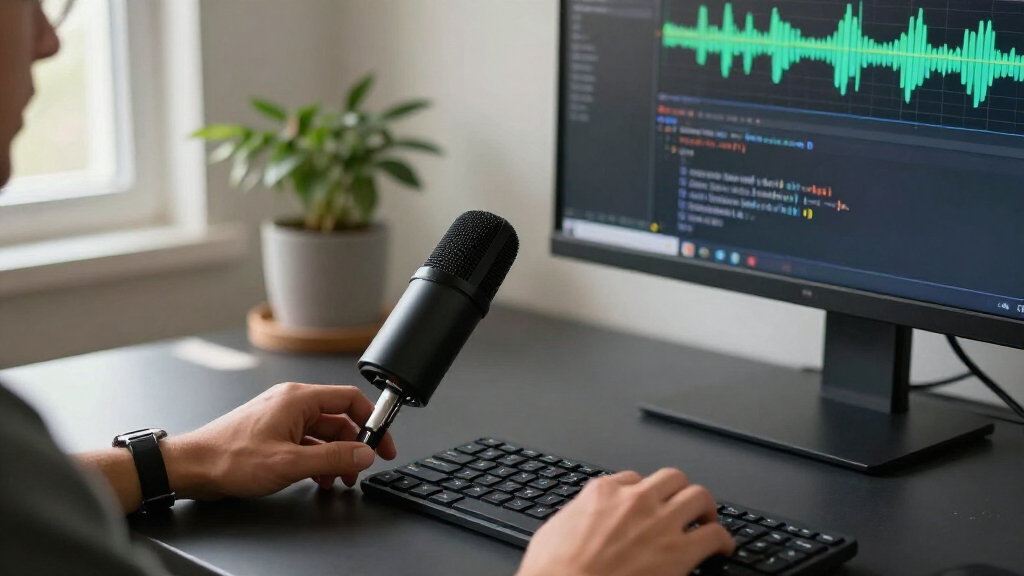
How We Picked
I ranked these microphones around developer workflows: daily video calls, remote pair programming, screen recordings, tutorials, and occasional streaming. I weighed voice-focused design, connection simplicity, mute and monitoring controls, placement options, and how easily each model fits a desk that may already hold a keyboard, laptop, and other gear. I also considered whether a microphone’s form factor suits a quiet home office or risks picking up room noise and keyboard sounds.
The ranking favors useful everyday performance and clear workflow advantages over headline specifications alone. The Elgato Wave:3 MK.2 leads for its feature-oriented desk role; smaller or simpler models rank higher for specific needs such as portability or fast muting, not because they replace a versatile main mic. Options with limited controls, uncertain room suitability, or narrow use cases rank lower, while USB/XLR flexibility earns the AM8 a place for developers who expect their setup to evolve.
| USB microphones for developer | Polar pattern |
|---|---|
| JOUNIVO JV-601 USB Gooseneck M | — |
| RØDE NT‑USB+ Professional-Grad | Unidirectional |
| DUNGZDUZ Mini USB Microphone f | Omnidirectional |
| ZealSound K66 USB Podcast Micr | — |
| Elgato Wave:3 MK.2 USB Condens | Super Cardioid |
| Shure MV6 Gen 2 USB-C Micropho | — |
| CMTECK G009 USB Desktop Microp | — |
| Sennheiser Profile USB Cardioi | Unidirectional |
| FIFINE AmpliGame AM8 USB/XLR D | Unidirectional |
| Razer Seiren V3 Mini USB Micro | — |
| MAONO UL10 USB Lavalier Microp | Omnidirectional |
| FIFINE K669B USB Condenser Mic | Unidirectional (cardioid) |
| RØDE NT-USB Mini USB Condenser | Unidirectional |
| NewTH USB Type-A Lavalier Micr | — |
| 2 Pcs USB 2.0 Mini Microphone | Omnidirectional |
Factors to Consider When Choosing USB Microphones For Developers
Developer audio gear has a different job from a dedicated recording studio setup: it needs to work reliably through long calls, fit a real desk, and stay manageable alongside a busy computer. I’d choose by workflow first, then match the mic’s placement and controls to the room.
Choose for calls before recording specs
Start with the sound your coworkers need to hear: clear, steady speech that does not change when you lean toward a second monitor. A high sample-rate figure alone does not guarantee a better call, since conferencing apps may process or compress the signal. For daily meetings, consistent mic distance and a convenient mute control often matter more than studio-oriented recording features. Think about whether you will also make tutorials or podcasts, where recording control can become more useful. A mic built for a single speaking position may frustrate someone who shifts around while coding. Match the microphone to the work you actually do, rather than paying attention to a spec that your call software may not use.
Match the microphone type to your room
Condenser microphones can capture detailed speech, but they may also pick up keyboard clicks, fans, and reflections from a bare room. Dynamic designs can be a better fit when the desk is noisy or the room is untreated, though they still need sensible placement and speaking distance. Neither type automatically removes background noise; software processing, mic position, and room conditions all play a part. Before buying, listen to a short recording made from the spot where you plan to work, including the computer fan and typing. If the room is lively, addressing echoes with furnishings may improve speech more than switching to a more expensive microphone. Pick a mic based on the sound environment it will face, not an idealized studio.
Treat placement as part of the purchase
A desk stand is easy to set up, but it can transfer keyboard vibration and occupy space near a mouse or laptop. A gooseneck can bring the capsule closer without a bulky arm, while a lavalier keeps the microphone on your clothing and frees the desktop. A compact mic is less intrusive, but its position may be harder to adjust if the stand is fixed. Check where the USB port, screen, and keyboard sit before choosing a form factor. Also consider whether the cable can reach the computer without crossing a work area or pulling the microphone out of position. The best placement is one you can maintain during long calls without changing your posture.
Prioritize controls you can reach during a call
Physical mute access is especially useful when calls overlap with household noise, quick side conversations, or focused work between meetings. Look for a control that is easy to locate without knocking the mic or diverting attention from the screen. A visible mute indicator can reduce uncertainty, but check how the control behaves with your operating system and conferencing app. Headphone monitoring can help with recording and live presentations, though it is less valuable if you rarely listen to your own voice. Software control can offer more settings, but it may depend on an app running in the background. Choose the combination you will use reliably rather than collecting controls that add setup overhead.
Decide whether USB-only is enough
USB microphones are appealing because they avoid a separate audio interface and reduce the number of connections to troubleshoot. For a developer who mainly joins calls on one computer, that simplicity is often a strength. A USB/XLR model adds a path to an audio interface or mixer, which can suit future recording work but also adds equipment and setup decisions. Do not buy into an upgrade path unless you have a plausible use for it; unused flexibility still takes desk space and attention. Check connector type and computer compatibility, especially if your laptop relies on USB-C or adapters. A direct connection is valuable only when the cable and ports fit your actual workstation.
Budget for the whole setup, not just the mic
A microphone’s role in your setup may bring extra needs: a better stand, a longer cable, headphones, or a quieter position away from the computer. Those additions can affect usability more than moving up to a model with more recording features. At the other end, ultra-simple mini microphones may be convenient for occasional voice input but offer fewer placement and control options for a full workday. Consider how often you speak, whether you record anything beyond calls, and how much space you can dedicate to audio gear. If you are unsure, prioritize an easy return path and test the mic in your normal call software. Spend more when a specific feature solves a recurring problem, not just because the product looks more professional.
Frequently Asked Questions
Should I buy a condenser or dynamic USB microphone for a home office with keyboard noise?
First, consider how close the microphone can sit to your mouth and how loud your keyboard and computer are. A dynamic model such as the FIFINE AmpliGame AM8 may suit a noisier desk better than a sensitive condenser, but placement still matters and no mic type cancels every click. Condenser models can capture detailed speech, yet a reflective room or nearby fan may become more audible. Keep the mic close enough for steady speech and avoid pointing it directly toward the keyboard. If possible, make a test recording from your intended position before settling on a model.
Is a mute button more useful than headphone monitoring for developer calls?
For most meeting-heavy workflows, I’d prioritize a physical mute control because it solves an immediate problem during live calls. Monitoring is more helpful when you record tutorials, stream, or need to check your voice and levels while speaking. A visible mute indicator can also make it easier to confirm your status without switching windows. App-based mute controls can work, but they may be less convenient when you are presenting or moving between applications. Choose monitoring first only if recording quality is a regular part of your work.
Will a USB microphone work with both my laptop and work computer?
Many USB microphones are intended for direct computer connection, but check the connector and operating-system compatibility for both machines. A USB-A mic may need an adapter or hub for a laptop with only USB-C ports, and adapters add another point of failure. Company-managed computers can also restrict software installation, so a model that depends on companion software may be less convenient than one with useful onboard controls. Confirm whether the features you need work without extra software. If you regularly switch devices, test the cable and mute behavior on each before relying on the setup for meetings.
Should I choose a lavalier or a desk microphone for remote pair programming?
A lavalier such as the MAONO UL10 or NewTH model can keep the microphone near your voice while leaving the desk clear, which helps if you move or share space. It can also pick up clothing rustle, and its cable may be awkward if you frequently stand or change seats. A desk microphone is easier to keep connected and may offer more convenient controls, but it uses workspace and can transmit desk vibration. Think about how much you move during a session and whether your clothing or headset makes a clip-on mic comfortable. For mostly stationary calls, a desk mic is often the simpler routine; for mobile setups, a lavalier can be more practical.
Is a USB/XLR microphone worth choosing if I only need better meeting audio today?
If calls are your only use, a straightforward USB microphone is usually easier to set up and maintain. USB/XLR flexibility becomes useful when you expect to add an audio interface, record several sources, or build a more involved streaming setup. That path can bring added cables, hardware, and configuration, so it is not automatically an advantage for a simple workstation. The FIFINE AM8 is the lineup’s clear option for someone who wants both connection paths. Choose it for a real plan to expand, not just the possibility that you might someday want studio equipment.
Conclusion
For most developers who want one capable desk microphone, I’d choose the Elgato Wave:3 MK.2 as the best overall pick because its feature-rich role suits calls and more involved voice work. The FIFINE K669B is my best-value direction for buyers who want a simple USB condenser without prioritizing advanced controls, while the RØDE NT-USB+ is the best premium choice for a more recording-focused setup. Beginners who want a compact, uncomplicated desk mic should start with the RØDE NT-USB Mini. For specific needs, pick the FIFINE AmpliGame AM8 for USB/XLR flexibility, the JOUNIVO JV-601 for a gooseneck and quick mute access, or the MAONO UL10 when a clip-on form factor suits your workspace. Match your choice to your room, call habits, and desk layout; the most elaborate mic is not automatically the easiest one to live with.