
For most small server racks, I’d start with the Vertiv EDGE-1500IRT2UXL: its 1350W rating, sine-wave output, and tower-or-rack flexibility make it the strongest all-around fit in this group. The APC Smart-UPS SMT1000RM2UC is a more compact rack choice with SmartConnect monitoring, while the CyberPower PR1500LCD suits buyers who want a sine-wave UPS for a larger or more demanding load. The main tradeoffs are rack space, usable wattage, battery replacement needs, and whether server-grade monitoring matters more than a simpler, lower-cost design. A UPS also needs to match your servers’ actual load and provide enough time for a safe shutdown, not just show a large VA number. Read on for the full breakdown and a guide to choosing a server UPS that fits your equipment.

Get business pricing on monitors, keyboards and dev gear
- Business-only prices and quantity discounts
- Tax-exempt purchasing
- Multiple users, one account, clear invoices
Key Takeaways
- The Vertiv EDGE-1500IRT2UXL leads on output and flexibility: 1350W capacity, sine-wave battery output, and rack-or-tower installation give it a wider server-room fit than the 900W desktop-style units.
- Rack depth and format narrow the field quickly: the APC Smart-UPS SMT1000RM2UC is a 2U option with 1000VA capacity, while several 1500VA models are tower units or have different mounting requirements.
- VA alone does not show how much server load a UPS can carry: models in this lineup range from 810W to 1350W, so wattage and runtime at the intended load matter more than matching VA labels.
- Lithium models trade battery longevity for a different purchase calculus: the GOLDENMATE 1500VA/1000W and 1000VA/800W units offer lithium batteries, but buyers should confirm service, warranty, and replacement arrangements before choosing.
- Server suitability depends on more than backup outlets: sine-wave output, AVR, monitoring, outlet layout, and shutdown support distinguish the more server-oriented choices from simpler desktop backup models.
| APC BX1500M Back-UPS Pro 1500VA/900W Battery Backup and Surge Protector |  | Best for Small Server and Network Setups | Capacity: 1500VA / 900W | Outlets: 10 NEMA 5-15R: 5 battery backup and surge protected; 5 surge protected | Runtime: Up to 68 minutes at 100W load | VIEW LATEST PRICE | See Our Full Breakdown |
| CyberPower CP1500AVRLCD3 1500VA/900W LCD UPS Battery Backup |  | Best for Beginners | Capacity: 1500VA / 900W | Input voltage: 120V | Outlets: 12 NEMA 5-15R: 6 battery backup and surge protected; 6 surge protected | VIEW LATEST PRICE | See Our Full Breakdown |
| Vertiv EDGE-1500IRT2UXL Vertiv Edge UPS 1500VA 1350W 230V 2U Line Interactive AVR Tower/Rack Mount |  | Best for 230V Rack or Tower Setups | Model: EDGE-1500IRT2UXL | Input voltage: 230V | Capacity: 1500VA / 1350W | VIEW LATEST PRICE | See Our Full Breakdown |
| APC Smart-UPS 1500VA Rack-Mount UPS with SmartConnect, 1000W, 120V |  | Best Overall for 120V Server Racks | Model: SMT1500RM2UC | Capacity: 1500VA / 1000W | Output voltage: 120V | VIEW LATEST PRICE | See Our Full Breakdown |
| GOLDENMATE 1500VA/1000W Lithium UPS Battery Backup & Surge Protector |  | Best for Long-Life Battery Ownership | Capacity: 1500VA / 1000W | Battery type: Lithium Iron Phosphate (LiFePO4) | Output waveform: Pure sine wave | VIEW LATEST PRICE | See Our Full Breakdown |
| CyberPower CP1500PFCRM2U PFC Sinewave UPS Battery Backup |  | Best for Short-Depth Racks | Capacity: 1500 VA | Maximum power: 1000 W | Output wattage: 600 W | VIEW LATEST PRICE | See Our Full Breakdown |
| UPS System 1550VA Line-Interactive (Out 230V AC / In 230V AC) |  | Best for 230V Rack Loads | Capacity: 1550 VA / 1100 W | Input voltage: 220 V AC | Output voltage: 240 V AC | VIEW LATEST PRICE | See Our Full Breakdown |
| APC Smart-UPS 1500VA/900W Line Interactive UPS with SmartConnect, SMC1500C |  | Best for Cloud-Monitored Tower Setups | Capacity: 1500 VA / 900 W | Input voltage: 120 V | Form factor: Tower | VIEW LATEST PRICE | See Our Full Breakdown |
| APC Smart-UPS SMT1000RM2UC 2U Rack Back-UPS, 1000 VA, 6 NEMA 5-15R Outlets, SmartConnect, SmartSlot, AVR, LCD Screen, includes 16GB USB |  | Best for Managed 2U Racks | Capacity: 1000 VA / 700 W | Form factor: 2U rackmount | Outlets: 6 NEMA 5-15R | VIEW LATEST PRICE | See Our Full Breakdown |
| GOLDENMATE 1000VA/800W Lithium UPS Battery Backup and Surge Protector |  | Best for Long-Life Battery Ownership | Capacity: 1000 VA / 800 W | Battery type: Lithium iron phosphate (LiFePO4) | Battery life: Over 10 years | VIEW LATEST PRICE | See Our Full Breakdown |
| CyberPower OR2200PFCRT2U PFC Sinewave UPS Battery Backup |  | Best for Higher Server Loads | Capacity: 2000VA / 1540W | Form factor: 2U rack / tower | Topology: Line interactive | VIEW LATEST PRICE | See Our Full Breakdown |
| Eaton Tripp Lite OMNI1500LCDT 1500VA/810W UPS with LCD and AVR |  | Best for Small Office Server Setups | Capacity: 1500VA / 810W | Outlets: 10 | Input voltage: 120V AC | VIEW LATEST PRICE | See Our Full Breakdown |
| Eaton Tripp Lite SMART1500LCD 1500VA 900W Rack-Mount UPS | 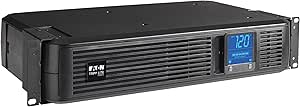 | Best for Flexible Rack-or-Tower Placement | Capacity: 1500VA / 900W | Form factor: 2U rack-mount or vertical tower | Outlets: 8 NEMA 5-15R | VIEW LATEST PRICE | See Our Full Breakdown |
| CyberPower PR1500LCD Sinewave UPS Battery Backup |  | Best Compact Sinewave Tower | Capacity: 1500VA / 1500W | Form factor: Mini-tower | Output voltage: 120V | VIEW LATEST PRICE | See Our Full Breakdown |
| uninterruptible power supplies for server | Capacity | Outlets | Form factor | Runtime |
|---|---|---|---|---|
| APC BX1500M Back-UPS Pro 1500V | 1500VA / 900W | 10 NEMA 5-15R: 5 battery backup and surge protected; 5 surge protected | — | Up to 68 minutes at 100W load |
| CyberPower CP1500AVRLCD3 1500V | 1500VA / 900W | 12 NEMA 5-15R: 6 battery backup and surge protected; 6 surge protected | Mini-tower | 3 minutes |
| Vertiv EDGE-1500IRT2UXL Vertiv | 1500VA / 1350W | 3 NEMA outlets | 2U rack/tower mount | — |
| APC Smart-UPS 1500VA Rack-Moun | 1500VA / 1000W | 6 × NEMA 5-15R | 2U rack mount | — |
| GOLDENMATE 1500VA/1000W Lithiu | 1500VA / 1000W | 8 NEMA 5-15P | — | — |
| CyberPower CP1500PFCRM2U PFC S | 1500 VA | 8 NEMA 5-15R | 2U rackmount | 3 minutes |
| UPS System 1550VA Line-Interac | 1550 VA / 1100 W | 6 IEC C13/C14 | Rack | — |
| APC Smart-UPS 1500VA/900W Line | 1500 VA / 900 W | 8 NEMA 5-15R; six battery-backed | Tower | — |
| APC Smart-UPS SMT1000RM2UC 2U | 1000 VA / 700 W | 6 NEMA 5-15R | 2U rackmount | — |
| GOLDENMATE 1000VA/800W Lithium | 1000 VA / 800 W | 8 | Tower | 30 minutes (listed) |
| CyberPower OR2200PFCRT2U PFC S | 2000VA / 1540W | 8: 2 NEMA 5-20R and 6 NEMA 5-15R | 2U rack / tower | Approximately 4 minutes |
| Eaton Tripp Lite OMNI1500LCDT | 1500VA / 810W | 10 | — | — |
| Eaton Tripp Lite SMART1500LCD | 1500VA / 900W | 8 NEMA 5-15R | 2U rack-mount or vertical tower | 4 minutes |
| CyberPower PR1500LCD Sinewave | 1500VA / 1500W | 8 NEMA 5-15R | Mini-tower | 4 minutes |
More Details on Our Top Picks
APC BX1500M Back-UPS Pro 1500VA/900W Battery Backup and Surge Protector
The APC BX1500M fits a small server corner where the priority is keeping a modest load powered long enough to ride out brief interruptions or shut down cleanly. Its AVR corrects some voltage swings without using battery charge, and the LCD reports load and estimated runtime—useful when deciding which devices belong on battery-backed outlets. Five outlets provide backup, while five more offer surge protection only. Compared with the APC Smart-UPS 1500VA Rack-Mount, this tower is less server-rack focused and has stepped-approximation output rather than pure sine wave, so compatibility deserves checking for sensitive server power supplies. Its replaceable battery helps with ownership over time, but the 68-minute figure applies only to a 100W load; heavier server loads will have much less runtime.
Pros:- AVR corrects voltage fluctuations without drawing on battery power.
- LCD shows load, input voltage, battery charge, and estimated runtime.
- Five battery-backed outlets plus five surge-only outlets help separate critical gear from accessories.
- Replaceable internal battery supports continued use after battery wear.
Cons:- Stepped-approximation sine wave may not suit every server power supply.
- Runtime falls as connected load rises; the maximum stated runtime is tied to a 100W load.
- Tower design is less suited to a rack-centered server installation than the APC Smart-UPS rack model.
Best for: Home-lab owners and small-office operators protecting a low-to-moderate-wattage server, router, and switch who want an LCD and replaceable battery.
Not ideal for: Rack-based server operators or owners of equipment requiring pure sine wave output; the tower format and stepped waveform may not fit their installation or compatibility needs.
- Capacity:1500VA / 900W
- Outlets:10 NEMA 5-15R: 5 battery backup and surge protected; 5 surge protected
- Runtime:Up to 68 minutes at 100W load
- Voltage regulation:Automatic Voltage Regulation; stable 120V output
- Output waveform:Stepped approximation to a sine wave
- Display:LCD
- Data-line protection:Coaxial and Ethernet
- Replacement battery:APC APCRBC124
Our verdict“Choose the BX1500M for a small, carefully sized server setup that benefits from AVR and a replaceable battery, but skip it if your equipment requires pure sine wave output.”
CyberPower CP1500AVRLCD3 1500VA/900W LCD UPS Battery Backup
The CyberPower CP1500AVRLCD3 is a straightforward entry point for protecting a small server alongside network gear, especially when extra outlets and easy-to-read status information matter. It provides 12 outlets, with six on battery backup, and its color LCD makes power conditions easier to check than a basic indicator-light unit. AVR handles minor voltage fluctuations without switching to battery, while USB-A and USB-C ports add convenient charging for small devices. Against the APC BX1500M, it offers two more total outlets and newer charging ports, but both use simulated or stepped sine wave output, so neither is the safe default for equipment that specifically requires pure sine wave. The listed three-minute runtime is a key limitation for server use: treat this as a short-interruption and orderly-shutdown buffer, not extended backup.
Pros:- Twelve outlets, including six with battery backup and surge protection.
- Color LCD presents battery and power conditions at a glance.
- AVR corrects minor voltage fluctuations without switching to battery.
- USB-A and USB-C ports provide convenient charging for small devices.
Cons:- The listed runtime is only three minutes, limiting the time available for shutdown or outage response.
- Simulated sine wave output may not be compatible with every server power supply.
- Eight-hour battery charge time can mean a long wait before the unit is fully recharged.
Best for: First-time UPS buyers running a small server or NAS with a router and switch who want a clear LCD, AVR, and ample outlet count.
Not ideal for: Administrators who need several minutes of server runtime under a substantial load or whose equipment requires pure sine wave output.
- Capacity:1500VA / 900W
- Input voltage:120V
- Outlets:12 NEMA 5-15R: 6 battery backup and surge protected; 6 surge protected
- USB ports:1 Type-A and 1 Type-C
- Runtime:3 minutes
- Output waveform:Simulated sine wave
- Battery type:Lead acid
- Form factor:Mini-tower
Our verdict“Pick the CP1500AVRLCD3 for an easy-to-monitor, outlet-rich starter setup, but choose a longer-runtime or pure-sine-wave model for more demanding server protection.”
Vertiv EDGE-1500IRT2UXL Vertiv Edge UPS 1500VA 1350W 230V 2U Line Interactive AVR Tower/Rack Mount
For a server installation built around 230V power, the Vertiv EDGE-1500IRT2UXL brings a useful combination of 1350W output, line-interactive AVR, and rack-or-tower mounting. Its sine wave output on battery is a stronger fit for sensitive server equipment than the stepped or simulated waveforms of the APC BX1500M and CyberPower CP1500AVRLCD3. The rotatable LCD also keeps status readable when the unit changes orientation, and programmable outlets allow selected equipment to be managed separately. The tradeoff is capacity at the wall: this is a 230V model, not a direct substitute for the 120V APC Smart-UPS rack unit. Its stated five minutes at full load is also a short window, so I would pair it with a shutdown plan rather than expect it to sustain a server through a prolonged outage.
Pros:- 1350W output provides more wattage headroom than the 900W APC BX1500M and CyberPower CP1500AVRLCD3.
- Sine wave output on battery suits sensitive equipment better than simulated or stepped output.
- 2U rack-or-tower mounting supports more than one installation style.
- Rotatable LCD and three programmable outlets support practical monitoring and power distribution.
Cons:- 230V input and output limit compatibility with standard 120V server circuits.
- About five minutes of runtime at full load leaves little time for extended outage response.
- At approximately 20kg, installation and repositioning take more effort than with smaller tower units.
Best for: IT teams with compatible 230V server infrastructure that need a rack-or-tower UPS, sine wave battery output, and more wattage than the 900W desktop models.
Not ideal for: Buyers with 120V-only circuits, or operators who need extended full-load runtime and cannot arrange prompt server shutdown.
- Model:EDGE-1500IRT2UXL
- Input voltage:230V
- Capacity:1500VA / 1350W
- Form factor:2U rack/tower mount
- Runtime at full load:5 minutes
- Outlets:3 NEMA outlets
- Battery cell type:Lithium ion
- Weight:20kg
Our verdict“Choose this Vertiv when your server environment uses 230V and needs sine wave output in a flexible 2U chassis, but not when 120V compatibility or long full-load runtime is required.”
APC Smart-UPS 1500VA Rack-Mount UPS with SmartConnect, 1000W, 120V
The APC Smart-UPS SMT1500RM2UC is the most server-oriented 120V choice in this group: its 2U rack form, 1000W output, and pure sine wave battery output suit a rack with servers, switches, or routers better than the tower-focused BX1500M and CP1500AVRLCD3. AVR helps manage high or low input voltage, while SmartConnect remote monitoring can give administrators visibility and notifications without being at the rack. Six outlets keep the layout focused, but offer less connection flexibility than the CyberPower’s 12 total outlets. The tradeoffs are physical and service-related: it occupies 2U, and SmartConnect is offered as a six-month free trial for qualifying units purchased or registered after August 1, 2023. Buyers should check ongoing monitoring terms and rack depth before committing.
Pros:- Pure sine wave output is well suited to sensitive server and network equipment.
- 2U rack-mount format and included support rails simplify rack integration.
- SmartConnect supports remote monitoring and automatic notifications.
- AVR helps correct high and low input voltage without relying on battery backup.
Cons:- Requires 2U of rack space and has substantial listed dimensions.
- Six outlets provide fewer connection points than the CyberPower CP1500AVRLCD3.
- SmartConnect is a six-month free trial for units purchased or registered after August 1, 2023.
Best for: Small-business IT administrators with a 120V rack who want pure sine wave backup, AVR, and remote visibility for servers and network equipment.
Not ideal for: Home-lab owners without rack space, users needing a large number of battery-backed outlets, or buyers who do not want to depend on a trial-based monitoring service.
- Model:SMT1500RM2UC
- Capacity:1500VA / 1000W
- Output voltage:120V
- Outlets:6 × NEMA 5-15R
- Form factor:2U rack mount
- Waveform:Pure sine wave
- Voltage regulation:Automatic Voltage Regulation
- Monitoring:APC SmartConnect remote monitoring
Our verdict“For a 120V server rack that needs pure sine wave output and remote monitoring, the APC Smart-UPS is the strongest fit here, provided its rack space and monitoring terms work for you.”
GOLDENMATE 1500VA/1000W Lithium UPS Battery Backup & Surge Protector
The GOLDENMATE stands apart from the lead-acid APC and CyberPower units with a LiFePO4 battery rated for more than 3,000 charge cycles and a stated lifespan of over 10 years. For a server owner prioritizing battery longevity and a compact installation, that chemistry may mean fewer battery replacements over time. Its pure sine wave output and under-10ms transfer time also suit sensitive equipment more directly than the stepped or simulated output of the BX1500M and CP1500AVRLCD3. The wall-mountable design can free floor or rack space, but it is not a conventional 2U rack UPS like the APC Smart-UPS. The listed data gives no runtime figure, so I would not size it for a server load without checking runtime at that wattage. Generator input compatibility may also be a problem.
Pros:- LiFePO4 battery is rated for over 3,000 charge cycles and more than 10 years of use.
- Pure sine wave output and transfer time under 10ms suit sensitive electronics.
- Wall-mountable design can save floor space compared with tower UPS units.
- Communication port supports automatic safe shutdown of connected devices.
Cons:- No runtime figure is provided, making server-load planning harder.
- May not recognize generator-supplied power as valid AC input.
- Wall-mount design is less direct to integrate into a standard server rack than the APC Smart-UPS.
Best for: Home-lab and small-office operators who want pure sine wave protection, a wall-mountable installation, and a long-cycle-life battery for a modest server or NAS.
Not ideal for: Rack administrators who need a standard 2U chassis, buyers who need a documented runtime for a defined server load, or users relying on generator-supplied AC.
- Capacity:1500VA / 1000W
- Battery type:Lithium Iron Phosphate (LiFePO4)
- Output waveform:Pure sine wave
- Transfer time:Under 10ms
- Outlets:8 NEMA 5-15P
- USB ports:1 USB-C and 1 USB-A; 10W total
- Mounting:Wall-mounted
- Display:Intelligent LCD
Our verdict“Choose the GOLDENMATE for a space-conscious server or NAS setup where long-life LiFePO4 and pure sine wave output matter more than rack mounting or a clearly stated runtime.”
CyberPower CP1500PFCRM2U PFC Sinewave UPS Battery Backup
The CP1500PFCRM2U is the most rack-friendly choice here when cabinet depth is the constraint: its 10.5-inch chassis is far shorter than the APC SMT1000RM2UC. Sine-wave output suits servers with active PFC power supplies, while AVR can correct modest voltage swings without using battery capacity. Eight outlets also give a small rack room to connect multiple devices. The tradeoff is backup time: the listed three-minute runtime leaves little margin for a prolonged outage, so treat it as a bridge to shutdown or generator power rather than extended operation. Unlike the Eaton 5P1550GR, remote monitoring requires an optional card. I’d choose it for a compact, locally monitored rack, not for a site that needs long battery autonomy.
Pros:- Short 10.5-inch depth fits racks where deeper units such as the APC SMT1000RM2UC may not.
- Sine-wave output supports servers with active PFC power supplies.
- AVR corrects minor voltage fluctuations without drawing on the battery.
- Eight NEMA 5-15R outlets accommodate several connected devices.
Cons:- Listed runtime is only three minutes, limiting outage coverage.
- Remote monitoring requires an optional management or monitoring card.
- Lead-acid batteries need more frequent replacement than the long-cycle LiFePO4 battery in the GOLDENMATE 1000VA/800W.
Best for: Server-room operators with shallow or space-constrained racks who need sine-wave output and brief backup for orderly shutdown.
Not ideal for: Teams needing extended runtime or built-in remote monitoring, since the listed runtime is short and monitoring requires an optional card.
- Capacity:1500 VA
- Maximum power:1000 W
- Output wattage:600 W
- Form factor:2U rackmount
- Depth:10.5 in
- Outlets:8 NEMA 5-15R
- Runtime:3 minutes
- Battery and charge time:Lead acid; 8 hours
- Monitoring:Multifunction color LCD; remote monitoring requires optional card
Our verdict“Choose this CyberPower for a shallow rack and short shutdown coverage, but look elsewhere for built-in monitoring or longer runtime.”
UPS System 1550VA Line-Interactive (Out 230V AC / In 230V AC)
The Eaton 5P1550GR is the lineup’s clearest fit for a rack built around 230–240V equipment, with 1550 VA and 1100 W capacity plus six IEC outlets. That makes it a stronger match for compatible higher-voltage server and network installations than the 120V CyberPower CP1500PFCRM2U or APC SMC1500C; those models are not direct voltage substitutes. At full load, however, the stated four-minute runtime is also brief, so it is best viewed as protection for a controlled shutdown rather than sustained service. Its 42.7-pound weight adds installation effort, especially in a crowded rack. I’d shortlist it when the electrical standard and output capacity fit the existing infrastructure, but skip it for ordinary 120V racks or sites that need longer autonomy.
Pros:- 1550 VA and 1100 W capacity suit compatible loads that exceed the 700 W APC SMT1000RM2UC rating.
- Six IEC C13/C14 outlets fit equipment commonly used in higher-voltage rack installations.
- Rack form factor suits data-center and office equipment deployments.
- Five-year warranty duration is listed in the product data.
Cons:- Approximately four minutes of runtime at full load offers little time beyond shutdown procedures.
- At 42.7 pounds, installation is more demanding than with lighter tower models such as the APC SMC1500C.
- 230–240V input and output limit compatibility with standard 120V server setups.
Best for: IT teams with compatible 230–240V rack equipment that need up to 1100 W of line-interactive backup in an IEC-outlet format.
Not ideal for: Buyers with standard 120V servers or anyone needing long outage runtime; the voltage configuration and four-minute full-load runtime are poor matches.
- Capacity:1550 VA / 1100 W
- Input voltage:220 V AC
- Output voltage:240 V AC
- Outlets:6 IEC C13/C14
- Form factor:Rack
- Runtime at full load:Approximately 4 minutes
- Weight:42.7 lb
- Warranty:5 years
Our verdict“Pick the Eaton when your rack is built for 230–240V and needs its higher wattage capacity, not for a typical 120V server room.”
APC Smart-UPS 1500VA/900W Line Interactive UPS with SmartConnect, SMC1500C
The APC SMC1500C makes the most sense for a server or network stack that sits outside a rack and benefits from SmartConnect cloud monitoring. Its pure sine-wave output and AVR are a sound fit for sensitive IT equipment, while eight NEMA outlets offer more connection points than the six on the rackmount Eaton 5P1550GR. Six outlets are battery-backed, so check the load layout rather than assuming every connected device stays online during an outage. At 900 W, it falls short of the Eaton’s 1100 W capacity and the 1000 W CyberPower CP1500PFCRM2U maximum-power figure. The tower shape and 20.1 kg weight also make it less suitable for a rack or frequent relocation. Choose it for visibility and monitoring, not high-density loads.
Pros:- SmartConnect cloud monitoring supports remote status checks and notifications.
- Pure sine-wave output and AVR suit sensitive server and network equipment.
- Eight NEMA 5-15R outlets provide flexible connections, with six battery-backed.
- Intelligent battery management uses temperature-compensated charging.
Cons:- 900 W maximum output is limiting for higher-density server loads.
- Tower form factor is less suitable for rack installations than the 2U CyberPower CP1500PFCRM2U.
- At 20.1 kg, moving or positioning the unit can be cumbersome.
Best for: Small-office IT administrators running a tower-based server and network stack who want cloud status updates and remote visibility.
Not ideal for: Rack operators or buyers with loads above 900 W; this tower unit is heavy and offers less stated capacity than the Eaton 5P1550GR.
- Capacity:1500 VA / 900 W
- Input voltage:120 V
- Form factor:Tower
- Outlets:8 NEMA 5-15R; six battery-backed
- Output waveform:Pure sine wave
- Monitoring:SmartConnect cloud monitoring
- Weight:20.1 kg
- Warranty:2-year repair/replace and 2-year battery
Our verdict“Choose the SMC1500C for cloud-visible tower deployments with moderate loads, rather than for a dense rack or high-wattage server stack.”
APC Smart-UPS SMT1000RM2UC 2U Rack Back-UPS, 1000 VA, 6 NEMA 5-15R Outlets, SmartConnect, SmartSlot, AVR, LCD Screen, includes 16GB USB
For a rack that needs remote status and shutdown options, the APC SMT1000RM2UC brings SmartConnect Ethernet monitoring, USB and serial connections, and SmartSlot support in a 2U chassis. Its 700 W output is below the 900 W APC SMC1500C and 1100 W Eaton 5P1550GR, so I’d reserve it for a measured, moderate server load rather than a densely populated rack. The listing reports one hour 25 minutes at full load, unusually generous compared with the short full-load runtimes stated for several other units here; verify runtime against the actual load before planning around it. The substantial 55.78-pound weight makes rack installation a two-person or rail-planning job, and its 18.78-inch depth needs cabinet clearance. The bundled USB drive is secondary to those fit and capacity decisions.
Pros:- SmartConnect Ethernet supports cloud-based remote monitoring.
- USB, serial, and optional Network Management Card support provide shutdown-management flexibility.
- Pure sine-wave output and AVR suit sensitive server equipment.
- Listed full-load runtime is longer than the short full-load figures given for the Eaton 5P1550GR and CyberPower CP1500PFCRM2U.
Cons:- 700 W capacity is lower than the APC SMC1500C and Eaton 5P1550GR.
- At 55.78 pounds, installation in a rack is physically demanding.
- 18.78-inch depth can rule it out for shallow cabinets.
Best for: Administrators with a compatible 120V rack who want Ethernet monitoring and multiple shutdown-management paths for a moderate server load.
Not ideal for: Teams with high-wattage racks, shallow cabinets, or limited installation support; it is rated at 700 W, nearly 19 inches deep, and weighs over 55 pounds.
- Capacity:1000 VA / 700 W
- Form factor:2U rackmount
- Outlets:6 NEMA 5-15R
- Input voltage:120 V AC
- Monitoring:SmartConnect Ethernet
- Runtime at full load:1 hour 25 minutes (listed)
- Dimensions:3.39 x 17.01 x 18.78 in
- Weight:55.78 lb
Our verdict“Choose this APC for managed 2U deployments with modest loads and enough rack depth and support for its heavy chassis.”
GOLDENMATE 1000VA/800W Lithium UPS Battery Backup and Surge Protector
The GOLDENMATE stands apart from the rack-focused APC SMT1000RM2UC and Eaton 5P1550GR with a LiFePO4 battery rated for more than 5,000 charge cycles and over ten years of battery life. That chemistry can appeal to a small server owner who wants a tower UPS built around long battery service life, rather than a standard lead-acid replacement cycle. Pure sine-wave output, an LCD, and eight backed-up outlets make it a practical fit for a compact server and network setup. Its stated 30-minute runtime should not be treated as a guarantee for an 800 W server load; actual time depends on connected equipment. It is also a tower unit, not a rack solution, and the cooling fan may run during heavy battery use. Check that the site’s power matches its 120V output before buying.
Pros:- LiFePO4 battery is rated for more than 5,000 charge cycles and over ten years of life.
- Pure sine-wave output is suited to sensitive server power supplies.
- Eight outlets provide battery backup and surge protection.
- LCD reports power and battery conditions, with automatic battery safeguards.
Cons:- Tower form factor is less suitable for server racks than the APC SMT1000RM2UC.
- Cooling fan may activate during heavy battery operation.
- The 30-minute runtime figure depends on load and should not be assumed at the full 800 W rating.
Best for: Small-office server owners who prefer a tower UPS with a long-cycle LiFePO4 battery and can confirm their equipment’s load and voltage needs.
Not ideal for: Rack-based deployments or buyers who need quiet operation under heavy battery use; this tower’s fan may activate and it does not mount in a 2U rack.
- Capacity:1000 VA / 800 W
- Battery type:Lithium iron phosphate (LiFePO4)
- Battery life:Over 10 years
- Charge cycles:More than 5,000
- Form factor:Tower
- Outlets:8
- Output:120 V; pure sine wave
- Runtime:30 minutes (listed)
- Battery charge time:10 hours
Our verdict“Pick the GOLDENMATE for a tower-based server setup where long-cycle battery chemistry matters more than rack mounting or fan-free operation.”
CyberPower OR2200PFCRT2U PFC Sinewave UPS Battery Backup
For a server rack that needs more headroom than a 1500VA unit provides, I’d shortlist the OR2200PFCRT2U. Its 2000VA / 1540W capacity and PFC-compatible sinewave output suit active-PFC server power supplies, while AVR can correct modest voltage swings without using battery capacity. The rotatable LCD makes rack or tower placement easier to monitor, and PowerPanel Business Edition adds remote monitoring and control. Compared with the CyberPower CP1500PFCRM2U, this model offers higher stated capacity, but its listed runtime is still only about four minutes, so it’s mainly a bridge to a controlled shutdown or generator. Its 2U footprint also demands rack space, and lead-acid batteries add periodic replacement work. I’d choose it for load capacity and monitoring, not extended outage coverage.
Pros:- 2000VA / 1540W capacity gives it more load headroom than the 1500VA options here.
- PFC sinewave output is suited to active-PFC server power supplies.
- AVR corrects minor voltage fluctuations without switching to battery.
- Rotatable LCD and included PowerPanel Business Edition support local and remote monitoring.
Cons:- Approximately four minutes of runtime limits outage coverage to brief interruptions or shutdown time.
- 2U rack/tower format takes dedicated space.
- Lead-acid batteries require replacement over the service life.
Best for: Small server rooms or rack owners whose combined server and network load needs more capacity than a 1500VA UPS and can shut down promptly during an outage.
Not ideal for: Operators who need long battery runtime, or buyers without 2U rack space or a suitable tower location.
- Capacity:2000VA / 1540W
- Form factor:2U rack / tower
- Topology:Line interactive
- Waveform:PFC sinewave
- Outlets:8: 2 NEMA 5-20R and 6 NEMA 5-15R
- Input:NEMA 5-20P, 10-foot cord
- Runtime:Approximately 4 minutes
- Surge protection:1470 joules
- Warranty:3 years, including batteries
Our verdict“Choose this 2U CyberPower when your server load calls for its higher capacity and you mainly need time for a controlled shutdown.”
Eaton Tripp Lite OMNI1500LCDT 1500VA/810W UPS with LCD and AVR
The OMNI1500LCDT is a practical fit when a small office needs battery backup for a modest server plus network equipment, and wants readable status information without a rack-specific chassis. Its LCD and AVR show operating conditions and correct voltage swings, while user-replaceable batteries make routine maintenance more manageable. Unlike the rack-ready Tripp Lite SMART1500LCD, this model is a desktop-style unit and supplies 810W rather than 900W, so I’d reserve it for lighter loads. Its stated average runtime of 7.5 minutes is longer than the four-minute figures listed for that SMART model and the CyberPower PR1500LCD, though actual runtime depends on the connected load. The tradeoffs are modest 650-joule surge protection and a substantial 24.6-pound weight.
Pros:- LCD reports power and battery conditions at a glance.
- AVR handles brownouts and overvoltage without routinely using battery power.
- User-replaceable battery cartridge simplifies maintenance.
- Ethernet and telephone/DSL line protection supplements outlet protection.
Cons:- 810W output capacity is lower than the 900W Tripp Lite SMART1500LCD.
- 650 joules of surge protection is modest compared with the CyberPower OR2200PFCRT2U.
- At 24.6 pounds, the unit can be awkward to place in a tight office.
Best for: Small-office administrators protecting a low-to-moderate-load server, router, and data lines who want an LCD and a replaceable battery.
Not ideal for: Rack operators needing a rack-mount UPS, or server owners whose equipment draws close to or above its 810W capacity.
- Capacity:1500VA / 810W
- Outlets:10
- Input voltage:120V AC
- Output voltage:120V AC
- Average runtime:7.5 minutes
- Surge protection:650 joules
- Dimensions:15.6 × 5.75 × 8 inches
- Weight:24.6 pounds
- Warranty:3-year limited manufacturer warranty
Our verdict“Pick the OMNI1500LCDT for a small office’s modest server load when an informative LCD and replaceable battery matter more than rack mounting or higher capacity.”
Eaton Tripp Lite SMART1500LCD 1500VA 900W Rack-Mount UPS
If installation flexibility matters as much as capacity, the SMART1500LCD can serve in a 2U rack or stand vertically as a tower. Its 900W output exceeds the OMNI1500LCDT’s 810W, and the LCD displays load, runtime, voltage, and battery status—useful information when deciding whether a server can stay online or should shut down. AVR covers a broad stated input range of 75V–147V, helping address voltage swings without drawing on the battery. However, the listed runtime is only four minutes, and its modified sinewave battery output is a less reassuring match for sensitive server power supplies than the PFC sinewave CyberPower OR2200PFCRT2U. Continuous fan noise is another concern for office placement. I’d favor it when flexible mounting and replaceable batteries outweigh quiet operation and longer runtime.
Pros:- Supports 2U rack-mount or vertical tower installation.
- 900W capacity is higher than the Tripp Lite OMNI1500LCDT’s 810W.
- AVR corrects input fluctuations across a stated 75V–147V range.
- LCD provides runtime, load, voltage, battery, and operating-mode information.
Cons:- Four-minute listed runtime provides little time during an extended outage.
- Modified sinewave output on battery may be a less suitable match for sensitive server power supplies than the OR2200PFCRT2U’s PFC sinewave.
- Fans run continuously at approximately 50 dBA.
Best for: IT administrators with a 900W-or-lower server load who may need to move the UPS between a 2U rack and a tower setup.
Not ideal for: Quiet offices or server owners whose equipment requires sinewave output on battery or more than a few minutes to shut down.
- Capacity:1500VA / 900W
- Form factor:2U rack-mount or vertical tower
- Outlets:8 NEMA 5-15R
- Input/output voltage:120V
- AVR range:Corrects 75V–147V input to 120V
- Runtime:4 minutes
- Surge protection:480 joules
- Communications:USB, RS-232, and RJ45 Ethernet surge protection up to 100 Mbps
- Weight:29 pounds
Our verdict“Choose the SMART1500LCD if you need 900W capacity and rack-or-tower flexibility, but skip it if fan noise or sinewave battery output is a priority.”
CyberPower PR1500LCD Sinewave UPS Battery Backup
For a server closet without room for a rack UPS, the PR1500LCD brings sinewave backup in a mini-tower format. Its sinewave output supports active-PFC and conventional power supplies, making it a more suitable battery-mode choice for many servers than the modified-sinewave Tripp Lite SMART1500LCD. AVR also handles minor voltage fluctuations without switching to battery. The detachable LCD is a useful distinction: it can be repositioned up to 4.5 feet away, so status remains visible even when the tower sits out of reach. Capacity is listed as 1500VA / 1500W, but the runtime figure is only four minutes, so I would not treat it as extended outage protection. Remote management also requires an optional card, unlike the OR2200PFCRT2U, which includes PowerPanel Business Edition software.
Pros:- Sinewave output supports active-PFC and conventional power supplies.
- Mini-tower format suits locations without dedicated rack space.
- Detachable LCD can be positioned up to 4.5 feet away for easier status checks.
- AVR corrects minor power fluctuations without using battery capacity.
Cons:- Four-minute listed runtime is suited mainly to brief interruptions or shutdown.
- Remote management requires a separately purchased RMCARD205.
- Sealed lead-acid batteries have an average life of about three years.
Best for: Small server-room operators who need a compact tower with sinewave battery output and want to place the status display where it is easy to see.
Not ideal for: Buyers who need built-in remote management, a rack-mount chassis, or substantial runtime during outages.
- Capacity:1500VA / 1500W
- Form factor:Mini-tower
- Output voltage:120V
- Outlets:8 NEMA 5-15R
- Waveform:Sinewave
- Runtime:4 minutes
- Battery:Sealed lead acid; approximately 3-year average life
- Input cord:6-foot NEMA 5-15P
- Warranty:3 years, including the battery
Our verdict“Choose the PR1500LCD for a compact server closet that needs sinewave backup and a movable display, not for long runtime or out-of-box remote management.”

How We Picked
I ranked these UPS systems for server use by looking first at usable wattage and output quality, since a high VA figure alone does not tell buyers whether a unit can support their load or suit power-factor-corrected equipment. I then weighed installation fit, including rack compatibility, height, and the flexibility to use a unit as a tower, along with management options such as LCD status and network-connected monitoring. Battery chemistry, replaceability, and the likely maintenance burden also affected placement.
The ranking favors models that balance server-relevant power, practical deployment, and useful monitoring over units that are better suited to general desktop backup. That is why the Vertiv EDGE-1500IRT2UXL sits above lower-wattage 1500VA models, while rack-focused APC and CyberPower units rank well for buyers whose equipment already lives in a cabinet. Simpler consumer-style models remain useful for small or standalone servers, but they rank lower when they offer less rack integration or fewer management features. Buyers should verify local voltage, plug and outlet type, rack depth, and runtime at their measured load before purchase.
Factors to Consider When Choosing Uninterruptible Power Supplies For Servers
A server UPS is a link in your shutdown and power-management plan, not a substitute for reliable electrical design. I’d decide what must stay online, how the system will shut down, and where the UPS will sit before comparing model labels. These choices help avoid buying excess capacity in the wrong form factor—or a unit that cannot support the server’s load.
Size by Watts and Runtime, Not VA Alone
VA describes apparent power, while the watt rating indicates the real power the UPS can supply to connected equipment. Check the server, storage, and network gear’s draw under normal operation, then leave headroom for load changes and startup behavior. Do not size only from the power supply’s maximum rating; it may be much higher than the equipment’s typical draw, but a peak load still matters. Runtime is a separate question: a UPS rated for a substantial load may offer only a short window at that load. Use the manufacturer’s runtime chart for the expected wattage, and decide whether you need time for an automatic shutdown or for staff to restore power. A unit with a higher VA label is not automatically the better match if its watt capacity or runtime is inadequate.
Match Output to Server Power Supplies
Many modern server power supplies use active power-factor correction, so output waveform and UPS compatibility deserve attention. Sine-wave output is a sensible preference for servers, particularly where the equipment maker specifies it or where a simulated waveform could cause switching or alarms. AVR can correct some voltage fluctuations without using battery power, which can reduce unnecessary battery cycling in locations with unstable mains voltage. Neither feature makes a UPS immune to every power problem, and the server manufacturer’s guidance should take priority. Avoid assuming that every product in a 1500VA class behaves the same under battery operation. Confirm the output type and supported load before connecting a production system.
Plan Rack Fit, Weight, and Airflow
A rack-mount label does not tell the whole installation story. Check the UPS’s height, depth, rail or mounting hardware, weight, and the rack’s available load capacity before ordering. A deep unit can block cable paths or prevent a rack door from closing, while a heavy battery assembly may need lower placement and suitable support. Leave room for ventilation and access to battery compartments, rather than filling every available rack unit. Tower models can work well beside a small server, but they may be awkward in a cabinet designed for fixed equipment. If the UPS will be shared by several devices, map outlets and cable lengths before deciding where it belongs.
Choose a Shutdown and Monitoring Plan
Backup power helps only if the equipment responds appropriately when the battery is running low. Check whether the UPS can communicate with your server through USB, serial, or a network management option, and confirm that your operating system or shutdown software supports that connection. Monitoring can report battery condition, load, and power events, but remote connectivity may involve setup, account configuration, or additional hardware. For a single server, a direct USB link may be sufficient; for several systems, coordinated shutdown and centralized alerts can matter more. Do not assume a SmartConnect label means every desired alert or control feature is included without configuration. Decide who will receive outage notices and who is responsible for testing shutdown behavior.
Compare Battery Service and Lifecycle Costs
UPS batteries age even when outages are rare, so a purchase decision should include service access and replacement planning. Traditional sealed lead-acid batteries are commonly replaceable, but replacement timing depends on temperature, usage, and the maker’s guidance. Lithium models may offer a different service life profile, yet the buyer should confirm whether the battery is user-replaceable, what support is available, and how warranty coverage applies. Hot, poorly ventilated spaces can shorten battery life regardless of chemistry. A lower-maintenance design may be worthwhile in a remote site, while a standard replaceable pack may be easier for an IT team to service. Compare the expected ownership and service process, not just the initial feature list.
Separate Essential Loads From Nice-to-Have Loads
Connecting every device to battery backup can drain runtime without improving server continuity. Identify the equipment needed to keep services running or shut them down cleanly, such as storage, core networking, and the server itself. Monitors and nonessential peripherals usually do not need battery-backed outlets, though surge protection may still be useful. Some UPS models offer different outlet groups or programmable outlets, which can help preserve power for priority devices. Also check how many battery-backed outlets are available; the total outlet count may include surge-only connections. A smaller, carefully planned load can provide more shutdown time than a larger UPS burdened with equipment that can safely switch off.
Frequently Asked Questions
Is a 1500VA UPS enough for a server?
It may be, but the VA rating by itself cannot answer that. Compare the server’s real watt draw with the UPS’s watt limit, then check the runtime chart at that load. The models in this roundup span 810W to 1350W, despite several carrying a 1500VA label. Add storage and networking gear to the load estimate if they will share the UPS. If the server is expected to grow, leave headroom rather than running near the unit’s limit.
Should I choose a rack-mount UPS or a tower model for my server?
Choose based on where the equipment will live and whether the UPS can be safely supported there. A rack model keeps power protection inside the cabinet, but you must check rack height, depth, rails, and weight capacity. A tower unit can suit a small office server or a setup with no rack, though it may take floor or desk space and complicate cable routing. Some models support both orientations, which can help if the installation changes. Confirm that the required mounting hardware is included or available before committing.
Do I need sine-wave output for a server UPS?
Sine-wave output is a prudent choice for servers with active power-factor-corrected supplies, especially when the server maker recommends it. It can reduce the chance of compatibility issues when the UPS switches to battery, but it does not replace checking the UPS and server specifications. Compare the battery output type rather than relying on the product’s name or VA rating. If you are protecting a production system, treat output compatibility as a requirement to verify, not an assumption. The Vertiv and several CyberPower options in this lineup explicitly specify sine-wave output.
How much runtime should I plan for a server UPS?
Set the target around what the system needs to do during an outage. If the goal is a clean automatic shutdown, estimate the time for the server, storage, and operating system to close services and power down, then add a buffer. If you expect to ride through brief outages, check runtime at the actual combined load and account for battery aging. Runtime figures usually change sharply as load increases, so do not rely on an unloaded estimate. Test the shutdown process safely after installation rather than assuming the communication link works.
Are lithium UPS batteries a better choice for a server room?
Lithium can be attractive where battery service intervals, weight, or space are important, but it is not automatically the best fit for every server room. Confirm the model’s replacement procedure, service support, warranty terms, and battery availability before buying. Compare those details with the practical service arrangements for a lead-acid unit, especially if your team already maintains replacement packs. Temperature and ventilation still affect UPS operation and battery health. In this roundup, the GOLDENMATE lithium models offer a distinct battery option, while the APC, CyberPower, Vertiv, and Eaton choices serve buyers who may prefer more familiar service paths.
Conclusion
For a balanced server setup, I’d choose the Vertiv EDGE-1500IRT2UXL as the best overall because its 1350W capacity, sine-wave output, and rack-or-tower installation address several common deployment needs at once. The best value for a basic server or small office is the CyberPower CP1500AVRLCD3, provided its 900W limit and installation format fit the load. For a premium rack-focused setup, consider the APC Smart-UPS SMT1000RM2UC for its compact 2U format and management features; buyers needing more output should compare the larger rack models, including the CyberPower OR2200PFCRT2U. Beginners with one modest server may find a simpler LCD-equipped unit easier to deploy, but should verify shutdown communication before relying on it. For buyers prioritizing lithium batteries, the GOLDENMATE 1500VA/1000W is the specific option to investigate, with battery service and support checked in advance. Match your final choice to measured watt draw, runtime needs, rack fit, and the shutdown plan—not the VA number alone.