
Among these programming keyboards for developers, I’d name the SOLAKAKA A99 Pro the best overall for its near-full-size layout, wireless connection, and dedicated controls. The ProtoArc K310 Pro is a more restrained wireless choice, while the Logitech MX Keypad suits developers who want programmable shortcuts alongside a separate main keyboard. The biggest tradeoffs are layout and desk space, switch feel and noise, and whether a macro pad or ergonomic design solves a real need in your workflow. Continue reading for the full breakdown and guidance on matching a keyboard to your setup.

Get business pricing on monitors, keyboards and dev gear
- Business-only prices and quantity discounts
- Tax-exempt purchasing
- Multiple users, one account, clear invoices
Key Takeaways
- The A99 Pro is the strongest all-rounder in this lineup: its 96% layout retains a numpad and adds a knob and screen without taking up as much space as a full-size board.
- Macro pads serve a different job from typing keyboards: the VSD K1 Pro and Logitech MX Keypad add programmable controls, but neither replaces a complete keyboard.
- Layout choices shape daily coding more than flashy extras: compact models such as the RK R65 save desk space but omit keys some developers rely on for navigation or number entry.
- Wireless and Mac-specific options trade flexibility for fit: the ProtoArc K310 Pro and Apple Magic Keyboard target different setups, so connection needs and operating-system preferences matter.
- Specialized designs involve clear compromises: the Frixalox split board prioritizes ergonomics, while the AULA WIN68 HE emphasizes gaming-oriented Hall effect features rather than a conventional developer layout.
| SOLAKAKA A99 Pro 96% Wireless Mechanical Keyboard with LCD Screen and Metal Knob |  | Best for Multi-Device Developers | Layout: 96%, 97 keys | Connectivity: Bluetooth 5.0, 2.4 GHz wireless, USB-C wired | Switches: LEOBOG Star Vector; supports 3-pin and 5-pin hot-swap switches | VIEW LATEST PRICE | See Our Full Breakdown |
| VSD K1 Pro Programmable Macro Keyboard with 6 LCD Keys and 3 Knobs |  | Best for Macro-Heavy Workflows | Layout: QWERTY, 87 keys | Programmable controls: 6 customizable LCD keys, 3 knobs, switchable pages | Connectivity: USB-C wired | VIEW LATEST PRICE | See Our Full Breakdown |
| RK Royal Kludge R65 66-Key Wired Mechanical Gaming Keyboard |  | Best for QMK/VIA Customization | Layout: 66-key QWERTY | Connectivity: USB-C wired | Switches: Linear cream switches; hot-swap support for 3-pin and 5-pin switches | VIEW LATEST PRICE | See Our Full Breakdown |
| Redragon K521 Rainbow LED Gaming Keyboard | 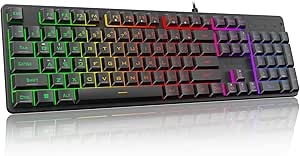 | Best Basic Full-Size Pick | Layout: QWERTY, 104 keys | Connectivity: Wired USB-A | Switch type: Mechanical-feeling | VIEW LATEST PRICE | See Our Full Breakdown |
| Redragon K686 PRO Wireless RGB Gasket Mechanical Gaming Keyboard |  | Best Wireless Compact Layout | Layout: QWERTY, 98 keys | Connectivity: USB-C, Bluetooth, 2.4 GHz wireless | Switches: Linear Red; hot-swap support for 3-pin and 5-pin switches | VIEW LATEST PRICE | See Our Full Breakdown |
| Logitech MX Keypad Programmable Macro Pad, Graphite |  | Best Developer Macro Pad | Key count: 9 customizable LCD keys | Connectivity: USB-C | Compatible operating systems: Windows and macOS | VIEW LATEST PRICE | See Our Full Breakdown |
| RK Royal Kludge R104 Full-Size Wired Mechanical Keyboard |  | Best Full-Size Quiet Mechanical Keyboard | Layout: Full-size QWERTY, 104 keys | Connectivity: USB-C wired | Switches: Pre-lubed Violet linear switches | VIEW LATEST PRICE | See Our Full Breakdown |
| GravaStar Mercury K1 Pro 75% Wireless Mechanical Gaming Keyboard |  | Best Compact Wireless Mechanical Keyboard | Layout: 75%, 79 keys | Switches: Hot-swappable GravaStar x Kailh Speedy Mint linear | Actuation force: 45 gf | VIEW LATEST PRICE | See Our Full Breakdown |
| AULA F2088 Retro Mechanical Gaming Keyboard with Blue Switches |  | Best for Developers Who Prefer Clicky Feedback | Keys: 104 | Connectivity: Wired USB | Switch type: Clicky blue mechanical switches | VIEW LATEST PRICE | See Our Full Breakdown |
| AULA WIN68 HE 68-Key Hall Effect Mechanical Gaming Keyboard |  | Best for Adjustable Key Actuation | Number of keys: 68 | Layout: 60% QWERTY | Switch type: Linear Hall Effect magnetic | VIEW LATEST PRICE | See Our Full Breakdown |
| Apple Magic Keyboard with Touch ID and Numeric Keypad, Black Keys |  | Best for Mac Developers Who Need a Number Pad | Layout: Full-size with document navigation controls, arrow keys, and numeric keypad | Connectivity: Wireless; USB-C charging | Authentication: Touch ID | VIEW LATEST PRICE | See Our Full Breakdown |
| ProtoArc K310 Pro Backlit Wireless Mechanical Keyboard |  | Best for Multi-Device Macro Workflows | Layout: Full-size QWERTY; 108 keys | Switches: Low-profile linear red | Connectivity: Bluetooth and 2.4 GHz USB receiver | VIEW LATEST PRICE | See Our Full Breakdown |
| Frixalox Wired Ergonomic Split Keyboard with RGB Backlight and Numpad |  | Best for Wrist Support and Wired Simplicity | Layout: Full-size QWERTY with number pad; 120 keys | Switch type: Membrane | Connection: Wired USB-A; USB-C adapter included | VIEW LATEST PRICE | See Our Full Breakdown |
| programming keyboards for developer | Layout | Connectivity | Compatibility | Switches |
|---|---|---|---|---|
| SOLAKAKA A99 Pro 96% Wireless | 96%, 97 keys | Bluetooth 5.0, 2.4 GHz wireless, USB-C wired | Windows, iOS, Mac, Android | LEOBOG Star Vector; supports 3-pin and 5-pin hot-swap switches |
| VSD K1 Pro Programmable Macro | QWERTY, 87 keys | USB-C wired | Windows 10 or later; macOS 11 Big Sur or later | Linear Red; hot-swap compatible with 3-pin and 5-pin switches |
| RK Royal Kludge R65 66-Key Wir | 66-key QWERTY | USB-C wired | — | Linear cream switches; hot-swap support for 3-pin and 5-pin switches |
| Redragon K521 Rainbow LED Gami | QWERTY, 104 keys | Wired USB-A | Windows XP and later, macOS; PS4, PS5, Xbox | — |
| Redragon K686 PRO Wireless RGB | QWERTY, 98 keys | USB-C, Bluetooth, 2.4 GHz wireless | Windows, macOS; PC, laptop, tablet | Linear Red; hot-swap support for 3-pin and 5-pin switches |
| Logitech MX Keypad Programmabl | — | USB-C | — | — |
| RK Royal Kludge R104 Full-Size | Full-size QWERTY, 104 keys | USB-C wired | — | Pre-lubed Violet linear switches |
| GravaStar Mercury K1 Pro 75% W | 75%, 79 keys | 2.4 GHz wireless, Bluetooth, and USB-C | — | Hot-swappable GravaStar x Kailh Speedy Mint linear |
| AULA F2088 Retro Mechanical Ga | QWERTY | Wired USB | Windows 7/8/10 and Mac | — |
| AULA WIN68 HE 68-Key Hall Effe | 60% QWERTY | Wired USB-C | Windows, gaming consoles, laptops, and PCs | — |
| Apple Magic Keyboard with Touc | Full-size with document navigation controls, arrow keys, and numeric keypad | Wireless; USB-C charging | Mac | — |
| ProtoArc K310 Pro Backlit Wire | Full-size QWERTY; 108 keys | Bluetooth and 2.4 GHz USB receiver | Windows, macOS, Android, iOS, and iPadOS | Low-profile linear red |
| Frixalox Wired Ergonomic Split | Full-size QWERTY with number pad; 120 keys | — | Windows, macOS, Chrome OS, and Linux | — |
More Details on Our Top Picks
SOLAKAKA A99 Pro 96% Wireless Mechanical Keyboard with LCD Screen and Metal Knob
The SOLAKAKA A99 Pro suits developers who want a compact workspace without giving up the numeric keypad. Its Bluetooth, 2.4 GHz, and USB-C connections let me switch between computers or use a wired setup, while memory for up to five devices adds flexibility that the wired RK Royal Kludge R65 lacks. The gasket structure, cushioning layers, and pre-lubricated stabilizers are designed for a softer typing feel during long coding sessions, and hot-swap support makes switch changes accessible without soldering.
The LCD screen and metal knob offer quick access to settings, but they are extras rather than developer essentials. The programmable web driver requires a wired connection, which limits customization while the keyboard is being used wirelessly. I’d also account for reduced battery life with RGB backlighting on. This is a stronger fit than the Redragon K521 for switch customization and wireless work, though it takes more setup and has more features to manage.
Pros:- Three connection modes and memory for up to five devices support flexible desk setups.
- 96% layout retains a numeric keypad while taking up less space than a full-size board.
- Hot-swap sockets accept 3-pin and 5-pin switches without soldering.
- Gasket structure, cushioning layers, and pre-lubricated stabilizers are designed for a softer typing feel.
Cons:- The web driver requires a wired connection for programming.
- RGB backlighting cuts the stated battery life to approximately 61 hours.
- The LCD screen and lighting features add complexity that may be unnecessary for straightforward coding.
Best for: Developers who switch among several computers, want a numeric keypad, and plan to customize switches without giving up wireless use.
Not ideal for: Developers who want a simple, wired keyboard or need to configure macros and settings without connecting a cable.
- Layout:96%, 97 keys
- Connectivity:Bluetooth 5.0, 2.4 GHz wireless, USB-C wired
- Switches:LEOBOG Star Vector; supports 3-pin and 5-pin hot-swap switches
- Keycaps:Double-shot PBT, OEM profile
- Battery:8000 mAh; approximately 61 hours with backlighting or 170 hours without
- Compatibility:Windows, iOS, Mac, Android
- Programming and controls:Programmable web driver, LCD screen, multifunction metal knob
- Lighting:RGB with 16 modes; side lighting with 5 modes
Our verdict“Choose the A99 Pro if you want a customizable, wireless coding keyboard with a numeric keypad and can accept wired-only driver access.”
VSD K1 Pro Programmable Macro Keyboard with 6 LCD Keys and 3 Knobs
The VSD K1 Pro is the most specialized option here for developers who trigger macros, scripts, or frequently repeated commands. Six customizable LCD keys can display their assigned functions, while three knobs and switchable pages provide more dedicated control than the single multifunction knob on the SOLAKAKA A99 Pro. That can make build tasks, media controls, or tool shortcuts easier to reach without taking over the main keyboard’s key layout.
Its 87-key QWERTY layout, gasket mount, and five-layer sound dampening make it a more complete typing keyboard than a standalone macro pad, and hot-swap support allows switch changes without soldering. The tradeoff is a USB-C-only connection: unlike the wireless A99 Pro and Redragon K686 PRO, it stays tethered to the desk. Some display and time settings also require software, and no USB-C-to-USB-C cable is included. I’d choose it for programmable controls, not for a low-maintenance setup.
Pros:- Six customizable LCD keys make assigned shortcuts easier to identify.
- Three knobs and switchable pages provide more dedicated control options than keyboards with one knob.
- Hot-swap support accepts 3-pin and 5-pin switches without soldering.
- Gasket mount and five-layer sound dampening are designed to soften typing noise and feel.
Cons:- USB-C wired connectivity offers less placement flexibility than the wireless A99 Pro or K686 PRO.
- Some screen and time settings require Windows or macOS software.
- Not water resistant, and a USB-C-to-USB-C cable is not included.
Best for: Developers who regularly run repeated commands or switch among shortcut sets and want labeled, dedicated controls on their main keyboard.
Not ideal for: Developers who need wireless placement, dislike installing companion software, or want a keyboard with water resistance.
- Layout:QWERTY, 87 keys
- Programmable controls:6 customizable LCD keys, 3 knobs, switchable pages
- Connectivity:USB-C wired
- Switches:Linear Red; hot-swap compatible with 3-pin and 5-pin switches
- Mount and dampening:Gasket mount with five-layer sound dampening
- Backlighting:RGB
- Compatibility:Windows 10 or later; macOS 11 Big Sur or later
- Water resistance:Not water resistant
Our verdict“Pick the K1 Pro if visible, programmable shortcuts and multiple knobs matter more to your coding workflow than wireless connectivity.”
RK Royal Kludge R65 66-Key Wired Mechanical Gaming Keyboard
For developers who want to shape their keymap around an editor or command-line workflow, the RK Royal Kludge R65 earns its place with QMK/VIA programming. That makes it a more direct fit for remapping than the SOLAKAKA A99 Pro, whose programmable web driver requires a wired connection. The R65 also combines hot-swap support with pre-lubed linear cream switches, so key assignments and switch feel can both be customized without soldering.
The compact 66-key layout leaves more desk room than the 87-key VSD K1 Pro, but that space saving means relying on layers or shortcuts for keys the larger board provides directly. Five layers of sound-absorbing material and double-shot PBT keycaps add practical comfort and durability for regular typing. Its other compromise is a fixed USB-C cable: unlike the wireless Redragon K686 PRO, it cannot move between desk setups without reconnecting. This is a focused pick for people who value programmable layouts over a number row of dedicated keys or wireless convenience.
Pros:- QMK/VIA support enables developer-focused key remapping.
- Hot-swap sockets support 3-pin and 5-pin switches without soldering.
- Compact 66-key layout frees desk space compared with the VSD K1 Pro.
- Five-layer sound absorption and double-shot PBT keycaps suit frequent typing.
Cons:- The 66-key layout omits many dedicated keys, so some workflows may depend on layers.
- USB-C wired connectivity lacks the flexibility of the wireless SOLAKAKA A99 Pro and Redragon K686 PRO.
- The compact layout is a poor fit for developers who frequently use a numeric keypad.
Best for: Developers who want QMK/VIA remapping, a compact footprint, and the option to change switches as their typing preferences evolve.
Not ideal for: Developers who rely on a dedicated numeric keypad, need wireless connectivity, or prefer having more keys available without layers.
- Layout:66-key QWERTY
- Connectivity:USB-C wired
- Switches:Linear cream switches; hot-swap support for 3-pin and 5-pin switches
- Mount and dampening:Gasket mount with five layers of sound-absorbing material
- Keycaps:Double-shot PBT, MDA profile
- Programmability:QMK/VIA
- Backlighting:RGB with more than 20 built-in modes
- Dimensions:12.6 × 4.6 × 1.6 in
Our verdict“Choose the R65 if programmable QMK/VIA keymaps and a small footprint matter more than dedicated keys or wireless use.”
Redragon K521 Rainbow LED Gaming Keyboard
The Redragon K521 is the straightforward choice for developers who want a full-size layout and familiar plug-and-play operation rather than switch customization or wireless features. Its 104 keys include 12 multimedia keys, and 19-key anti-ghosting supports simultaneous presses—useful when typing combinations or switching between commands. Compared with the RK Royal Kludge R65, it gives up QMK/VIA and hot-swappable mechanical switches but keeps a complete set of dedicated keys without relying on layers.
The main distinction is in the typing hardware: the K521 uses mechanical-feeling switches, not switches described as fully mechanical. That makes it a less suitable choice for someone seeking the more configurable feel of the R65 or Redragon K686 PRO. Its wired USB-A connection is simple, but it limits placement and the board does not offer the wireless options of those alternatives. I’d treat the adjustable rainbow lighting and console compatibility as useful extras, not reasons to choose it over a keyboard built around developer customization.
Pros:- Full-size 104-key layout keeps dedicated keys available without layers.
- Twelve multimedia keys offer direct control of common media functions.
- Nineteen-key anti-ghosting supports simultaneous key presses.
- Plug-and-play compatibility includes Windows, macOS, PS4, PS5, and Xbox.
Cons:- Mechanical-feeling switches are not described as fully mechanical.
- No hot-swap support or developer-focused QMK/VIA programming is listed.
- Wired USB-A connection offers less flexibility than the wireless SOLAKAKA A99 Pro and Redragon K686 PRO.
Best for: Developers who want a basic full-size layout with dedicated multimedia keys and simple wired connection across a computer or console.
Not ideal for: Developers seeking fully mechanical switches, hot-swap support, programmable keymaps, or wireless connectivity.
- Layout:QWERTY, 104 keys
- Connectivity:Wired USB-A
- Switch type:Mechanical-feeling
- Backlighting:Rainbow LED with adjustable lighting
- Anti-ghosting:19 keys
- Multimedia keys:12
- Compatibility:Windows XP and later, macOS; PS4, PS5, Xbox
- Plate material:ABS
Our verdict“Choose the K521 if you want a simple full-size wired board, but skip it if mechanical switch customization is a priority.”
Redragon K686 PRO Wireless RGB Gasket Mechanical Gaming Keyboard
The Redragon K686 PRO balances a compact layout with wireless freedom, making it a practical option for developers who want more keys than the 66-key RK Royal Kludge R65 but less bulk than a full-size board. Its 98-key layout retains a broad set of keys, while USB-C, Bluetooth, and 2.4 GHz connections support different desk and device setups. A knob controls backlight brightness and media playback, giving quick access to adjustments without adding the six LCD keys and three knobs found on the VSD K1 Pro.
Gasket mounting and five-layer noise dampening are designed to cushion typing, and hot-swap sockets allow 3-pin or 5-pin switch changes without soldering. The included Linear Red switches may not satisfy developers who prefer tactile feedback or audible clicks, so switch customization could be part of the plan. It also lacks water resistance, a limitation shared by the VSD K1 Pro. I’d favor this over the wired R65 for flexible placement, but choose the R65 if QMK/VIA keymap programming is the deciding feature.
Pros:- USB-C, Bluetooth, and 2.4 GHz connections support flexible desk and device setups.
- The 98-key layout keeps more dedicated keys than the 66-key RK Royal Kludge R65.
- Hot-swap sockets accept 3-pin and 5-pin switches without soldering.
- Gasket mounting and five-layer dampening are designed for a cushioned, quieter typing feel.
Cons:- Linear Red switches may not suit developers who prefer tactile or clicky feedback.
- Not water resistant.
- No QMK/VIA support is listed, unlike the RK Royal Kludge R65.
Best for: Developers who want a compact keyboard with wireless and wired options, a near-full set of keys, and hot-swap flexibility.
Not ideal for: Developers who need water resistance, QMK/VIA programming, or tactile or clicky switches out of the box.
- Layout:QWERTY, 98 keys
- Connectivity:USB-C, Bluetooth, 2.4 GHz wireless
- Switches:Linear Red; hot-swap support for 3-pin and 5-pin switches
- Construction:Gasket-mounted with five-layer noise dampening
- Backlighting:RGB
- Controls:Knob for backlight brightness and media playback
- Compatibility:Windows, macOS; PC, laptop, tablet
- Water resistance:Not water resistant
Our verdict“Pick the K686 PRO if you want a compact, hot-swappable keyboard with wireless flexibility and more dedicated keys than a 65% layout.”
Logitech MX Keypad Programmable Macro Pad, Graphite
Rather than replace a typing keyboard, the Logitech MX Keypad adds nine customizable LCD keys for actions you repeat in development tools: launching scripts, triggering commands, or calling up shortcuts. Its app-aware profiles can change with the active program, giving it a more workflow-specific role than the GravaStar Mercury K1 Pro, which is a full keyboard built around compact typing and flexible connections. Integrations for VS Code, IntelliJ, and GitHub Copilot make this a focused companion for developers who want quick access to tool actions without memorizing every shortcut.
The tradeoff is that its usefulness depends on software setup: customization requires Logi Options+, and some AI features need an internet connection and a third-party account. With only nine keys, it complements a keyboard rather than replacing one. Choose it for programmable workflow controls; skip it if you want a standalone typing upgrade.
Pros:- Nine LCD keys can launch apps, commands, macros, scripts, and prompts.
- App-aware profiles can adapt controls to the active development tool.
- Integrations include VS Code, IntelliJ, and GitHub Copilot.
- USB-C connection and Windows and macOS compatibility.
Cons:- Logi Options+ is required to customize the keys.
- Some AI features require an internet connection and a third-party account.
- Nine keys provide less typing functionality than a full keyboard.
Best for: Developers who already have a preferred keyboard and want app-specific shortcuts, scripts, or AI actions at their fingertips.
Not ideal for: Buyers seeking a complete keyboard or anyone who wants programmable controls without installing companion software.
- Key count:9 customizable LCD keys
- Connectivity:USB-C
- Compatible operating systems:Windows and macOS
- Compatible devices:Laptop and PC
- Additional features:Backlit display keys, hotkeys, and media keys
- Color:Graphite
- Enclosure material:Plastic
Our verdict“Choose this as a dedicated programmable companion for development workflows, not as your main typing keyboard.”
RK Royal Kludge R104 Full-Size Wired Mechanical Keyboard
The RK Royal Kludge R104 is the practical full-size choice for developers who want a number pad, dedicated arrow keys, and a conventional typing layout without a wireless setup. Its pre-lubed quiet linear switches and gasket mount are better suited to shared offices than the AULA F2088’s clicky blue switches, which produce more audible feedback. Double-shot PBT keycaps and full N-key rollover add durability and reliable recognition when many keys are pressed together.
The R104 also includes a Windows/macOS switch, useful for developers who move between operating systems. The cost of its complete layout is desk space: at 17.6 inches wide, it occupies substantially more room than compact options such as the GravaStar Mercury K1 Pro. It is wired, not water resistant, and its PCB accepts only 3-pin sleeve-style switches. Pick it for quieter, full-size everyday coding; skip it if compactness or switch-modification flexibility matters more.
Pros:- Quiet linear switches and a gasket mount help soften typing sound and vibration.
- Full-size 104-key layout includes a number pad.
- Dedicated switch supports Windows and macOS.
- Double-shot PBT keycaps and full N-key rollover.
Cons:- Full-size dimensions take more desk space than compact keyboards.
- Not water resistant.
- PCB compatibility is limited to 3-pin sleeve-style switches.
Best for: Developers who need a number pad and full navigation cluster, especially those typing in a shared workspace.
Not ideal for: Developers with limited desk space or buyers who want wireless use, water resistance, or broad switch compatibility.
- Layout:Full-size QWERTY, 104 keys
- Connectivity:USB-C wired
- Switches:Pre-lubed Violet linear switches
- Mount:Gasket mount
- Keycaps:Double-shot PBT
- Backlighting:Customizable RGB backlighting and side lighting
- Operating systems:Windows and macOS
- Dimensions:17.6 × 5.4 × 1.6 in
Our verdict“Choose the R104 if you want a quieter full-size mechanical board with a number pad and can spare the desk space.”
GravaStar Mercury K1 Pro 75% Wireless Mechanical Gaming Keyboard
The GravaStar Mercury K1 Pro suits developers who want a compact layout without giving up wireless options or a dedicated control knob. Its 75% arrangement keeps 79 keys in less desk space than the full-size RK Royal Kludge R104, while retaining more everyday controls than a small macro pad like the Logitech MX Keypad. Three connection modes—2.4 GHz, Bluetooth, and USB-C—make it easier to share the keyboard across a computer and other devices.
Hot-swappable linear switches and a gasket-mounted, foam-dampened build give buyers room to adapt the typing setup, though the low 1.2 mm pre-travel and 45 gf actuation are more specific preferences than a neutral fit for every typist. Battery life is stated at up to 470 hours with lighting off, but falls to up to 40 hours with lighting on. Its skeletal aluminum frame also makes a strong visual statement that may not suit a restrained office desk.
Pros:- Supports 2.4 GHz wireless, Bluetooth, and USB-C connections.
- Compact 75% layout includes a dedicated control knob.
- Hot-swappable linear switches offer customization options.
- Long stated battery life with lighting off.
Cons:- Stated battery life drops to up to 40 hours with lighting on.
- Skeletal aluminum styling may not suit every workspace.
- Compact layout omits the number pad found on the RK Royal Kludge R104.
Best for: Developers who want a space-saving mechanical keyboard that can switch between wired and wireless devices.
Not ideal for: Buyers who need a full-size number pad, prefer understated hardware, or plan to keep RGB lighting on for long stretches between charges.
- Layout:75%, 79 keys
- Switches:Hot-swappable GravaStar x Kailh Speedy Mint linear
- Actuation force:45 gf
- Pre-travel:1.2 mm
- Connectivity:2.4 GHz wireless, Bluetooth, and USB-C
- Battery life:Up to 470 hours with lighting off; up to 40 hours with lighting on
- Mount and dampening:Gasket-mounted FR4 plate with 5-layer foam structure
- Lighting:RGB, 16.8 million colors, 13 modes
Our verdict“Pick the Mercury K1 Pro for compact multi-device use and switch customization, provided its styling and battery tradeoffs suit your desk habits.”
AULA F2088 Retro Mechanical Gaming Keyboard with Blue Switches
The AULA F2088 takes a different approach from the quieter RK Royal Kludge R104: it uses clicky blue switches for audible feedback as you type. That can suit developers who like a distinct click at each keystroke, but it is a poor match for a shared office or calls where keyboard noise matters. Its 104-key layout gives it the number pad and full-size familiarity the compact GravaStar Mercury K1 Pro lacks.
Programmable keys, three customizable lighting profiles, a control knob, and full N-key rollover make it more configurable than a basic wired typing board. The metal top panel and removable magnetic wrist rest add useful desk features, though the retro round keycaps are a styling choice rather than a universal preference. Backlighting is rainbow with one color at a time, not individually selectable colors across the board. Choose it for a full-size, expressive wired setup; skip it if quiet typing is the priority.
Pros:- Clicky blue switches provide distinct audible and tactile feedback.
- Full-size 104-key layout includes a number pad.
- Programmable keys, three lighting profiles, and a media and lighting control knob.
- Removable magnetic wrist rest and full N-key rollover.
Cons:- Clicky switches can be noisy in shared workspaces.
- Backlighting supports rainbow effects with a single color at a time.
- Wired USB connectivity does not offer the device flexibility of the GravaStar Mercury K1 Pro.
Best for: Developers who prefer audible, clicky feedback and want a full-size wired keyboard with a number pad and wrist rest.
Not ideal for: People typing in shared offices, quiet rooms, or frequent calls where blue-switch noise could distract others.
- Keys:104
- Connectivity:Wired USB
- Switch type:Clicky blue mechanical switches
- Layout:QWERTY
- Backlighting:Rainbow, 19 modes, and 3 customizable profiles
- Top panel:Aluminum
- Wrist rest:Removable magnetic wrist rest
- Compatibility:Windows 7/8/10 and Mac
Our verdict“Choose the F2088 if you want clicky feedback and full-size controls, but avoid it where typing noise would be disruptive.”
AULA WIN68 HE 68-Key Hall Effect Mechanical Gaming Keyboard
The AULA WIN68 HE is the most specialized typing option in this group: its Hall Effect switches let users adjust actuation from 0.02 mm to 3.44 mm. That range gives developers control over how much key travel triggers an input, unlike the fixed linear switches in the GravaStar Mercury K1 Pro. Its 68-key layout retains arrow keys, making it more practical for navigating code than many especially small boards, while using less desk space than the full-size AULA F2088.
This is a wired USB-C keyboard with a detachable cable, not a wireless alternative. Its Windows-compatible web driver handles programmable settings, which limits configuration access for developers who work on macOS. The 8,000 Hz polling rate and 0.3 ms response time are gaming-oriented specifications; they do not replace the everyday benefits of a comfortable layout or well-matched actuation. Choose it for adjustable magnetic-switch behavior and compact navigation keys, but skip it if you need cross-platform software configuration.
Pros:- Adjustable Hall Effect actuation ranges from 0.02 mm to 3.44 mm.
- 68-key compact layout retains arrow keys and basic function controls.
- Detachable USB-C cable supports a tidier or more portable setup.
- Programmable features and customizable RGB lighting.
Cons:- Web driver configuration is compatible with Windows only.
- Settings require software or key combinations to configure.
- Wired-only connection lacks the multi-device flexibility of the GravaStar Mercury K1 Pro.
Best for: Windows-based developers who want to tune key actuation and keep arrow keys in a compact wired layout.
Not ideal for: Mac users who need software-based customization, or developers who require wireless connectivity or a full-size number pad.
- Number of keys:68
- Layout:60% QWERTY
- Switch type:Linear Hall Effect magnetic
- Actuation range:0.02–3.44 mm
- Polling rate:8,000 Hz
- Response time:0.3 ms
- Connectivity:Wired USB-C
- Compatibility:Windows, gaming consoles, laptops, and PCs
Our verdict“Choose the WIN68 HE for adjustable actuation in a compact Windows setup, not for cross-platform configuration or wireless work.”
Apple Magic Keyboard with Touch ID and Numeric Keypad, Black Keys
For a Mac-focused developer who spends time entering figures or moving through long documents, this keyboard pairs a full-size layout with a numeric keypad and dedicated navigation controls. Touch ID can speed up secure logins and purchases without reaching for a password, while automatic Mac pairing keeps setup simple. Compared with the ProtoArc K310 Pro, it gives up mechanical switches, backlighting, and programmable macros in exchange for a more straightforward Mac-integrated experience. Its wireless connection and battery life of about a month or more suit a tidy desk, though it still needs periodic charging. The main limitation is its narrow fit: Mac compatibility is the intended use, so developers who regularly switch among Windows, Linux, or mobile devices should look at the ProtoArc instead.
Pros:- Touch ID supports secure logins and purchases on Mac
- Full-size layout includes arrow keys, document navigation controls, and a numeric keypad
- Rechargeable battery lasts about a month or more between charges
- Pairs automatically with Mac and charges through USB-C
Cons:- Designed for Mac, limiting its appeal for mixed-platform desks
- Does not offer mechanical switches, backlighting, or programmable macros
- Wireless use requires periodic recharging
Best for: Mac developers who want a quiet, full-size wireless keyboard, Touch ID, and a number pad for spreadsheets or numeric input.
Not ideal for: Developers who need programmable macros, mechanical switches, or dependable use across Windows and Linux systems.
- Layout:Full-size with document navigation controls, arrow keys, and numeric keypad
- Connectivity:Wireless; USB-C charging
- Authentication:Touch ID
- Battery:Rechargeable lithium-ion; about a month or more between charges
- Compatibility:Mac
- Dimensions:17.6 × 5.04 × 0.75 inches
- Weight:1.36 pounds
- Color:Black keys
Our verdict“Choose it for a Mac-centered development desk where Touch ID and a numeric keypad matter more than mechanical feel or customization.”
ProtoArc K310 Pro Backlit Wireless Mechanical Keyboard
The K310 Pro is the most adaptable pick here for developers who move between computers or mobile devices: it connects to up to three devices over Bluetooth or a 2.4 GHz receiver and supports several major operating systems. Its low-profile linear red switches favor smooth, relatively quiet keypresses, while macro recording can put repeated commands within easier reach. Unlike the Mac-specific Apple Magic Keyboard, it offers cross-platform flexibility and mechanical switches; unlike the wired Frixalox split keyboard, it keeps the desk free of a permanent cable. That flexibility comes with setup caveats: macro customization requires a 2.4 GHz USB connection, cannot be detected through a multi-port hub, and Safari is unsupported for customization. Developers seeking a simple plug-and-play board may prefer the Apple, while those wanting extensive macro control should account for these connection limits.
Pros:- Connects to up to three devices using Bluetooth or a 2.4 GHz USB receiver
- Low-profile linear red switches provide smooth, quiet typing
- Macro recording and editing can simplify repeated coding workflows
- Aluminum top case, adjustable tilt legs, and adjustable backlighting
Cons:- Macro customization requires a 2.4 GHz USB connection
- Cannot be detected through a multi-port hub for customization
- Safari is not supported for macro customization
Best for: Developers who switch among a computer, tablet, and phone and want quiet linear mechanical typing plus programmable macros.
Not ideal for: Buyers who need hub-based macro setup, Safari-based customization, or a fully wired keyboard with no battery to manage.
- Layout:Full-size QWERTY; 108 keys
- Switches:Low-profile linear red
- Connectivity:Bluetooth and 2.4 GHz USB receiver
- Multi-device support:Up to 3 devices
- Backlighting:10 effects; adjustable speed and brightness
- Programmable keys:Macro recording and editing
- Power:USB-C rechargeable battery; standby up to 150 days
- Compatibility:Windows, macOS, Android, iOS, and iPadOS
- Dimensions:17.64 × 6.1 × 1.77 inches
Our verdict“Pick the K310 Pro if you want one cross-platform mechanical keyboard for multiple devices and can work around its macro-setup requirements.”
Frixalox Wired Ergonomic Split Keyboard with RGB Backlight and Numpad
The Frixalox suits developers who prioritize a broad typing surface and built-in wrist support over mechanical customization. Its split full-size layout, integrated wrist rest, and adjustable tilt legs offer a different desk posture from the compact, low-profile ProtoArc K310 Pro, while the number pad and 17 shortcut keys keep common controls close at hand. A wired USB connection avoids pairing and battery management, and the included USB-C adapter broadens connection options. The tradeoff is a membrane switch design rather than the ProtoArc’s linear mechanical switches, so it is less suited to buyers seeking a distinct mechanical feel or programmable macros. Its 17 shortcuts may also behave differently across operating systems. This is a practical comfort-focused choice, but its 9.4-inch depth takes substantial desk space.
Pros:- Split layout includes an integrated wrist rest and adjustable tilt legs
- Full-size layout provides a number pad and 17 dedicated shortcuts
- Wired plug-and-play connection avoids wireless pairing and battery upkeep
- Works with Windows, macOS, Chrome OS, and Linux
Cons:- Membrane switches lack the mechanical feel and customization available on the ProtoArc K310 Pro
- Its 9.4-inch depth can crowd smaller desks
- Shortcut functionality may vary by operating system, and it is not compatible with PS5 or Xbox
Best for: Developers who type for long sessions at a fixed workstation and want an integrated wrist rest, full-size keys, and a wired connection.
Not ideal for: Developers with limited desk depth, those seeking mechanical switches or macro programming, and users who need PS5 or Xbox compatibility.
- Layout:Full-size QWERTY with number pad; 120 keys
- Switch type:Membrane
- Connection:Wired USB-A; USB-C adapter included
- Cable length:5.6 feet
- Shortcuts:17 multimedia and function shortcut keys
- Lighting:RGB with 17 effects and 5 brightness levels
- Additional features:Integrated wrist rest, adjustable tilt legs, and water resistance
- Compatibility:Windows, macOS, Chrome OS, and Linux
- Dimensions:17.1 × 9.4 × 1.1 inches
Our verdict“Choose the Frixalox for a spacious, wired development station where wrist support matters more than mechanical switches or compact sizing.”

How We Picked
I compared the 13 keyboards by how well each supports common developer workflows: extended typing, navigation through code, shortcut use, and access to number keys. Layout, connectivity, programmability, switch or typing style, and practical desk fit mattered more than gaming-focused lighting or novelty features. I also weighed whether a product is a complete typing keyboard or an add-on macro pad, since those serve different needs and should not be treated as direct substitutes.
The ranking favors versatility for everyday coding, followed by useful features and fewer workflow compromises. That puts the SOLAKAKA A99 Pro first for combining a compact footprint with a numpad and extra controls. Dedicated macro pads rank as workflow supplements, while small, gaming-first, or highly specialized boards rank lower for general development because their layouts or feature priorities suit narrower use cases. I also account for buyer fit: the right pick depends on operating system, desk space, noise tolerance, and whether a standard layout is necessary.
Factors to Consider When Choosing Programming Keyboards For Developers
Before choosing, I’d start with the parts of your workday a keyboard must support, not the feature list on the box. These broader tradeoffs can prevent a compact board, macro pad, or specialty layout from becoming an awkward fit.
Choose a Layout Around Your Coding Habits
A smaller keyboard can free room for a mouse or notebooks, but removing keys shifts work onto layers or shortcuts. Think about whether you use a numpad for data, dedicated arrow keys for code navigation, or function keys for debugging tools. Developers who switch between coding and spreadsheets may find a 96% or full-size layout less disruptive than a compact board. A common mistake is choosing the smallest footprint first and only later noticing that essential keys are missing. If you rarely use the numpad, compact layouts can make sense; if you use it daily, saving a little desk space may not be worth the adjustment.
Treat Macro Controls as a Supplement
Macro keys can launch applications, paste repeated snippets, or trigger multi-step actions, but their usefulness depends on software support and how often those actions recur. Before buying a separate pad, list a few tasks you repeat enough to justify assigning dedicated controls. Check whether the software can store profiles and whether those profiles work across your computer and applications. A frequent mistake is assuming a macro pad will make every coding workflow faster; many programming actions already have strong shortcuts in the editor. A separate device also occupies desk space and adds another configuration task, so it makes more sense when you have stable, repeatable commands.
Match Switch Feel and Noise to Your Workspace
Typing feel is personal, but your surroundings matter too: a loud keyboard can be distracting in a shared office or during calls. Mechanical boards offer a range of switch styles, while other designs may prioritize a quieter or more laptop-like typing experience. Do not assume that a gaming label tells you how comfortable a board will be during long coding sessions. If possible, check the switch type and whether the keyboard supports replacing or modifying switches before choosing. Also account for your own typing force and sound tolerance; a satisfying sound at home may be a poor fit for a quiet workplace.
Check Operating-System and Connection Fit
Wireless convenience can reduce cable clutter, but it brings practical questions about pairing, charging, and switching among devices. Wired models avoid battery upkeep and may be simpler for a fixed desk or a restricted work computer. Mac-focused keys or features can suit Apple users, yet they may feel less natural if you regularly move between macOS and Windows. Verify that the keyboard’s software, programmable functions, and key labels match the machines you actually use. Buying based on wireless capability alone can lead to extra setup friction if your work device limits software installation or Bluetooth pairing.
Look Beyond Features to Long-Term Practicality
Backlighting, screens, knobs, and custom profiles can be useful, but each adds complexity that may not improve everyday coding. Consider how easy it is to clean the board, replace keycaps or switches, and find support for its configuration software. Ergonomic split designs deserve a separate fit check: they may encourage a different hand position, but the layout can take time to learn and may not suit every desk or workflow. A common buying mistake is paying attention to a long feature list while overlooking maintenance and setup. Choose extras only when they answer a specific problem you already have.
Decide Whether You Need One Keyboard or Two Devices
A full typing keyboard and a macro pad solve different problems, so comparing them as if they were alternatives can lead to the wrong purchase. If you need a main keyboard, prioritize layout, comfort, and reliable access to coding and navigation keys. If your current board already works well, a dedicated macro pad may add controls without forcing you to relearn your typing layout. Some desks can accommodate both, but others cannot spare the space or USB connections. Set the role of the device before comparing features: replacement, companion, or specialized workstation tool.
Frequently Asked Questions
Should I choose a compact keyboard or keep a numpad for programming?
I’d base this on your actual number-entry and navigation habits rather than on the idea that smaller is always better. A compact model saves desk space, but missing keys can require layers or changes to your shortcuts. If you regularly work with numeric data, a numpad may be worth keeping through a 96% or full-size layout. Developers who mainly write code and rarely enter numbers can reclaim space with a smaller board. Think about the applications you use outside your editor too, since spreadsheet work can change the answer.
Is a macro pad a replacement for a programming keyboard?
No: the VSD K1 Pro and Logitech MX Keypad are better understood as companions to a main keyboard. They add programmable keys or controls for repeated actions, but they do not provide a complete set of typing and navigation keys. A macro pad makes sense when you can name specific tasks that would benefit from dedicated buttons. If you are buying your first keyboard, put your main typing needs first. You can add a macro device later if your workflow has repeatable actions that justify the extra hardware.
Is a wireless keyboard a good choice for a developer’s main workstation?
It can be, especially if you value a cleaner desk or move the keyboard between devices. The tradeoff is that wireless boards require attention to pairing, charging, and compatibility with your work computer. A wired model may be easier in a fixed setup, particularly if your employer restricts Bluetooth or configuration software. Compare the connection options with your actual computer policy before choosing. Wireless is a convenience, not a coding feature by itself.
Should I buy a gaming keyboard for coding?
A gaming-focused board can work well for programming if its layout, typing feel, and noise suit your work. Features such as RGB lighting or rapid-input technology may not improve code editing, so I would not treat them as a reason to choose a board on their own. Check whether it has the keys you use for navigation and whether its software is practical on your operating system. If you also play games, one keyboard can serve both roles; if not, a simpler typing-focused option may better match your needs. The right choice comes down to useful controls and comfort, not the label.
What should I check before buying an ergonomic split keyboard?
Confirm that the split layout can fit your desk and that you are willing to adapt to a different key arrangement. Ergonomic designs can change hand positioning, but they are not an automatic fix for discomfort, and preferences vary. Check where the numpad sits, how the keyboard connects, and whether the key layout matches the shortcuts you rely on. If you can, try a similar layout before committing, since adjustment time may affect your work. If you have persistent pain, keyboard choice is only one part of the picture and professional guidance may be appropriate.
Conclusion
For most developers who want one versatile board, I’d choose the SOLAKAKA A99 Pro as best overall for its 96% layout, numpad, and added controls. The Redragon K521 is my best-value-style pick for buyers seeking a straightforward wired option, while the GravaStar Mercury K1 Pro is the premium-leaning choice for those drawn to a more distinctive wireless mechanical board. Beginners who want a conventional layout can start with the RK Royal Kludge R104; Mac users who prefer Apple’s familiar design should look at the Magic Keyboard. For specialized needs, choose the VSD K1 Pro or Logitech MX Keypad as a macro companion, the Frixalox for a split ergonomic format, or the AULA WIN68 HE for Hall effect gaming features. If none of those specific needs apply, prioritize layout and typing comfort over extra controls.