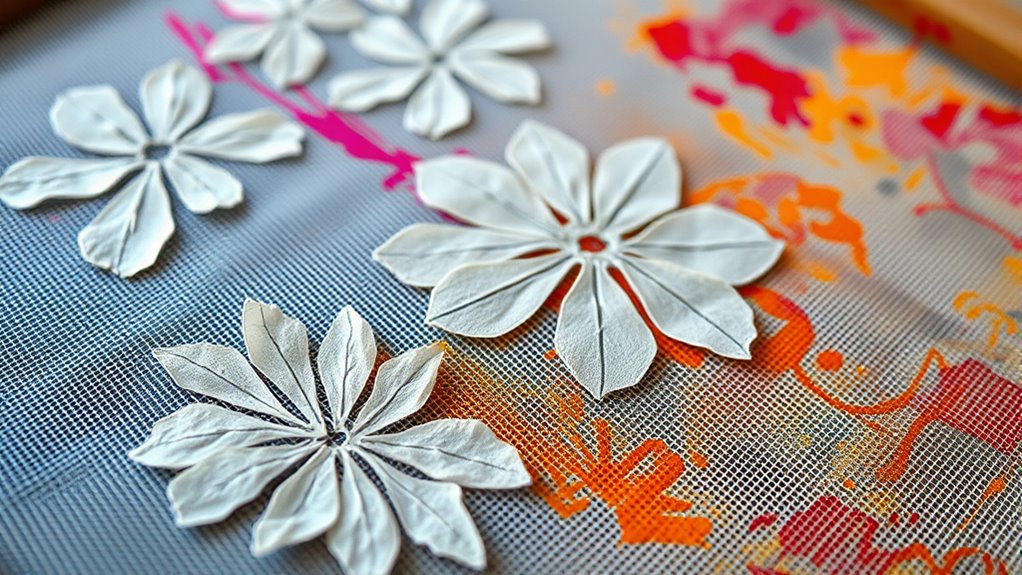

Screen printing with tissue paper stencils is an easy and affordable way to add detailed, textured designs on various surfaces like fabric, paper, or wood. You can experiment with different ink colors, layering for complex effects, and creating unique textures using tissue paper’s thin or crumpled qualities. By understanding ink behaviors and applying techniques like layering or embossing, you can achieve professional-looking results. Keep exploring to discover tips that will help you master this creative process.
Key Takeaways
- Tissue paper stencils are an affordable, detailed option for screen printing designs on various surfaces.
- Select vibrant ink colors, including metallic or neon, to make tissue paper stencils stand out.
- Layer tissue paper stencils to create textured, multi-dimensional effects in screen printing.
- Use proper ink application techniques, like sponging or brushing, to achieve desired textures and sharpness.
- Test on sample materials to ensure color accuracy and predictable results before full-screen printing.

Screen printing with tissue paper stencils is an easy and affordable way to create detailed designs on a variety of surfaces. It offers you the flexibility to experiment with different ink colors and achieve unique texture effects that make your artwork stand out. Because tissue paper is lightweight and easy to cut, you can craft intricate stencils without much hassle. This method is perfect whether you’re designing on fabric, paper, wood, or other materials, giving you a versatile tool for your creative projects.
Create detailed, textured designs easily on various surfaces with tissue paper stencils and vibrant inks.
When working with tissue paper stencils, selecting the right ink colors is vital. Bright, bold hues can make your designs pop, while softer shades lend a subtle, elegant touch. You can also layer different ink colors to produce complex color blends and gradients, adding depth to your work. Keep in mind that some inks may bleed or spread, so choosing high-quality, fabric or textile inks can help you maintain sharp, vibrant results. If you want to experiment further, using metallic or neon inks can add a striking effect, elevating your design from simple to eye-catching.
Texture effects are another exciting aspect of tissue paper stenciling. Because tissue paper is thin, it allows you to create subtle, textured impressions on your surface. For example, you can crumple the tissue slightly before applying it to add a distressed, vintage look or layer multiple stencils to create a raised, textured feel. When applying the ink, you can manipulate the pressure or use sponges and brushes to add variety to the texture. This technique enables you to produce a tactile quality that enhances your piece’s visual interest.
Another way to enhance texture effects is by experimenting with different types of inks and application methods. Using puff inks or embossing powders can give your design a three-dimensional feel. Similarly, varying the amount of ink applied or the pressure during printing can result in different textures, from smooth and flat to heavily textured. The key is to test your materials on spare surfaces first, so you understand how your chosen ink colors and texture effects will behave. This preparation helps you achieve professional-looking results without surprises.
Additionally, understanding the importance of color accuracy can help you select inks that match your intended palette and produce consistent results across projects.
Frequently Asked Questions
Can Tissue Paper Stencils Be Reused for Multiple Prints?
Yes, tissue paper stencils can be reused for multiple prints if you handle them carefully. While tissue paper durability varies, you can make them more reusable by applying a light spray of adhesive or sealing them with a clear spray. Keep in mind, though, they aren’t as durable as reusable stencils made from sturdier materials. With gentle use and proper care, you can extend their life and enjoy several prints.
What Types of Fabric Work Best With Tissue Paper Stencils?
Imagine your fabric as a welcoming dance floor for your stencil’s delicate steps. You’ll find that cotton, linen, and polyester blend fabrics are great partners, offering ideal fabric compatibility and easy stencil adhesion. These materials hold your design steady, allowing your ink to glide smoothly. Steer clear of slippery silk or stretchy knits—they resist stencil adhesion, making your design dance awkwardly. Choose fabrics that embrace your stencil’s gentle touch perfectly.
How Do You Prevent Tissue Paper From Tearing During Stencil Application?
To prevent tissue tearing and guarantee stencil durability, handle the tissue paper gently and avoid stretching it during application. Use a low-tack adhesive spray or painter’s tape to secure the stencil firmly without pulling. Keep your workspace smooth and free of debris, and work slowly when applying the tissue. These steps help maintain the integrity of the tissue, reducing tearing and creating a cleaner, more durable stencil for your screen printing project.
Is Special Ink Necessary for Tissue Paper Stencil Screen Printing?
Think of your tissue paper stencil as a delicate butterfly; you don’t want to damage its wings. You don’t need special ink for tissue paper stencil screen printing, but ink compatibility is key. Use slow-drying, water-based inks to enhance stencil durability and prevent tearing. Regular screen printing inks work fine if they’re compatible, ensuring your design stays crisp and intact without sacrificing the tissue’s delicate structure.
How Long Does the Tissue Paper Stencil Last Before It Degrades?
Your tissue paper stencil typically lasts for about 1 to 3 uses before it begins to degrade. Its durability depends on factors like paper thickness and ink type. As you print, expect some tissue degradation, especially after multiple layers or prolonged exposure to moisture. To maximize stencil lifespan, handle the paper gently and avoid excessive ink or moisture, ensuring your stencil maintains its integrity through more prints.
Conclusion
Just like a master artist shaping their masterpiece with delicate strokes, your tissue paper stencils transform plain fabric into a canvas of possibility. With patience and creativity, you’ve unfastened a secret akin to Da Vinci’s own sketches—timeless and full of potential. So, keep experimenting and let your designs flow freely, knowing that each print is a story waiting to be told. Embrace the magic of your craft, and watch your ideas come vividly to life.