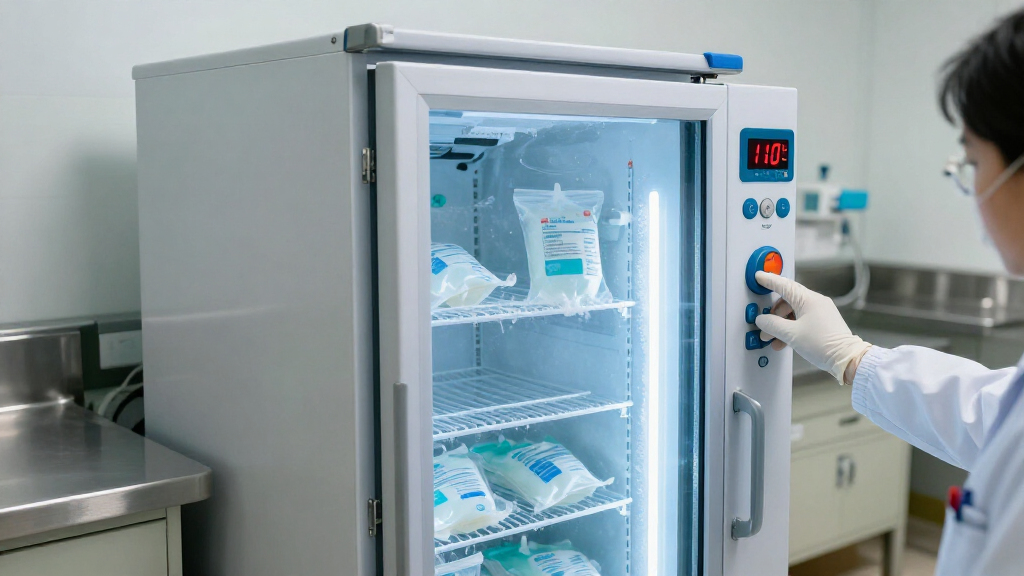

🔍 Read the full analysis: The 110 °C Alert In A Blood Bank's Plasma Freezer Hack on ThorstenMeyerAI.com

Get business pricing on monitors, keyboards and dev gear
- Business-only prices and quantity discounts
- Tax-exempt purchasing
- Multiple users, one account, clear invoices
TL;DR
France’s national blood service said a cybersecurity incident involving a refrigeration contractor affected cold-room controls at three sites on the night of Nov. 1–2, 2026. Reports that the controller was set to 110 °C describe a programmed target, not a measured temperature; EFS says alarms prompted staff to move the plasma, with no reported health impact or product loss.
France’s national blood service, the Établissement français du sang (EFS), said a cybersecurity incident involving a refrigeration contractor affected cold-room control systems at three sites overnight Nov. 1–2, 2026, where frozen plasma was stored for transfusions and medicine production. EFS said alarms detected abnormal settings, the products were moved as a precaution, and it had identified no health impact or loss of blood products.
In a statement issued Nov. 3 and reported by French media, EFS said the incident affected the supervision and control installations for cold rooms at three locations. The service said temperature and defrost thresholds had been raised to very high settings. It did not give a number or identify the refrigeration contractor. EFS said the contractor had experienced a cybersecurity incident and that EFS itself was not directly targeted, according to the reporting provided.
The figure 110 °C appeared in reporting by Le Canard enchaîné, which said rooms intended to operate at about −30 °C had been programmed to that target. That figure describes a controller setting, not a recorded room temperature. The supplied material does not report that any room or plasma reached 110 °C. EFS said its monitoring and alarm systems identified the anomalies quickly; an on-call technician noticed temperatures rising during the night, and the equipment was brought under control or switched off.
The affected rooms held plasma intended both for transfusion and for fractionation, a process used to make medicines from plasma. EFS said the contents were transferred to other installations as a precaution. The service said technical teams were working with France’s national cybersecurity agency, ANSSI, and the health ministry, and that temperature monitoring across its equipment had been increased.
Infographic 01 · 110 °C, explained
A setting, not a temperature
Someone raised the targets of plasma cold rooms at France’s blood service to +110 °C. The rooms never got there. What mattered was the alarm.
Frozen plasma has to stay at or below this line. The danger was thawing, not boiling. A few degrees too warm can already mean discarding bags.
- +110 °CThe programmed setpointTyped into the controller (Canard). Never reached, never measured.
- ~+50 °CHottest reported in the supermarket waveDefrost heaters forced on, same night (AFP, ZDFheute)
- −25 °CThe line that mattersFrozen plasma is stored at −25 °C or colder (EDQM guide via ISBT)
- −30 °CNormal operation of the EFS cold roomsAs reported by Le Canard enchaîné
Why the alarm won
- DetectionEFS monitoring and alarms flagged the anomaly quickly (EFS)
- A person on callAn on-call technician saw the temperature rise in the night (Canard)
- A plan BThe plasma was moved to other installations as a precaution (EFS)
Sources: EFS communiqué, 3 Nov 2026, via franceinfo · Le Canard enchaîné, as reported by Solutions Numériques · ISBT, citing the EDQM Guide · AFP via Al Jazeera, 4 Nov · ZDFheute, 3 Nov. The 110 °C and −30 °C figures come only from Le Canard enchaîné; the EFS gives no number.
Powered by Thorsten Meyer AI
Why Plasma Temperature Control Matters
Frozen plasma is a medical product that must remain within controlled storage conditions. The source material says European guidance, as summarised by the International Society of Blood Transfusion, calls for fresh frozen plasma to be stored at −25 °C or colder. A control-system change that causes a room to warm could put stored products at risk, even if the displayed target is never reached. That is why the reported intervention matters more than the dramatic number attached to the setting.
In this case, EFS reports that alarms and staff response limited the incident: the temperature rise was detected, and products were moved before any loss was reported. The service said there was no health impact. Those are EFS’s stated findings; the available information does not provide an independent technical account of the incident or a detailed audit of every affected product.
The event also highlights the operational exposure created when an outside contractor can remotely supervise or control refrigeration equipment. Remote maintenance can support essential infrastructure, but compromised access could affect temperature settings at facilities that store medically important materials. The reported outcome shows the value of monitoring and a response plan; it does not establish how the attacker gained access or whether the same weakness exists elsewhere.
Products Worth Considering

Samsung Odyssey G4 25-inch FHD Gaming Monitor

LG UltraGear 32GX850A-B 32-inch 4K UHD Glossy OLED Gaming Monitor

Samsung 34-Inch Odyssey G5 Ultra-Wide Curved Gaming Monitor
As an affiliate, we earn on qualifying purchases.
How the Contractor Accessed Cold Rooms
EFS is France’s national blood service, collecting donations and supplying hospitals. The incident involved control installations at three EFS sites, but the service did not publicly name the contractor or disclose all affected locations. Le Canard enchaîné identified the contractor as Coolworld, a company that rents and maintains refrigerated rooms and containers. That identification is attributed to the newspaper; the supplied material says Coolworld had not commented publicly.
The incident occurred during the same night as a second wave of attacks affecting supermarket refrigeration systems in multiple European countries. The source material reports that at least 11 countries were affected and that supermarket systems were also subjected to changes involving defrost cycles. No authority has linked those attacks to the EFS incident. Two groups describing themselves as pro-Russian later claimed the supermarket attacks in a video, but the claim was unverified, the posts were deleted, and no government attribution was reported. The overlap in timing is not evidence of a shared operation.
Separately, reports described 110 °C as a programmed target rather than a measured temperature. The supplied material cites reported temperatures of up to about 50 °C at some supermarket sites, but those reports concern different facilities and incidents. They do not show that EFS’s plasma rooms reached those temperatures.
““The EFS monitoring and alarm systems made it possible to identify these anomalies quickly.””
— Établissement français du sang, statement issued Nov. 3
What the Incident Record Leaves Open
The public information does not establish how the contractor’s system was accessed, who was responsible, or whether the incident involved stolen credentials, a software vulnerability, or another route. EFS has not named the contractor in its statement, and the attribution to Coolworld comes from Le Canard enchaîné rather than the service. The supplied material also says two of the three affected sites have not been publicly identified.
There is no reported measured temperature for the affected rooms, nor a public technical account of how long the settings were altered or how far temperatures rose before staff intervened. The 110 °C figure was a setpoint, not a measurement. EFS reports no product loss or health impact, but the available material does not include a detailed independent review of product-by-product temperature records.
The simultaneous supermarket attacks remain a separate, unresolved matter. Their timing overlaps with the EFS incident, but no government or authority cited in the source has connected them. Claims by groups describing themselves as pro-Russian remain unverified and do not establish responsibility.
EFS and ANSSI Continue Their Review
EFS said its technical teams were working with ANSSI and the health ministry after the incident. It also said temperature monitoring had been stepped up across its equipment. The next public details to watch for are whether investigators identify the access route, whether the contractor is formally named by EFS, and whether authorities publish findings about the affected control systems.
For now, the confirmed public account is limited: abnormal settings affected refrigeration controls at three sites, alarms and an on-call technician prompted a response, and plasma was moved. EFS reports no health impact and no loss of blood products. No timetable for a final technical report or further public update was provided in the source material.
Key Questions
Did the plasma freezer actually reach 110 °C?
No such measured temperature is reported. The 110 °C figure refers to a programmed controller target reported by Le Canard enchaîné, not a reading from the cold room.
Was any plasma lost or used to treat patients?
EFS said the contents were moved to other installations as a precaution and reported no loss of blood products and no health impact. The supplied information does not say that affected plasma was used to treat patients.
Who was responsible for the incident?
Responsibility has not been established in the available reporting. EFS described a cybersecurity incident involving a refrigeration contractor; the supplied material does not identify an attacker or explain how access was obtained.
Was this connected to the supermarket refrigeration attacks?
The incidents occurred on the same night, but no authority has linked them, according to the source material. Claims about responsibility for the supermarket attacks were unverified and do not establish a connection to EFS.
What happens next?
EFS said it was working with ANSSI and the health ministry and had increased monitoring. The public account does not give a date for a final investigation report or further findings.
Source: ThorstenMeyerAI.com