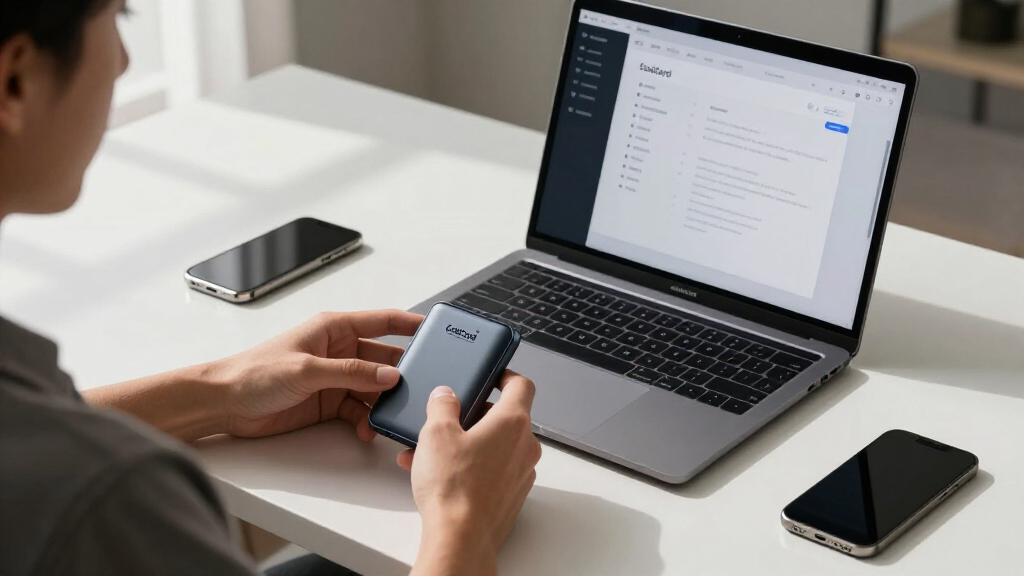

📊 Full opportunity report: The Time Machine Is Open: What The ColdCard Hack Tells Us About The New Security Era on ThorstenMeyerAI.com — validation score, market gap, and execution plan.

Get business pricing on monitors, keyboards and dev gear
- Business-only prices and quantity discounts
- Tax-exempt purchasing
- Multiple users, one account, clear invoices
TL;DR
A firmware flaw in a popular hardware wallet allowed attackers to drain over $70 million in Bitcoin, exposing vulnerabilities in hardware security. This incident signals a broader shift in digital security threats.
On 30 July 2023, over $70 million in Bitcoin was stolen from nearly 1,200 wallets through a previously unknown firmware bug in a leading hardware wallet. The breach was executed via a flaw that had gone undetected for over five years, despite the device’s reputation for security. This incident underscores significant vulnerabilities in hardware security and raises questions about the integrity of digital asset storage methods.
The breach involved a firmware update from March 2021, which inadvertently rerouted the wallet’s key generation process from a dedicated hardware random-number generator to a deterministic software fallback. This change reduced entropy from over 128 bits to approximately 40-72 bits, making private keys vulnerable to brute-force attacks. Attackers used offline tools to generate all possible keys within this smaller space, checked which addresses held funds, and systematically drained wallets, completing the theft in under an hour. The company behind the wallet, Coinkite, acknowledged that a human engineering error caused the flaw, despite having conducted an AI-assisted security review weeks prior.
There is no public evidence to suggest AI directly executed or discovered this attack, though some analysts speculate AI-assisted tooling might have played a role in the rapid identification and exploitation of the bug. The incident highlights the risks associated with firmware updates and the importance of entropy in cryptographic security, even in devices considered highly secure.
A firmware error shrank the pool that “random” keys were drawn from. A searchable pool is a drainable one. Here is the mechanism, conceptually — no operational detail.
A March 2021 firmware update rerouted key generation from the device’s hardware random-number generator to a deterministic software fallback — drawing seeds from a dramatically smaller universe.
Once the flaw is understood, the whole attack runs on an ordinary machine — no internet needed until the final move.
Implications for Hardware Wallet Security in the Digital Age
This incident demonstrates that even trusted hardware wallets are vulnerable to deep-seated firmware bugs, especially those affecting cryptographic entropy. It signals a potential shift in security paradigms, where software flaws in hardware devices can lead to massive financial losses without recourse. For users, this emphasizes the need to reevaluate reliance solely on hardware wallets for digital asset security and consider layered protections. For the industry, it underscores the urgency of rigorous, AI-assisted audits and ongoing security vetting of firmware updates to prevent future breaches of this scale.
hardware wallet security accessories
As an affiliate, we earn on qualifying purchases.
As an affiliate, we earn on qualifying purchases.
Background of Firmware Vulnerabilities in Hardware Wallets
Hardware wallets have long been regarded as the most secure method for storing cryptocurrencies, relying on private keys generated within isolated hardware environments. However, the March 2021 firmware update introduced an integration error that shifted key generation away from the device’s dedicated hardware RNG to a deterministic process, significantly reducing entropy. Despite prior security reviews, including AI-assisted audits, the flaw remained dormant for over five years. The incident marks a turning point, revealing how subtle software bugs can undermine hardware security and facilitate large-scale thefts.
"This is the sober reality of a new AI paradigm, where AI-assisted code review can surface latent bugs faster than seasoned experts."
— Rodolfo Novak, CEO of Coinkite
As an affiliate, we earn on qualifying purchases.
Unclear Aspects of the Attack’s Full Scope
It remains unknown whether AI tools were directly involved in discovering or executing the attack. There is no public proof linking AI to the breach, and analysts attribute the flaw primarily to human engineering error. Additionally, details about whether AI-assisted tooling played a role in the rapid identification of the vulnerability are speculative. The full extent of the attack chain and whether other devices or firmware versions are affected is still under investigation.
hardware wallet anti-tamper sticker
As an affiliate, we earn on qualifying purchases.
As an affiliate, we earn on qualifying purchases.
Next Steps for Industry and Users After the Breach
Security researchers and hardware manufacturers are likely to increase scrutiny of firmware updates, emphasizing entropy and randomness in cryptographic processes. Users should consider diversifying security measures, including hardware and software layers, and monitor for further disclosures about affected devices. Industry-wide, this event may accelerate development of AI-enhanced auditing tools and push for more transparent firmware vetting protocols. The incident also underscores the need for ongoing vigilance and rapid response frameworks for hardware security breaches.
cryptocurrency wallet backup device
As an affiliate, we earn on qualifying purchases.
As an affiliate, we earn on qualifying purchases.
Key Questions
Could this type of firmware bug happen to other hardware wallets?
Yes, any device relying on deterministic or software-based key generation could be vulnerable if similar bugs exist or are introduced in future updates. Ongoing security audits and rigorous testing are essential to prevent such flaws.
Is my Bitcoin safe if stored on a hardware wallet?
While hardware wallets are generally secure, this incident highlights that no system is infallible. Users should stay informed about firmware updates, use layered security practices, and consider diversification of storage methods.
Did AI play a role in discovering or executing the attack?
There is no public evidence that AI was directly involved. Analysts suggest AI-assisted tooling might have contributed to the rapid identification of the vulnerability, but this remains speculative.
What should users do now to protect their assets?
Users should review their device firmware, avoid installing unverified updates, and consider using multiple security layers, including hardware and software protections, to safeguard their holdings.
Source: ThorstenMeyerAI.com
Fall Picks
fall essentials
As an affiliate, we earn on qualifying purchases.