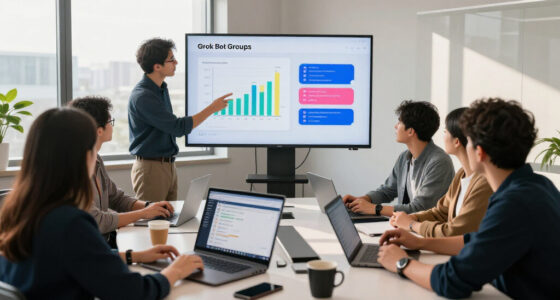
📊 Full opportunity report: Remote Employees’ Musculoskeletal Health: Essential Strength Tests on IdeaNavigator AI — validation score, market gap, and execution plan.
Prime for Young Adults — start your free trial
Fast free delivery, streaming and member deals for eligible 18–24 year olds.
Try it freeAs an affiliate, we earn on qualifying purchases.
TL;DR
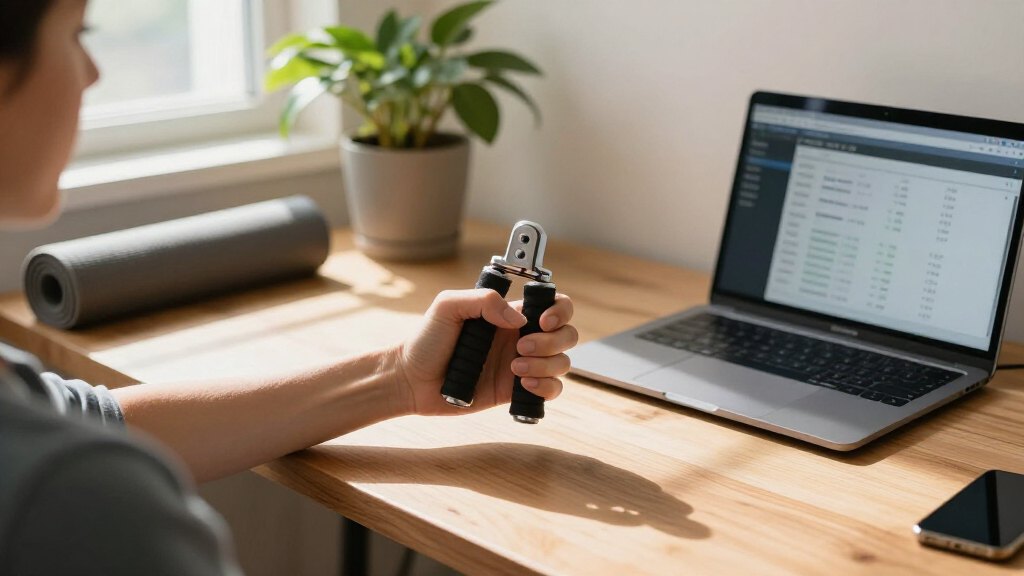
A new at-home musculoskeletal (MSK) strength assessment tool is being piloted for remote employees. It uses phone camera technology to identify early MSK decline, helping employers prevent costly health issues. The initiative aims to provide a scalable, privacy-safe screening method for large remote workforces.
Remote work strength tests are being developed and piloted as a proactive way for employers to identify early musculoskeletal (MSK) decline among remote employees. These assessments leverage smartphone camera technology to evaluate movement quality, posture, and mobility without requiring clinical visits or sensors. The initiative aims to address rising MSK health issues linked to sedentary remote work, which now accounts for a significant share of workplace health costs.
Employers, especially mid-to-large organizations and self-insured firms, are exploring the deployment of self-guided MSK assessments that employees can perform at home using their smartphone cameras. These tests, designed to take about 10 minutes, include activities such as sit-to-stand repetitions, shoulder and hip range-of-motion exercises, plank and wall-sit holds, and seated posture photos. The assessments utilize pose estimation algorithms to score movement quality and generate a personalized MSK risk profile.
The goal is to identify early signs of mobility decline or poor posture before they develop into costly clinical episodes, such as back pain or neck strain. The assessments also produce a short corrective routine and enable ongoing progress tracking. Employers will have access to a privacy-safe aggregate dashboard showing team-level MSK risk trends and engagement metrics, alongside a referral system for employees flagged as high risk to clinical MSK or physical therapy providers.
Initial pilots are planned with one or two employers, aiming to validate scoring accuracy, engagement rates, and employee willingness to participate. Success criteria include meaningful completion and retention rates over 60-90 days, correlation of camera-derived risk scores with validated self-report questionnaires, and at least one signed paid pilot agreement from an HR or benefits decision-maker.
Potential Impact on Remote Workforce Health Management
This development represents a shift toward proactive, scalable MSK health management for remote workers, a group increasingly vulnerable to sedentary-related issues. By enabling early detection of mobility and posture decline, employers can intervene before costly medical claims and lost productivity occur. The technology also offers a new data-driven approach for benefits programs, aligning with broader trends toward personalized, preventive healthcare in the workplace.
Since MSK problems are already a leading driver of employer health costs, especially in remote settings, this tool could significantly reduce long-term expenses. Additionally, it provides a privacy-conscious alternative to traditional clinical assessments, making it easier to implement at scale across distributed teams. If validated, this approach could reshape corporate wellness strategies and foster healthier remote work environments.
at-home musculoskeletal assessment phone app
As an affiliate, we earn on qualifying purchases.
As an affiliate, we earn on qualifying purchases.
Rising MSK Issues in Remote Work Environments
The shift to remote and hybrid work arrangements has led to a decline in incidental movement, such as walking or commuting, which historically contributed to maintaining musculoskeletal health. As a result, many remote employees experience increased neck, back, and posture-related problems, prompting employers to see rising medical claims and workday disruptions.
Current MSK management programs are largely reactive, focusing on treatment after pain or injury occurs. Experts and benefits leaders recognize the need for early screening tools that can be deployed remotely, leveraging advances in smartphone camera technology and pose estimation algorithms that have matured sufficiently for health applications.
Several startups and health tech firms are now exploring self-assessment platforms that can provide immediate feedback and risk stratification, with pilot programs expected within the next few months. These efforts are supported by the broader push for digital health solutions that enable preventive care outside traditional clinical settings.
“Using phone cameras for MSK assessment could revolutionize early detection and prevention in remote workforces.”
— an anonymous researcher
posture correction device for remote workers
As an affiliate, we earn on qualifying purchases.
As an affiliate, we earn on qualifying purchases.
Validation and Adoption Challenges for Remote MSK Tests
It is not yet clear how accurately the camera-based assessments will correlate with clinical evaluations or self-reported MSK symptoms. The success of pilot programs will depend on employee engagement, data privacy assurances, and the reliability of scoring algorithms. Further validation studies are needed to establish clinical efficacy and cost-effectiveness, and broader adoption will require overcoming organizational and technical hurdles.
As an affiliate, we earn on qualifying purchases.
Upcoming Pilot Deployments and Validation Studies
Within the next 3-6 months, pilot programs with initial employer partners are expected to launch, aiming to validate assessment scoring, engagement levels, and employee feedback. Results from these pilots will determine the feasibility of scaling the solution across larger remote workforces. Additionally, ongoing research will refine algorithms and establish correlations with clinical MSK assessments, paving the way for wider industry adoption.
As an affiliate, we earn on qualifying purchases.
Key Questions
How do remote MSK strength tests work?
Employees perform guided movements using their smartphone cameras, which capture their motion. The system analyzes posture, movement quality, and range-of-motion to generate a personalized MSK risk score and suggest corrective exercises.
Are these assessments private and secure?
Yes, the assessments are designed to be privacy-safe, with data processed locally on devices or anonymized before aggregation. Employers receive aggregate risk trends without access to individual video data.
Will this replace clinical MSK assessments?
No, these tools are intended as early screening and preventive measures. Employees flagged as high risk are referred to clinical providers for further evaluation and treatment.
When will these assessments be widely available?
Initial pilots are expected to run within the next 3-6 months, with broader deployment contingent on validation results and industry adoption efforts.
What are the benefits for employers?
Employers can proactively identify MSK issues, reduce long-term health costs, improve employee well-being, and demonstrate a commitment to innovative, preventive health strategies.
Source: IdeaNavigator AI
Fall yard work Picks
leaf blowers
As an affiliate, we earn on qualifying purchases.