
TL;DR
IPv6 zones in URLs, such as ‘%eth0’, are problematic because they are not supported by browsers and require awkward percent-encoding. Experts suggest removing or redesigning this feature to improve usability and security.
Experts and developers are warning that including IPv6 zones directly in URLs is a design flaw, as current standards and browsers do not support this feature properly, leading to usability and security concerns.
The issue stems from the way IPv6 link-local addresses incorporate zone identifiers, such as ‘%eth0’, to disambiguate addresses on multiple interfaces. While this is necessary at the OS level, embedding these zones into URLs introduces parsing errors and inconsistent behavior across platforms.
For example, URLs like ‘http://[fe80::4%eth0]:80’ cause errors in many programming languages and browsers because the ‘%’ character is reserved in URL syntax and must be percent-encoded as ‘%25’. Currently, the only workaround involves manually encoding these zones, which is error-prone and user-unfriendly.
Browsers, in particular, do not support IPv6 zones in URLs because it conflicts with the concept of the ‘origin’ in web security models. This lack of support complicates the adoption of IPv6 zones in web applications and can lead to broken links or security issues.
Why It Matters
This development is significant because it exposes a fundamental flaw in the current handling of IPv6 link-local addresses within web URLs. As IPv6 adoption increases, the inability to reliably include zone identifiers in URLs could hinder interoperability, complicate network configurations, and pose security risks.
Experts suggest that the industry needs to reconsider the necessity of embedding zones in URLs or develop standardized, browser-supported methods to handle them securely. Until then, developers must continue using awkward workarounds, risking errors and security vulnerabilities.

LIQ-Duo-IE, LinkIQ-Duo Cable, Wi-Fi, and Network Tester with Industrial Ethernet Adapter Kit
- Industrial Ethernet Testing: Tests EtherNet/IP, PROFINET, EtherCAT, and more
- Network Diagnostics: IPv4/IPv6 ping, switch info, VLAN, data rates
- PoE Verification: Detects PoE class, power, and load testing
As an affiliate, we earn on qualifying purchases.
As an affiliate, we earn on qualifying purchases.
Background
IPv6 was designed to replace IPv4, with features like link-local addresses that require zone identifiers for disambiguation. Currently, RFC 6874 specifies how to encode zones in URI literals, but practical support remains limited. This issue has become more visible as tools and frameworks, such as Go and nginx, struggle with the standard, often resulting in errors or inconsistent behavior.
Historically, URL syntax has not accommodated zone identifiers, and browsers have not adopted support, citing security and complexity concerns. The draft RFC 9844 attempts to address these issues but has not been widely implemented. As IPv6 deployment grows, the incompatibility between standards and implementations becomes a pressing concern.
“Including IPv6 zones in URLs is an edge case that the industry hasn’t handled well. The current workaround is clunky and error-prone, and browsers don’t support it.”
— Developer from Hacker News
“RFC 6874 provides a formal way to encode IPv6 zones, but actual implementation and support are still lacking across major platforms.”
— Internet standards expert
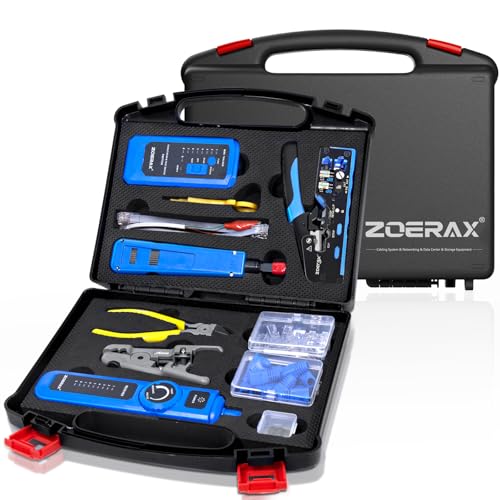
Professional Network Tool Kit, ZOERAX 14 in 1 – RJ45 Crimp Tool, Cat6 Pass Through Connectors and Boots, Cable Tester, Wire Stripper, Ethernet Punch Down Tool
- All-in-One Professional Kit: Sturdy case for easy transport and storage
- Complete Tool Set: Includes crimper, punch down, stripper, cutters, connectors
- Versatile Ethernet Crimper: Adjustable, compatible with pass-through and standard connectors
As an affiliate, we earn on qualifying purchases.
As an affiliate, we earn on qualifying purchases.
What Remains Unclear
It is still unclear whether future browser updates or standard revisions will fully support IPv6 zones in URLs, or if alternative solutions will be adopted by the industry to address this flaw.
As an affiliate, we earn on qualifying purchases.
What’s Next
Next steps include advocating for standardization efforts to improve support for IPv6 zones in URLs, and for developers to adopt best practices that avoid embedding zones directly in URLs until a robust solution exists. Monitoring browser and framework updates will be crucial.

TESMEN TLP-123A Network Cable Tester for RJ11 RJ45, Ethernet Wire Tool for CAT5/CAT5E/CAT6/CAT6A/CAT7/UTP&STP, LAN & TEL Continuity Test, Suitable for Cable Maintenance – Green
- Supports RJ45 and RJ11: Detects line connectivity and faults
- One-button operation: Simple and quick testing process
- Test speed adjustment: Customize testing speed for efficiency
As an affiliate, we earn on qualifying purchases.
As an affiliate, we earn on qualifying purchases.
Key Questions
Why are IPv6 zones included in URLs at all?
They are included to disambiguate link-local addresses that require interface identifiers, especially in local network contexts.
Can I safely include IPv6 zones in URLs now?
No, most browsers and frameworks do not support this feature properly, and doing so can cause errors or security issues.
What is the recommended workaround for using IPv6 link-local addresses?
Manually percent-encode the ‘%’ character as ‘%25’ in the address, but this remains a fragile solution until standards and support improve.
Will browsers support IPv6 zones in URLs in the future?
It is uncertain. Draft RFCs exist, but widespread support has not been implemented, and industry consensus is lacking.
Source: Hacker News