
Watermarks and laid paper have a rich history as tools for authenticating and securing documents. Originally handmade from rag fibers, they featured wire patterns and intricate symbols that indicated origin and quality. Over time, designs became more complex, showcasing both security features and artistic craftsmanship. These elements helped prevent counterfeiting and established reputation for paper makers. Continuing to explore this history reveals how technological and artistic advances shaped the evolution of paper security features.
Key Takeaways
- Watermarks and laid paper originated from handmade techniques to verify authenticity and origin of historical documents.
- Early watermarks served as signatures or maker marks, evolving into intricate designs for security and identification.
- The complexity of watermarks increased over time, incorporating detailed motifs and multi-tone images for enhanced security.
- Watermarks combined functional security features with artistic expression, reflecting technological progress in paper manufacturing.
- Today, watermarks and laid paper are valuable for authenticating historic documents and understanding craftsmanship and innovation.
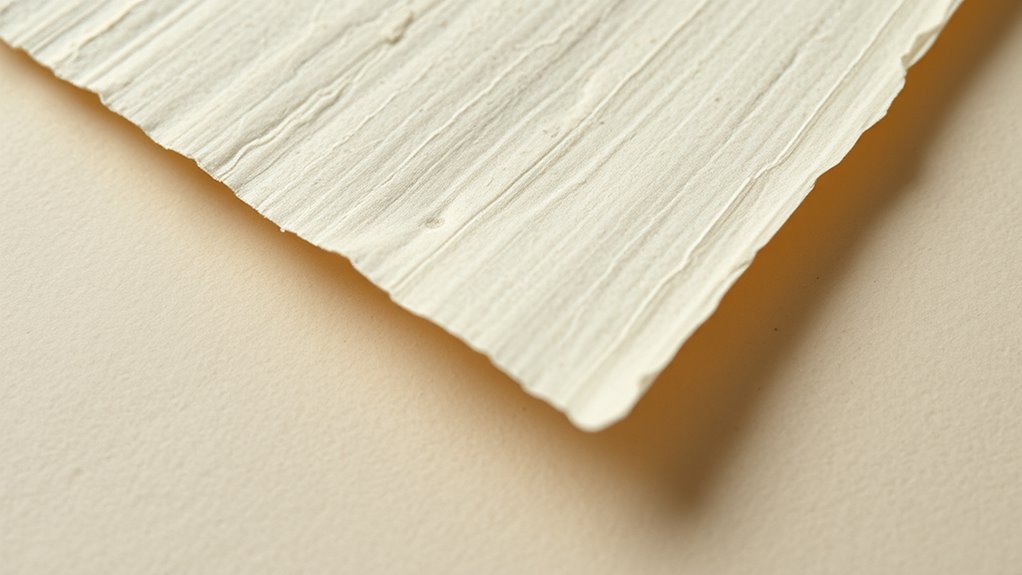
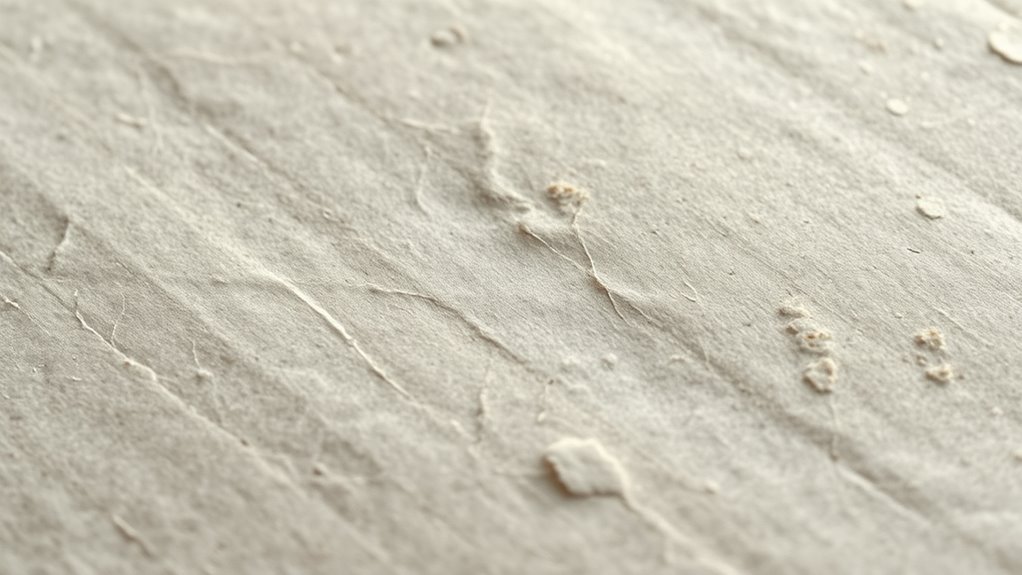
Watermarks and laid paper have long been essential tools for verifying the authenticity and origin of documents. When you examine historical papers, you’re often looking at more than just ink or handwriting—you’re peering into a world where craftsmanship and innovation intertwined. The origins of these features trace back to historical paper manufacturing techniques, where artisans sought ways to distinguish their work and prevent forgery. During the early days, paper was made by hand, using rag fibers that were pulped and pressed into molds with wire screens. This process left a distinctive pattern—known as laid lines—that created the textured surface of the paper. These lines, combined with watermarks, became crucial security features, especially as documents gained importance and value.
Watermarks and laid paper reveal centuries of craftsmanship and security in historical documents.
As you explore the evolution of watermark designs, you’ll notice they became more sophisticated over time. Initially, watermarks were simple symbols or initials pressed into the wire mesh during paper production. These early marks served as signatures or brand marks, signifying the maker or the origin. As paper manufacturing advanced, watermarks grew more intricate, featuring coats of arms, symbols, or complex patterns that could be easily identified but hard to counterfeit. The design evolution reflected both technological progress and changing needs for security. In the 17th and 18th centuries, for instance, paper mills began producing standardized watermarks that could be replicated across large batches, facilitating easier verification for authorities, merchants, and governments.
You might find it fascinating how the design complexity increased as forgeries became more prevalent. The introduction of multi-tone watermarks and detailed images made counterfeiting more difficult, consequently enhancing document security. During the height of the paper industry, watermark designs often indicated the paper’s origin, quality, and even the specific batch, serving as a quality assurance mark. This evolution wasn’t just about security; it also reflected artistic expression, with some watermarks displaying elaborate motifs, floral patterns, or heraldic symbols. These designs helped forge a sense of identity and prestige for the paper makers.
Today, understanding the historical context of paper manufacturing and watermark design reveals how these features have served both functional and aesthetic purposes. They’ve shaped the way we verify documents, assess authenticity, and appreciate the craftsmanship behind historic papers. From simple wire marks to elaborate symbols, the evolution of watermark designs demonstrates a continuous effort to blend security, artistry, and innovation. When you see a watermark today, you’re witnessing a centuries-old tradition that has evolved alongside advances in manufacturing, always aiming to safeguard the integrity and authenticity of essential documents.

Archival Watermarked Rubbing & Restoration Paper – 100 Sheets (127×88mm) – Handmade Xuan Paper for Stone Rubbings, Ancient Book Conservation, Artifact Preservation
PROFESSIONAL PAPER FOR HISTORICAL RESTORATION & ARCHIVING Specially designed for restoration of ancient books, scrolls, and documents, this…
As an affiliate, we earn on qualifying purchases.
As an affiliate, we earn on qualifying purchases.
Frequently Asked Questions
How Do Watermarks Influence Paper Value and Authenticity?
Watermark significance greatly impacts paper valuation and authenticity because it helps you verify the paper’s origin and age. When you spot an authentic watermark, it confirms the paper’s historical value, making it more desirable for collectors or historians. Recognizing these watermarks allows you to distinguish genuine, high-quality paper from fakes, ensuring you’re accurately evaluating its worth and preserving its historical integrity.
What Are the Main Differences Between Laid and Wove Paper?
Laid paper features a distinctive, textured grain pattern created by the wire mesh during production, with fibers aligned in a random orientation. Wove paper, in contrast, has a smooth surface, with fibers evenly distributed, resulting in a uniform appearance. Notably, over 90% of modern papers are wove, making laid paper rare. Your choice affects the paper’s feel, appearance, and suitability for different artistic or archival purposes.
Can Watermarks Be Altered or Forged?
Yes, watermarks can be altered or forged, but doing so is challenging due to watermark security features. Forgery detection techniques help identify these alterations by examining inconsistencies or tampering with the watermark design. Skilled forgers may attempt to imitate genuine watermarks, but experts use specialized tools to verify authenticity. Maintaining watermark integrity is vital for verifying documents, artworks, and historical papers, ensuring their authenticity and preventing counterfeit claims.
How Do Watermarks Help Date Historical Documents?
Watermarks help you date historical documents by revealing specific historic watermark patterns that were used during certain periods. Using watermark identification techniques, you can compare these patterns to known samples, allowing you to determine the document’s approximate age. Recognizing unique or evolving watermarks provides valuable clues, making it easier to authenticate and place documents within their correct historical context.
Are Watermarks Visible to the Naked Eye or Require Special Tools?
Watermarks are often visible to the naked eye through visual detection, especially when you hold the paper up to light. However, for detailed examination or faint watermarks, a light examination with a strong light source or magnification may be necessary. Sometimes, special tools like backlit panels or microscopes help uncover subtle watermarks that aren’t easily seen with just visual detection. This guarantees accurate analysis of historical documents.

80 Sheets Vintage Paper, 8.5" x 11" Antique Stationary Paper for Writing, Letter Size Printer Paper, Double-sided Aged Parchment for Printing
Letter Size Vintage Paper: The size of our antique papers 8.5×11 inches, with 80 sheets; the vintage design…
As an affiliate, we earn on qualifying purchases.
As an affiliate, we earn on qualifying purchases.
Conclusion
Think of watermarks and laid paper as the fingerprints of history, revealing stories woven into each sheet. They’re like secret signatures that time has carefully preserved, whispering tales from centuries past. By understanding these delicate designs, you unveil a hidden world of craftsmanship and history. So, keep exploring these intricate patterns—your journey into the past is like unrolling a timeless parchment, where every detail invites you to discover its secrets.
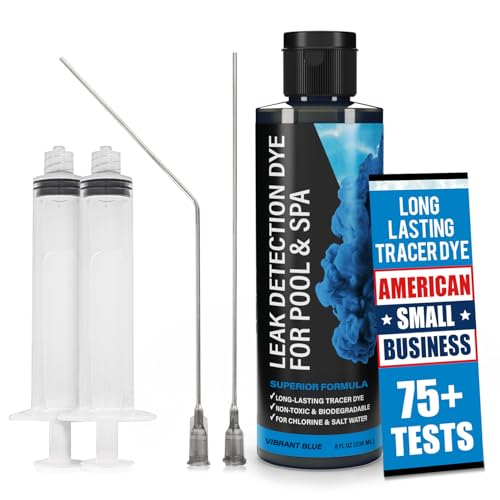
Pool Leak Detection Dye Kit – 75+ Tests – 2 Stainless Steel Precision Applicators – Superior Long Lasting Pool Dye Easily Locates Leaks – for All Pool, Spa, & Hot Tub Types – 8 OZ (Vibrant Blue)
Easily Identify & Locate Leaks – 75+ tests per kit! This pool leak detection kit delivers a High-Contrast…
As an affiliate, we earn on qualifying purchases.
As an affiliate, we earn on qualifying purchases.

ExcelMark Custom Stamp – Clear & Crisp Impressions – Personalized Self-Inking Rubber Stamp – Use for Address Stamp and More (Medium)
CUSTOM STAMP: Personalize up to 4 lines of text within a 0.7” x 1.8” impression area. Whether it’s…
As an affiliate, we earn on qualifying purchases.
As an affiliate, we earn on qualifying purchases.