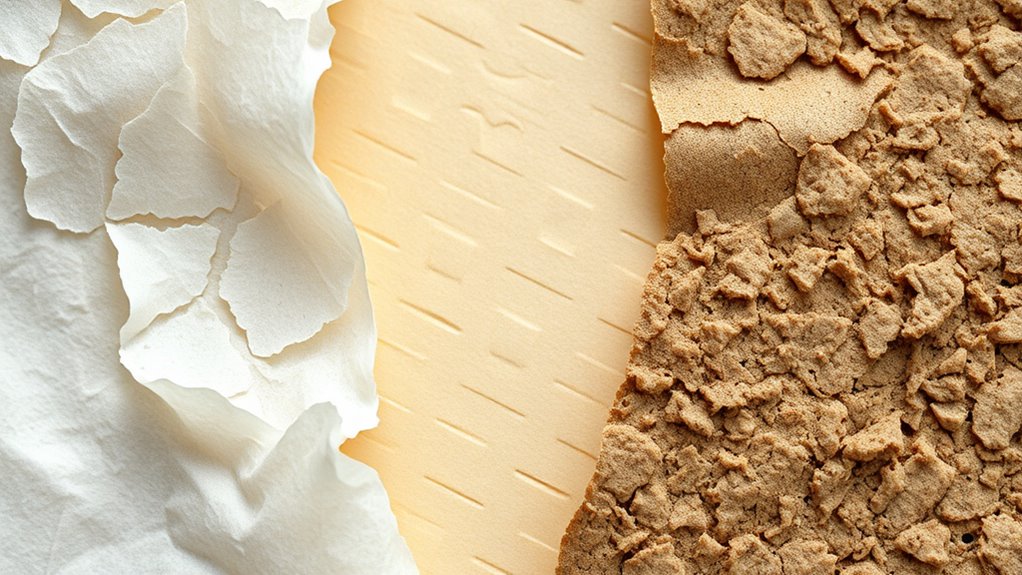
Specialty papers like rice, washi, and hemp are handcrafted materials known for their unique textures, strength, and eco-friendly origins. You’ll find these papers made using traditional techniques that minimize environmental impact and use natural fibers like rice straw, gampi, and hemp. They’re perfect for artwork, calligraphy, or sustainable packaging. If you want to learn more about how these exceptional papers blend craftsmanship and eco-consciousness, keep exploring their fascinating qualities and production methods.
Key Takeaways
- Specialty papers like rice, washi, and hemp are handcrafted for unique textures, durability, and aesthetic appeal.
- Made from natural fibers, these papers promote sustainability and eco-friendly practices.
- Rice paper is lightweight and translucent, ideal for artwork and calligraphy, crafted with delicate traditional techniques.
- Washi is renowned for strength and beauty, produced from fibers of gampi, mitsumata, or mulberry using centuries-old methods.
- Hemp paper offers sturdy, long-lasting sheets suitable for packaging and art, emphasizing environmentally friendly hemp fibers.
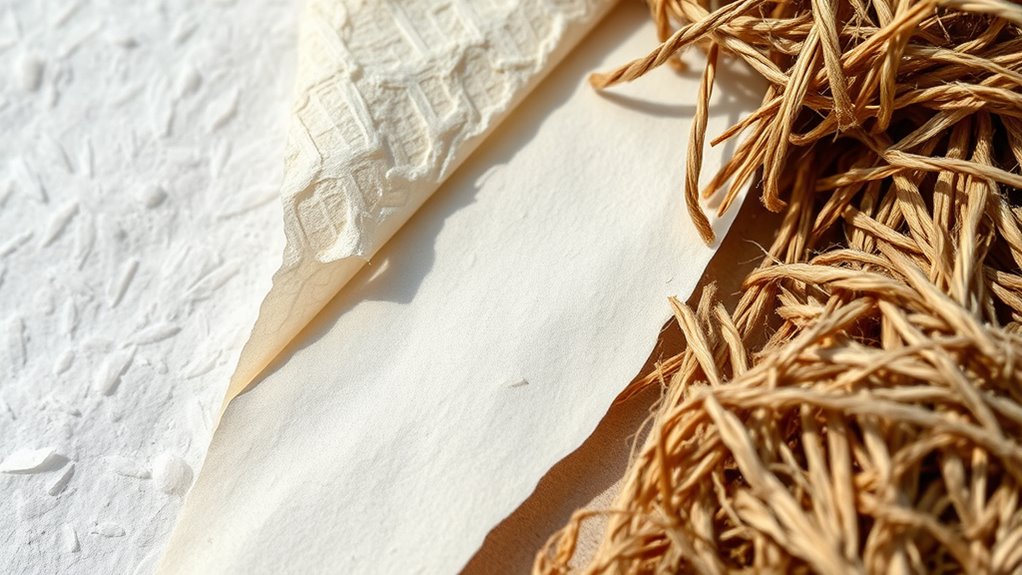
Have you ever wondered how certain documents and products stand out with unique quality and functionality? The answer often lies in the specialty papers they’re made from. These papers aren’t just ordinary sheets; they’re crafted using specific techniques that give them distinctive textures, durability, and aesthetic appeal. Handmade techniques play a crucial role here, allowing artisans to produce each sheet with precision and care. This meticulous process not only results in a high-quality product but also reduces the environmental impact compared to mass-produced alternatives. When you choose specialty papers like rice, washi, or hemp, you’re supporting sustainable practices that often emphasize eco-friendliness and minimal waste. They’re made from natural fibers, and the crafting process typically involves fewer chemicals and less energy, making them more environmentally conscious options.
Rice paper, for instance, is traditionally made from the pith of the rice plant or rice straw, and its creation involves a delicate, handmade process that preserves the natural qualities of the material. This paper is lightweight, translucent, and smooth, perfect for delicate artwork, calligraphy, or decorative projects. Its production emphasizes sustainability because rice is a renewable resource, and the handmade techniques used help to keep waste minimal. Similarly, washi, a Japanese paper renowned for its strength and beauty, is crafted from fibers of the gampi tree, mitsumata shrub, or paper mulberry. Artisans develop washi through a centuries-old handmade process, which involves pounding and kneading the fibers into a pulp, then carefully spreading and drying the sheets by hand. This craftsmanship not only guarantees durability and unique textures but also minimizes environmental impact by utilizing plant fibers that grow quickly and require little chemical treatment.
Additionally, the use of handmade techniques in producing hemp paper ensures that the process stays eco-friendly, with less reliance on harmful chemicals often associated with conventional paper manufacturing. Hemp fibers result in a sturdy, long-lasting sheet suitable for various uses, from packaging to art. By opting for specialty papers like rice, washi, and hemp, you’re embracing environmentally conscious choices that combine artistry with sustainability. These papers remind us that quality doesn’t have to come at the expense of our planet, especially when crafted with mindful, handmade techniques. When you select such materials, you’re not just choosing a product—you’re supporting traditional craftsmanship and reducing your environmental footprint.
Frequently Asked Questions
What Are the Environmental Impacts of Producing Rice Paper?
Producing rice paper can impact the environment through water usage and pesticide use in rice cultivation. If you choose sustainably farmed rice, you help diminish chemical runoff and conserve water. Pesticide use can harm ecosystems, so opting for rice from farms practicing sustainable farming minimizes these effects. Sustainable practices ensure that rice paper production remains eco-friendly, supporting healthier ecosystems and reducing your carbon footprint.
How Does Hemp Paper Compare in Durability to Traditional Paper?
Hemp paper is generally more durable than traditional paper because of its higher fiber strength, making it resistant to tearing and wear. Its degradation rate is slower, so it lasts longer when exposed to environmental factors. You’ll notice that hemp’s tough fibers provide a sturdier, more resilient material, ideal for long-lasting applications. This durability makes hemp paper a sustainable choice, especially when compared to less durable, traditional paper options.
Are There Health Benefits to Using Washi Paper?
Think of washi paper as a gentle, natural shield for your health. Using it offers benefits like fewer chemicals and toxins, reducing allergic reactions. Its cultural significance highlights its traditional craftsmanship, often making it a preferred choice for decorative techniques that honor heritage. This connection to nature can promote a healthier environment and well-being, making washi a wise choice for those seeking both beauty and health advantages.
Can Specialty Papers Be Recycled Easily?
Specialty papers can be recycled, but recycling challenges often arise due to their unique materials and finishes. You might find that some specialty papers, like rice or hemp, require special processes or facilities, making recycling less straightforward. However, they’re eco-friendly alternatives to conventional paper, and you can choose to reuse or repurpose them to reduce waste. Supporting recycling programs that handle specialty papers helps promote sustainability and minimizes environmental impact.
What Are Common Uses for Hemp Paper Today?
You can use hemp paper today for various purposes, thanks to its sustainability and durability. It’s popular in eco-friendly printing, art projects like rice paper art, and even packaging materials. Hemp paper’s eco-friendly qualities make it a great sustainable choice, reducing environmental impact. Its strength and texture lend themselves well to creative and functional uses, helping you support sustainability efforts while enjoying versatile options for art, craft, and packaging needs.
Conclusion
As you explore the world of specialty papers like rice, washi, and hemp, you realize they’re like threads weaving tradition into modern life. Each sheet tells a story, blending history and innovation into a tapestry of craftsmanship. Embrace these materials, and you’ll see how they’re not just paper, but vessels carrying culture and creativity—delicate yet resilient, like a butterfly’s wing, delicate but strong enough to carry dreams across time.