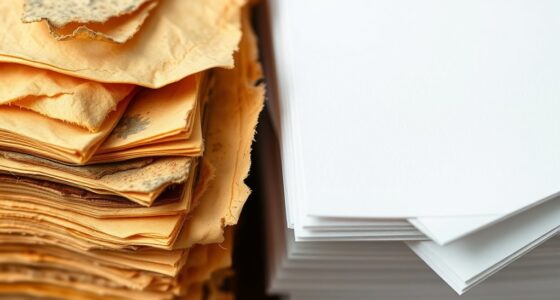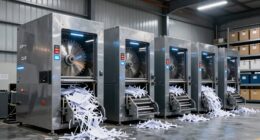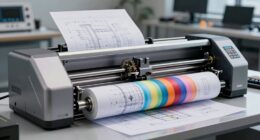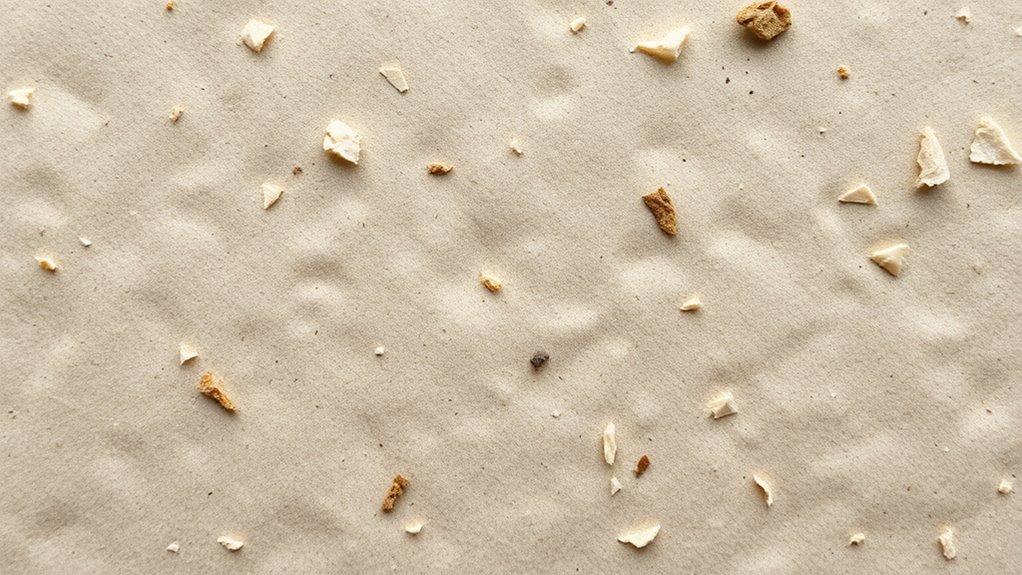

Recycling paper involves collecting used paper, sorting out contaminants, and then shredding it into small pieces. The process includes de-inking to remove inks and adhesives, followed by washing the pulp thoroughly. Modern techniques blend recycled fibers with new ones, creating high-quality paper that’s durable and eco-friendly. These advancements guarantee recycled paper matches the appearance and strength of virgin paper. To discover more about how these processes boost quality and sustainability, keep exploring this topic.
Key Takeaways
- Recycled paper production involves collection, sorting, shredding, de-inking, cleaning, blending, and sheet formation.
- Modern techniques enable high recycled fiber content without compromising paper quality or durability.
- The de-inking process uses chemicals and water to remove inks, adhesives, and fillers from paper pulp.
- Recycled paper offers comparable strength and appearance to virgin paper, supporting eco-friendly standards.
- Advancements in recycling technology improve efficiency and allow recycled paper to meet diverse industrial needs.
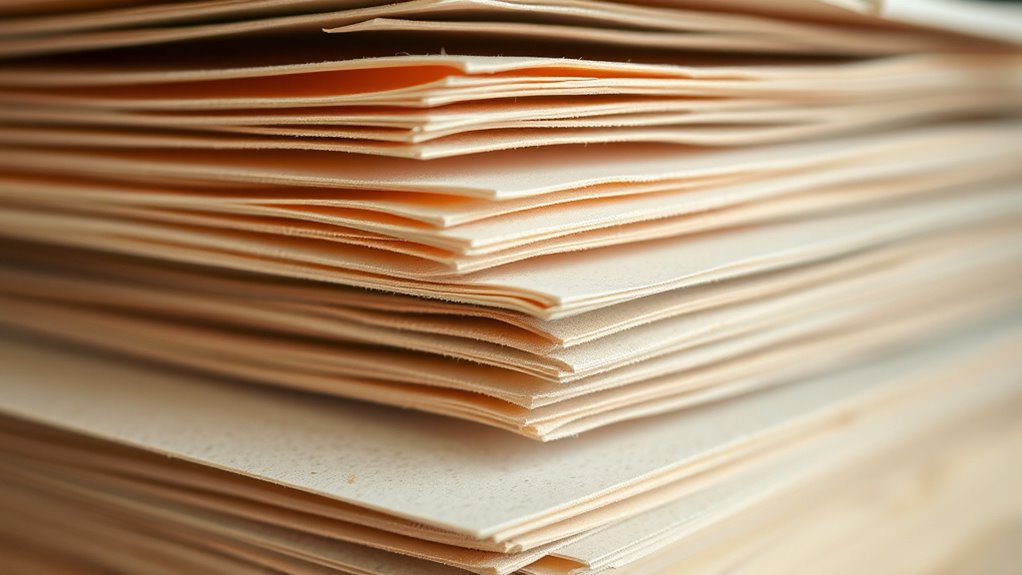
Have you ever wondered how recycled paper helps protect the environment? When you choose recycled paper, you’re actively contributing to reducing waste and conserving natural resources. The environmental benefits are significant because recycling paper reduces the need to harvest virgin trees, which are essential for maintaining healthy ecosystems. Plus, by recycling, you help cut down on the energy consumption associated with producing new paper from raw materials. This process results in fewer greenhouse gas emissions, making a tangible difference in combating climate change. Recycling techniques have advanced over the years, making the process more efficient and effective. Typically, it starts with collecting used paper, which is then sorted to remove contaminants such as plastic, staples, and other residues. The sorted paper is shredded into small pieces to facilitate the cleaning process. Next, it goes through a de-inking stage, where inks, adhesives, and fillers are separated using chemicals and water. This step is essential because it guarantees the recycled paper will have a clean, high-quality finish. After de-inking, the pulp is cleaned and washed thoroughly to eliminate any remaining impurities. Once clean, the pulp is blended with new fibers if needed, which helps improve strength and quality. The mixture is then spread out on screens or rollers to form sheets, which are pressed and dried to produce the finished recycled paper. Throughout these recycling techniques, attention is given to maintaining the quality of the final product. Modern recycling methods have evolved to produce recycled paper that closely matches the quality of paper made from virgin materials, guaranteeing that consumers and businesses can rely on it for various uses. The advancements in these techniques allow for a higher percentage of recycled content without sacrificing durability or appearance. This means you can choose recycled paper for printing, packaging, or writing without worry about quality. Additionally, recycling helps reduce landfill waste, preventing toxic leachates and decreasing the burden on waste management systems. By supporting recycled paper, you’re also encouraging manufacturers to innovate and invest in sustainable practices. This cycle creates a positive impact, promoting eco-friendly production and consumption habits. As the quality of recycled paper continues to improve, more consumers are likely to opt for environmentally friendly options. Ultimately, the combination of improved recycling techniques and the awareness of environmental benefits makes recycled paper a smart choice. It’s a simple yet powerful way to lessen your ecological footprint. When you opt for recycled paper, you’re not just making a responsible choice; you’re actively participating in a global effort to conserve resources, reduce pollution, and protect the planet for future generations. Every sheet you use is a step toward a more sustainable and environmentally friendly world.

PrintWorks 100% Recycled Printer Paper 8.5" x 11" White – 20 lb Copy & Multipurpose Computer Paper – 1 Pack, 400 Sheets – Made in the USA – 92 Bright – Printer & Copier Compatible (00018)
100 percent post-consumer recycled printer paper for everyday use at an affordable price
As an affiliate, we earn on qualifying purchases.
As an affiliate, we earn on qualifying purchases.
Frequently Asked Questions
How Does Recycled Paper Compare to Virgin Paper in Durability?
Recycled paper often has comparable durability to virgin paper thanks to advanced recycling technology that preserves paper strength. While some may think recycled paper is weaker, modern processes enhance its quality, making it suitable for many uses. You might notice slight differences in texture or thickness, but overall, recycled paper provides strong, durable options that meet your needs, all while supporting eco-friendly practices.
Are There Specific Types of Paper That Cannot Be Recycled?
Think of some papers like stubborn stains—certain materials just can’t be recycled. You can’t recycle paper mixed with non-recyclable materials like plastic coatings, foil, or wax. These paper limitations mean they end up in the trash instead of the recycling bin. For example, glossy magazines or laminated paper often can’t be recycled because their coatings interfere with the process. So, always check for recycling symbols to avoid non-recyclable materials.
How Does Recycling Paper Impact Environmental Conservation Efforts?
Recycling paper crucially boosts environmental conservation efforts by promoting sustainable practices and reducing waste. By recycling, you help conserve natural resources like trees and water, lowering the ecological footprint. This process minimizes landfill waste and reduces greenhouse gas emissions. Engaging in paper recycling supports a healthier planet, preserves ecosystems, and promotes responsible resource use, making it an essential part of ecological benefits that benefit everyone.
What Are the Main Challenges in Recycling Contaminated Paper?
You face main challenges in recycling contaminated paper, especially contamination issues that hinder the recycling process. Sorting difficulties also complicate efforts, as removing non-paper materials requires extra effort and precise separation. These problems reduce the quality of recycled paper and increase processing costs. To overcome these challenges, you need effective sorting methods and contamination control measures, ensuring cleaner feedstock and better final products.
Can Recycled Paper Be Used for Food-Grade Packaging?
Yes, you can use recycled paper for food-grade packaging, but you must guarantee it meets strict food safety and packaging regulations. These regulations set standards to prevent contamination and ensure the recycled paper is safe for contact with food. You need to select high-quality recycled paper processed under controlled conditions, and always verify that it complies with relevant safety standards before using it for food packaging.

Joyberg 70PCS Vintage Paper 8.5 x 11 in Parchment paper for Writing Letter writing Paper, Decorative Printer Paper for Invitation, Letter, Resume, Award, Diploma, Art, Craft, Certificate Antique
1、Size and Quantity: Our vintage paper measures 8.5×11 inches and comes in 70 sheets. The vintage design is…
As an affiliate, we earn on qualifying purchases.
As an affiliate, we earn on qualifying purchases.
Conclusion
By choosing recycled paper, you’re turning the pages of a new chapter in sustainability. Just like a phoenix rises from the ashes, recycled fibers transform waste into valuable resources, giving them a second life. Every sheet you use is a brushstroke on the canvas of a greener future, proving that small actions can weave a powerful tapestry of change. Embrace recycled paper, and become a essential thread in the fabric of environmental preservation.

Elementree Brown Packing Paper Sheets for Moving & Shipping – 250 Count (229 Feet) – 14.5" x 11" Sheet Size – Sustainable Void Fill Packaging Made in the USA – Kraft Paper Thickness (00923)
Whether you’re packing, moving, shipping, or storing, these kraft paper sheets safeguard items and fill space to prevent…
As an affiliate, we earn on qualifying purchases.
As an affiliate, we earn on qualifying purchases.
PrintWorks 100% Recycled Printer Paper 8.5" x 11" White – 20 lb Copy & Multipurpose Computer Paper – 1 Pack, 400 Sheets – Made in the USA – 92 Bright – Printer & Copier Compatible (00018)
100 percent post-consumer recycled printer paper for everyday use at an affordable price
As an affiliate, we earn on qualifying purchases.
As an affiliate, we earn on qualifying purchases.