Rag paper has played a crucial role in history because of its durability and rich texture. Made from recycled textile fibers like linen and cotton, it’s stronger and more resilient than ordinary paper. This quality made it ideal for preserving important documents, artworks, and legal papers for centuries. Its traditional manufacturing processes ensure it lasts over time. If you want to know more about its fascinating history and lasting significance, keep exploring this remarkable material.
Key Takeaways
- Rag paper, made from textile fibers like linen, is highly durable and resistant, ensuring longevity of important documents.
- Historically used for legal, archival, and fine art purposes due to its resilience and high-quality fiber content.
- Its manufacturing process preserves natural fibers, making it more environmentally friendly than wood pulp papers.
- Rag paper’s strength and texture contributed to its role in preserving manuscripts, currency, and artworks over centuries.
- Its reputation for durability and archival quality has maintained its significance in conservation and collectible arts.
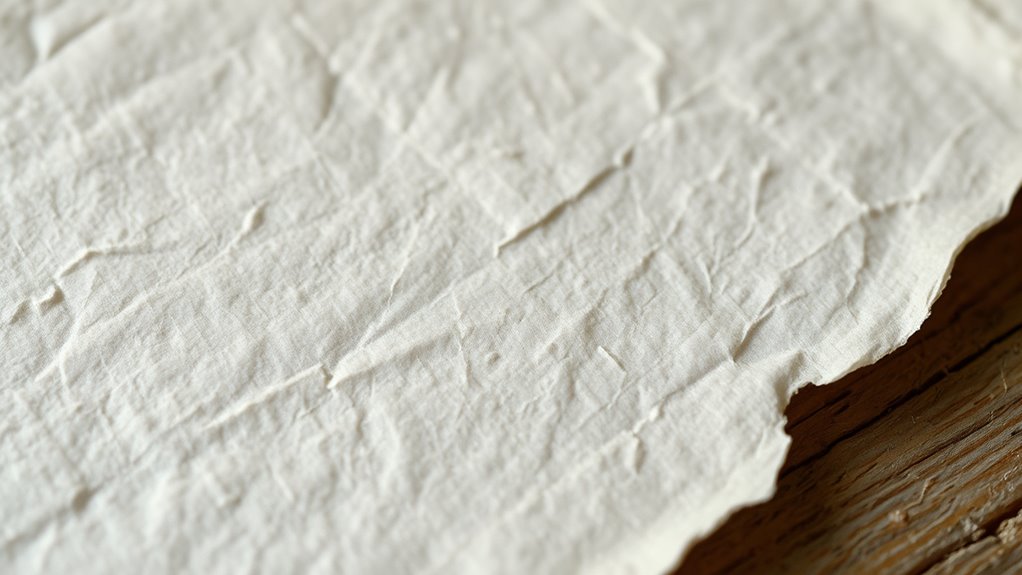
Have you ever wondered what makes rag paper stand out from regular paper? The answer lies in its fiber content and manufacturing process. Unlike typical paper made from wood pulp, rag paper is crafted primarily from textile fibers, often recycled linen, cotton, or other linen-like fabrics. This unique fiber content gives rag paper its distinct quality—durability, a luxurious feel, and a rich texture that’s hard to replicate. This process results in a product that’s thicker and more resilient than ordinary paper. The fiber content, mainly composed of long, sturdy textile fibers, contributes profoundly to rag paper’s longevity. That’s why it has historically been used for important documents, legal papers, and fine art—its durability ensures these items last for centuries, resisting wear and tear far better than standard paper. You’ll notice that rag paper has a higher degree of resilience because the fibers are longer and more interconnected, creating a stronger matrix. The manufacturing process also involves fewer chemicals and less bleaching than typical paper, preserving the natural qualities of the fibers and producing a more environmentally friendly product. Moreover, the traditional manufacturing techniques used in making rag paper help maintain its superior quality and environmental advantages. Throughout history, rag paper played an essential role in the preservation of manuscripts, currency, and artworks. Its resilience meant documents could withstand the test of time, making it the material of choice for important records. Even today, artists and collectors prefer rag paper for their work because of its superior strength, texture, and archival qualities. Its fiber content and traditional manufacturing process give it a character that modern paper, made from wood pulp and synthetic additives, simply can’t match. So, when you hold a sheet of rag paper, you’re holding a piece of history—crafted with care, built to last, and rooted in centuries of craftsmanship that emphasize quality over quantity.
Frequently Asked Questions
How Is Rag Paper Produced Today?
Today, you produce rag paper using modern production techniques that build on historical manufacturing processes. You start by collecting textile scraps, mainly cotton or linen rags, then shred and clean them. Next, you mix the fibers with water to create pulp, which is spread evenly on screens. After pressing and drying, you get durable, high-quality rag paper—combining traditional methods with efficient, contemporary technology.
What Are the Environmental Impacts of Rag Paper?
You’ll find rag paper’s environmental impact surprisingly gentle, yet recycling challenges remain. As you imagine fibers woven from old textiles, you see a smaller ecological footprint compared to new paper. Recycling rag paper reduces waste and conserves resources, but it still faces hurdles like contamination and energy use. By choosing rag paper, you help lessen environmental strain, turning discarded textiles into beautiful, durable material that’s kinder to our planet.
How Does Rag Paper Compare in Durability to Modern Paper?
You’ll find rag paper more durable than modern paper thanks to its fiber composition, which includes long, strong fibers from cotton or linen. This makes rag paper highly resistant to aging and deterioration over time. Unlike modern paper, which often contains wood pulp and acids that weaken with age, rag paper can last centuries, maintaining its quality and appearance, making it ideal for archival purposes.
Are There Any Notable Artists Who Preferred Rag Paper?
You’ll find that many notable artists, like Rembrandt and Turner, preferred rag paper for their masterpieces. Think of rag paper as a sturdy vessel, preserving art through centuries. Its durability is essential in art conservation and enhances collectible value. These artists chose it for its strength and longevity, ensuring their work remains vibrant over time. If you’re collecting or conserving, understanding rag paper’s importance helps protect and appreciate timeless art.
Can Rag Paper Be Recycled or Biodegradable?
Yes, rag paper can be recycled and is biodegradable. During recycling processes, rag paper is broken down and repurposed, reducing waste. Its biodegradability factors make it environmentally friendly, as it naturally decomposes over time without harming ecosystems. You can dispose of rag paper in compost or recycling bins, helping to minimize landfill waste and promote sustainability. Its durability and eco-friendliness make rag paper a responsible choice for environmentally conscious use.
Conclusion
You hold in your hands a paper crafted from rag fibers—once the epitome of quality and durability. Today, it’s rare and precious, a reminder of an era when craftsmanship mattered. While modern paper may be fleeting and disposable, rag paper endures, telling stories of tradition and resilience. In a world rushing forward, this fragile material connects you to history’s strength, proving that some things, like craftsmanship and legacy, truly stand the test of time.