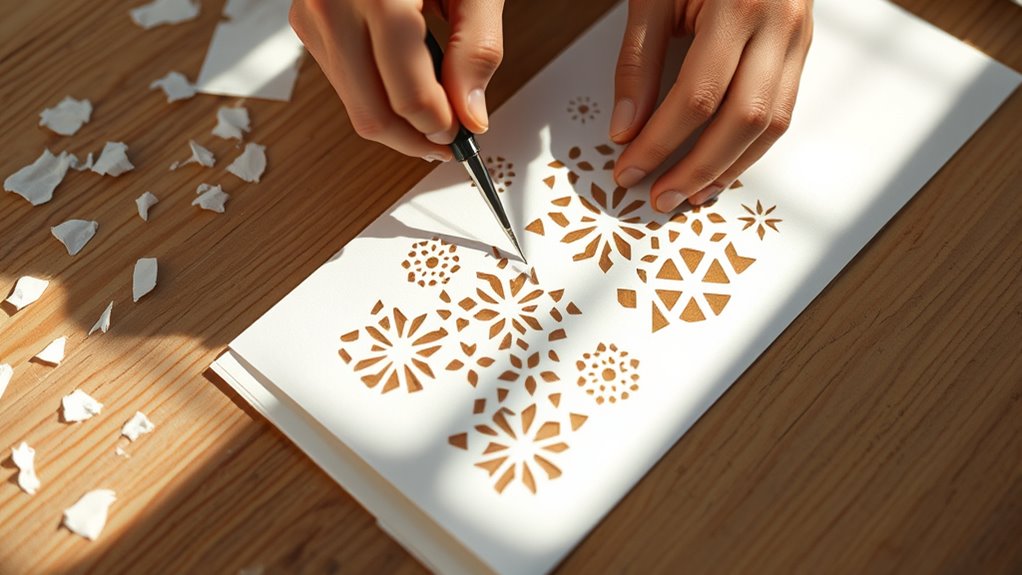

To make paper stencils for painting, start by sketching or selecting a clear, bold pattern that fits your design idea. Use thick cardstock or heavyweight paper for durability, and cut out the shapes carefully with a sharp craft knife for sharp edges. Handle the stencil gently to avoid tears and clean it after each use to prolong its life. With proper care and practice, you’ll create professional-looking results—keeping these tips in mind will guide you through the process more smoothly.
Key Takeaways
- Sketch or select a bold, simple pattern that fits your design vision.
- Use thick, durable cardstock or heavyweight paper, possibly laminate for extra longevity.
- Cut out the stencil carefully with a sharp craft knife, ensuring clean, precise edges.
- Handle and clean the stencil gently to prevent tears and extend reuse.
- Practice and refine your technique for sharp, professional-looking paint patterns.
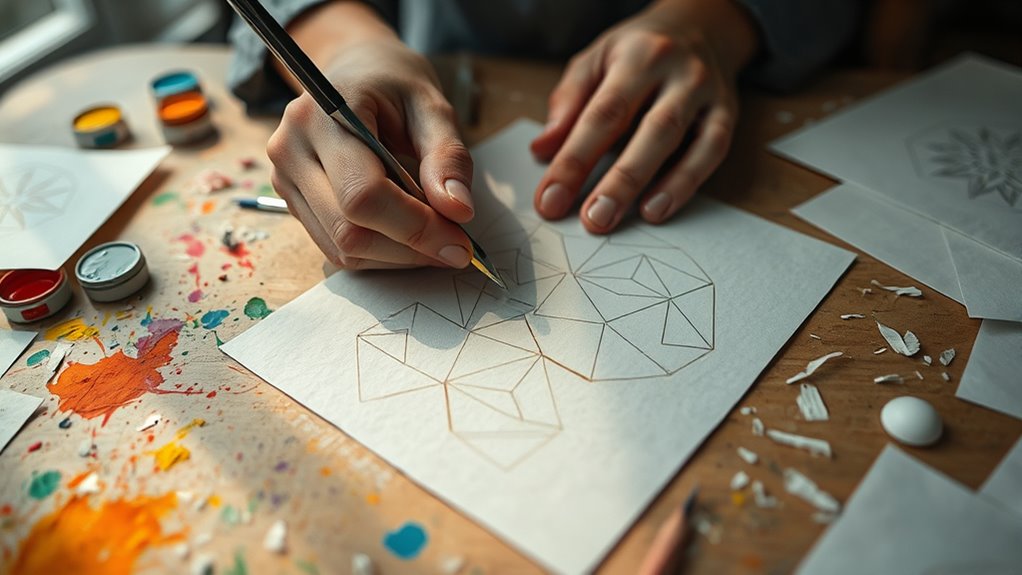
Have you ever wanted to create clean, professional-looking designs for your paintings? Making paper stencils is a fantastic way to achieve that, and it all starts with understanding how to craft a precise stencil design. Your stencil design is the blueprint for your artwork, so take your time sketching or choosing a pattern that fits your vision. Use simple, bold lines to guarantee your design can be easily cut out and transferred onto your paper. Keep in mind that intricate details might be difficult to cut and could weaken the paper, affecting its durability during painting. Opt for designs with clear, defined shapes that translate well into a stencil.
When selecting paper for your stencil, paper durability becomes a vital factor. Not all paper is created equal—some types are too thin, tearing easily when you cut or handle them, while others are sturdy enough to withstand multiple uses. For a durable stencil, choose thick cardstock or heavyweight paper that resists tearing and warping. This kind of paper provides a stable surface for cutting and can endure the pressure of repeated use without losing its shape. If you plan to reuse your stencil many times, investing in high-quality, durable paper is worthwhile. You might even consider laminating your stencil after cutting it out to enhance longevity, especially if you’re working with paint that’s thick or if you’re applying pressure during painting.
When you’re ready to transfer your design onto the paper, use a sharp craft knife or precision cutting tool to carefully cut along your stencil lines. Take your time to avoid tearing or uneven edges, which can compromise the clean look of your finished work. Remember, the sturdiness of your paper will influence how easily you can make these cuts without damaging your stencil. If your paper isn’t sturdy enough, it might fold or tear during cutting, which will make your stencil look less professional and could affect your painting process. To guarantee your stencil design comes out perfectly, always test your cutouts on a scrap piece of similar paper first. This allows you to refine your cutting technique and confirm that your paper durability holds up.
Once you’ve cut out your stencil, you’re ready to use it for painting. Be gentle when handling it, especially if you’ve used thinner paper, and clean it carefully after each use to extend its lifespan. With a well-planned stencil design on sturdy paper, you’ll be able to create consistent, sharp patterns that elevate your artwork. Making paper stencils may take a little practice, but mastering the balance between an intricate stencil design and paper durability will give you professional results every time. Additionally, exploring different material options can help you discover which paper types best suit your specific painting projects.
Frequently Asked Questions
Can I Reuse Paper Stencils Multiple Times?
Yes, you can reuse paper stencils multiple times if you choose reusable materials like sturdy cardstock or mylar, which offer better stencil durability. To maximize their lifespan, clean them gently after each use, avoid excessive paint buildup, and store them flat. With proper care, your paper stencils will last through many projects, saving you money and effort while maintaining crisp, clean designs every time you use them.
What Types of Paint Work Best With Paper Stencils?
You should use acrylic or spray paints with the right paint consistency for paper stencils. These paints provide good stencil adhesion without bleeding or smudging. Thinner paints can seep under the edges, so make certain your paint isn’t too runny. Test your paint first to get the perfect consistency. Proper application guarantees clean lines and preserves your stencil’s integrity, giving you professional-looking results every time.
How Do I Prevent Bleeding Under the Stencil?
Think of your stencil as a tight seal on a treasure chest—you want no leaks. To prevent bleeding under the stencil, use light, multiple coats of paint, letting each dry thoroughly to enhance stencil adhesion. Press down firmly when applying, and consider using a barrier like painter’s tape for edges. These steps create a strong bond, ensuring clean lines and avoiding unwanted paint seepage.
Is It Possible to Make Stencils for Intricate Designs?
Yes, you can make stencils for intricate designs by employing detailed cutting techniques. Use a sharp craft knife and a steady hand to carefully carve out complex patterns, ensuring all fine lines are precise. Designing complex patterns requires patience, so take your time to plan and sketch your design beforehand. Practice on scrap paper first, and consider using thinner paper or specialized stencil film for better accuracy and cleaner edges.
How Should I Store Paper Stencils for Future Use?
Did you know that proper storage can extend your stencil’s lifespan by up to 50%? To keep your paper stencils in top shape, use flat storage like filing folders or a dedicated folder for stencil organization. Store them in a cool, dry place away from direct sunlight, and avoid bending or folding. This way, your stencils stay crisp and ready for your next creative project.
Conclusion
Creating paper stencils is a simple, cost-effective way to enhance your painting projects. Did you know that DIY stencil makers save up to 60% compared to store-bought options? By making your own, you not only personalize your designs but also save money and reduce waste. So, grab some paper, get creative, and enjoy the satisfaction of crafting your own unique stencils—your next masterpiece is just a cut away!