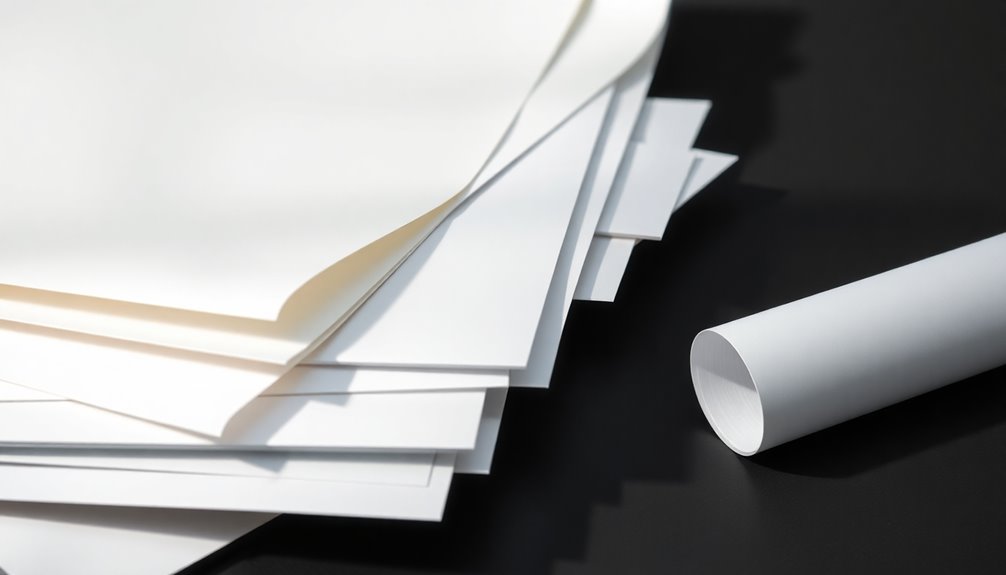
Choosing the right OBA content in fine art paper affects how your artwork looks and lasts. High OBAs make colors pop and appear more vibrant under certain lighting, but they can also distort true colors and cause yellowing over time. Lower OBA levels preserve accurate hues and improve long-term preservation. Understanding how OBAs influence brightness, color accuracy, and aging helps you pick the best paper for your art’s longevity and visual impact—if you wish to learn more, keep exploring.

Get business pricing on monitors, keyboards and dev gear
- Business-only prices and quantity discounts
- Tax-exempt purchasing
- Multiple users, one account, clear invoices
Key Takeaways
- OBA levels influence the paper’s brightness and whiteness, affecting overall visual impact of artwork.
- High OBA content can distort true colors, reducing accuracy in fine art reproductions.
- Lower OBA papers better preserve original hues and provide consistent appearance under various lighting conditions.
- Excessive OBAs may cause long-term degradation, compromising artwork preservation.
- Selecting OBA-free or low-OBA papers enhances archival quality and durability over time.

Have you ever wondered how the OBA content in art paper influences your creative projects? OBA, or Optical Brightening Agents, are chemicals added to paper to enhance brightness and whiteness, making colors pop and images appear more vibrant. When choosing fine art paper, understanding the role of OBA content is crucial, especially if you plan to use digital printing or aim for archival quality. The presence of OBAs can dramatically affect how your artwork looks and how well it withstands the test of time. Additionally, OBA content can impact the long-term color stability of your artwork, which is essential for preserving its original appearance over the years. The composition of the paper also plays a significant role in determining how OBAs interact with other elements in the paper, influencing both visual effects and durability. Recognizing the chemical interactions within the paper can help you select the most suitable options for your specific needs. Furthermore, paper manufacturing processes can influence how OBAs are incorporated and how they perform over time, affecting your choice of material.
In digital printing, the quality of your prints depends heavily on the paper you select. Papers with high OBA content can produce lively, eye-catching images because they reflect more light, making colors appear more intense. However, this brightness can sometimes be misleading, giving the impression of a more vibrant print than what you might see in natural light or over time. If your goal is to produce highly detailed, true-to-life images, choosing art paper with lower OBA levels might be better. These papers tend to preserve the integrity of the original colors without artificially enhancing whiteness, resulting in more accurate representations of your artwork.
High OBA papers create vibrant images but can be misleading; lower OBA options ensure true-to-life color accuracy.
Archival quality is another critical factor when selecting art paper. Papers with high OBA content often contain chemicals that can yellow or degrade over time, compromising the longevity of your artwork. If you’re creating pieces intended for display or sale, opting for archival-quality paper with minimal or no OBAs ensures your work remains vibrant and intact for decades. Acid-free, OBA-free papers are less prone to discoloration and deterioration, making them suitable for collectors and galleries that prioritize durability and preservation. Moreover, understanding the composition of the paper can help you better assess its long-term stability and suitability for archival purposes.
It’s important to remember that the OBA content also influences how your artwork interacts with different lighting conditions. Bright, OBA-rich papers can look stunning under gallery lighting but may appear dull or less vibrant in natural daylight over time. Conversely, papers with lower OBA levels provide a more consistent appearance, maintaining their visual integrity regardless of the viewing environment. This consistency is especially vital if your work will be displayed in multiple locations or needs to be stored safely for years.
As an affiliate, we earn on qualifying purchases.
Frequently Asked Questions
How Does OBA Content Affect the Longevity of Fine Art Prints?
OBA content affects the longevity of your fine art prints by impacting archival preservation and color stability. Higher OBA levels can cause prints to fade faster over time, reducing their lifespan. To guarantee your artwork remains vibrant and well-preserved, choose papers with low or no OBA content. This helps maintain true colors and protects your prints from deterioration, giving you a more durable, lasting piece of art.
Can Oba-Free Papers Still Produce Vibrant Colors?
Did you know that 85% of artists prefer oba-free papers for their true color reproduction? Yes, you can still achieve vibrant colors on oba-free papers. They offer excellent ink absorption, ensuring your artwork remains sharp and lively. Without OBAs, your prints might have a more natural look, but with the right paper, you’ll enjoy rich color vibrancy that truly pops. It’s all about choosing the right materials for your vision.
What Environmental Impacts Are Associated With High OBA Content?
High OBA content can contribute to environmental pollution because the chemicals involved may leach into ecosystems during manufacturing or disposal. Additionally, producing OBA-rich papers often involves resource depletion, as more energy and raw materials are used. By choosing papers with lower OBA content, you help reduce environmental pollution and conserve resources, supporting a more sustainable approach to fine art printing and paper production.
Are There Specific Art Styles That Benefit From Oba-Free Papers?
You’ll find that abstract and contemporary art styles benefit from OBA-free papers because they enhance digital printing clarity and preserve the artwork’s true colors. OBA-free papers also offer better texture enhancement, giving a more authentic, matte finish that complements modern art’s subtle details. By selecting OBA-free options, you guarantee your art’s texture and color fidelity stand out, making your digital prints look vibrant and true to your creative vision.
How Do OBA Levels Influence the Paper’s Texture and Finish?
OBA levels act like a painter’s brushstroke, shaping your paper’s texture and finish. Higher OBA content can smooth out the surface, creating a glossy, polished finish that enhances color vibrancy. Conversely, lower OBA levels reveal a richer, more textured feel, perfect for artists seeking a natural, tactile experience. Your choice influences the Oba texture and finish enhancement, ultimately guiding how your artwork’s details and depth come alive on the page.
archival quality watercolor paper
As an affiliate, we earn on qualifying purchases.
As an affiliate, we earn on qualifying purchases.
Conclusion
By understanding OBA content in paper selection, you reveal the secret to transforming ordinary artwork into timeless masterpieces that captivate generations. Ignoring it is like handing your artwork a ticking time bomb of deterioration—your stunning pieces could crumble into oblivion overnight. Embrace OBA awareness, and you wield the power to preserve your art’s brilliance for centuries, making it an unstoppable force in the art world. Don’t settle for less—your masterpiece deserves the ultimate safeguard.
acid-free art paper for printing
As an affiliate, we earn on qualifying purchases.
As an affiliate, we earn on qualifying purchases.
As an affiliate, we earn on qualifying purchases.
Halloween Picks
halloween
As an affiliate, we earn on qualifying purchases.