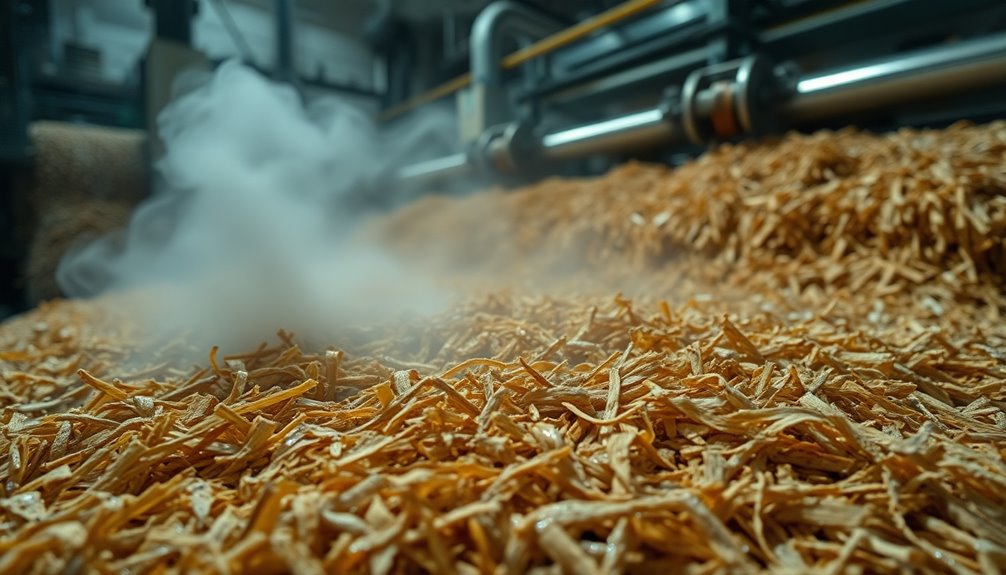
Machine-made paper transformed publishing by offering consistent quality and uniformity, making large-scale production possible. It improved ink absorption and surface control, resulting in sharper images and clearer text. This allowed for more precise textures like glossy or matte finishes, enhancing detail and color accuracy. Production costs dropped, and efficiency increased, enabling wider dissemination of books, magazines, and newspapers. If you want to discover how these changes continue to influence today’s publishing landscape, keep exploring further.

Get business pricing on monitors, keyboards and dev gear
- Business-only prices and quantity discounts
- Tax-exempt purchasing
- Multiple users, one account, clear invoices
Key Takeaways
- Introduced uniformity in paper quality, ensuring consistent print appearance across large print runs.
- Improved ink absorption and surface control led to sharper images and clearer text.
- Enabled a variety of surface textures, enhancing detail rendering and overall print quality.
- Reduced production costs and increased efficiency, making widespread dissemination of printed materials possible.
- Supported advanced printing techniques with consistent material properties, fostering innovation in publishing.
Since the invention of machine-made paper, the publishing industry has undergone a profound transformation. No longer are books and newspapers limited by the constraints of handmade paper, which was often inconsistent in quality. Machine-made paper introduced a new level of uniformity, meaning you could produce large quantities of printed material that maintained a consistent appearance and performance. This consistency is vital because it directly affects how well ink is absorbed onto the surface. Thanks to advances in paper manufacturing, you now enjoy predictable ink absorption, which results in sharper images, clearer text, and less bleed-through. When ink flows smoothly into the paper’s surface, your printed material looks more professional and is easier to read, whether in books, magazines, or newspapers.
The change in paper texture also plays a significant role. Machine-produced paper allows for precise control over the surface finish, creating smoother, more refined textures that enhance print quality. You can choose from a variety of textures—glossy, matte, semi-gloss—that suit different publishing needs. A smoother texture ensures that fine details in images and small fonts are rendered with clarity. This uniformity in texture also means that you don’t have to worry about rough patches or inconsistent absorption, which can distort colors or make text difficult to read. Because the texture is predictable, printers can optimize ink formulations to maximize quality without wasting ink or sacrificing clarity. Additionally, the ability to produce paper at scale significantly contributed to the cost reduction in publishing, enabling broader dissemination of printed materials. The increased production efficiency also helped meet the growing demand for printed materials worldwide. Furthermore, the improved consistency in paper quality reduced waste during production, making the entire process more sustainable and cost-effective. In addition, advancements in material uniformity have allowed for more innovative printing techniques, resulting in more vibrant and detailed images that captivate readers.
As an affiliate, we earn on qualifying purchases.
Frequently Asked Questions
How Did Machine-Made Paper Impact Small-Scale or Independent Publishers?
Machine-made paper made a big difference for small-scale and independent publishers. It lowered costs and improved paper quality, allowing you to produce more publications efficiently. This technology helped you access better materials, making your books and magazines more appealing and durable. As a result, you could compete with larger publishers, reach wider audiences, and sustain independent publishing efforts, all thanks to the affordability and quality of machine-made paper.
What Environmental Effects Resulted From Mass-Producing Machine-Made Paper?
You see smoky skies and rivers choked with waste, clear signs of environmental pollution from mass-produced paper. As factories churn out endless sheets, resource depletion accelerates, draining forests and water supplies. This relentless demand strips the earth’s natural bounty, leaving ecosystems strained. The environmental toll is unmistakable, showing how widespread paper production impacts air, water, and land—reminding you of the urgent need for sustainable practices.
How Did Machine-Made Paper Influence Literacy Rates Globally?
Machine-made paper considerably boosted global literacy rates by making books and educational materials more affordable and accessible. As a result, more people gained access to reading resources, improving digital literacy and fostering a culture of learning. You notice that increased literacy accessibility empowers individuals, enhances communication, and promotes knowledge sharing across communities. This widespread availability of printed materials ultimately bridges educational gaps and supports broader societal development.
Were There Any Notable Resistance Against Adopting Machine-Made Paper?
You might think resistance was fierce, but during the Industrial Revolution, some skeptics doubted paper manufacturing’s quality and environmental impact. Traditionalists feared mass production would erode craftsmanship and devalue handwritten books. Despite these concerns, the efficiency and affordability of machine-made paper ultimately won over many, transforming publishing at scale. This shift highlighted how progress often faces resistance but can lead to broader access and cultural growth.
How Did Machine-Made Paper Affect the Preservation of Historical Documents?
You’ll find that machine-made paper negatively impacted the preservation of historical documents by increasing acidic degradation. Unlike handmade paper, which was more durable, early machine-made paper often contained acids that caused faster deterioration over time. This made archival preservation challenging, as documents became fragile and prone to disintegration. Consequently, efforts to conserve historical materials had to adapt, developing new methods to counteract the effects of acidic degradation on these essential records.
As an affiliate, we earn on qualifying purchases.
Conclusion
Now that you’ve seen how machine-made paper revolutionized publishing, imagine yourself in a Victorian library, marveling at the affordability and abundance of books. Thanks to these innovations, stories and knowledge became accessible to everyone, not just the elite. It’s like discovering fire or inventing the wheel—an invention that forever changed society. So, next time you flip through a book, remember that behind the scenes, a machine’s magic made it all possible—no TARDIS needed.
high quality printing paper for books
As an affiliate, we earn on qualifying purchases.
As an affiliate, we earn on qualifying purchases.
As an affiliate, we earn on qualifying purchases.
Fall Picks
fall essentials
As an affiliate, we earn on qualifying purchases.