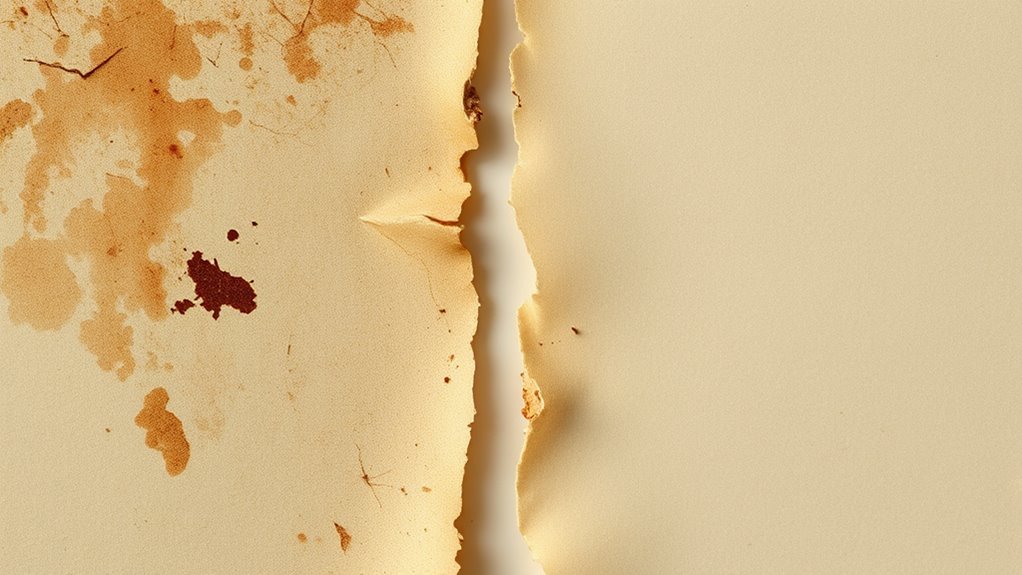

If you want your documents or artworks to last, choose alkaline over acidic paper. Acidic paper contains lignin and acids that break down cellulose, causing yellowing and brittleness over time. Alkaline paper, with higher pH and buffering agents, resists this deterioration and stays stable longer. By understanding the properties that contribute to durability, you can better protect your valuable items—keep exploring to discover how pH stability impacts preservation.
Key Takeaways
- Acidic paper contains lignin and acids that accelerate cellulose breakdown, reducing longevity.
- Alkaline or neutral papers with buffering agents maintain stable pH, extending lifespan.
- pH stability prevents acid migration and chemical deterioration, crucial for preservation.
- Acidic papers yellow, become brittle, and deteriorate faster than alkaline counterparts.
- Archival-quality, alkaline papers are designed for long-term durability and resistance to aging.
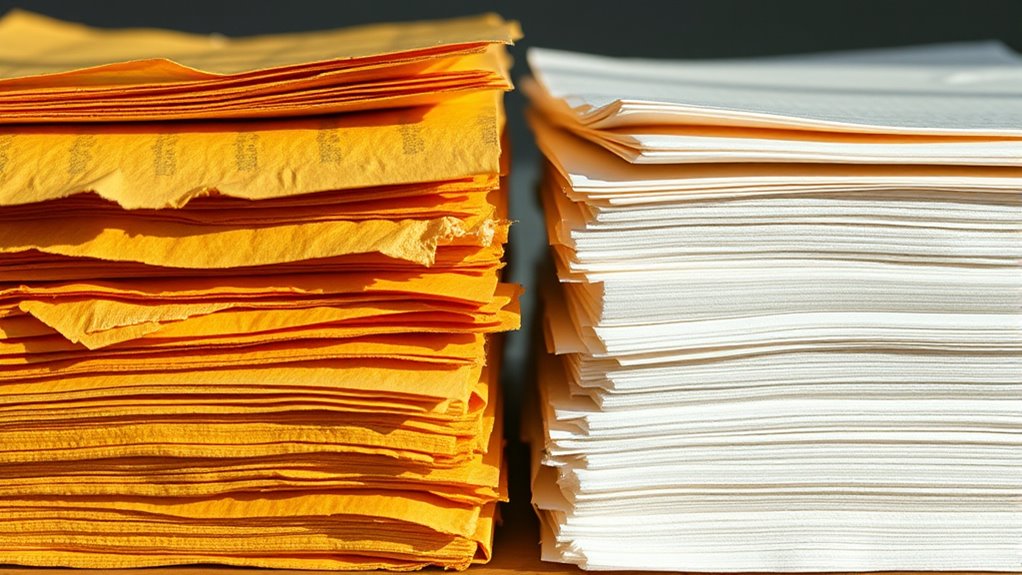
Have you ever wondered why some papers last for decades while others deteriorate quickly? The answer often lies in their chemical composition, especially their pH stability and archival quality. When you handle documents, photographs, or artworks, understanding these factors can help you choose the right materials for preservation. Acidic paper, which tends to have a low pH, usually contains lignin and other acidic substances that accelerate deterioration over time. These acids break down cellulose fibers in the paper, making it brittle, yellowing, and fragile. As a result, acidic paper’s lifespan is markedly shorter, and it’s more prone to damage from environmental factors like humidity and light. Conversely, alkaline or neutral papers have higher pH levels, often stabilized with buffering agents like calcium carbonate, which enhances their pH stability. This buffering capacity is vital because it neutralizes acids that may develop or be introduced over time, maintaining the paper’s integrity. You’ll find that archival-quality papers are designed with this in mind—they’re made to last for generations without substantial degradation. Their pH stability ensures that they resist acid migration and chemical breakdown, which are common causes of deterioration in standard papers.
When choosing paper for long-term storage or artistic purposes, you should prioritize archival quality. Archival-quality paper is manufactured specifically to meet industry standards for durability, pH balance, and chemical stability. These papers are free from lignin and other acidic fillers, making them less susceptible to yellowing and becoming brittle. They often undergo rigorous testing to verify their pH levels—ideally close to neutral or slightly alkaline—so you can trust that they’ll retain their quality over the years. The importance of pH stability cannot be overstated; it’s the foundation of longevity in paper preservation. Stable pH levels prevent the formation of acids that cause deterioration, and buffering agents help maintain this stability even when environmental conditions fluctuate. If you’re concerned with preserving documents, photographs, or artworks, investing in archival-quality, alkaline papers is essential. They will guarantee your materials remain vibrant, flexible, and intact for decades, making them a wise choice for collectors, archivists, and anyone who values longevity.
Frequently Asked Questions
How Does Storage Environment Affect Paper Longevity?
You can considerably extend your paper’s lifespan by controlling the storage environment. Keep humidity levels low and stable to prevent warping and mold growth. Proper temperature control, ideally cool and consistent, reduces chemical deterioration and fading. Avoid fluctuations that cause stress on paper fibers. By maintaining ideal humidity and temperature, you ensure your paper stays in good condition longer, preserving its quality and value over time.
Can Acidic Paper Be Safely Neutralized for Preservation?
Yes, you can safely neutralize acidic paper through pH balancing techniques. Using proper neutralization methods, like calcium carbonate or magnesium oxide treatments, helps stabilize the paper’s pH. These neutralization techniques halt ongoing deterioration and extend the lifespan of your documents. Make sure to consult a conservation professional before attempting, as improper pH balancing can cause further damage. Properly neutralized paper preserves historical value and ensures long-term storage stability.
What Are the Environmental Impacts of Alkaline Vs Acidic Paper?
You might think alkaline paper’s eco-friendliness outweighs acidic paper, but its environmental footprint depends on manufacturing and disposal. Alkaline paper often recycles more easily, reducing waste, whereas acidic paper presents recycling challenges due to its corrosive nature, which can harm machinery. While alkaline options may have a better environmental impact overall, consider production energy and chemical use when choosing paper for sustainability.
Does Ink Type Influence the Longevity of Different Paper Types?
Yes, ink type influences the longevity of different paper types. You’ll notice ink degradation varies depending on paper composition and coating effects. For instance, alkaline paper often preserves ink better due to its neutral pH, reducing acid-related deterioration. Conversely, acidic paper can accelerate ink fading and degradation over time. Choosing the right ink and understanding paper coating effects are vital for ensuring your documents stay legible and preserved longer.
Are There Specific Industries That Prefer One Type Over the Other?
Some industries, like museums and libraries, swear by alkaline paper because it surpasses even the strictest archival standards and conservation techniques, ensuring documents last for centuries. Conversely, businesses in packaging or printing might prefer acidic paper for its affordability and quick production. You’ll find that cultural institutions prioritize longevity and preservation, making alkaline paper their go-to, while commercial sectors often opt for the cheaper, more readily available acidic options.
Conclusion
Choosing between acidic and alkaline paper impacts your documents’ longevity. For example, storing valuable manuscripts on alkaline paper can prevent deterioration over decades, unlike acidic paper that may yellow and weaken quickly. If you want your cherished papers to last, opt for alkaline options and store them in a cool, dry environment. Investing in the right paper guarantees your records remain intact for future generations, safeguarding your history and stories from fading away.