
Choosing acid-free paper is crucial for preserving your important documents, photos, and artwork over time. It’s designed to resist deterioration, maintain a stable pH, and prevent yellowing or becoming brittle. This ensures your stored items stay vibrant and intact for decades. Using acid-free paper gives you peace of mind, knowing your cherished keepsakes will last. If you want to understand how this simple choice can protect your valuables, there’s more to discover.
Key Takeaways
- Acid-free paper resists deterioration, ensuring documents and artwork remain intact over time.
- It maintains a stable pH level, preventing yellowing and weakening of stored materials.
- Using acid-free paper reduces the need for frequent conservation or replacement.
- It is essential for archival storage, protecting valuable items from acid-related damage.
- Choosing acid-free paper ensures long-term preservation for personal and professional collections.

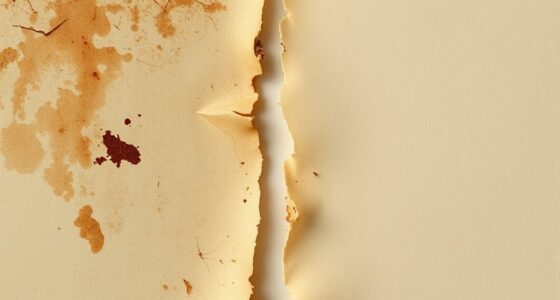
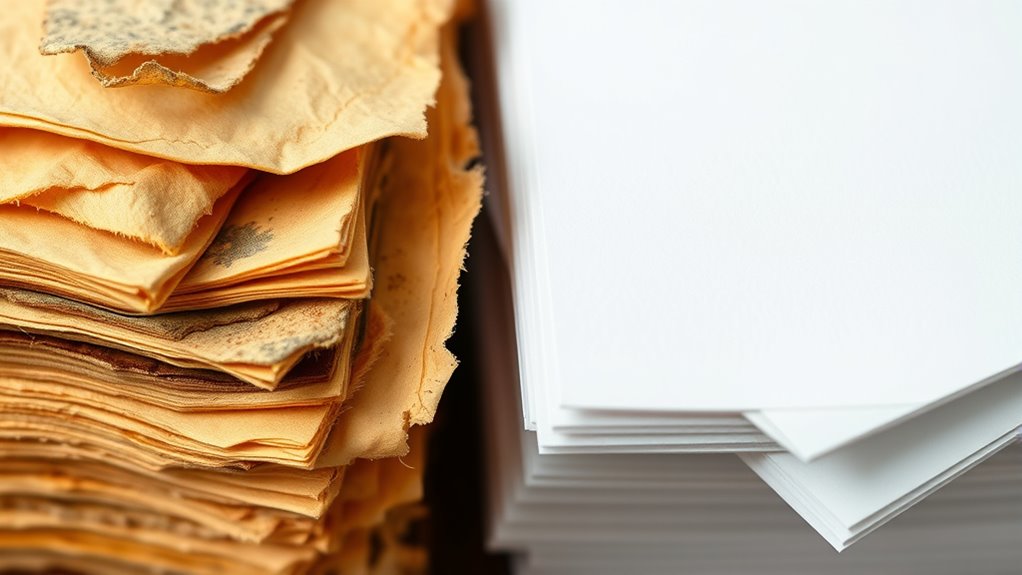
Acid-free paper is specially designed to last longer and resist deterioration over time. When you choose acid-free paper, you’re selecting a material with a stable pH balance that prevents acidic degradation. Regular paper tends to be acidic, which means it contains lower pH levels that can cause it to become brittle, discolor, and eventually disintegrate. In contrast, acid-free paper maintains a neutral or slightly alkaline pH, which helps preserve its integrity for decades or even centuries. This pH balance is essential if you’re storing important documents, photographs, or artwork, as it markedly reduces the risk of deterioration caused by acid migration.
The importance of archival quality cannot be overstated when it comes to preserving valuable items. Acid-free paper is often classified as archival quality because it meets strict standards for durability and long-term preservation. This means that it’s specifically manufactured to withstand the test of time without yellowing or weakening. When you use archival-quality acid-free paper, you’re making an investment in the longevity of your materials. Whether you’re archiving historical documents, creating professional prints, or compiling a family photo album, choosing acid-free paper ensures that your items will look and stay their best for generations. It’s especially essential in environments where preservation is a priority, such as museums, libraries, or personal collections that you want to pass down.
Furthermore, the pH balance of acid-free paper directly impacts its ability to resist deterioration. Acidic paper accelerates processes like oxidation and acid hydrolysis, which break down cellulose fibers and cause paper to become fragile. Acid-free paper’s neutral pH helps inhibit these chemical reactions, keeping the paper stable over time. This stability is fundamental if you’re considering long-term storage or display, as it minimizes the need for frequent replacements and reduces conservation costs. You’ll find that acid-free paper often contains buffering agents that help maintain a consistent pH level, adding an extra layer of protection—making it a wise choice for preserving your most treasured items.
Additionally, using acid-free paper can be especially beneficial when combined with appliance preservation techniques, as it can help protect delicate or valuable items from environmental factors that accelerate deterioration. In essence, choosing acid-free paper is about safeguarding your documents and creations against the ravages of time. Its superior pH balance and archival quality mean you’re selecting a material designed for longevity, ensuring that your important materials stay vibrant, legible, and intact for many years. Whether for personal keepsakes or professional archiving, acid-free paper offers the peace of mind that comes with knowing you’ve made a thoughtful decision to preserve the past for the future.
Frequently Asked Questions
How Long Does Acid-Free Paper Typically Last?
You’ll find that acid-free paper can last over 200 years with proper archival preservation. Its longevity depends on factors like storage conditions, humidity, and exposure to light. To maximize its lifespan, keep it in a cool, dry place away from direct sunlight. Good handling also helps maintain its quality. By controlling these longevity factors, you guarantee your acid-free paper remains intact and preserves your valuable documents or artwork for generations.
Is Acid-Free Paper More Expensive Than Regular Paper?
You’ll find acid-free paper is usually more expensive than regular paper, but it’s worth it for archival preservation. For example, museums invest in acid-free materials to guarantee paper longevity and protect their collections over decades. This higher cost reflects its superior quality, preventing deterioration and fading. If you’re preserving important documents or artwork, paying extra for acid-free paper helps ensure their longevity and maintains their value over time.
Can Acid-Free Paper Be Recycled?
Yes, acid-free paper can be recycled. You can include it in paper recycling programs, just like regular paper. Its alkaline content helps with archival preservation, ensuring documents last longer without deterioration. Recycling acid-free paper reduces waste and supports sustainability. So, when you’re finished with your acid-free documents, don’t hesitate to recycle them—your efforts contribute to a greener environment while preserving important materials for the future.
Does Acid-Free Paper Prevent All Types of Document Deterioration?
No, acid-free paper doesn’t prevent all types of document deterioration, but it does promote pH stability and archival quality. By reducing acid migration and neutralizing existing acids, it slows down deterioration caused by acidity. However, factors like light, humidity, and handling still affect document longevity. Choosing acid-free paper helps preserve your documents longer, but it’s not a complete safeguard against all forms of damage.
Are There Environmental Benefits to Using Acid-Free Paper?
Yes, using acid-free paper offers environmental benefits. You support eco-friendly manufacturing processes that reduce harmful chemicals and waste, making it better for the planet. Acid-free paper also promotes archival preservation, ensuring documents last longer without frequent replacements. By choosing acid-free options, you contribute to sustainable practices, help conserve resources, and reduce environmental impact, making your choice both practical and eco-conscious.
Conclusion
Choosing acid-free paper is a smart move if you want your documents and artwork to stand the test of time. It’s worth every penny, because once you invest in quality, you won’t have to worry about deterioration or yellowing. Think of it as hitting two birds with one stone—preserving your memories and maintaining their value. Don’t wait until it’s too late; start protecting your treasures today with acid-free paper.