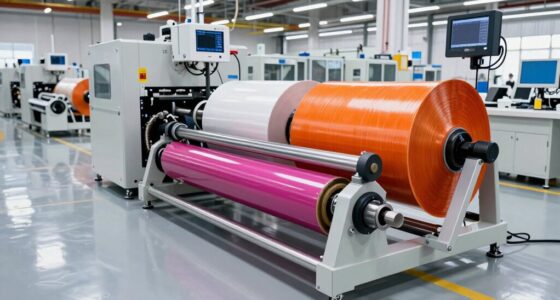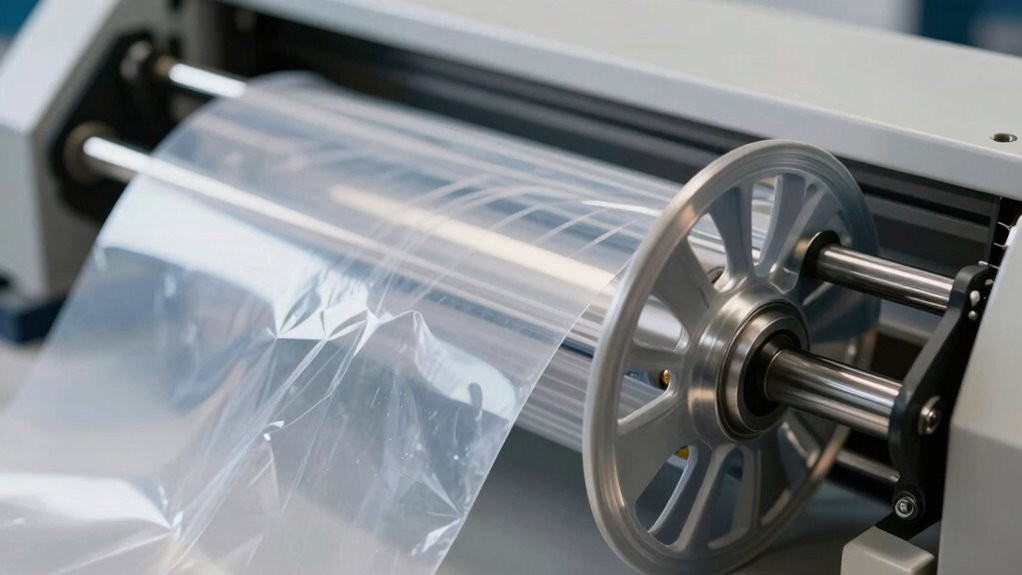

Take-up reels help you prevent wrinkles during laminating by maintaining proper film tension, alignment, and smooth winding. When you control tension with adjustable arms or brakes, you avoid slack or stretching that causes creases. Proper reel alignment ensures even winding, preventing skewing and film drift. Regular equipment maintenance and calibration keep everything running smoothly, reducing interruptions. If you want to discover how these elements work together for flawless laminations, continue exploring effective reel practices.

Get business pricing on monitors, keyboards and dev gear
- Business-only prices and quantity discounts
- Tax-exempt purchasing
- Multiple users, one account, clear invoices
Key Takeaways
- Proper film tension regulation prevents slack or overstretching that causes wrinkles during winding.
- Accurate reel alignment ensures even winding and avoids film skewing that leads to wrinkles.
- Tension control mechanisms maintain consistent tension, reducing slack or tightness that causes wrinkles.
- Regular equipment maintenance ensures smooth reel rotation and consistent film handling.
- Steady reel operation minimizes interruptions, maintaining high-quality lamination and reducing wrinkles.
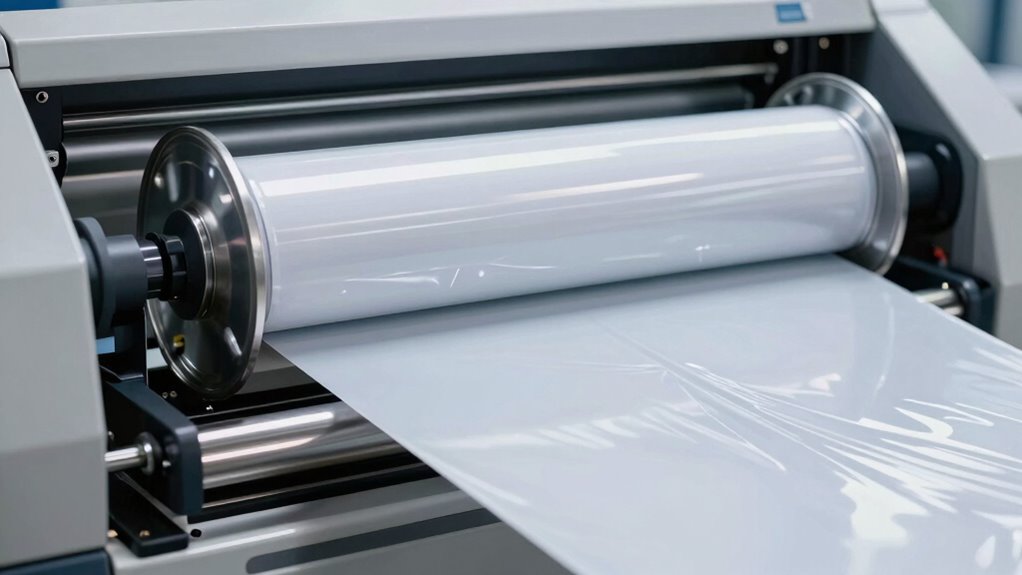
If you’re looking for effective ways to reduce wrinkles, understanding how take-up reels play a role can be surprisingly helpful. In laminating workflows, wrinkles often result from inconsistent film tension and poor reel alignment. Take-up reels are designed to manage the film after it passes through the lamination process, and their proper use directly impacts the quality of the finished product. When film tension isn’t maintained evenly, it causes the film to stretch or bunch up, leading to wrinkles that can ruin the appearance of your laminated materials. The take-up reel helps regulate this tension by winding the film smoothly, preventing slack or excessive tightness that can cause creases.
Reel alignment is another essential factor in wrinkle reduction. If the take-up reel isn’t properly aligned with the supply reel, the film can drift or skew as it moves through the laminator. This misalignment creates uneven winding, which introduces wrinkles and distortions. Ensuring that both reels are perfectly aligned helps the film feed steadily and evenly, reducing the likelihood of creases during winding and subsequent handling. Proper reel alignment also minimizes the risk of film jams or uneven winding, which can contribute to imperfections. Regular calibration of the reel mechanism ensures consistent reel operation and helps prevent misalignments that lead to wrinkles. Implementing proper setup procedures can further enhance reel accuracy and workflow consistency. Additionally, using precision alignment tools can help maintain optimal reel positioning and avoid common issues that cause wrinkles. Regularly checking reel tension and alignment is crucial for maintaining a wrinkle-free lamination process.
Controlling film tension is necessary, and the take-up reel’s tension mechanism plays a fundamental role in this. Many reels are equipped with adjustable tension arms or brakes, allowing you to set the ideal tension level for your specific material. When tension is too loose, the film can slack, leading to wrinkles and folds. Conversely, overly tight tension can stretch or deform the film, producing creases. By fine-tuning the tension on the take-up reel, you guarantee that the film winds smoothly without undue stress, resulting in a more uniform, wrinkle-free finish. Monitoring tension regularly ensures that the film remains within optimal parameters throughout the process.
Additionally, consistent reel operation contributes to overall workflow efficiency. When the take-up reel operates smoothly with proper film tension and alignment, you experience fewer interruptions, less rework, and a higher-quality product. It’s important to regularly inspect the reels, ensuring they are free of debris and properly lubricated to maintain smooth rotation. Proper maintenance and calibration of the reel mechanism help sustain the best film tension and alignment, preventing wrinkles from forming in the first place. Regularly monitoring and adjusting the reel tension helps maintain optimal conditions for wrinkle-free lamination. Incorporating routine maintenance into your workflow can further extend equipment lifespan and improve overall results.
lamination take-up reel tension control
As an affiliate, we earn on qualifying purchases.
As an affiliate, we earn on qualifying purchases.
Frequently Asked Questions
How Do Take-Up Reels Differ From Other Tension Control Devices?
Take-up reels differ from other tension control devices because they actively maintain tension consistency and guarantee proper reel alignment during lamination. Unlike brake systems or tension arms, take-up reels automatically adjust as the roll grows, preventing slack or excessive tension. This continuous adjustment helps reduce wrinkles by keeping the material smooth and evenly tensioned, making your workflow more efficient and producing higher-quality laminated outputs with fewer defects.
Can Take-Up Reels Be Used With All Types of Laminating Materials?
Yes, take-up reels can typically be used with most laminating materials, but material compatibility varies. You should consider reel customization options to match your specific laminating needs, guaranteeing smooth operation. Different materials, like films or foils, may require tailored tension settings or reel adjustments. By choosing the right reel customization, you can optimize workflow, minimize wrinkles, and ensure seamless lamination, regardless of the material type you’re working with.
What Maintenance Is Required for Take-Up Reels to Prevent Wrinkles?
You should regularly check and adjust the tension of your take-up reel to prevent wrinkles, ensuring it’s not too tight or loose. Keep the reel clean by removing dust, adhesive buildup, or debris that could cause uneven winding. Proper tension adjustment and reel cleaning maintain smooth operation, reducing the risk of wrinkles during lamination. Consistent maintenance helps your workflow stay efficient and your laminated materials wrinkle-free.
Are There Size Limitations for Take-Up Reels in Large-Scale Laminating?
Yes, there are size limitations for take-up reels in large-scale laminating. You need to take into account reel size to ensure it fits your laminator’s capacity and matches the material width. Larger reels are ideal for high-volume projects but may require specific equipment compatibility. Always check material compatibility with the reel size to prevent issues, like wrinkles or jams, ensuring smooth operation in your laminating workflow.
How Do Take-Up Reels Impact the Overall Speed of Laminating Workflows?
Take-up reels boost your workflow efficiency by maintaining consistent material tension, preventing slack and wrinkles. This steady tension allows your laminating process to run smoothly and faster, reducing downtime caused by manual adjustments. As a result, you can complete more projects in less time, ensuring a seamless workflow. By optimizing tension control, take-up reels help you achieve quicker, higher-quality laminations with minimal interruptions.
laminating film reel alignment tools
As an affiliate, we earn on qualifying purchases.
As an affiliate, we earn on qualifying purchases.
Conclusion
So, next time you’re battling wrinkles in your laminating workflow, remember: take-up reels are your secret weapon. They twist, turn, and tame the chaos—like a fashionista’s perfect ponytail—keeping your film smooth and your workflow slick. No more fuss, no more frustration. Just let the reels do their magic, and you’ll be laughing all the way to flawless laminations. Because, let’s face it, who doesn’t love a wrinkle-free life?
adjustable tension arm for laminating reels
As an affiliate, we earn on qualifying purchases.
As an affiliate, we earn on qualifying purchases.
lamination reel calibration tools
As an affiliate, we earn on qualifying purchases.
As an affiliate, we earn on qualifying purchases.
Halloween Picks
halloween
As an affiliate, we earn on qualifying purchases.