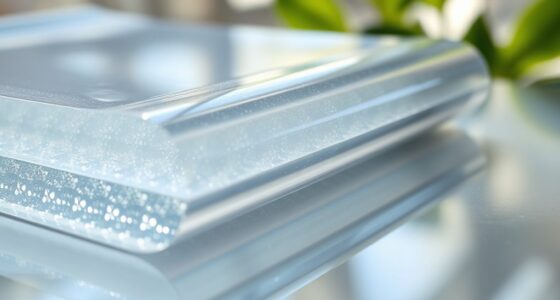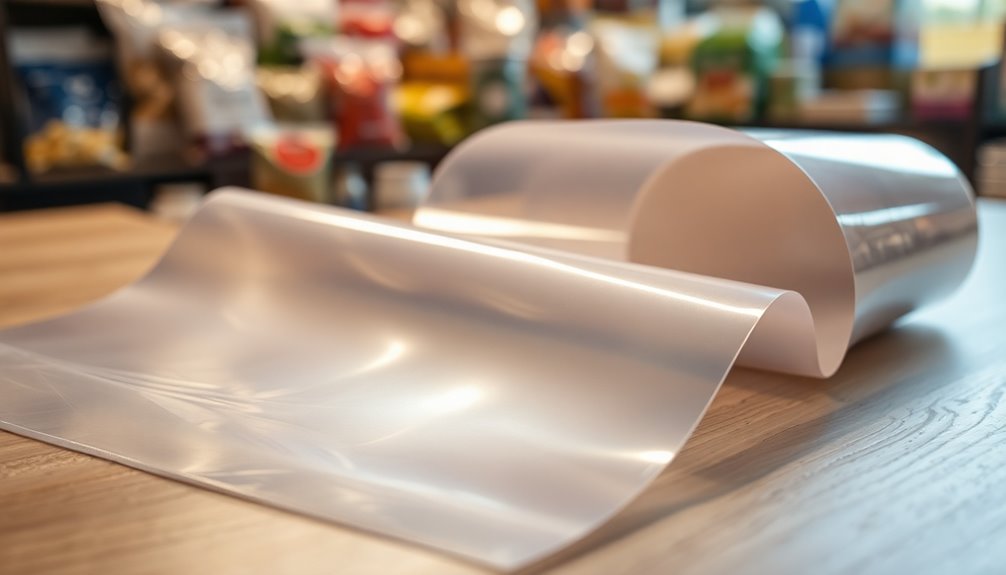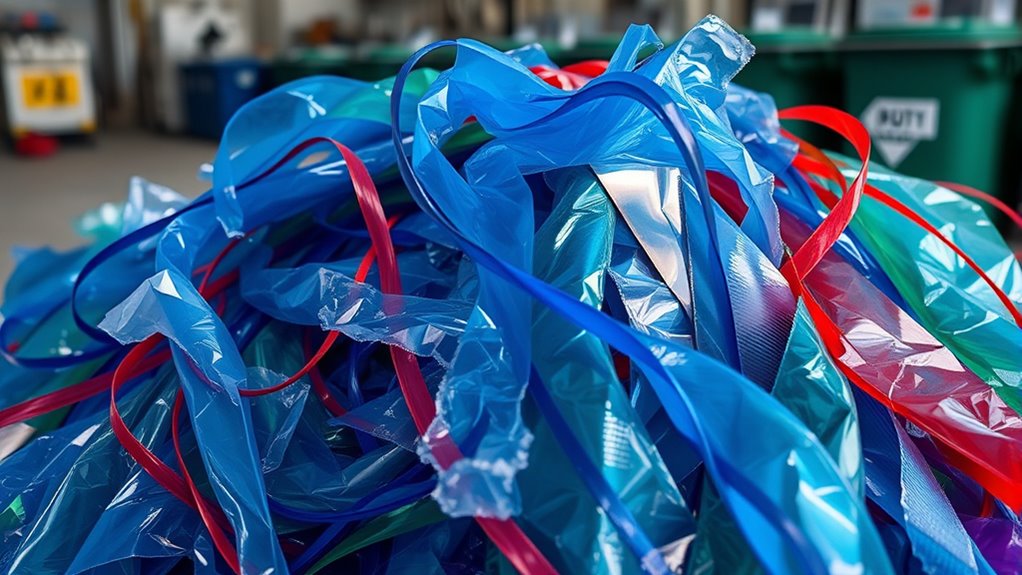

Recycling multi-layer films is tricky because their complex structure and different materials make it hard to separate and recover pure components. Adhesives can bond layers tightly, preventing easy removal, while incompatible polymers may melt at different points, causing contamination. Mechanical and chemical separation methods often degrade the materials or are costly. If you want to know more about how these challenges are being addressed and innovative solutions, keep exploring this topic further.
Key Takeaways
- Fused multi-layer structures are difficult to separate, complicating recycling processes.
- Incompatible adhesives and materials hinder effective layer separation and contaminate recycled products.
- Chemical or solvent-based separation methods are costly and environmentally challenging.
- Material incompatibility causes phase separation and degraded properties in recycled outputs.
- Designing recyclable multi-layer films requires overcoming bonding, compatibility, and processing challenges.
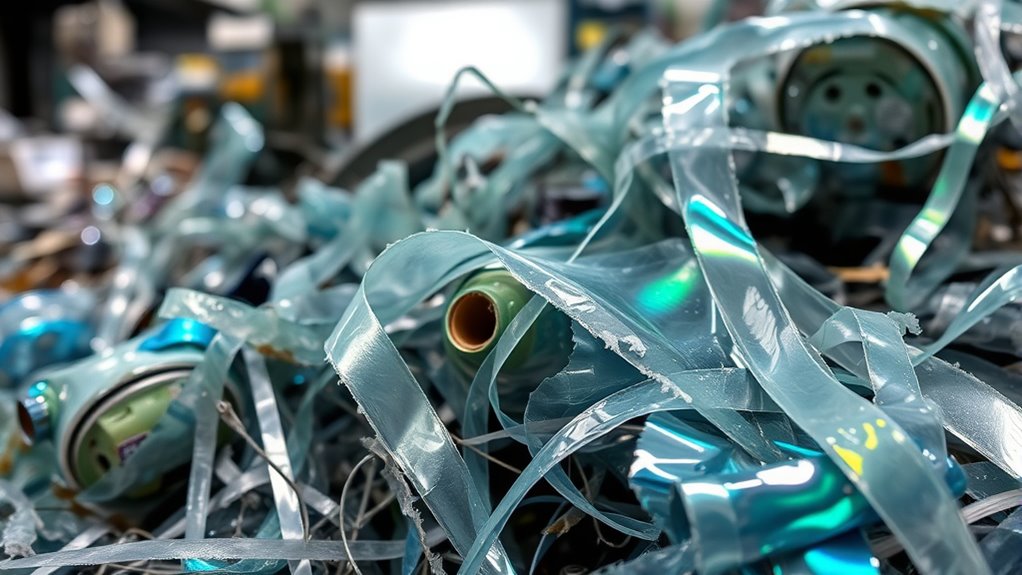
Recycling multi-layer films presents important challenges because their complex structures make separation and processing difficult. These films are engineered with multiple layers of different materials, each serving specific functions such as barrier protection, strength, or sealability. While this design improves product performance, it complicates recycling efforts. One key issue is adhesive compatibility; adhesives used to bond layers often hinder the separation process. When adhesives are not compatible or degrade during recycling, they can cause layers to stick together or break apart unpredictably. This makes it harder to recover pure materials and leads to contamination in the recycled output. As a result, recycling facilities must find ways to address the adhesive bonds without damaging the integrity of the individual layers. Additionally, advancements in recyclable adhesives can help overcome these barriers by enabling easier separation during processing.
Material separation is at the heart of the challenge. Multi-layer films are typically fused into a single, composite sheet, making it difficult to isolate each component during recycling. Traditional mechanical methods, like shredding or melting, often result in a mixture of materials with contaminated or degraded properties. Chemical or solvent-based separation techniques can be more effective but tend to be costly and environmentally taxing. Furthermore, the presence of incompatible polymers in the layers complicates the process further. When different plastics are fused together, they may have differing melting points and chemical compatibilities, which can cause issues like phase separation or poor-quality recycled material. This inconsistency reduces the economic viability of recycling multi-layer films and discourages manufacturers from designing for recyclability.
To improve recycling outcomes, you need to focus on how layers are bonded and whether the materials can be separated efficiently. Innovations in adhesive formulations that are compatible with recycling processes are essential. For example, developing adhesives that weaken or break down during thermal or chemical treatment can facilitate easier separation. Additionally, designing multilayer films with compatible polymers or using mono-material structures can greatly simplify recycling. Efforts to increase recyclability also involve adopting standards that encourage the use of recyclable adhesives and materials, making separation more achievable in existing facilities. Ultimately, addressing adhesive compatibility and enhancing material separation techniques are critical steps toward making multi-layer films easier to recycle. This way, you can help reduce plastic waste, conserve resources, and promote more sustainable packaging solutions.

Glue-Less Surface Protection Film Tape, Adhesive-Less Film Tape with No Residue. (Green Product Alert – 100% Recyclable Product), (Blue, 6" x 600 Feet (1 Roll/Order))
Glueless: Our Glueless Protection Film is a medium tack, designed for applications on smooth surfaces such as metals,…
As an affiliate, we earn on qualifying purchases.
As an affiliate, we earn on qualifying purchases.
Frequently Asked Questions
How Do Multi-Layer Films Impact Overall Plastic Waste Management?
Multi-layer films complicate plastic waste management because they hinder effective recycling. You’ll find that these films often cause recycling contamination, making it tough to process and reuse materials efficiently. Their complex structure prevents proper material separation, leading to increased waste and higher disposal costs. As a result, multi-layer films reduce recycling rates and strain waste management systems, highlighting the need for better design or alternative solutions to address these challenges.
Are There Successful Case Studies of Multi-Layer Film Recycling?
Like a puzzle coming together, some successful case studies showcase multi-layer film recycling. You’ll find innovative sorting techniques and advanced material separation methods play vital roles. Companies have developed processes that efficiently break down complex films into reusable raw materials, reducing waste. These examples prove that with the right technology, multi-layer films can be recycled effectively, turning what once seemed impossible into a sustainable solution.
What Innovations Are Emerging to Improve Multi-Layer Film Recyclability?
You’ll find that innovations like innovative adhesives and biodegradable polymers are transforming multi-layer film recyclability. These adhesives enable easier separation of layers, boosting recycling efficiency. Biodegradable polymers reduce environmental impact and can be integrated into multi-layer structures without compromising durability. As a result, you’ll see advancements that make recycling more sustainable and cost-effective, encouraging widespread adoption and reducing plastic waste globally.
How Does Multi-Layer Film Composition Vary Globally?
Imagine a tapestry woven differently across continents—that’s how multi-layer film compositions vary globally. You’ll find material variability driven by regional regulations, which shape the choice of materials, adhesives, and barrier layers. In some areas, eco-friendly trends influence lighter, recyclable layers, while others prioritize durability. These regional differences create a mosaic of films, making universal recycling a complex puzzle for you to piece together effectively.
What Policies Incentivize Better Recycling of Multi-Layer Films?
You can benefit from policies like extended producer responsibility, which makes manufacturers responsible for recycling their products, encouraging them to design easier-to-recycle multi-layer films. Recycling subsidies also help by providing financial support to recycling facilities, making it more viable to process complex films. These incentives motivate producers and recyclers to work together, improving recycling rates and reducing environmental impact of multi-layer films.

YCCLDIPL Film Cassette Cartridge Opener Removal for 135 Negative Film Darkroom Tool Bulk Film Reload Film Retriever
【Note】:1.Use only in the darkroom or film changing bag .You cannot restore the film cartridge once it opens.3.Please…
As an affiliate, we earn on qualifying purchases.
As an affiliate, we earn on qualifying purchases.
Conclusion
Ultimately, recycling multi-layer films is like trying to untangle a complex web woven with threads of innovation and obstacle. Each layer represents a barrier you must carefully peel back, revealing the fragile core of sustainability. While the journey seems intimidating, your effort serves as a beacon—a lighthouse guiding the way through murky waters. Embrace this challenge, for within it lies the power to transform waste into a symbol of hope, resilience, and a cleaner future.

JIALAI HOME Recycling Bin, Separate Large Recycle Bins for Kitchen – Indoor Home Trash Bin, Recyclable Waste Trash Sorting Organizer, Durable, Washable, Affordable Recycle Bags, 2 Pack
MULTI-PURPOSE: Please insert black plastic stripes under the handles. Those actually keep bags in shape and you have…
As an affiliate, we earn on qualifying purchases.
As an affiliate, we earn on qualifying purchases.

ALadrs 6PCS FEP Film for Resin LCD 3D Printer, FEP Film for ELEGOO Saturn S, Saturn, Mono X 6K,Photon Mono X, M3, M3 Plus, Sonic Mini 8K, Mighty 4K 7.1-9.25 inch 3D Printer 260x200x0.15 mm
Suitable models : ELEGOO Saturn s,Saturn , Photon Mono X, Mono X 6K, Photon Mono X 6KS, Photon…
As an affiliate, we earn on qualifying purchases.
As an affiliate, we earn on qualifying purchases.