

Compostable packaging film regulations set strict standards for biodegradability, labeling, and certification to make sure your materials truly decompose in composting environments. They require third-party testing to verify claims and proper labeling to guide consumers and waste facilities. These rules help prevent greenwashing and promote transparency in the industry. If you want to understand how these regulations protect the environment and ensure genuine compostability, there’s more to explore.
Key Takeaways
- Biodegradability standards like ASTM D6400 and EN 13432 set benchmarks for compostable packaging films.
- Clear labeling requirements specify whether films are suitable for industrial or home composting.
- Certification by third-party organizations verifies compliance with recognized biodegradability standards.
- Regulations enforce truthful claims to prevent greenwashing and ensure environmental integrity.
- Proper regulations support consumer awareness, industry accountability, and sustainable packaging practices.
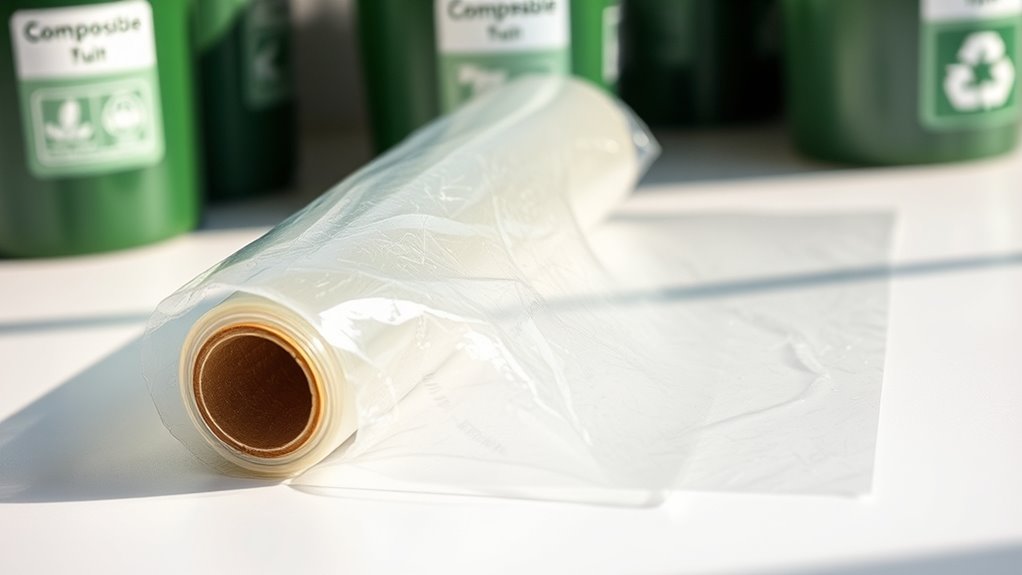
Are compostable packaging films truly meeting environmental standards? That’s a question many consumers and manufacturers are asking as eco-consciousness grows. The truth is, not all compostable films are created equal, and understanding the regulations surrounding them is crucial to guaranteeing they deliver on their promise. One of the key factors in this area revolves around biodegradability standards. These standards set the benchmarks for how quickly and thoroughly a packaging film can decompose in a composting environment. They help distinguish genuinely eco-friendly products from those that merely claim to be compostable without meeting rigorous criteria. If a film claims to be biodegradable, it should meet specific standards set by recognized organizations, such as ASTM D6400 or EN 13432, which specify the percentage of material that must break down within a certain timeframe. Without meeting these standards, a product’s environmental benefit becomes questionable.
Alongside biodegradability standards, labeling requirements play a critical role in guiding consumers and waste management facilities. Clear, accurate labeling helps prevent confusion and misuse. For example, a packaging film labeled as “compostable” should specify whether it is suitable for industrial or home composting, as these environments vary greatly. Labels must also include relevant certification marks, indicating that the product has undergone third-party testing and complies with established standards. Misleading claims or vague language can lead to improper disposal, which hampers composting efforts and compromises environmental goals. Regulations often stipulate strict guidelines for labeling, requiring manufacturers to provide transparent information about the compostability process, including any limitations or conditions. This ensures that consumers know whether they can compost the film at home or need to rely on commercial facilities. Additionally, adherence to biodegradability standards helps ensure that films truly break down in a timely and eco-friendly manner, reducing environmental impact.
Furthermore, compliance with these regulations isn’t just about meeting legal requirements; it’s about building trust and credibility. When you choose products with proper labeling and certification, you’re supporting companies that adhere to high standards, fostering a more sustainable packaging industry. Regulatory bodies are increasingly cracking down on false claims to prevent greenwashing, which means manufacturers must be diligent about meeting biodegradability standards and accurately representing their products through proper labeling. As a consumer, understanding these requirements empowers you to make informed choices and advocate for products that genuinely support environmental health. In the end, guaranteeing compostable packaging films meet strict standards and are properly labeled isn’t just good practice—it’s essential for making a real difference in reducing waste and protecting the planet.
Frequently Asked Questions
Are Compostable Films Suitable for All Types of Food Packaging?
Compostable films aren’t suitable for all food packaging types because of biodegradability concerns and moisture resistance issues. You should consider their compatibility with the specific food product, as some films may break down too quickly or fail to resist moisture effectively. For items needing longer shelf lives or high moisture barriers, traditional plastics might still be better. Always check the film’s specifications to guarantee it meets your packaging needs.
What Certifications Validate a Film’s Compostability?
You can verify a film’s compostability through certification standards like ASTM D6400, EN 13432, and OK compost HOME. These certifications ensure regulatory compliance by confirming the film breaks down within specific timeframes under industrial composting conditions. Always look for trusted labels from recognized certifying bodies, as they guarantee the product meets strict environmental and safety criteria, giving you confidence in its compostability.
How Do Compostable Films Compare in Cost to Traditional Plastics?
Compostable films often cost considerably more than traditional plastics, sometimes by a margin that feels like paying a fortune. When you do a cost comparison, you’ll notice that these eco-friendly options tend to have higher production and material expenses, impacting economic feasibility. However, as demand grows and technology advances, prices are gradually decreasing, making compostable films a more practical choice for sustainable packaging without breaking the bank.
Can Compostable Packaging Films Be Recycled Alongside Regular Plastics?
You can’t recycle compostable packaging films with regular plastics because their recycling compatibility differs. These films are designed to break down naturally in composting environments, not in standard recycling facilities. Using compostable films reduces environmental impact by decreasing plastic waste, but mixing them with traditional plastics can contaminate recycling streams. To maximize sustainability, always follow disposal instructions and separate compostable packaging from regular plastic waste.
What Are the Disposal Requirements for Compostable Packaging Films?
You should follow specific disposal guidelines for compostable packaging films, primarily relying on industrial composting facilities. These films need to be composted in environments with controlled temperature and humidity to break down properly. Do not throw them in regular trash or recycling bins, as they won’t decompose correctly. Always check local regulations to ensure you’re adhering to the proper disposal procedures for compostable packaging films, supporting eco-friendly waste management.
Conclusion
Guiding compostable packaging film regulations can feel like sailing through stormy seas, but staying informed keeps you steady. Imagine a small business that switched to compliant packaging and watched their customer loyalty grow, much like a tree that flourishes when nurtured with care. By understanding these rules, you’re not just meeting standards — you’re planting seeds for a greener future. Embrace the journey, and let your commitment to sustainability be the guiding star.