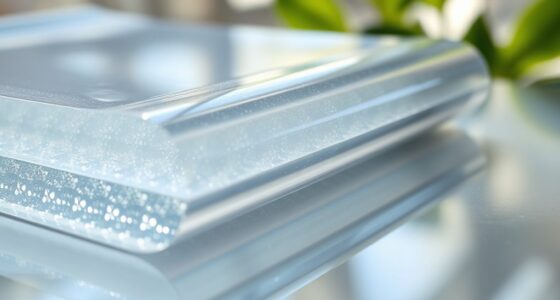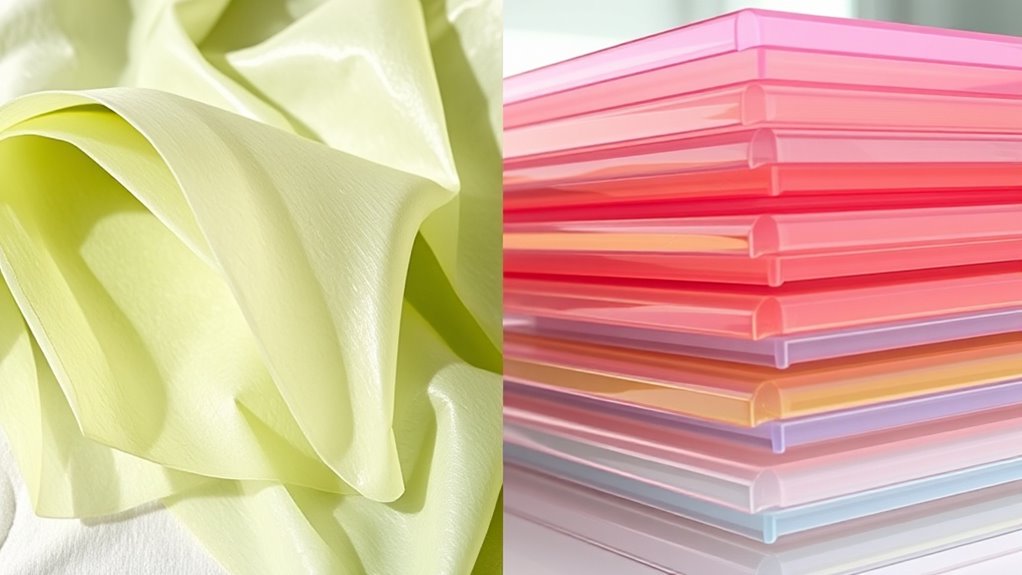

Bioplastics are designed to be more environmentally friendly than petroleum-based packaging films, especially by offering better marine biodegradability. However, challenges remain in recycling and waste management, as many bioplastics need separate processing and can contaminate conventional recycling streams. Proper disposal methods and infrastructure are vital for realizing their benefits. If you want to understand how bioplastics truly compare and what it takes to make them sustainable, there’s more to uncover below.
Key Takeaways
- Bioplastics are designed to be more environmentally friendly, with some capable of marine biodegradation, unlike petroleum-based films.
- Petroleum-based films benefit from established recycling streams, whereas bioplastics often require separate waste management systems.
- Bioplastics tend to be biodegradable or compostable, but their environmental performance depends on disposal conditions and infrastructure.
- Petroleum plastics generally persist longer in the environment, contributing to pollution, while bioplastics aim to reduce this impact.
- Transitioning from petroleum to bioplastics involves considering lifecycle impacts, recycling challenges, and infrastructure improvements.

Are bioplastics truly a better alternative to traditional petroleum-based packaging films? This question often comes up as environmental concerns grow and companies seek greener solutions. One key aspect to contemplate is marine biodegradability. Unlike conventional plastics, some bioplastics are designed to break down more readily in marine environments, reducing the risk of ocean pollution. This means that if bioplastics end up in the ocean, they’re less likely to persist for hundreds of years, harming marine life. However, not all bioplastics are created equal. Some still require specific conditions to biodegrade, such as industrial composting facilities, which aren’t always accessible or widespread. This creates a gap between their theoretical environmental benefits and real-world performance, especially when it comes to marine biodegradability. You might think that just switching to bioplastics solves the pollution problem, but that’s not entirely true.
Recycling challenges also complicate the picture. Traditional plastics have well-established recycling streams, even if they’re not always efficient or widespread. Bioplastics, on the other hand, often require separate recycling processes, which can be confusing for consumers and waste management systems. When mixed with conventional plastics, they can contaminate recycling batches, making recycling more difficult and less effective. This can lead to increased waste sent to landfills or incineration, negating some of the environmental benefits bioplastics aim to provide. Plus, the infrastructure for recycling bioplastics is still developing, meaning you might not always be able to recycle them properly. As a result, they often end up in landfills, where degradation takes much longer and can produce greenhouse gases.
While bioplastics have the potential to be more environmentally friendly, especially if designed with marine biodegradability in mind, the current recycling challenges hinder their widespread adoption. You need to reflect that switching to bioplastics isn’t just about choosing a “greener” material; it involves understanding the entire lifecycle, including how they are disposed of and how they behave in different environments. Without proper disposal and recycling infrastructure, the environmental benefits of bioplastics can be limited. In essence, while bioplastics can offer advantages over traditional plastics in terms of marine biodegradability, their effectiveness depends heavily on improving waste management systems and educating consumers. Only then can they truly serve as a sustainable alternative in packaging applications.

Eco Friendly Clear Poly Bags with Suffocation Warning – 10" x 13" (100 Count) – Strong Self Seal – Biodegradable Premium Frosted Bag for Packaging
[100% COMPOSTABLE MATERIAL & NON-TOXIC] This is a plant based bag made from compostable biodegradable resin certified in…
As an affiliate, we earn on qualifying purchases.
As an affiliate, we earn on qualifying purchases.
Frequently Asked Questions
How Do Bioplastics Impact Overall Carbon Footprints?
You can reduce your overall carbon footprint by choosing bioplastics, as they typically have a smaller greenhouse gas impact during production and disposal. Bioplastics help lower your contribution to greenhouse emissions because they often originate from renewable resources, which absorb CO2 during growth. By opting for bioplastics, you support a more sustainable cycle, ultimately decreasing your personal and collective greenhouse gas emissions and making a positive environmental difference.
Are Bioplastics Suitable for High-Temperature Packaging?
Bioplastics generally aren’t suitable for high-temperature packaging because they lack thermal stability and heat resistance compared to petroleum-based plastics. When exposed to elevated temperatures, they can deform or break down, compromising product safety and integrity. If you need packaging that withstands high heat, look for bioplastics specifically engineered for thermal stability or consider alternative materials that offer better heat resistance for your application.
What Are the Cost Differences Between Bioplastics and Petroleum Plastics?
You’ll find that bioplastics generally have a higher cost compared to petroleum plastics, primarily due to raw material expenses and production processes. In market pricing, petroleum-based plastics are more affordable because of established, large-scale manufacturing. The cost comparison shows bioplastics’s premium, which can impact your budget for packaging projects. However, as demand and technology improve, bioplastics may become more competitive in the future.
How Do Bioplastics Affect Recycling Processes?
You might notice that bioplastics can impact recycling processes by affecting recycling compatibility and increasing contamination risks. Since some bioplastics aren’t always compatible with traditional recycling streams, they can cause contamination, making it harder to recycle mixed materials effectively. To minimize these issues, always verify if bioplastics are recyclable in your local facilities and separate them from petroleum-based plastics to guarantee smooth recycling and reduce contamination risks.
What Are the Limitations of Bioplastics in Industrial Applications?
Imagine a fragile glass sculpture, beautiful but easily broken—bioplastics face similar limits. You’ll encounter scalability challenges as producing them in large volumes remains difficult, and material durability often falls short under industrial conditions. These constraints hinder their widespread use, especially where long-lasting, tough materials are essential. Until innovation overcomes these hurdles, bioplastics can’t fully replace traditional plastics in demanding industrial applications.
![[100 per box] | Recyclable Compostable Reusable Biodegradable Plastic T-Shirt Bags | Grocery Shopping Bags | Green Eco Plastic Bags (100 per Pack) | T-Shirt Carryout Bags 100 count Restaurant Quality, Durable, Reusable and Econ Friendly | Measures 11. 5" X 6. 25" X 21"( large size 1/6) , 16 Mic (0. 63 Mil)](https://m.media-amazon.com/images/I/41A-ygPgCOL._SL500_.jpg)
[100 per box] | Recyclable Compostable Reusable Biodegradable Plastic T-Shirt Bags | Grocery Shopping Bags | Green Eco Plastic Bags (100 per Pack) | T-Shirt Carryout Bags 100 count Restaurant Quality, Durable, Reusable and Econ Friendly | Measures 11. 5" X 6. 25" X 21"( large size 1/6) , 16 Mic (0. 63 Mil)
100% BIODEGRADABLE- No need to compost – just throw this bag in your regular trash can or recycle…
As an affiliate, we earn on qualifying purchases.
As an affiliate, we earn on qualifying purchases.
Conclusion
Choosing bioplastics over petroleum-based films means embracing sustainability and reducing environmental harm. While traditional plastics are durable and cost-effective, they often end up in landfills or oceans, harming ecosystems. Bioplastics, though newer and sometimes pricier, break down more easily and lessen our carbon footprint. It’s like swapping a heavy, polluting vehicle for an electric one—you still get where you’re going, but with a cleaner conscience and a healthier planet.

JENCENBIO Cling Wrap Compostable Food Wrap Film with Slide Cutter 12" Wide 200 FT for Kitchen ASTM D6400 Certified Clear
12 Inches wide x 200ft long Compostable film: Made from PLA material that reduces plastic waste. Say goodbye…
As an affiliate, we earn on qualifying purchases.
As an affiliate, we earn on qualifying purchases.

Rubbermaid Commercial Products Slim Jim Plastic Rectangular Recycling Bin/Trash Can with Venting Channels 23 Gal Blue for Kitchens/Classrooms/Offices/Back of House
RECYCLE: Blue color and recycling symbol for improved waste diversion
As an affiliate, we earn on qualifying purchases.
As an affiliate, we earn on qualifying purchases.