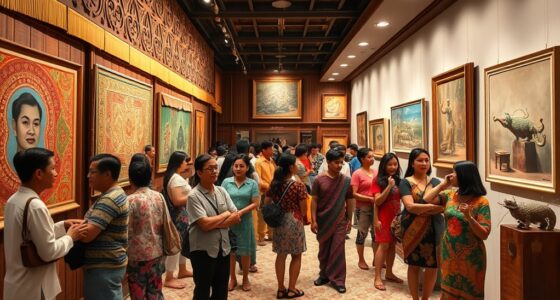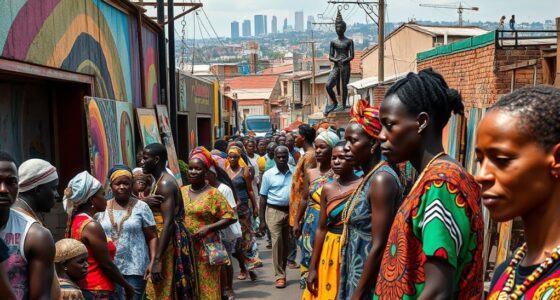
You can see how Southeast Asian craft traditions influence fine art materials through techniques like textile dyeing and bamboo weaving. These methods reflect rich cultural symbolism and emphasize sustainability, blending ancient skills with modern creativity. Natural dyes from local plants create vibrant, eco-friendly colors, while bamboo works inspire innovative forms. By practicing these crafts, you connect with cultural heritage and bring meaningful stories into contemporary art. Keep exploring, and you’ll discover even more about this fascinating fusion of tradition and innovation.
Key Takeaways
- Traditional textile dyeing techniques like resist dyeing and ikat add textured patterns and cultural symbolism to fine art textiles.
- Bamboo weaving techniques influence sculpture and mixed-media art through their structural and textural qualities.
- Natural dyes derived from regional plants and insects inspire environmentally sustainable color palettes in contemporary art.
- Craft practices embody cultural heritage, informing themes of identity and history in modern artistic expressions.
- Integration of traditional methods fosters innovation, blending ancient craftsmanship with contemporary artistic concepts.
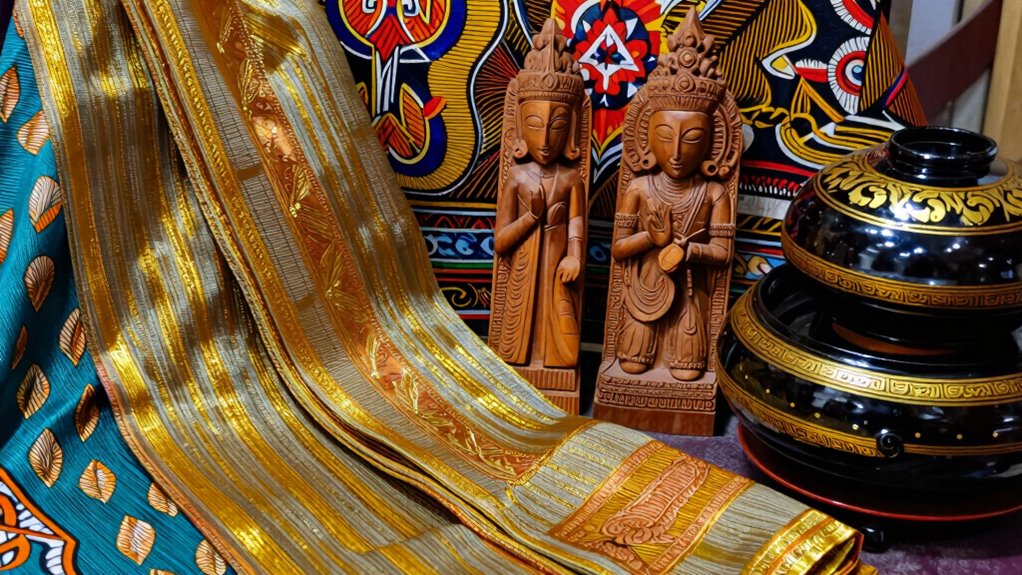
Southeast Asia boasts a rich tapestry of craft traditions and fine art materials that reflect its diverse cultural heritage. These traditions shape the way artists and artisans approach their work, blending ancient techniques with contemporary ideas. When you explore the region’s craft practices, you see how they influence the materials used in fine art, especially through processes like textile dyeing and bamboo weaving. These methods don’t just produce functional items; they serve as cultural expressions embedded with history and symbolism.
Textile dyeing stands out as a vital craft that deeply influences Southeast Asian art. You’ll notice that many traditional textiles feature vibrant colors achieved through natural dyeing processes. These dyes often come from plants, roots, and insects, each with symbolic significance. For example, indigo produces deep blue hues, while turmeric yields bright yellow shades. Artists and artisans use these colors intentionally, embedding stories and cultural meanings into their work. The techniques of resist dyeing, such as batik or ikat, add layers of complexity and texture, inspiring fine artists to incorporate similar patterns and methods into their mixed-media pieces. The craftsmanship involved in textile dyeing encourages a respect for natural materials and sustainable practices, which many contemporary artists now integrate into their portfolios. Additionally, the natural dyeing methods employed highlight the region’s commitment to environmentally friendly and sustainable art practices. These methods have been refined over centuries, illustrating how tradition can adapt to modern ecological concerns. This ongoing tradition demonstrates how environmentally friendly techniques are vital to preserving both cultural heritage and ecological balance. Moreover, the use of locally sourced materials in dyeing supports regional economies and promotes sustainable resource use, ensuring that these practices remain viable for future generations.
Bamboo weaving is another craft that significantly influences fine art materials in Southeast Asia. You might see this technique in everything from traditional baskets to intricate sculptures. Bamboo’s versatility allows artists to experiment with form and structure, transforming this humble plant into fine art. Its natural strength and flexibility inspire innovative uses, such as creating lightweight frames or detailed woven patterns. Artists often incorporate bamboo into their installations or sculptures to evoke a sense of connection to nature and tradition. The craftsmanship behind bamboo weaving emphasizes patience and precision, qualities that transfer into the aesthetic and conceptual depth of the final artwork. This tradition also imparts a tactile quality, encouraging viewers to appreciate the material’s organic texture and the skill required to manipulate it. Additionally, the detailed craftsmanship involved in bamboo weaving exemplifies the dedication of artisans to their craft, which enhances the cultural significance of each piece.
Together, textile dyeing and bamboo weaving exemplify how Southeast Asian craft traditions influence fine art materials. These practices preserve cultural identity while fostering creativity. As you engage with these materials and techniques, you gain insight into the region’s history and the ongoing dialogue between tradition and innovation. Southeast Asian artisans demonstrate how ancient methods can evolve into contemporary art forms, enriching the visual language with textured colors and natural materials that tell stories beyond words.
natural dyeing kits for textiles
As an affiliate, we earn on qualifying purchases.
As an affiliate, we earn on qualifying purchases.
Frequently Asked Questions
How Do Traditional Southeast Asian Techniques Adapt to Modern Art Forms?
You see traditional Southeast Asian techniques adapt to modern art forms through contemporary reinterpretations, where artists blend age-old methods with new concepts. Cross-cultural collaborations play a key role, allowing you to experiment with diverse influences and materials. This fusion results in innovative works that honor tradition while pushing boundaries, making your art relevant and fresh in today’s global art scene. You embrace these hybrid approaches to create meaningful, culturally rich pieces.
What Specific Southeast Asian Materials Are Most Influential in Contemporary Fine Art?
You see that textile innovation and natural dyes are the most influential materials in contemporary fine art from Southeast Asia. Artists incorporate traditional weaving techniques and vibrant, eco-friendly dyes to create textured, colorful pieces that honor cultural heritage. These materials lend authenticity and depth, allowing modern artists to explore new visual expressions while maintaining a strong connection to traditional craft practices, enriching the global art scene.
How Do Cultural Motifs From Southeast Asia Translate Into Modern Art Symbolism?
You see Southeast Asian cultural motifs transforming into modern art symbolism through vibrant, layered expressions. Cultural symbolism from the region—like intricate patterns and mythological elements—becomes a language for artists to communicate identity and history. This results in artistic fusion, blending traditional motifs with contemporary styles, creating powerful visuals that honor heritage while pushing creative boundaries. Such integration enriches modern art, making it more meaningful and globally resonant.
Are There Environmental Concerns Related to Sourcing Traditional Craft Materials?
Sourcing traditional craft materials is like walking a tightrope, balancing cultural preservation with environmental impact. You should prioritize sustainable sourcing to reduce harm to ecosystems and guarantee resource renewal. Many artisans and suppliers are now adopting eco-friendly practices, but it’s essential to stay informed. By supporting sustainable options, you help protect Southeast Asia’s rich heritage while minimizing environmental concerns, making certain these beautiful traditions endure for generations to come.
How Do Artisans Preserve Traditional Methods Amid Globalized Art Markets?
You can preserve traditional methods by engaging in artisan collaborations that emphasize cultural authenticity. By working directly with local artisans, you support their crafts and guarantee their techniques are passed down. Promoting these collaborations also raises awareness and appreciation for authentic Southeast Asian craft traditions, helping them thrive amid globalized art markets. Your efforts help maintain cultural integrity while integrating traditional materials into contemporary art forms.
bamboo weaving sculpture materials
As an affiliate, we earn on qualifying purchases.
As an affiliate, we earn on qualifying purchases.
Conclusion
Imagine yourself walking through a vibrant marketplace, each stall bursting with colors and textures woven from ancient traditions. These craft materials are like secret keys, revealing the soul of Southeast Asian artistry and passing its stories into fine art. As you embrace these materials, you become a bridge—carrying the whispers of tradition into the modern world. In doing so, you keep the enduring spirit of Southeast Asian craft alive, alive as a flame that forever illuminates art’s future.
As an affiliate, we earn on qualifying purchases.
As an affiliate, we earn on qualifying purchases.