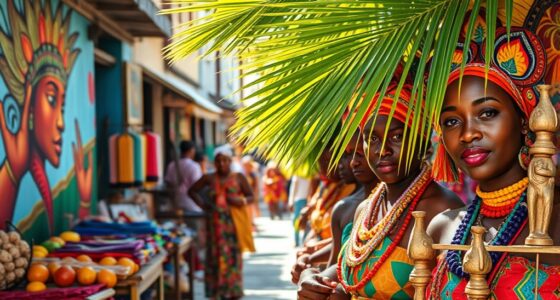
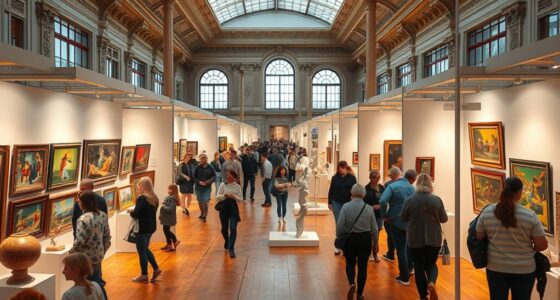
Mexican muralism transforms public spaces into vivid storytelling platforms that depict the nation’s history, social struggles, and cultural pride. It began as a way to build national identity, with artists like Diego Rivera and Orozco inspiring unity and social awareness. Today, contemporary murals continue to address issues like migration and inequality, evolving as active symbols of community and activism. To explore how this powerful art movement shaped Mexico and its ongoing influence, keep exploring these remarkable stories.
Key Takeaways
- Mexican muralism originated in the early 20th century as a way to promote national identity and social justice.
- Prominent artists like Diego Rivera, Siqueiros, and Orozco used murals to blend indigenous traditions with revolutionary ideals.
- Murals transformed public spaces into accessible storytelling platforms, fostering social awareness and community dialogue.
- Today, contemporary muralists address modern issues such as migration, inequality, and cultural diversity in urban environments.
- Mexican muralism continues to influence public art globally, maintaining its role in cultural expression and social activism.

Have you ever wondered how art can transform public spaces and tell powerful stories? Mexican muralism is a perfect example of this. It’s more than just wall paintings; it’s a vibrant form of public art that captures the essence of a nation’s cultural identity. When you walk through cities like Mexico City, you can’t help but notice murals that depict history, social struggles, and cultural pride. These murals serve as visual narratives, turning blank walls into open books that anyone can read and interpret. They’re a reflection of the collective conscience, giving voice to stories that might otherwise be overlooked or forgotten.
Public art in the form of murals became a way for artists to reach a broad audience, making art accessible to everyone, not just those who visit galleries. During the early 20th century, Mexican muralists like Diego Rivera, David Alfaro Siqueiros, and José Clemente Orozco used their work to forge a national identity rooted in indigenous traditions, revolutionary ideals, and social justice. Their murals often depict scenes from Mexico’s past and present, blending myth with reality. They aim to inspire unity and pride among viewers, creating a shared cultural memory that fosters a sense of belonging. This approach transformed public spaces into open-air museums, where art became a tool for education and social change. The enduring influence of Mexican muralism is also evident in its cultural significance, shaping artistic expression and social movements in Latin America and beyond.
Today, the legacy of Mexican muralism continues in contemporary public art projects. Modern artists draw inspiration from those early pioneers, using murals to address current issues such as migration, inequality, and political activism. The murals still serve as visual storytelling devices, connecting communities and sparking dialogue. You might see new murals in urban neighborhoods, reflecting diverse voices and experiences, which strengthens cultural identity across generations. This ongoing tradition proves that public art isn’t just decoration—it’s a dynamic, participatory process that keeps history alive while shaping future narratives. Whether in historic murals or modern street art, the power of Mexican muralism lies in its ability to communicate complex stories and reinforce cultural pride in public spaces. It reminds us that art can be a unifying force, a way to celebrate shared heritage, and a catalyst for social awareness. As you explore these murals, you become part of a living history, witnessing how art continues to evolve while maintaining its essential role in shaping cultural identity.

Mexican Muralists: Orozco, Rivera, Siqueiros
Used Book in Good Condition
As an affiliate, we earn on qualifying purchases.
As an affiliate, we earn on qualifying purchases.
Frequently Asked Questions
How Did Mexican Muralism Influence Modern Street Art?
Mexican muralism influences modern street art by inspiring you to use public spaces for political activism and cultural expression. You see murals as powerful tools to communicate social messages, just like the masters did. This movement encourages you to embrace cultural identity, making your art meaningful and accessible. Street artists today channel this legacy through bold, large-scale works that challenge viewers and spark conversations about society, history, and identity.
What Are the Key Themes in Contemporary Mexican Murals?
You see contemporary Mexican murals echoing bold themes like social justice and cultural identity, much like a vibrant tapestry woven with shared struggles and pride. These murals challenge viewers to reflect on inequality, history, and resilience, reminiscent of the revolutionary spirit of the past. They serve as visual protests, celebrating heritage while urging change, creating powerful connections that inspire action and foster community dialogue.
Which Mexican Muralists Are Currently Active Today?
You’ll find contemporary muralists like Saner, Seher, and Fintan Magee actively creating in Mexico today. They blend modern artistic techniques with traditional themes, making their work stand out. These artists explore social issues, cultural identity, and political messages through vibrant murals. By using innovative styles and materials, they continue the legacy of Mexican muralism while pushing boundaries and engaging communities with their powerful, visually striking art.
How Has Government Support Changed for Mural Artists Over Time?
You’ll notice government support for mural artists has shifted over time due to funding shifts and changing political support. In the past, governments actively funded murals as a way to promote national identity. Today, funding is more sporadic, often driven by local initiatives or private donors, with political support varying depending on current leadership’s priorities. This change impacts how muralists access resources and the themes they explore.
What Role Do Indigenous Cultures Play in Current Murals?
You see indigenous cultures playing a vital role in current murals through vibrant indigenous symbolism, celebrating heritage and identity. Artists incorporate traditional patterns and stories to promote cultural preservation, making murals powerful tools for community expression. These artworks honor indigenous roots, fostering pride and awareness. By highlighting indigenous symbolism, murals help guarantee that cultural traditions are remembered and respected, creating a bridge between past and present for future generations.

Walls That Speak: How to Build a Professional Mural Painting Business in Your Community – From Pricing and Prep to Storytelling Walls
As an affiliate, we earn on qualifying purchases.
As an affiliate, we earn on qualifying purchases.
Conclusion
As you step back and gaze at these vibrant murals, you’re not just admiring art—you’re stepping into Mexico’s soul. The colors and stories swirl like a living tapestry, connecting past struggles with present hopes. Mexican muralism is a powerful voice that echoes through time, inviting you to feel its heartbeat. So, next time you see a mural, remember: it’s more than paint—it’s a window into a nation’s enduring spirit.

DANG Prime Spray Paint Set of 12 Popular Colors, 400ml Cans, Matte Graffiti Art Supplies, Weather Resistant Graffiti Supplies, Spray Paint for Metal, Mural, Glass, Canvas, Wood, 12 Carolina Caps
The DANG Prime Spray Paint Set features top spray paint colors for graffiti, mural paint, and creative projects…
As an affiliate, we earn on qualifying purchases.
As an affiliate, we earn on qualifying purchases.
murals wall art prints
As an affiliate, we earn on qualifying purchases.
As an affiliate, we earn on qualifying purchases.