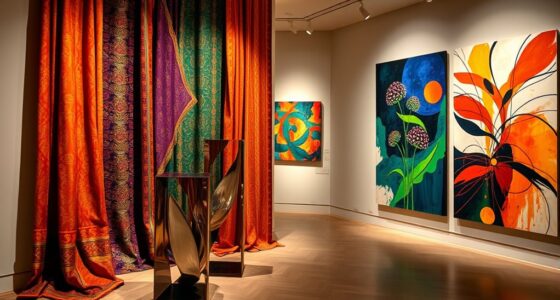
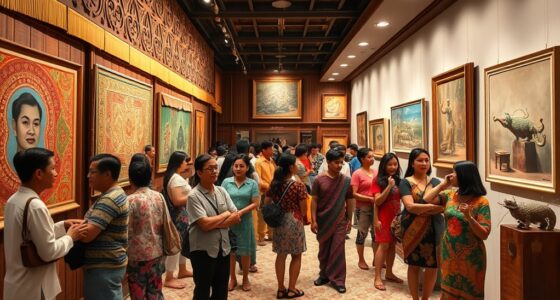
Latin American art showcases a vibrant mix of indigenous traditions and modern influences. You’ll see symbols, techniques, and stories that connect the past with the present. Artists blend traditional crafts with contemporary styles like street art and digital media to comment on social issues and cultural identity. This ongoing dialogue creates a dynamic, layered visual language that continues to evolve. If you explore further, you’ll discover how these diverse expressions shape the region’s unique artistic landscape.
Key Takeaways
- Latin American art blends indigenous symbols with contemporary styles, reflecting ongoing cultural dialogue.
- Artists incorporate traditional motifs into modern mediums like street art and digital installations.
- Art movements challenge colonial legacies, emphasizing social activism, identity, and environmental issues.
- The region’s art evolves by integrating new technologies while honoring cultural heritage.
- The dynamic landscape showcases a vibrant mix of tradition and innovation, representing diverse social and political narratives.
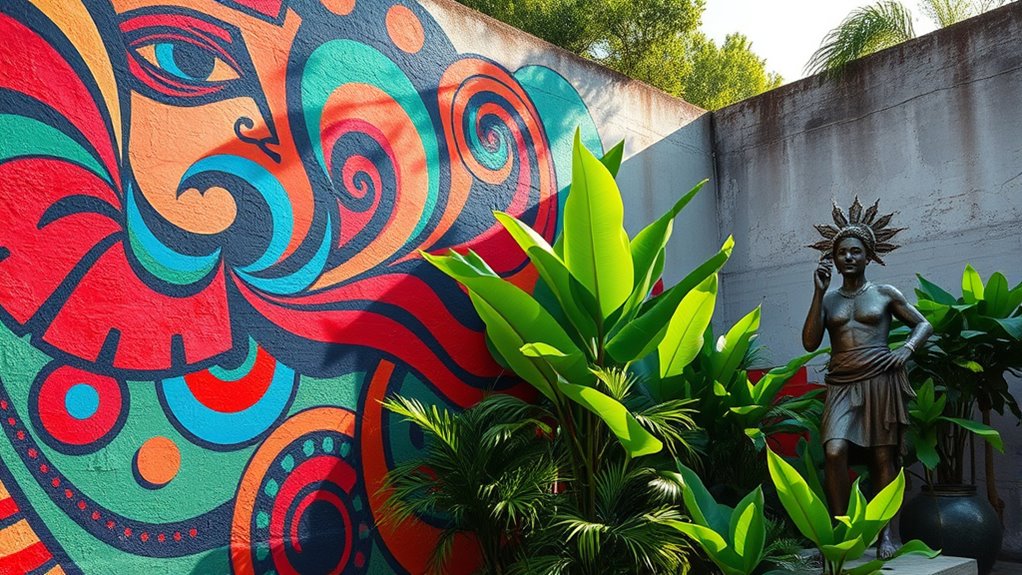
Latin American art is a vibrant tapestry of styles, themes, and cultural influences that reflect the region’s diverse history and identities. You can see this richness in the way Indigenous influences shape many artworks, blending ancient traditions with modern expressions. Indigenous communities have long contributed symbols, techniques, and stories that continue to resonate in contemporary pieces. From the intricate patterns of weaving and pottery to the bold motifs in mural art, these influences serve as a foundation that artists build upon, reinterpreting them in new contexts. You might notice how indigenous motifs are not simply preserved but are transformed to comment on current social, political, or environmental issues. This ongoing dialogue between the past and present creates a dynamic visual language, making Latin American art uniquely layered and meaningful.
As you explore the region’s art scene, you’ll find that contemporary movements thrive alongside traditional influences. Artists today are pushing boundaries by integrating global art trends with local narratives, creating a hybrid style that’s both innovative and rooted in history. Movements like street art and digital art have gained prominence, yet many artists still draw on Indigenous symbolism to challenge colonial legacies or reclaim cultural identity. The use of bright colors, bold forms, and experimental techniques often reflects a desire to break free from historical constraints and express a contemporary voice. These movements emphasize social activism, identity politics, and environmental concerns, making Latin American art a powerful tool for change.
You’ll also notice that many artists don’t see tradition and modernity as opposing forces but as parts of a continuum. They incorporate Indigenous crafts and motifs into contemporary mediums like murals, installations, and performance art, creating compelling juxtapositions. This blending highlights both the resilience and adaptability of Indigenous cultures within a globalized world. The region’s art scene is vibrant because it constantly evolves, embracing new technologies and ideas without losing sight of its roots. Whether through reclaiming indigenous narratives or pioneering new digital expressions, Latin American artists demonstrate a remarkable capacity for innovation rooted in cultural heritage. Additionally, the integration of Indigenous influences often enhances the authenticity and depth of contemporary artworks.
In this way, Latin American art invites you to witness a complex, ever-changing landscape. It’s a reflection of a region that honors its Indigenous past while boldly forging new paths through contemporary movements. The result is a diverse artistic universe that challenges, inspires, and continually redefines what Latin American art can be.

Latin Art Print Colorful Indigenous Textile Painting Wall Art (8×10)
Made with archival pigment-based ink on 100% cotton paper.
As an affiliate, we earn on qualifying purchases.
As an affiliate, we earn on qualifying purchases.
Frequently Asked Questions
How Has Latin American Art Influenced Global Contemporary Art Scenes?
You see how Latin American art influences global contemporary scenes through its innovative fusion techniques and powerful visual narratives. By blending indigenous traditions with modern styles, it creates unique expressions that resonate worldwide. Your understanding of these dynamic approaches highlights how Latin American artists challenge norms, inspire new trends, and foster cross-cultural dialogues, making a lasting impact on the international art landscape and encouraging others to explore diverse artistic voices.
What Role Do Indigenous Cultures Play in Shaping Latin American Art?
Think of indigenous cultures as the roots of a vibrant tree, grounding Latin American art and fueling its growth. You see, indigenous symbolism is woven into many artworks, reflecting deep cultural preservation. These traditions influence artists to honor their heritage, blending ancient motifs with modern styles. By doing so, indigenous cultures shape Latin American art’s unique identity, ensuring their stories and symbols continue to thrive and inspire across generations.
How Have Political Movements Impacted Latin American Artistic Expression?
You see how political activism has critically shaped Latin American art by inspiring artists to create powerful social commentary. Through murals, posters, and installations, they challenge oppression, demand change, and document struggles. These works serve as visual protests, reflecting the region’s political movements and fostering awareness. You can observe how artists embed activism within their art, making it an essential tool for expressing dissent and shaping societal dialogues.
What Are Emerging Trends in Latin American Contemporary Art?
You see emerging trends in Latin American contemporary art through digital innovation, which transforms how artists create and share their work, making it more accessible globally. Environmental activism also plays a pivotal role, inspiring artists to address climate change and ecological issues. These trends push boundaries, blending technology and activism to foster more socially engaged, innovative art that reflects current societal concerns and sparks dialogue across diverse communities.
How Do Economic Factors Affect Art Production in Latin America?
You might think economic factors barely affect art, but in Latin America, they can shake the entire creative scene! Economic instability often leads to a dramatic drop in art funding, forcing artists to get super creative or even halt projects altogether. When funding dries up, fewer galleries support new works, making it harder for artists to sustain their careers. So, economic ups and downs directly shape the vibrancy and diversity of Latin American art.

SUNHIPPIE Wall Hanging Mural, Plug in Power Supply 3D Wall Sculptures Art with LED Light, Modern Floral Wall Art for Home, Living Room, Study, Bedroom Decor(A,19.7 * 39.4in)
Modern Floral Wall Art: The Wall Hanging Mural, 3D Wall Sculptures Art with LED Light features a sophisticated…
As an affiliate, we earn on qualifying purchases.
As an affiliate, we earn on qualifying purchases.
Conclusion
You see how Latin American art reflects a rich tapestry of cultural diversity and ongoing change. By exploring artists like Frida Kahlo or imagining a contemporary muralist blending indigenous and urban styles, you recognize the dynamic evolution of this vibrant region. Latin American art continually challenges conventions, inspiring new voices and perspectives. Embrace this diversity, knowing it shapes a compelling narrative of resilience and innovation that invites ongoing exploration and appreciation.

Drawing Tablet, UGEE M708 10 x 6 inch Large Drawing Tablet with 8 Hot Keys, Passive Stylus of 16384 Levels Pressure, Digital Graphics Art Tablet for PC Paint, Design, Art Creation Sketch
【Large Active Drawing Space】: UGEE M708 V3 graphic drawing tablet, features 10 x 6 inch large active drawing…
As an affiliate, we earn on qualifying purchases.
As an affiliate, we earn on qualifying purchases.

DANG Prime Spray Paint Set of 12 Popular Colors, 400ml Cans, Matte Graffiti Art Supplies, Weather Resistant Graffiti Supplies, Spray Paint for Metal, Mural, Glass, Canvas, Wood, 12 Carolina Caps
The DANG Prime Spray Paint Set features top spray paint colors for graffiti, mural paint, and creative projects…
As an affiliate, we earn on qualifying purchases.
As an affiliate, we earn on qualifying purchases.