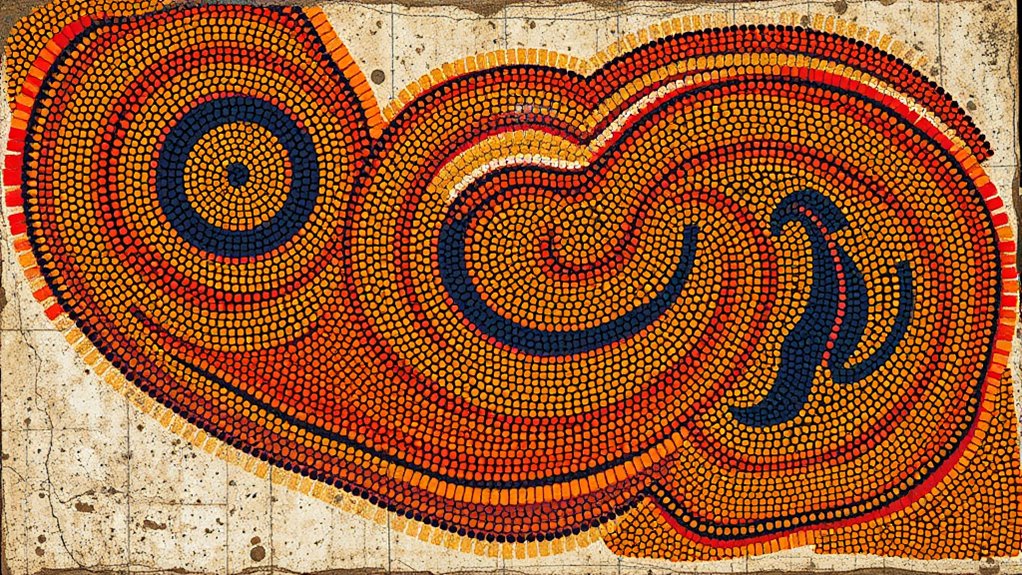

Indigenous Australian art tells the sacred stories of the Dreamtime, connecting land, spirits, and traditions through symbols and patterns. You’ll see unique techniques using natural pigments like ochre and charcoal, often forming dots and symbols that represent waterholes, paths, and ancestral beings. These artworks serve as a visual language that preserves ancient laws and beliefs, offering a glimpse into a spiritual worldview. Keep exploring to discover how these vibrant creations hold the soul of a timeless culture.
Key Takeaways
- Dreamtime stories explain origins of land, animals, and people, forming the sacred foundation of Indigenous Australian culture.
- Indigenous art visually represents Dreamtime stories through symbols, patterns, and colors that encode spiritual and ancestral knowledge.
- Traditional techniques use natural pigments like ochre and charcoal, applied with tools to preserve cultural and spiritual significance.
- Dot paintings and symbolic patterns serve as a visual language, conveying sacred laws, stories, and ancestral connections.
- Indigenous art is a living cultural practice that maintains storytelling, spiritual beliefs, and land relationships across generations.
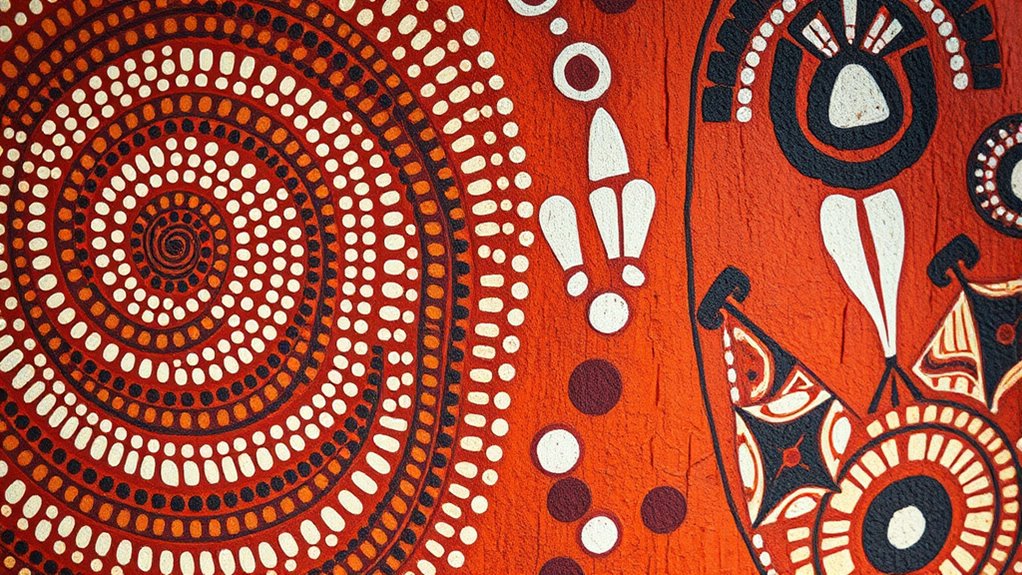
Indigenous Australian art is a vibrant and ancient expression of the continent’s First Nations cultures, dating back tens of thousands of years. This art form is much more than just visual imagery; it’s a way for you to connect with the stories and traditions that have been passed down through generations. At its core, Indigenous art often depicts Dreamtime stories—mythical narratives that explain the origins of the land, its creatures, and its people. These stories aren’t just myths; they’re sacred truths that shape cultural identity and spiritual understanding. When you explore Indigenous art, you’re stepping into a world where storytelling and visual expression intertwine seamlessly. Traditional painting techniques play a vital role in conveying these stories. You might notice the use of natural pigments made from ochre, charcoal, and clay, which are carefully prepared and applied with tools like sticks, fingers, or brushes made from plant fibers. These techniques have remained largely unchanged for thousands of years, highlighting the deep respect for tradition within Indigenous communities. The patterns and symbols you see are deliberate, each with specific meanings tied to Dreamtime stories. For example, concentric circles might represent waterholes or campsites, while lines could symbolize travel routes or ancestral paths. Understanding these symbols allows you to interpret the stories embedded in the artwork, revealing layers of cultural significance. Additionally, the symbolic meaning behind each pattern helps preserve sacred knowledge that is often kept confidential from outsiders. As you observe Indigenous paintings, you’ll realize that the art is often highly stylized and abstract, yet deeply meaningful. The use of repetitive patterns and vibrant colors isn’t just aesthetic; it’s a way to embody spiritual concepts and ancestral connections. You might see dot paintings, a technique that originated from the need to communicate secret or sacred knowledge in a way that outsiders couldn’t easily decipher. These dots and patterns serve as a visual language that preserves stories, laws, and traditions, allowing them to be passed down through generations. Engaging with Indigenous Australian art gives you a window into a worldview where storytelling, spirituality, and art are inseparable. You’re not just an observer but a participant in a cultural dialogue that stretches back thousands of years. Each piece invites you to explore the Dreamtime stories and appreciate the traditional painting techniques that have kept these stories alive. Through this art, you gain a deeper understanding of the enduring connection between the land, the people, and their ancestral stories.
Amz Camel Diamond Painting Kit, 30x40cm Peacock Pointillism Art Collage, Round Drill Craft Easy to Do for Calming Activity and Patience Cultivation
Exquisite Peacock Design : This magnificent artwork features a peacock with a lavish tail. Sparkling diamonds create a…
As an affiliate, we earn on qualifying purchases.
As an affiliate, we earn on qualifying purchases.
Frequently Asked Questions
How Do Dreamtime Stories Influence Modern Indigenous Australian Art?
Dreamtime storytelling deeply influences your modern Indigenous Australian art by shaping its themes and imagery. You incorporate cultural symbolism that reflects ancestral stories, connecting past and present. This storytelling guides your use of symbols and patterns, ensuring their work honors tradition while expressing contemporary perspectives. By blending ancient narratives with modern techniques, you keep Dreamtime stories alive, allowing viewers to understand the rich cultural heritage behind your art.
What Materials Are Traditionally Used in Creating Indigenous Australian Art?
You’ll find that traditional techniques and natural pigments shape Indigenous Australian art in extraordinary ways. They use materials like ochre, charcoal, and clay—materials so ancient, they seem to hold the secret to time itself. These pigments are painstakingly prepared from the earth, creating vibrant reds, yellows, and blacks. With each brushstroke, you connect to a timeless tradition that transforms humble natural materials into breathtaking stories of Dreamtime.
How Do Artists Ensure Cultural Authenticity in Their Work?
You guarantee cultural authenticity by respecting traditional stories and symbols, which helps preserve cultural heritage. By collaborating with community elders and gaining permission, you uphold artistic integrity and avoid misrepresentation. Staying true to traditional techniques and using authentic materials also supports cultural preservation. This approach shows your commitment to honoring Indigenous culture, ensuring your work remains genuine and ethically responsible.
Are There Specific Symbols Unique to Different Indigenous Groups?
Yes, you’ll find that each indigenous group has unique cultural symbols and artistic motifs. These symbols serve as visual language, representing stories, beliefs, and connections to land and ancestors. You’ll notice variations in patterns, shapes, and colors that reflect specific group identities. These cultural symbols and artistic motifs are essential for preserving traditions and inspiring respect for the diverse cultural stories woven into Indigenous Australian art.
How Can Viewers Respectfully Engage With Indigenous Art and Stories?
You can respectfully engage with Indigenous art and stories by practicing cultural sensitivity and approaching with genuine curiosity. Observe the artwork attentively, avoiding assumptions, and listen to elders or community members if given the opportunity. Always respect the stories’ sacred nature, refraining from sharing or reproducing them without permission. Your respectful observation shows appreciation and helps preserve the cultural significance of these stories and artworks.

Natural Earth Paint Pigment Sample Pack – 20 Non-Toxic, Archival Earth & Mineral Pigments for DIY Paint – Eco-Friendly, Sustainably Sourced Colors – No Fillers or Additives
20 Natural Earth & Mineral Pigments – Create your own non-toxic, archival paint with 20 pure pigments. No…
As an affiliate, we earn on qualifying purchases.
As an affiliate, we earn on qualifying purchases.
Conclusion
As you walk through the vibrant stories woven into Indigenous Australian art, remember that these works echo the timeless echoes of the Dreamtime—Australia’s sacred mythic past. Like the ancient songlines guiding travelers, these artworks connect you to ancestral spirits and sacred landscapes. Embrace their power to remind us that, much like the endless sky or the eternal river, these stories endure, inviting you to listen deeply and honor the profound wisdom of the land’s first storytellers.

Painted Anarchy Abstract Aboriginal Art Canvas Print – Dreamtime Story – Aboriginal, Dreamtime Story, Wall Art, Intricate Patterns, 12" x 12"
Canvas Wall Art Size: 12" x 12" Framed Wall Art Ready to Hang
As an affiliate, we earn on qualifying purchases.
As an affiliate, we earn on qualifying purchases.

Australian Aboriginal Art: A Coloring Book for Adults and Children
As an affiliate, we earn on qualifying purchases.
As an affiliate, we earn on qualifying purchases.