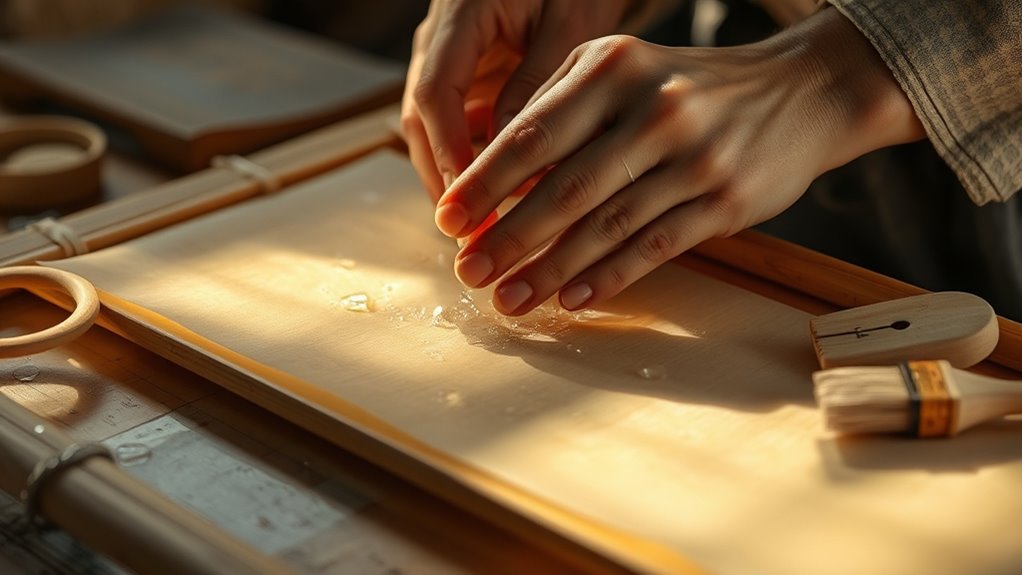

To craft traditional Japanese washi, you start with selecting high-quality fibers from mulberry or mitsumata bark and carefully prepare them through soaking, boiling, and beating to create pulp. Your tools, like bamboo screens and wooden frames, must be precisely crafted to control sheet thickness and quality. Attention to fiber purity and craftsmanship in tool use guarantees the delicate strength, translucency, and beauty of each sheet. Continue exploring, and you’ll discover the artistry that makes washi truly unique.
Key Takeaways
- Washi is traditionally made by preparing high-quality fibers from mulberry or mitsumata bark through soaking, boiling, and beating.
- The process emphasizes fiber purity and strength, impacting the paper’s texture, durability, and appearance.
- Skilled craftsmanship involves using precisely made tools like bamboo screens and wooden frames to control sheet quality.
- Tool quality and handling are essential for achieving desired characteristics like softness, translucency, and strength.
- The entire process reflects a deep respect for tradition, craftsmanship, and artistic expression passed down through generations.

Traditional Japanese papermaking, known as washi, is an intricate craft that has been perfected over centuries. When you dive in this art form, you’ll notice that the process begins with careful fiber preparation. You start by selecting high-quality fibers, often from the bark of trees like the mulberry or mitsumata shrub. These fibers must be meticulously prepared to guarantee their purity and strength. You’ll soak, boil, and beat them into a pulp, removing any impurities that could weaken the final product. This step is essential because the quality of your fibers directly influences the texture, durability, and appearance of the paper. As you work through fiber preparation, you develop an understanding of how each step impacts the final outcome, emphasizing the importance of patience and precision. The craftsmanship involved in selecting and processing these fibers reflects a deep respect for tradition and material quality.
Once your fibers are ready, the focus shifts to tool craftsmanship. The tools used in washi making are simple yet expertly crafted, and their design is critical for achieving the desired results. You’ll use a bamboo screen called a sugeta to scoop up the pulp and form thin, even layers of paper. The craftsmanship of this tool ensures that you can control the thickness and smoothness of each sheet. The frame, made from wood and bamboo, must be sturdy yet lightweight, allowing you to shake and manipulate the pulp without tearing the fibers. The craftsmanship of these tools isn’t just about durability; it’s about finesse. The tension, balance, and texture of each tool influence how easily and precisely you can work with the pulp, affecting the consistency of your sheets. tool craftsmanship plays a vital role in the quality of the final product.
Throughout the process, you’ll notice that tool craftsmanship also extends to the drying racks and pressing weights. These tools help you achieve the characteristic softness, strength, and translucency of traditional washi. As you master these tools, you’ll learn to appreciate their subtle craftsmanship, which enables you to produce sheets that are both beautiful and functional. The combination of fiber preparation and skillfully crafted tools creates a harmony that defines authentic washi. It’s a craft that demands respect for tradition, attention to detail, and a steady hand. When you understand the significance of each step, from preparing fibers to crafting tools, you realize that traditional Japanese papermaking is more than just a process—it’s a form of artistic expression passed down through generations.
Frequently Asked Questions
How Long Does It Take to Make a Sheet of Washi?
It takes about a day to make a sheet of washi through the handmade process, including time for drying. First, you prepare the fibers and form the pulp, then spread it onto screens. After pressing out excess water, you carefully peel the sheet and lay it flat to dry. The drying time varies depending on humidity and thickness, but usually, you wait several hours to guarantee the paper is fully dry before handling.
What Are the Main Types of Plants Used in Washi Production?
Imagine a tapestry woven from nature’s finest threads—plant fibers that serve as the heart of washi. You’ll find primarily kozo (paper mulberry), mitsumata, and gampi plants in papermaking. These papermaking plants provide the sturdy, flexible fibers essential for creating durable, beautiful sheets. Kozo is the most common, offering strength, while mitsumata and gampi add smoothness and translucency, making each sheet uniquely exquisite.
Can Washi Be Recycled or Reused?
Yes, you can recycle and reuse washi. The recycling process involves carefully cleaning and flattening used sheets to remove ink and dirt. Reusing techniques include repurposing washi for crafts, origami, or decorative purposes, extending its life. You should handle it gently to prevent tears and preserve its beauty. With proper care, washi can be a sustainable choice, allowing you to enjoy its beauty multiple times while reducing waste.
How Does Washi Compare to Western Paper in Durability?
You might think Western paper wins in durability, but washi surprises you. Its fiber strength and aging resistance are exceptional, making it surprisingly durable over centuries. While Western paper can tear easily or degrade quickly, washi withstands the test of time, aging gracefully without losing its integrity. So, don’t underestimate this ancient craft—your delicate-looking washi holds up far better than you’d expect, proving strength isn’t always visible.
Are There Modern Technologies Incorporated Into Traditional Washi Making?
You’ll find that modern technologies like digital integration and automated manufacturing are increasingly incorporated into traditional washi making. These innovations help streamline processes, improve quality control, and preserve craftsmanship. While maintaining the authentic techniques, artisans now use digital tools for design and automation to enhance productivity. This blend of tradition and technology ensures washi remains relevant and sustainable in today’s world.
Conclusion
Now that you’ve discovered the delicate art of washi, imagine holding centuries of tradition in your hands—fragile yet resilient, simple yet intricate. It’s a world where ancient craftsmanship meets timeless beauty, standing in stark contrast to modern mass production. As you appreciate each sheet’s unique texture, remember that this art form isn’t just about paper; it’s a living link to Japan’s rich cultural history, inviting you to cherish craftsmanship in a fast-paced world.