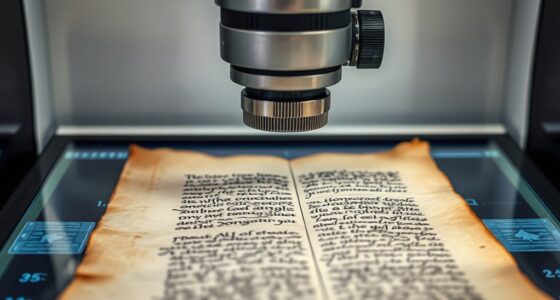
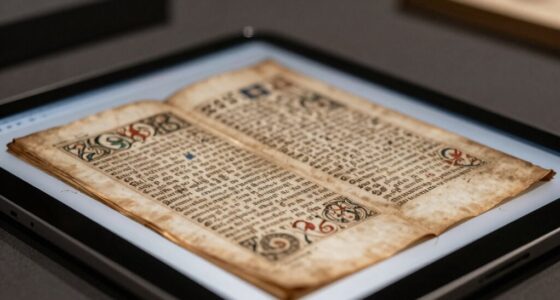
You need different preservation strategies for oversized maps because their size and delicate materials make them more vulnerable to damage. Unlike books, they require flat storage, custom supports, and careful handling to prevent folding, creasing, or tearing. Constant environmental controls help avoid warping and mold. Using digital backups can reduce handling risks. Understanding these special needs guarantees their longevity. Keep exploring to learn more about how to best protect these valuable items.

Get business pricing on monitors, keyboards and dev gear
- Business-only prices and quantity discounts
- Tax-exempt purchasing
- Multiple users, one account, clear invoices
Key Takeaways
- Oversized maps are more delicate and prone to damage due to their size and fragile materials.
- They require specialized storage solutions, like flat, acid-free folders, to prevent creasing and folding.
- Handling oversized maps poses greater risk of physical wear compared to standard books.
- Environmental controls are more critical to prevent warping, mold, and deterioration in large formats.
- Unique display methods are necessary to showcase and preserve oversized maps without causing damage.

Have you ever wondered how to protect oversized maps from deterioration over time? These large, delicate documents face unique challenges that set them apart from standard books. Unlike books, which are typically stored in controlled environments and handled with care, oversized maps require specialized preservation strategies to prevent physical damage and guarantee their longevity. One of the most effective approaches is digital archiving, which allows you to create high-resolution digital copies of these extensive documents. By digitizing maps, you reduce the need for physical handling, minimizing wear and tear. Digital archives also provide a backup in case of damage or loss, making the maps accessible without risking the originals. Additionally, understanding the importance of physical preservation plays a crucial role in maintaining the map’s structural integrity over time. Properly implementing storage solutions tailored to oversized maps is essential for their preservation.
Conservation techniques tailored to oversized maps are indispensable for maintaining their physical integrity. These methods include proper storage solutions, like acid-free, custom-sized folders and flat storage options that prevent folding and creasing. When handling these maps, you should always use clean, dry gloves to avoid transferring oils and dirt. If a map is damaged or deteriorating, professional conservation treatments can stabilize the paper, reinforce weak areas, or remove harmful residues. These measures help slow the natural aging process and prevent further deterioration. Regular monitoring of environmental conditions is also critical to prevent issues like mold growth or warping. Implementing environmental control measures can significantly extend the lifespan of these fragile items.
The size and fragility of oversized maps mean they often have more complex conservation needs than books. For example, they are more susceptible to environmental damage from fluctuations in humidity and temperature, which can cause warping or mold growth. Hence, controlling storage conditions and avoiding exposure to direct light are paramount. You might also consider specialized display techniques, such as framing with UV-protective glass, to both preserve and showcase the map without exposing it to harmful elements.
The combination of digital archiving and targeted conservation techniques is essential because it addresses both the digital and physical aspects of preservation. Digital copies serve as a safeguard and facilitate research or public access, while proper conservation prolongs the life of the original map. This dual approach ensures that these valuable documents are kept in the best possible condition for future generations. Oversized maps demand more nuanced strategies, and understanding their unique needs enables you to implement effective preservation measures that go beyond the methods used for ordinary books.
As an affiliate, we earn on qualifying purchases.
Frequently Asked Questions
How Do Oversized Maps Impact Storage Space Requirements?
Oversized maps substantially increase storage space requirements because they don’t compress easily, unlike smaller books. You need to contemplate map compression techniques to reduce their size without damaging details. Storage optimization becomes essential; you might use specialized shelving or digital scanning to conserve space. By implementing these strategies, you can efficiently manage large maps, making preservation easier and ensuring they remain accessible for future reference.
Are There Specific Environmental Conditions Ideal for Oversized Maps?
Ironically, oversized maps require just as much climate control and light exposure management as delicate artworks. You should keep temperature and humidity stable, ideally around 65°F and 50% RH, to prevent warping or mold. Avoid direct sunlight and harsh lighting, which can fade colors and damage paper fibers. Proper environmental conditions are essential, because even grand maps can’t withstand neglect or poor storage, despite their impressive size.
What Are Common Damages Unique to Oversized Maps?
Oversized maps are especially vulnerable to damage due to their map fragility, making careful handling techniques essential. Common damages include tears, creases, and distortions from improper handling or folding. You should always support the entire map during handling, avoid folding or creasing it unnecessarily, and store it flat or rolled. Using gloves can prevent oils from damaging the surface, ensuring your map stays in good condition over time.
How Can Digital Preservation Benefit Oversized Map Conservation?
Digital preservation acts like a sturdy bridge over fragile waters, safeguarding oversized maps from physical harm. You can use digital archiving to create detailed, high-resolution images that preserve every nuance. This allows you to offer interactive access, making maps viewable and analyzable without risking damage. Digital solutions extend the maps’ life, enabling researchers and enthusiasts to explore their details endlessly while maintaining the original artifacts’ integrity.
What Specialized Tools Are Needed for Oversized Map Handling?
To handle oversized maps, you need specialized equipment like large, flat storage boards, custom cradles, and wide, gentle tools to prevent damage. Handling techniques should focus on minimal contact, supporting the map’s weight evenly, and avoiding folding or creasing. Using these specialized tools and careful handling techniques helps preserve the map’s integrity, ensuring it remains intact over time while allowing safe examination and conservation efforts.
As an affiliate, we earn on qualifying purchases.
Conclusion
Just like a giant tapestry woven with intricate threads, oversized maps demand delicate, tailored preservation. You can’t treat them like ordinary books—they’re sprawling landscapes that breathe with history and artistry. By recognizing their unique size and fragility, you become the guardian of their story, ensuring these colossal treasures stand tall for generations. In preserving oversized maps, you protect more than paper—you safeguard the very map of our collective knowledge, a grand voyage worth every careful step.
As an affiliate, we earn on qualifying purchases.
UV-protective display frame for maps
As an affiliate, we earn on qualifying purchases.
As an affiliate, we earn on qualifying purchases.
Fall Picks
fall essentials
As an affiliate, we earn on qualifying purchases.