To flatten rolled drawings safely, you should begin by carefully evaluating their condition to choose the gentlest method. Use humidification in a controlled environment to relax paper fibers without introducing moisture damage. Then, gently press the drawing between blotters or with light weight, avoiding aggressive stretching or force. Combining non-invasive techniques like airflow or gentle heat can help, all while monitoring for signs of stress. If you’d like to discover more about preserving these delicate works, keep exploring the steps involved.

Get business pricing on monitors, keyboards and dev gear
- Business-only prices and quantity discounts
- Tax-exempt purchasing
- Multiple users, one account, clear invoices
Key Takeaways
- Conduct a thorough condition assessment to determine the safest flattening method based on paper and ink stability.
- Use controlled humidification to gently relax fibers without risking ink smudging or mold growth.
- Apply gentle, even pressure with blotters or custom supports to gradually flatten without tearing.
- Incorporate non-invasive techniques like controlled airflow or gentle heat to aid in relaxing the material.
- Plan each step carefully, prioritizing preservation principles to prevent further deterioration or damage.

Archivists are now tackling the challenge of flattening rolled drawings to preserve their integrity and accessibility. When you deal with fragile, rolled documents, you understand how delicate they can be. Properly flattening these drawings is vital for digital preservation, allowing you to scan, digitize, and store them efficiently. The goal is to prevent further damage while making these valuable pieces accessible for study and display. To achieve this, you must employ conservation techniques that are both effective and gentle, guaranteeing that the drawings remain intact during the process.
Properly flattening fragile, rolled drawings is essential for preserving their integrity and enabling safe digital access.
The first step involves evaluating the condition of each drawing. You examine factors such as paper strength, ink stability, and any signs of deterioration. This careful evaluation helps you decide the safest method for flattening. You avoid aggressive stretching or forcing the paper, which could cause tears or distortions. Instead, you choose conservation techniques that work with the material’s natural properties. For example, humidification is a common method used to relax the paper fibers. You introduce controlled moisture—using a humidity chamber or a damp enclosure—so the paper becomes pliable enough to flatten without cracking or buckling. This process requires precision, as excess moisture can lead to mold growth or ink smudging, so you monitor conditions closely.
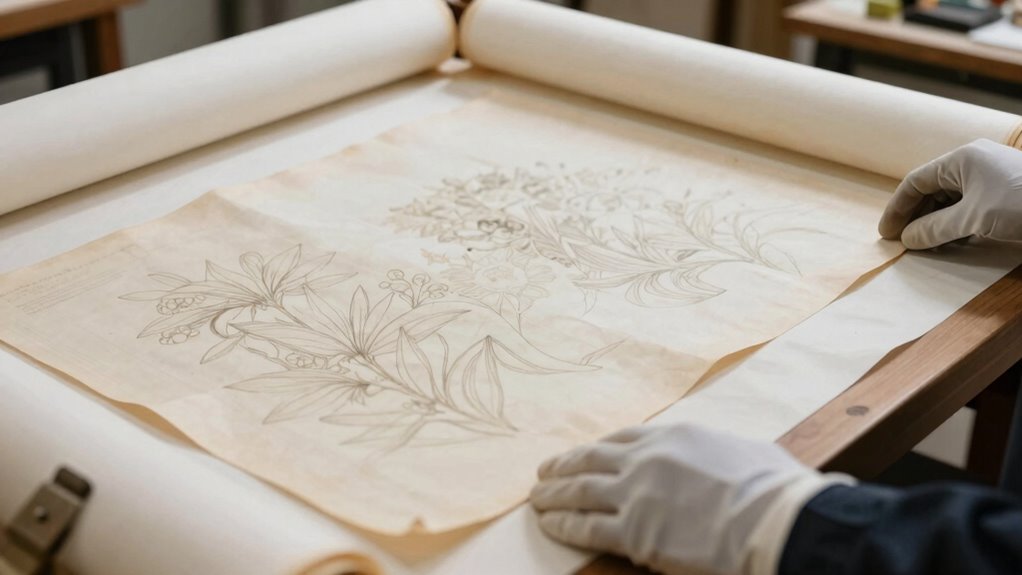
Once the paper is sufficiently relaxed, you gently press the drawings between blotters or smooth, acid-free materials. You use weights or a press to apply even, light pressure, gradually reducing the rolled form. Throughout this process, your focus is on maintaining the drawing’s fidelity. You check for signs of stress or damage, adjusting your approach as needed. In some cases, you might employ custom supports or placards to hold high-value or particularly fragile pieces in place during flattening. These conservation techniques ensure that you don’t compromise the original artwork or document. Understanding the material properties of the paper helps you select the most appropriate method for each unique document. Additionally, you may incorporate non-invasive methods such as controlled airflow or gentle heat to assist in the flattening process without applying direct pressure. Being aware of conservation principles helps you minimize risks and maximize preservation outcomes.
Recognizing the importance of preventing further deterioration, you carefully plan each step to avoid unnecessary risks during flattening. Flattening rolled drawings with precision and care is vital to safeguarding cultural heritage, and your expertise plays an essential role in this ongoing effort. Digitizing not only guarantees that the images are preserved in case of future damage but also makes them more accessible for research and display. Your careful application of conservation techniques guarantees that these valuable drawings can be preserved in their best possible condition, all while making them available for future generations.
As an affiliate, we earn on qualifying purchases.
Frequently Asked Questions
How Long Does the Flattening Process Typically Take?
The flattening process usually takes several days to a week, depending on the drawing’s condition and thickness. You’ll want to use archival adhesives carefully and guarantee humidity control to prevent damage. Gradually increasing humidity helps relax the paper fibers. As you work, monitor the environment closely, and gently flatten the drawing under weights or blotters, allowing the materials to adapt slowly without risking tears or warping.
Can Any Rolled Drawing Be Safely Flattened at Home?
You can’t safely flatten any rolled drawing at home without proper tools and knowledge. Handling techniques and archival supplies are essential to avoid damage. Imagine gently unrolling a delicate treasure, not tearing fragile paper. Use weights, blotting paper, and a clean, flat surface to gradually flatten your drawing. However, for valuable or fragile pieces, consulting a professional archivist guarantees preservation without risking harm.
What Signs Indicate a Drawing Is Too Fragile to Flatten?
If your drawing shows tears, cracking, or flaking, it’s likely too fragile for conservation techniques that involve flattening. Look for paper that feels brittle, warped, or crumbles easily under light handling. These signs indicate the materials are delicate and could suffer further damage if you try to flatten them. In such cases, it’s best to consult a professional conservator to make sure you don’t harm the artwork’s integrity.
Are There Digital Methods to View Flattened Drawings?
Think of digital scanning as a magic window into flattened drawings. You can view and analyze delicate, rolled artwork without risking damage through physical handling. Virtual restoration techniques further enhance this process, allowing you to digitally straighten and repair images with precision. These methods make it easier to study fragile pieces, preserving their integrity while providing clear, detailed views, all from the comfort of your computer screen.
How Should I Store Flattened Drawings to Prevent Future Rolling?
To prevent future rolling, you should store flattened drawings in a stable environment with proper storage conditions, such as a cool, dry, and dark space. Use acid-free folders or flat storage boxes to protect them from dust, light, and physical damage. Preservation techniques like placing drawings between acid-free paper or polyester sleeves also help maintain their flatness and integrity over time, ensuring long-term preservation.
archival blotters for flattening drawings
As an affiliate, we earn on qualifying purchases.
As an affiliate, we earn on qualifying purchases.
Conclusion
By carefully following these techniques, you can gently flatten rolled drawings without causing damage, much like unwrapping a fragile gift. Patience and precision are your best tools, turning a crumpled, curled-up piece into a flat, viewable masterpiece. Remember, taking your time guarantees preservation and longevity. With each careful step, you’re not just flattening paper—you’re safeguarding history, so future generations can appreciate the artistry just as vividly as you do today.
acid-free paper supports for artwork
As an affiliate, we earn on qualifying purchases.
As an affiliate, we earn on qualifying purchases.
gentle heat gun for art preservation
As an affiliate, we earn on qualifying purchases.
As an affiliate, we earn on qualifying purchases.
Evergreen bestsellers Picks
bestsellers
As an affiliate, we earn on qualifying purchases.