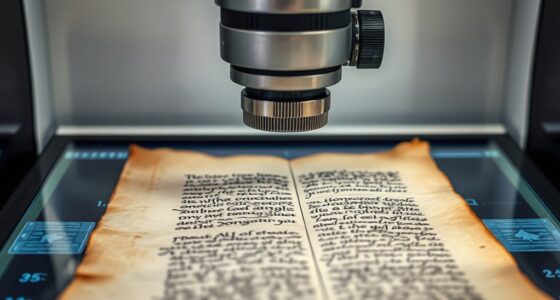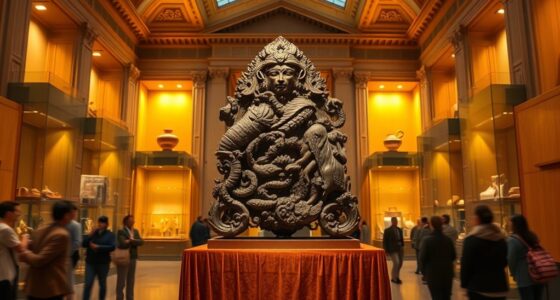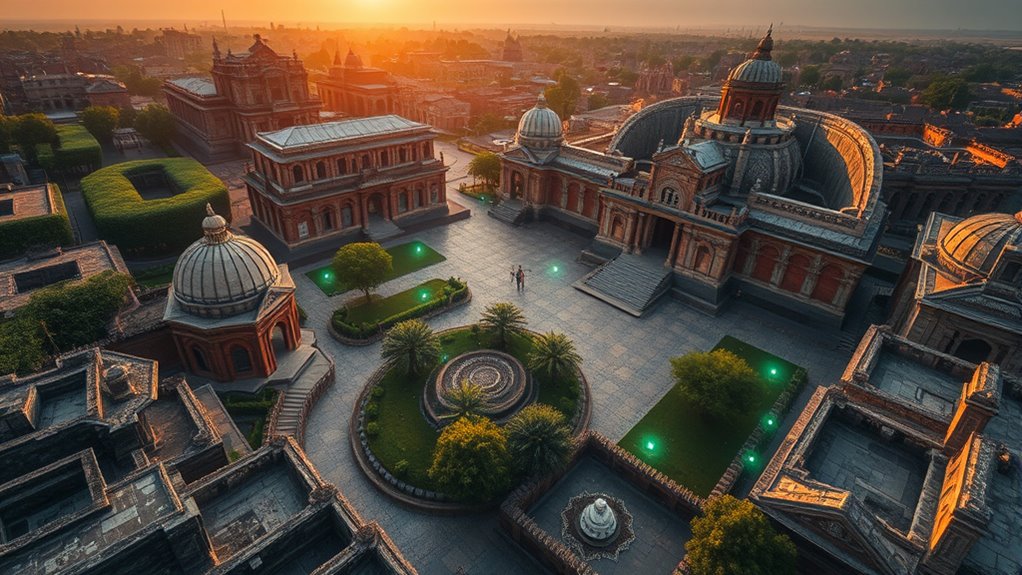

Digital twins of ancient cities are detailed virtual models that let you explore and experience historical urban landscapes as they once were. These digital replicas combine archaeological data, historical records, and advanced 3D visualization techniques to create immersive environments. They help preserve cultural heritage, support urban planning, and provide educational opportunities. By interacting with these virtual cities, you can uncover insights into ancient life and architecture. Keep exploring to discover how these technologies transform our connection to history.
Key Takeaways
- Digital twins create accurate virtual replicas of ancient cities for exploration and educational purposes.
- They integrate archaeological data, historical records, and 3D modeling to reconstruct urban landscapes.
- These models aid in preservation, virtual tourism, and understanding city evolution over time.
- They support archaeological research and urban planning by providing detailed, interactive environments.
- Digital twins enhance cultural engagement by making historical sites accessible and immersive for a global audience.
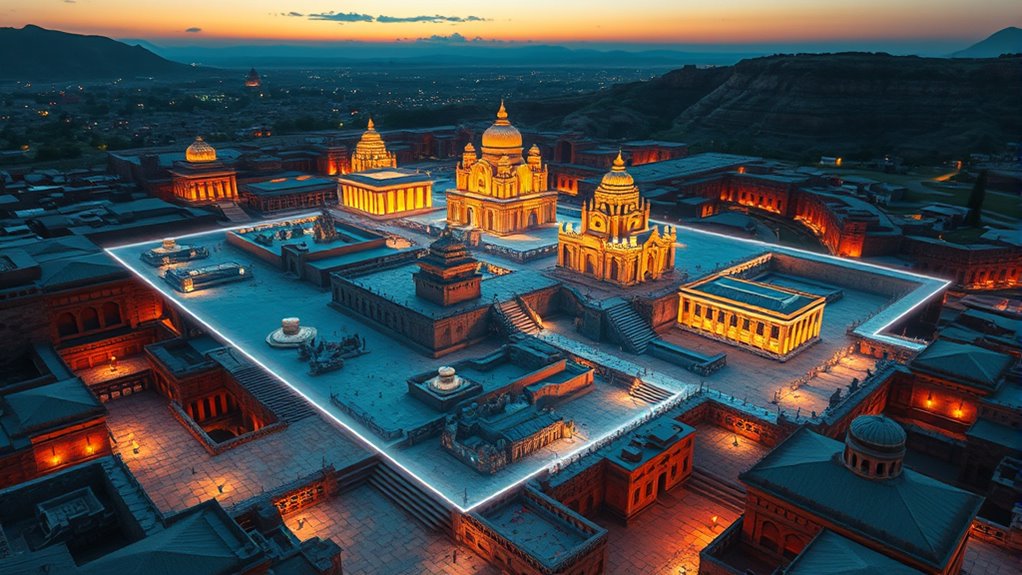
Have you ever wondered how technology can bring ancient cities back to life? With the rise of digital twins, you can now explore and experience these historical sites in ways never before possible. Digital twins are virtual replicas of physical spaces, and when applied to ancient cities, they serve as powerful tools for urban reconstruction and virtual heritage. These digital models allow you to walk through the streets of a city long gone, see its architecture, and understand its layout as if you were there in the past. This fusion of technology and history makes it easier for you to appreciate the city’s cultural significance and architectural marvels, even if they no longer exist in the physical world. By incorporating detailed visualization techniques, experts are able to create highly accurate and immersive digital reconstructions. Urban reconstruction is a vital aspect of creating digital twins of ancient cities. By combining archaeological data, historical records, and modern 3D modeling techniques, experts reconstruct what these cities looked like centuries ago. This process involves meticulous attention to detail, from the design of individual buildings to the overall urban planning. When you interact with a digital twin, you’re not just viewing static images; you’re engaging with a dynamic, immersive environment. You can navigate through streets, enter buildings, and observe how the city evolved over time. This virtual approach helps preserve the cultural heritage of these sites and offers a new way for you to learn about their history. It also provides valuable insights for archaeologists and urban planners working on real-world restoration projects.
Digital twins revive ancient cities, allowing immersive exploration of history and architecture long lost to time.
Virtual heritage becomes more accessible and engaging through digital twins. Instead of relying solely on static photographs or written descriptions, you get a vivid, interactive experience. You can explore ancient marketplaces, temples, and residential areas at your own pace, gaining a deeper understanding of daily life in those times. This technology also facilitates educational opportunities, allowing students and history enthusiasts to experience these cities firsthand, regardless of geographic or physical limitations. As you navigate these virtual environments, you develop a sense of connection and appreciation for the architecture, culture, and history embedded within these ancient urban landscapes.
In essence, digital twins revolutionize how you engage with the past. They transform archaeological data into living, breathing environments that make history tangible. By integrating urban reconstruction techniques and emphasizing virtual heritage, these models preserve the essence of ancient cities for future generations. They not only serve as educational tools but also as a bridge connecting you to the rich history and cultural identity of civilizations long gone. With this technology, you’re invited to step back in time and witness the beauty and complexity of ancient urban life firsthand.

Geodesign, Urban Digital Twins, and Futures
As an affiliate, we earn on qualifying purchases.
As an affiliate, we earn on qualifying purchases.
Frequently Asked Questions
How Do Digital Twins Enhance Archaeological Research?
Digital twins enhance archaeological research by enabling you to perform detailed virtual reconstructions of ancient sites. With these models, you can conduct precise spatial analysis, identifying structural relationships and uncovering hidden features without disturbing the original artifacts. This approach allows you to visualize changes over time, test hypotheses, and share findings easily, making your research more accurate, efficient, and accessible while preserving the integrity of the historical site.
What Technology Is Used to Create Digital Twins of Ancient Cities?
You use advanced technologies like 3D laser scanning and photogrammetry to create digital twins of ancient cities. Augmented Reality helps you overlay virtual reconstructions onto real-world sites, enhancing your experience. Data Integration combines archaeological data, historical records, and geographic information, allowing you to explore detailed, accurate models. These tools enable you to study and visualize ancient urban layouts, bringing history to life with interactive, immersive digital representations.
Can Digital Twins Predict Future Changes in Ancient Urban Landscapes?
Think of digital twins as crystal balls for ancient cities. They can’t predict every twist of history but do help you foresee future changes. You can use these models for urban planning, guiding restorations, and improving disaster management. By simulating potential scenarios, you gain insight into how ancient landscapes might evolve, allowing you to make informed decisions that respect history while preparing for future challenges.
How Do Digital Twins Help in Preserving Ancient City Sites?
Digital twins help in preserving ancient city sites by enabling virtual reconstruction of damaged or lost structures, which aids heritage conservation efforts. You can analyze these detailed models to identify vulnerabilities and plan restorations without risking harm to the original artifacts. This proactive approach guarantees that cultural heritage is maintained for future generations, providing a digital record that supports ongoing preservation and educational initiatives.
Are Digital Twins Accessible to the Public for Educational Purposes?
Yes, digital twins are often accessible to the public for educational use. You can explore these virtual models through online platforms, museums, or dedicated apps, which provide interactive and immersive experiences. This public access allows you to learn about ancient cities’ history, architecture, and cultural heritage in a more engaging way. By making digital twins available for educational purposes, you gain a deeper understanding while helping to preserve these invaluable sites.
3D visualization tools for historical reconstructions
As an affiliate, we earn on qualifying purchases.
As an affiliate, we earn on qualifying purchases.
Conclusion
As you explore these digital twins, it’s almost as if you’re walking through history itself. Coincidentally, technology now lets you experience ancient cities in ways you never could before, revealing secrets long buried. By bridging past and present, you get a glimpse of what once was—and what’s possible for the future. So, as you marvel at these virtual reconstructions, remember, sometimes a digital mirror reflects more than just the past; it shows what’s truly timeless.

3D VR Headset, Virtual Reality Glasses Headset Helmets, Compatible with 5.0-7.0 inch with Controller, for Mobile Games & Movies(Black)
【Immersive 3D Movie Viewing】Gaming and watching movies in 3D works best when proper your eyes properly align with…
As an affiliate, we earn on qualifying purchases.
As an affiliate, we earn on qualifying purchases.

Digital Imaging for Cultural Heritage Preservation (Digital Imaging and Computer Vision)
As an affiliate, we earn on qualifying purchases.
As an affiliate, we earn on qualifying purchases.