
To conserve ancient frescoes, you should prioritize gentle, non-invasive cleaning and reversible treatments that respect their original materials. Managing environmental factors like humidity, pollutants, and temperature fluctuations is vital to slow deterioration. Use stabilization techniques carefully to prevent further decay, always aiming to retain the fresco’s authenticity. Balancing preservation with minimal intervention can be challenging but essential. Continuing exploration reveals more about the innovative strategies and ethical considerations behind safeguarding these invaluable cultural treasures.
Key Takeaways
- Non-invasive cleaning and reversible treatments are essential to preserve fresco integrity while removing contaminants.
- Environmental control, such as humidity regulation and pollution reduction, mitigates deterioration risks.
- Restoration efforts must balance stabilization with minimal intervention, respecting original materials and artistic intent.
- Use of compatible, reversible consolidants and cautious chemical applications help prevent further damage.
- Ethical preservation emphasizes maintaining authenticity, considering long-term effects, and addressing climate change impacts.

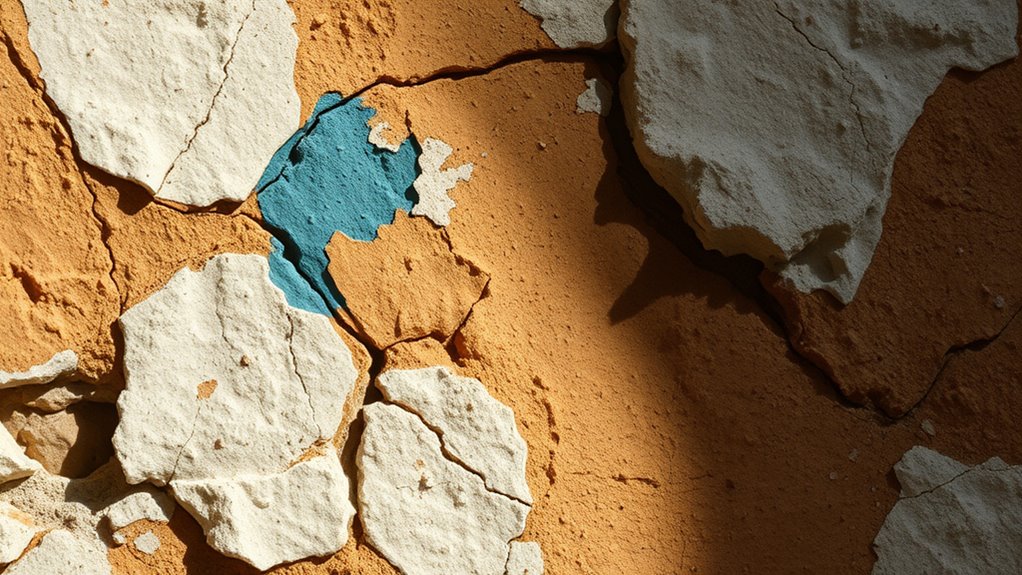
Ancient frescoes are invaluable cultural treasures that offer a glimpse into past civilizations, but they face constant threats from environmental factors, pollution, and human activity. Protecting these artworks requires careful reflection of restoration ethics, making certain that any intervention preserves their authenticity without causing further damage. When you approach conservation, you must balance the need to stabilize deteriorating surfaces with respect for the original artist’s intent and the historical context. Restoration ethics emphasize minimal intervention, meaning you should only implement techniques necessary to prevent ongoing deterioration, avoiding invasive procedures that could compromise the fresco’s integrity. This approach recognizes that every touch or chemical treatment can alter the artwork, so you must weigh the benefits against potential risks. Environmental impacts also play a significant role in the preservation process. Exposure to humidity, temperature fluctuations, and pollutants accelerates decay, so you need to address these factors proactively. Controlling environmental conditions within display or storage areas minimizes fluctuations that could cause cracking or flaking of the pigments and plaster. Additionally, pollution, especially airborne chemicals like sulfur dioxide or nitrogen oxides, reacts with the fresco’s surface, leading to discoloration or erosion. Managing these impacts involves installing air filtration systems or protective coverings, but you must do so carefully to avoid obstructing the artwork or detracting from its visual and historical value. When you plan restoration work, you should prioritize non-invasive cleaning methods, such as gentle brushes or solvents that are reversible and do not harm the original materials. In some cases, consolidants are applied to stabilize flaking paint, but these must be chosen with precision, ensuring they don’t alter the fresco’s appearance or chemical composition. You also have to think about the ethical implications of using modern materials; some may be effective but could pose long-term risks or be incompatible with ancient substances. The challenge lies in making decisions that respect the fresco’s original state while preventing further deterioration. Preservation efforts must also account for future risks, like climate change, which could introduce new environmental stresses. Understanding the importance of environmental control is essential for long-term preservation, as it helps mitigate the impact of external conditions. Ultimately, conserving ancient frescoes demands a delicate balance: employing scientifically sound techniques that align with restoration ethics while actively mitigating environmental impacts. Your goal is to guarantee these masterpieces endure for future generations, maintaining their cultural and historical significance without compromising their authenticity.

Betanull Crevice Cleaning Brush Set, Multi-Purpose Hard Bristle Brushes for Deep Cleaning Kitchen, Bathroom, Grout, Sink, Cup, Teapot, Bottle, Blender, Corners, Tight Spaces & More
【8 Piece Ultimate Crevice Cleaning Brush Set】 Tackle every corner of your home effortlessly with our versatile cleaning…
As an affiliate, we earn on qualifying purchases.
As an affiliate, we earn on qualifying purchases.
Frequently Asked Questions
How Do Climate Changes Affect Fresco Preservation?
Climate changes cause climate-induced deterioration of frescoes, making preservation more difficult. You need to monitor environmental conditions closely through environmental monitoring to detect fluctuations like humidity and temperature that accelerate decay. Rapid changes can cause cracking, flaking, and fading. By tracking these factors, you can implement timely interventions, reducing damage and prolonging the frescoes’ lifespan. Adapting conservation efforts to evolving climate conditions guarantees better protection for these priceless artworks.
What Modern Technology Is Used in Fresco Restoration?
You’ll find that digital imaging and laser cleaning are revolutionizing fresco restoration. Digital imaging captures detailed, high-resolution images, helping you analyze and document artwork precisely. Laser cleaning uses focused beams to gently remove dirt and pollutants without damaging the original paint—restoring up to 60% more detail than traditional methods. These modern techniques enable you to preserve frescoes more effectively, ensuring their beauty endures for future generations.
Are There Ethical Concerns in Restoring Ancient Frescoes?
Yes, there are ethical dilemmas in restoring ancient frescoes. You need to contemplate cultural sensitivity, ensuring restorations respect the original artist’s intent and cultural significance. Restorers face the challenge of balancing preservation with authenticity, avoiding over-restoration that might distort history. By addressing these ethical concerns thoughtfully, you help preserve cultural heritage while maintaining respect for the artwork’s original context and meaning.
How Do Conservators Prevent Future Deterioration?
To prevent future deterioration, you should apply protective coatings that shield frescoes from environmental damage like moisture and pollution. Regular monitoring helps you catch early signs of deterioration, and structural reinforcement ensures the wall’s stability. You need to regulate temperature and humidity levels carefully, maintaining a stable environment. These combined efforts help preserve the frescoes for generations, ensuring they remain vibrant and intact over time.
What Training Is Required for Fresco Conservation Specialists?
Did you know that less than 5% of fresco conservators hold a specialized certification? To become a fresco conservation specialist, you need extensive conservation training, typically including a degree in art conservation or a related field. You also pursue specialist certification, which guarantees you possess the necessary skills to preserve delicate frescoes. This rigorous process prepares you to handle complex preservation challenges and maintain cultural heritage for future generations.
reversible consolidants for artwork
As an affiliate, we earn on qualifying purchases.
As an affiliate, we earn on qualifying purchases.
Conclusion
So, here you are, trying to preserve these delicate masterpieces, only to realize that time itself is the biggest threat. You carefully remove centuries of dirt, yet every brushstroke risks erasing history’s secrets. Ironically, in your efforts to save these ancient frescoes, modern techniques threaten their authenticity. It’s as if the walls are whispering, “You can try to save us, but in doing so, you might just erase what makes us timeless.”

WEN 3410 3-Speed Remote-Controlled Air Filtration System (300/350/400 CFM), Basic w/ RF Remote (400 CFM) , Black
Includes a 1-micron filter and a 5-micron pre-filter, both of which can be easily replaced
As an affiliate, we earn on qualifying purchases.
As an affiliate, we earn on qualifying purchases.

Massage Stones Warmer Hot Stone Heater – 6 Quart Adjustable Temperature Control Heating Device (6Q)
DURABLE STAINLESS STEEL MATERIAL : The body of the heater is made of high-quality stainless steel, offering easy…
As an affiliate, we earn on qualifying purchases.
As an affiliate, we earn on qualifying purchases.