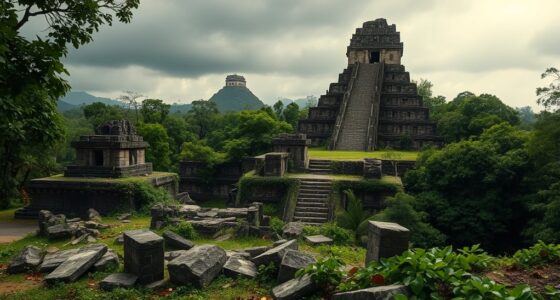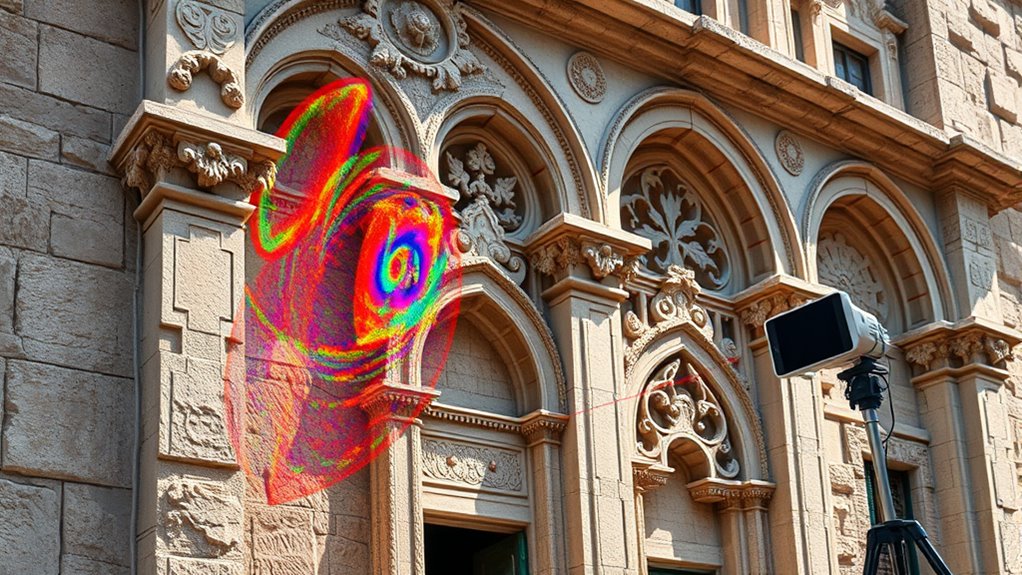

Using 3D scanning for architectural preservation allows you to create highly detailed digital models of historic structures without contact, capturing surface features and condition accurately. The technology generates precise point clouds that serve as permanent digital records, which are invaluable for restoration, documentation, and education. It also helps monitor changes over time and guides minimally invasive repairs. If you want to discover how this innovative method can protect your heritage site effectively, keep exploring the possibilities.
Key Takeaways
- Laser scanning creates detailed digital models to document and preserve fragile architectural structures non-invasively.
- Digital archives support accurate restoration, conservation planning, and legal documentation of historic sites.
- 3D scans enable ongoing monitoring of structural changes and deterioration over time.
- Digital data facilitates virtual tours, research, education, and collaborative preservation efforts.
- Integration of 3D scanning enhances decision-making and ensures long-term preservation of cultural heritage.
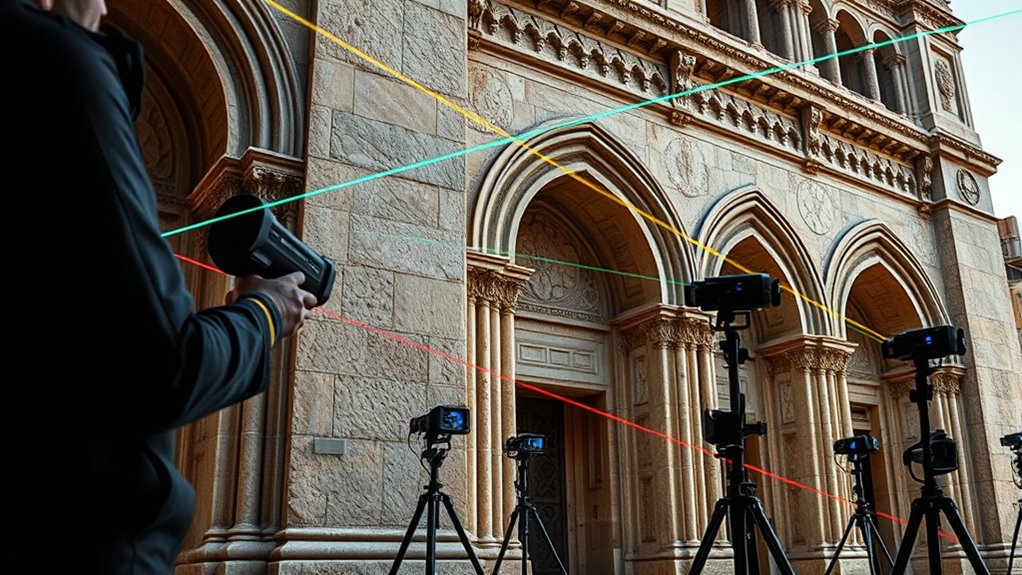
3D scanning has become an essential tool in architectural preservation, allowing professionals to capture detailed, accurate models of historic structures. Among the most effective techniques is laser scanning, which uses laser beams to measure the precise dimensions and features of a building or artifact. When you perform laser scanning, you generate millions of data points that create a highly detailed point cloud, capturing every nuance of the structure’s surface. This process is non-invasive, so you can preserve fragile or deteriorating sites without physical contact. The resulting data can then be processed into digital models that serve multiple purposes, from restoration planning to virtual exhibits.
One of the key benefits of laser scanning is its ability to produce exhaustive digital archives. These archives act as a digital fingerprint of the structure, documenting its current condition in meticulous detail. As you store these digital archives, you create a permanent record that can be accessed and referenced long after physical elements have changed or deteriorated. This is especially valuable in cases of extreme weather, vandalism, or natural decay, where having a detailed digital record can guide future restoration efforts or provide legal documentation. The digital archives also facilitate collaboration across disciplines; architects, conservators, and historians can access and work with the same detailed data, improving coordination and decision-making.
When you integrate laser scanning into preservation projects, you gain the ability to analyze structural elements with unmatched precision. You can identify subtle cracks, material inconsistencies, or areas at risk of failure that might be invisible to the naked eye. This level of detail informs your restoration strategies, ensuring interventions are both minimally invasive and highly effective. Additionally, by converting the laser scan data into digital archives, you create a resource that can be shared digitally or used for future research, education, or virtual tours. These archives also support ongoing maintenance, enabling you to monitor changes over time and address issues proactively.
Frequently Asked Questions
How Cost-Effective Is 3D Scanning for Small Heritage Sites?
You’ll find 3D scanning cost-effective for small heritage sites when you do thorough cost analysis and budget planning. It minimizes manual labor, reduces errors, and speeds up documentation, saving money in the long run. While initial expenses might seem high, the detailed digital models help in preservation and restoration efforts, ultimately offering great value. Proper planning guarantees you maximize benefits without overspending, making it a smart choice for small sites.
What Are the Most Common Challenges Faced During 3D Data Capture?
During 3D data capture, you often face challenges like lighting inconsistencies, which can cause shadows or uneven scans, and surface reflectivity, making it difficult for scanners to accurately capture details. You need to modify lighting conditions and choose appropriate scanning settings to minimize these issues. Handling reflective surfaces with coatings or specialized equipment also helps guarantee you get precise, high-quality data without gaps or distortions.
How Does 3D Scanning Improve Restoration Accuracy?
You see that 3D scanning considerably improves restoration accuracy by capturing detailed geometry and textures precisely. This technology enhances detail accuracy, ensuring every feature is accurately represented. As a result, restoration efforts become more precise, reducing errors and guesswork. The high-resolution data also allows restorers to identify subtle imperfections, making precision enhancement possible. Overall, 3D scanning provides a reliable, detailed foundation for restoring and preserving architectural heritage effectively.
Can 3D Scans Be Integrated With Existing Preservation Tools?
Yes, 3D scans can be integrated with existing preservation tools through digital documentation. You can easily import scan data into CAD programs, GIS systems, or BIM platforms, enabling seamless preservation integration. This integration allows you to create detailed models, analyze structural details, and plan accurate restorations. By combining 3D scanning with your current tools, you enhance preservation efforts, maintain historic accuracy, and streamline your workflow effectively.
What Training Is Required to Operate 3D Scanning Equipment Effectively?
To operate 3D scanning equipment effectively, you need technical certifications that cover device operation and data management. These certifications guarantee you understand how to handle the hardware and software, interpret scan data accurately, and maintain data integrity. You should also gain hands-on experience through training sessions or workshops, which help you become proficient in capturing precise scans and managing large datasets efficiently for architectural preservation projects.
Conclusion
By leveraging 3D scanning, you can preserve architectural treasures for generations to come. It’s a game-changer that allows you to capture intricate details quickly and accurately, ensuring nothing gets lost in the shuffle. Think of it as hitting two birds with one stone—saving history while embracing innovation. So, don’t wait until it’s too late; harness this technology now and keep our architectural heritage alive and well for the future.