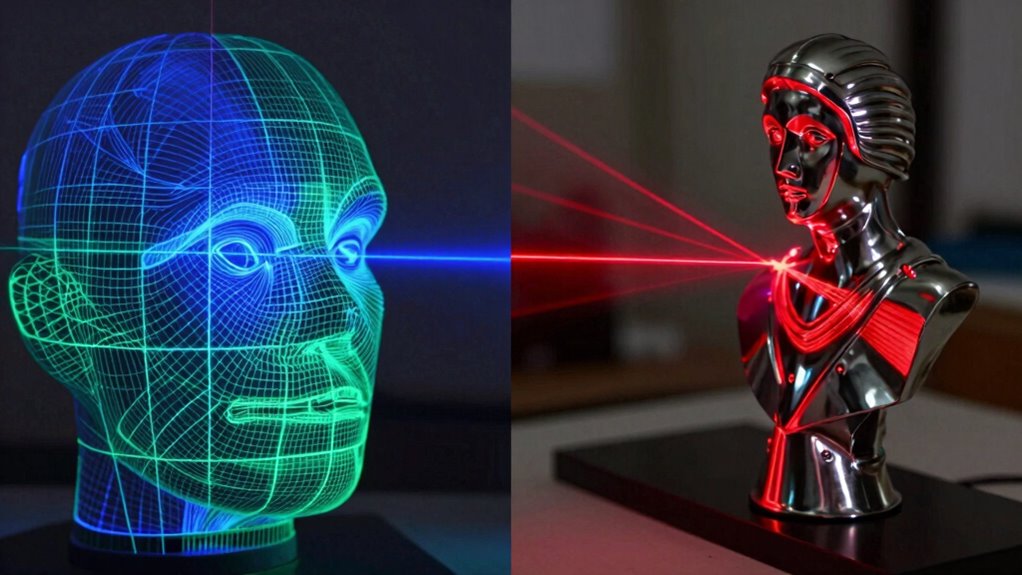

Structured light and laser 3D scanning each have their strengths. Structured light projects patterns onto objects, capturing fine details quickly indoors but struggles with ambient light and reflective surfaces. Laser scanners offer higher accuracy, better performance on complex or reflective surfaces, and cover larger areas, though they can be more expensive and slower. Understanding their differences helps you choose the best method for your needs—exploring more gives you clearer insight into their applications and limitations.
Key Takeaways
- Structured light projects patterns for detailed surface capture, while laser scanners use focused laser beams for precise distance measurements.
- Laser scanners generally offer higher accuracy and resolution, especially on reflective or long-distance surfaces.
- Structured light is more sensitive to ambient light and environmental conditions compared to laser scanning.
- Structured light systems are typically faster and more cost-effective for small objects; laser scanners excel in large or complex areas.
- Both methods face challenges with shiny, transparent surfaces and require surface preparation for optimal results.

Revopoint MetroY Pro 3D Scanner for 3D Printing, Up to 0.01mm Precision, 34+15+1 Industrial Blue Laser Handheld Scanner, 62-Line Full-Field, Real-time Preview, Bulit-in Wi-Fi 6, Full-Color 3D Scan
Industrial-Grade Accuracy: Capture every detail flawlessly with MetroY's advanced blue lasers, offering precision of up to 0.01 mm,…
As an affiliate, we earn on qualifying purchases.
As an affiliate, we earn on qualifying purchases.
What Are Structured Light and Laser 3D Scanning?
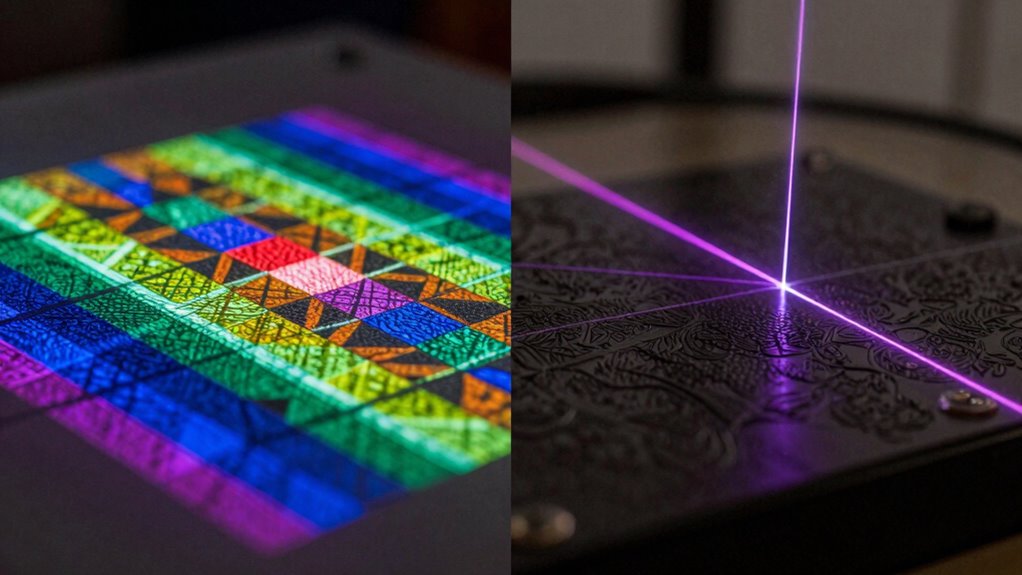
Have you ever wondered how 3D scanning technologies capture detailed object surfaces? With structured light and laser 3D scanning, you get precise surface data quickly. Structured light scanners project a pattern of light onto an object, and cameras capture how the pattern deforms to create detailed 3D models. They often feature excellent color capture, allowing you to record textures and surface details vividly. These scanners also boast portability features, making them easy to carry and set up in various environments. Portability and the ability to capture surface color and texture make them versatile tools for a wide range of applications. Laser scanners, on the other hand, use focused laser beams to measure distances accurately. Both technologies are compact and lightweight, ideal for on-site inspections or fieldwork. Their portability and ability to capture surface color and texture make them versatile tools for a wide range of applications. Exploring new digital concepts continues to expand the capabilities and applications of these innovative scanning methods.

EinScan Rigil Professional Wireless 3D Laser Scanner, Industrial Tri-Mode Hybrid (Laser + VCSEL IR), 0.04mm Accuracy, 0.05mm Resolution, 50 Laser Lines for Reverse Engineering & Manufacturing
WIRELESS ALL-IN-ONE SCANNING SOLUTION: Enjoy seamless 3D scanning with triple modes Standalone, Wireless PC, and Wired PC. The…
As an affiliate, we earn on qualifying purchases.
As an affiliate, we earn on qualifying purchases.
How Do They Work?
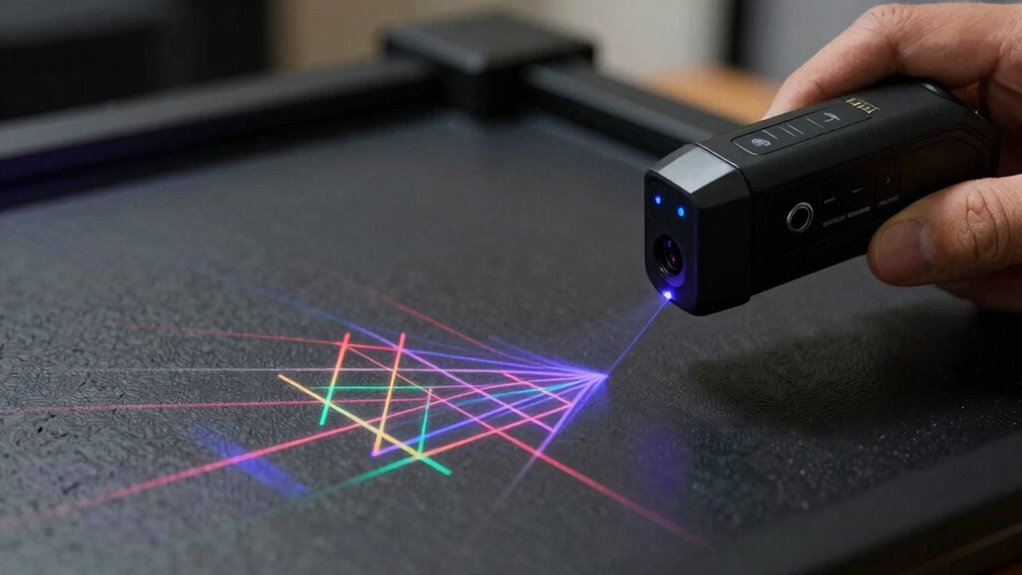
Structured light scanners work by projecting a pattern of light—such as grids or stripes—onto the object’s surface. As the pattern deforms over the contours, the scanner captures images to analyze these distortions. This process uses specific scanning techniques to interpret how the pattern bends, allowing the system to calculate precise 3D measurements quickly. The technology differences between structured light and laser scanning are significant: structured light relies on pattern deformation, while laser scanners use laser beams and phase-shift measurements. Both methods convert the captured data into detailed 3D models, but they do so through different mechanisms. Understanding these fundamental differences helps you choose the right scanner for your needs, considering factors like speed, accuracy, and environmental conditions.

Compatible for 3D Scanning Devices Portable 3D Scanning Accessory WiFi 6 ≤30W Power Supply(Raptor Serie Version)
Suitable for various 3D scanning devices with strong compatibility
As an affiliate, we earn on qualifying purchases.
As an affiliate, we earn on qualifying purchases.
Compare Accuracy and Resolution of Structured Light and Laser Scanners
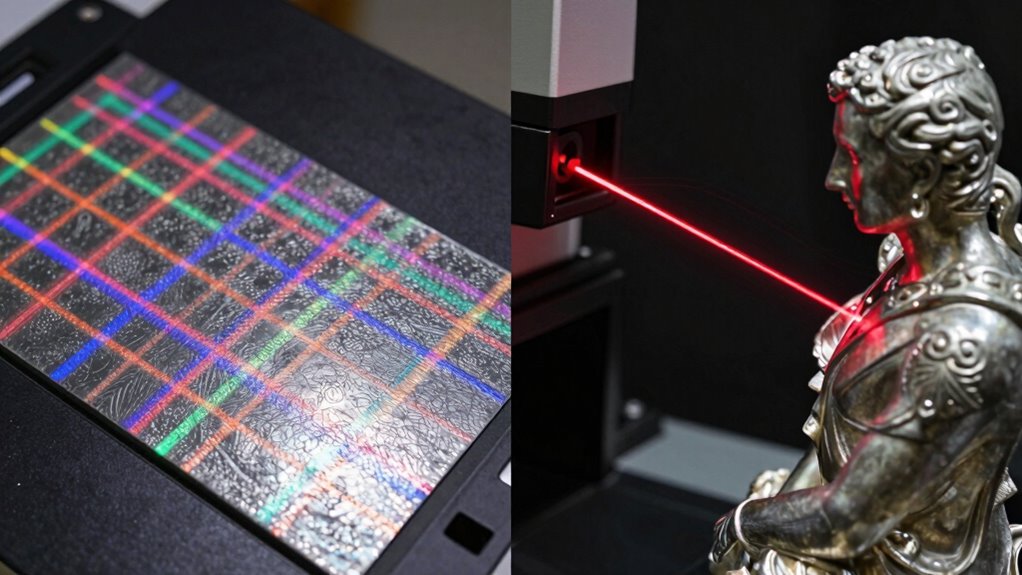
When comparing structured light and laser scanners, you’ll notice differences in measurement precision and surface detail capture. Laser scanners often offer higher accuracy and better resolution limits, making them ideal for detailed surfaces. However, structured light systems can provide sufficient resolution for many applications while being faster and more versatile. Additionally, understanding the Free Floating technique can enhance the effectiveness of both scanning methods by minimizing errors caused by movement or environmental factors. Implementing error mitigation strategies can further improve scan quality by addressing environmental disturbances and system stability. Recognizing the importance of measurement precision helps optimize the choice between these technologies based on specific project needs. Moreover, surface reflectivity significantly influences the accuracy and quality of scans, requiring proper surface preparation or calibration techniques.
Measurement Precision Levels
While both structured light and laser scanners excel at capturing detailed 3D data, their measurement precision levels differ considerably. Structured light scanners often provide high resolution and excellent color accuracy, making them ideal for detailed visualizations. However, they can be more sensitive to environmental conditions like ambient light, which may reduce their precision. Environmental sensitivity can significantly impact the accuracy of structured light scanning, especially in uncontrolled settings. Laser scanners generally offer superior measurement accuracy over larger areas and perform better in varying lighting conditions, as they are less affected by environmental sensitivity. While laser scanners might have slightly lower color capture capabilities, their precision in capturing fine details over long distances is typically higher. Your choice depends on whether you prioritize color fidelity and quick results or need maximum measurement precision in challenging environments. Additionally, vetted equipment tends to deliver more reliable and consistent results in professional applications.
Surface Detail Capture
Surface detail capture hinges on the accuracy and resolution capabilities of the scanner. Structured light systems often excel at capturing fine surface details, thanks to their high resolution, but can struggle with surface reflectivity and color fidelity. Laser scanners tend to have slightly lower resolution but provide better results on reflective surfaces, thanks to their precise point measurement. To compare:
- Accuracy: Laser scanners generally deliver consistent accuracy on various surfaces, while structured light can be affected by surface reflectivity.
- Resolution: Structured light offers higher resolution, capturing more surface intricacies.
- Color Fidelity: Structured light systems often incorporate color capture, enhancing surface detail with better color accuracy, where surface reflectivity plays a vital role. Additionally, understanding the spatial resolution of each type helps determine which scanner best suits detailed surface capture needs.
Furthermore, considering the measurement range of each system can influence the effectiveness of capturing surface details at different distances.
Choosing between them depends on the specific detail and surface characteristics of your object.
Equipment Resolution Limits
The resolution limits of 3D scanners directly impact the level of detail you can capture, influencing both accuracy and the finer nuances of your models. Sensor accuracy determines how precisely a scanner records data, affecting the fidelity of the final scan. Structured light scanners often offer higher data resolution, capturing intricate surface details thanks to their precise projection and imaging systems. Laser scanners, while also accurate, may have slightly lower resolution in some models but excel in capturing larger areas quickly. Your choice depends on your needs: for detailed, high-fidelity models, prioritize scanners with superior sensor accuracy and resolution. Keep in mind that even slight differences in data resolution can markedly influence the quality and usability of your 3D models.

Revopoint INSPIRE 2 3D Scanner for 3D Printing Handheld, Up to 0.03mm Precision, Multi-Line Laser/Structured Light, Wireless/Outdoor Scanning, Full-Color Scan, for iOS/Android/Win/macOS, Standard
Wireless Scanning & Interactive Streaming: Built-in WiFi 6.0 enables on-the-go, structured light mobile scanning or real-time PC-to-mobile interactive…
As an affiliate, we earn on qualifying purchases.
As an affiliate, we earn on qualifying purchases.
Which Method Is Faster for 3D Data Capture?
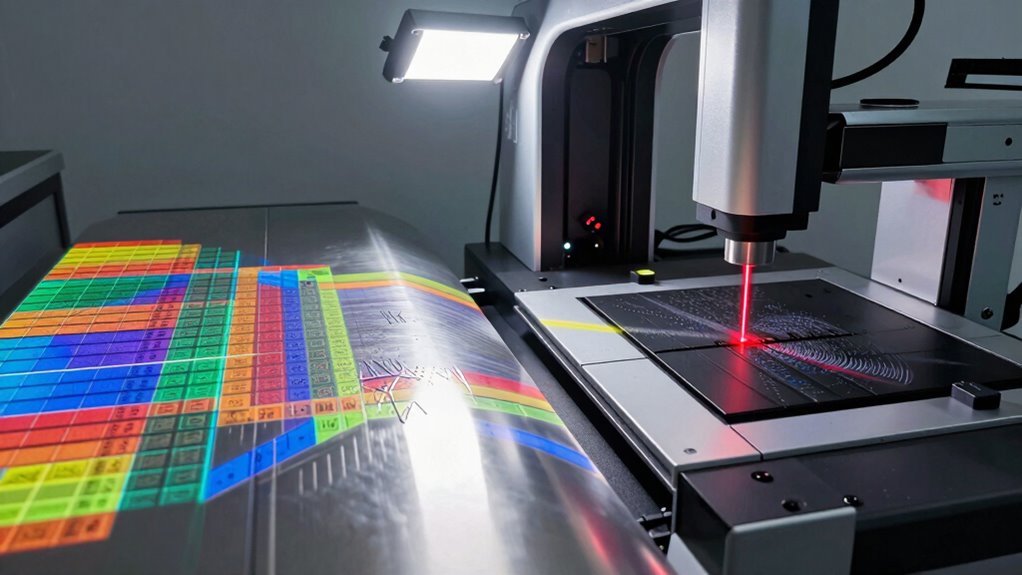
When comparing speed, consider how quickly each method can be set up and calibrated, as this impacts overall efficiency. The data acquisition rate also plays a vital role, determining how fast you can capture detailed 3D information. By examining these points, you’ll better understand which scanning technique gets the job done more quickly. Additionally, the complexity of early detection techniques can influence how swiftly each method is implemented in practice. Moreover, understanding the scanning process complexity can help optimize workflow and reduce overall scanning time.
Setup and Calibration Speed
While both structured light and laser 3D scanning systems aim to quickly capture detailed models, their setup and calibration speeds can vary considerably. Your choice depends on the accuracy comparison and setup efficiency.
- Structured light systems typically require minimal calibration, often done in minutes, making them faster to deploy initially.
- Laser scanners may need extensive calibration routines, which can take longer but improve overall accuracy.
- The setup efficiency of structured light is generally higher for smaller objects, while laser systems excel in larger or complex environments.
- Additionally, ease of calibration plays a crucial role in determining the overall setup speed for different 3D scanning methods.
Data Acquisition Rate
Structured light systems often capture data more quickly for small to medium-sized objects because they project and analyze multiple patterns simultaneously. This approach increases the sampling rate, allowing you to gather detailed information in fewer passes. Their data throughput is optimized for rapid collection, making them ideal when speed matters. Laser scanners, on the other hand, typically scan line by line, which can slow down data acquisition, especially for complex or larger surfaces. While laser systems may offer higher accuracy, their slower sampling rate often results in longer capture times. If your priority is quick, efficient data collection for smaller objects, structured light systems generally provide a faster solution, leveraging higher data throughput and multi-pattern projection to streamline the process.
What Are the Costs of Structured Light and Laser Scanners?
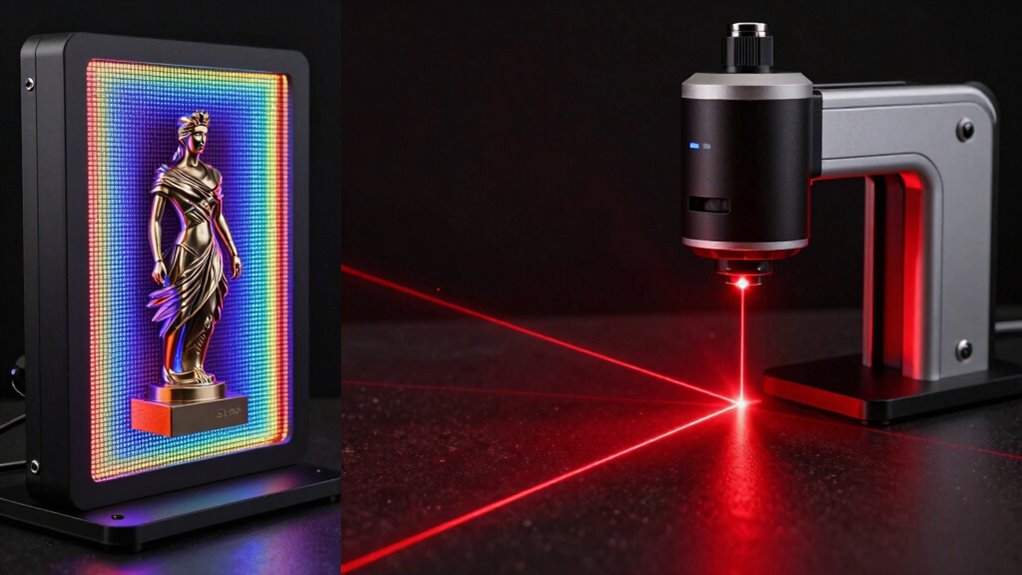
Are you wondering how the costs of structured light and laser 3D scanners compare? A thorough cost analysis considers initial investment, maintenance, and operational expenses. Market trends show that structured light scanners generally have a lower entry price but may require more frequent calibration. In contrast, laser scanners tend to be more expensive upfront but offer longer-term durability and accuracy.
Here’s a quick comparison:
- Initial purchase cost – structured light scanners are usually more affordable.
- Maintenance expenses – laser scanners often require less frequent servicing.
- Operational costs – laser systems might consume more power but last longer.
Understanding these factors helps you make informed decisions aligned with your project budget and long-term needs.
When Should You Use Structured Light or Laser Scanning?
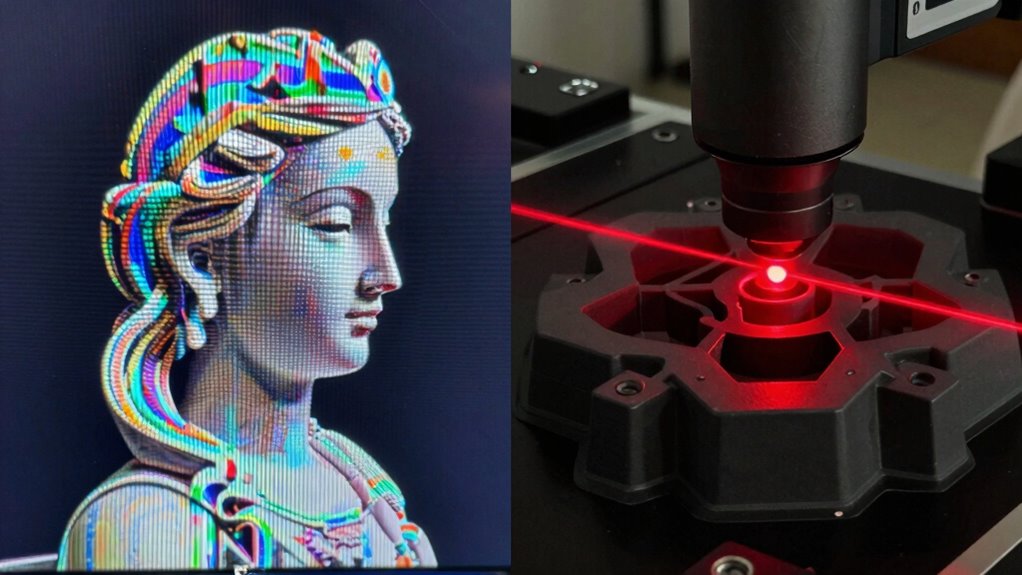
Choosing between structured light and laser scanning depends on your project’s specific requirements. For industrial applications that demand high accuracy and speed, laser scanners are often the best choice, especially for large or complex objects. They handle outdoor environments and longer ranges better, making them suitable for manufacturing, quality control, or construction. If your focus is on artistic projects or detailed small-scale work, structured light offers excellent precision and faster data acquisition for intricate surfaces. It’s ideal for capturing fine details in sculptures, jewelry, or detailed prototypes. Consider factors like project size, environment, and detail level. Use laser scanning for large, outdoor, or industrial settings, and opt for structured light when working on delicate, detailed, or indoor artistic projects. Additionally, understanding colorful presentation techniques can enhance the visual clarity of scanned data, especially for detailed artistic works.
What Are the Limitations and Challenges of Each Method?
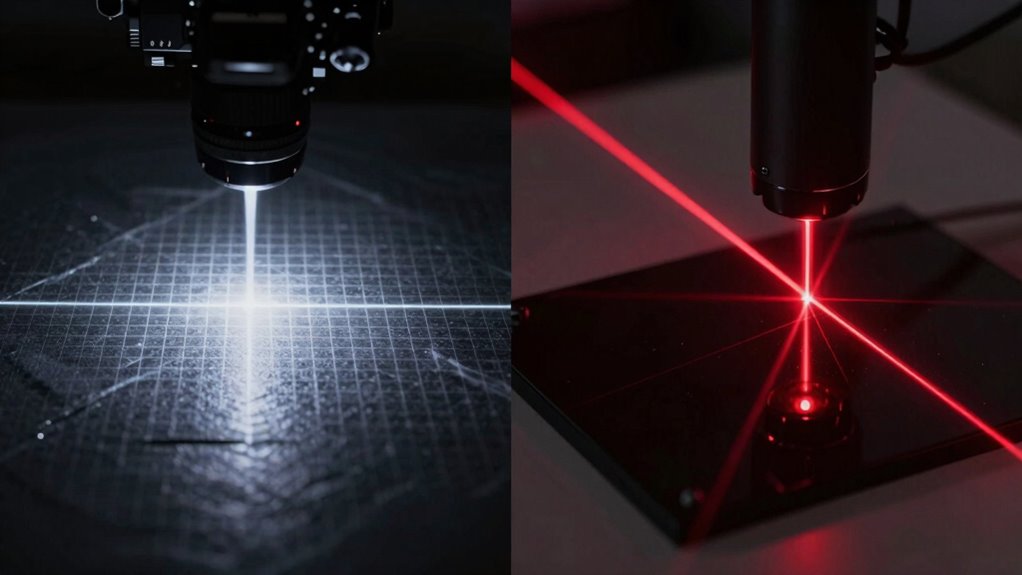
While both structured light and laser scanning offer powerful 3D data collection, each method has its own limitations that can impact your project.
- Sensor sensitivity varies; structured light systems struggle in low-light conditions, while laser scanners can be affected by reflective or transparent surfaces.
- Environmental constraints pose challenges; dust, fog, or bright sunlight can distort data, making accurate scans difficult.
- Surface properties influence accuracy; shiny or dark objects may not be captured well, requiring extra preparation or alternative techniques.
- Sensor limitations must be carefully considered when planning your scanning setup to ensure optimal results. For example, understanding the sensor capabilities can help mitigate some of these issues.
Additionally, ambient conditions, such as temperature and humidity, can also influence the performance of scanning devices, adding another layer of complexity to data collection. Moreover, measurement range is a critical factor to consider, as some sensors may have limited reach or resolution depending on the environment.
Furthermore, data processing complexity can vary between methods, requiring different levels of expertise and software to interpret the captured data effectively.
These limitations mean you need to contemplate your environment, object properties, and sensor capabilities carefully to ensure reliable results. Understanding these challenges helps you choose the right method and optimize your scanning process effectively.
How to Choose the Best 3D Scanner for Your Project
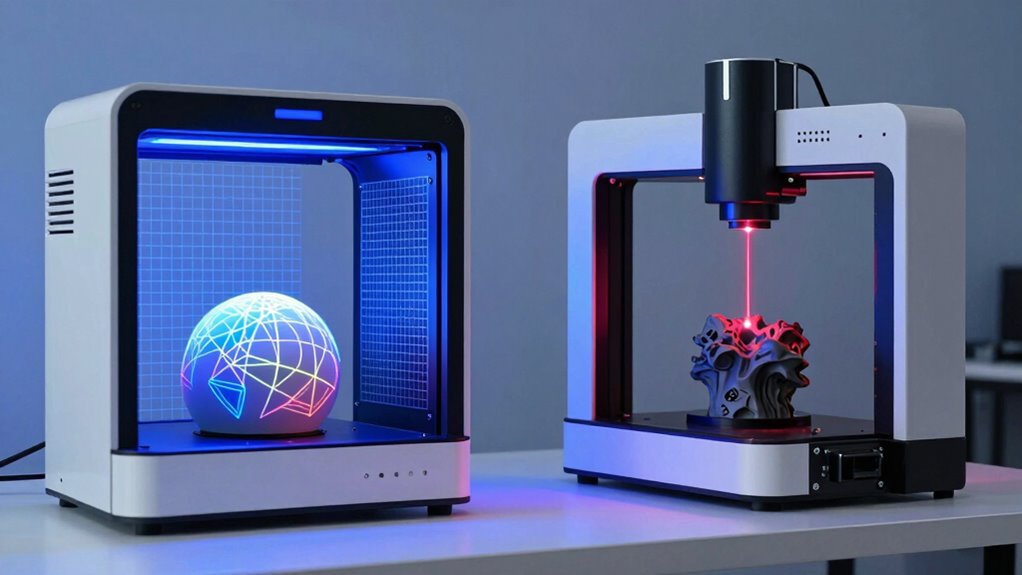
Selecting the right 3D scanner depends on understanding your project’s specific requirements, including the types of objects you’re capturing, environmental conditions, and desired accuracy. Consider the cost comparison between structured light and laser scanners—some models offer affordability but may sacrifice speed or detail. Think about user experience; if you prefer an intuitive interface or quick setup, choose a scanner that aligns with those needs. For intricate, high-precision projects, a laser scanner might be better, while structured light systems excel in capturing detailed textures quickly. Assess the complexity of your scans, portability needs, and budget constraints. Additionally, understanding the technology differences between structured light and laser scanning can help you make a more informed choice. Making an informed decision ensures you pick a device that balances performance, ease of use, and cost-effectiveness for your project’s success.
Frequently Asked Questions
What Are the Typical Applications for Structured Light Versus Laser 3D Scanning?
You use structured light 3D scanning for precise applications like cultural heritage preservation and detailed industrial inspections, where accuracy and speed matter. Laser scanning suits large-scale projects, outdoor environments, or complex surfaces, making it ideal for industrial inspections needing detailed surface analysis. Both methods help you capture intricate details, but your choice depends on whether you prioritize speed and detail in controlled settings or durability over larger, outdoor areas.
How Do Environmental Conditions Affect Each Scanning Method’s Performance?
Imagine capturing a detailed landscape; ambient interference like bright sunlight can wash out structured light patterns, making data collection tough. Laser scanners, however, cut through fog or dust, but highly reflective surfaces may cause laser beams to bounce unpredictably, skewing results. Both methods are affected by environmental conditions, so you need to take into account your surroundings. Adjusting for ambient interference and surface reflectivity helps ensure accurate, reliable scans regardless of external challenges.
Can Both Scanning Methods Be Integrated Into a Single System?
Yes, you can integrate both scanning methods into a hybrid system. This approach combines the strengths of each technique, improving accuracy and versatility. However, integration challenges include aligning different data formats, calibration complexities, and synchronization issues. You’ll need to carefully design the system to manage these challenges, ensuring seamless operation and reliable results. This hybrid setup can be especially useful in diverse environments or complex scanning tasks.
What Are the Safety Considerations for Using Laser Versus Structured Light Scanners?
Imagine the risk of laser safety causing a catastrophe! You need to be cautious with laser scanners because their intense beams can harm eyes if mishandled. Meanwhile, structured light risks are minimal, but you should still avoid direct eye exposure. Always wear appropriate safety gear, follow manufacturer guidelines, and guarantee proper training. Your safety depends on understanding these hazards and taking proactive steps to protect yourself during scanning operations.
How Do Post-Processing Requirements Differ Between the Two Methods?
You’ll find that post-processing differs substantially between the two methods. With laser scanning, you often need extensive data correction to address noise and gaps, and calibration procedures are vital for accuracy. Structured light scans typically require less correction but still need calibration to guarantee precision. Overall, laser scans tend to demand more detailed post-processing steps, while structured light may need less but still benefits from proper calibration.
Conclusion
Choosing between structured light and laser 3D scanning is like picking the right brush for your masterpiece. Each method paints a different picture—fast and precise or versatile and detailed. By understanding their strengths and limits, you can craft your perfect 3D capture. So, weigh your project‘s needs carefully, and let your decision flow smoothly, turning complex shapes into clear, accurate forms—your creative journey just got a whole lot brighter.