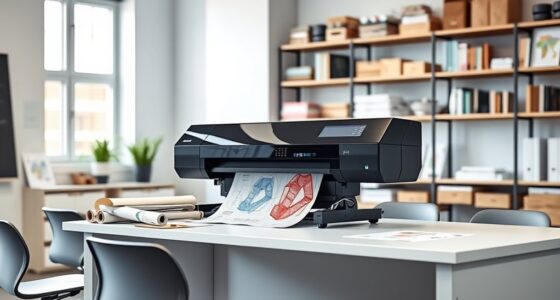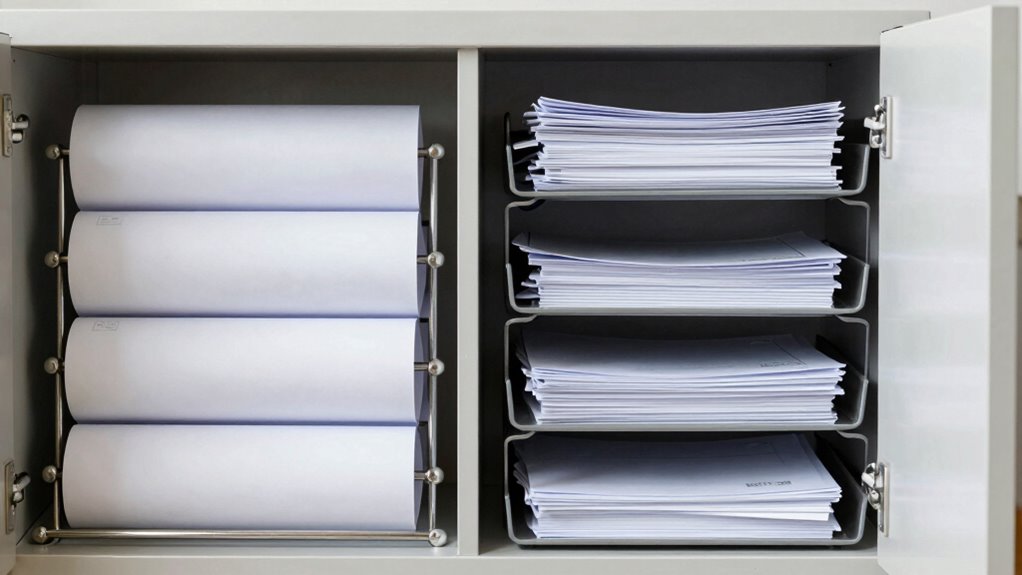

When deciding between roll and flat storage, consider your documents’ fragility and size. Roll storage reduces surface contact and minimizes creasing, making it ideal for large or delicate items, but improper rolling can stress fibers over time. Flat storage provides better protection for fragile papers and allows easier environmental control, though it takes up more space. Both methods are safe if you use proper materials and techniques—continue to explore how to choose the best option for your collection.

Get business pricing on monitors, keyboards and dev gear
- Business-only prices and quantity discounts
- Tax-exempt purchasing
- Multiple users, one account, clear invoices
Key Takeaways
- Roll storage reduces surface contact, lowering risk of surface damage but may cause fiber stress if not properly rolled.
- Flat storage minimizes creasing and warping, offering better protection for fragile or delicate documents.
- Both methods require acid-free materials and controlled environments for optimal archival safety.
- Proper handling techniques are essential in both methods to prevent accidental physical damage.
- Space and cost considerations can influence safety, with roll storage being more economical for large items.
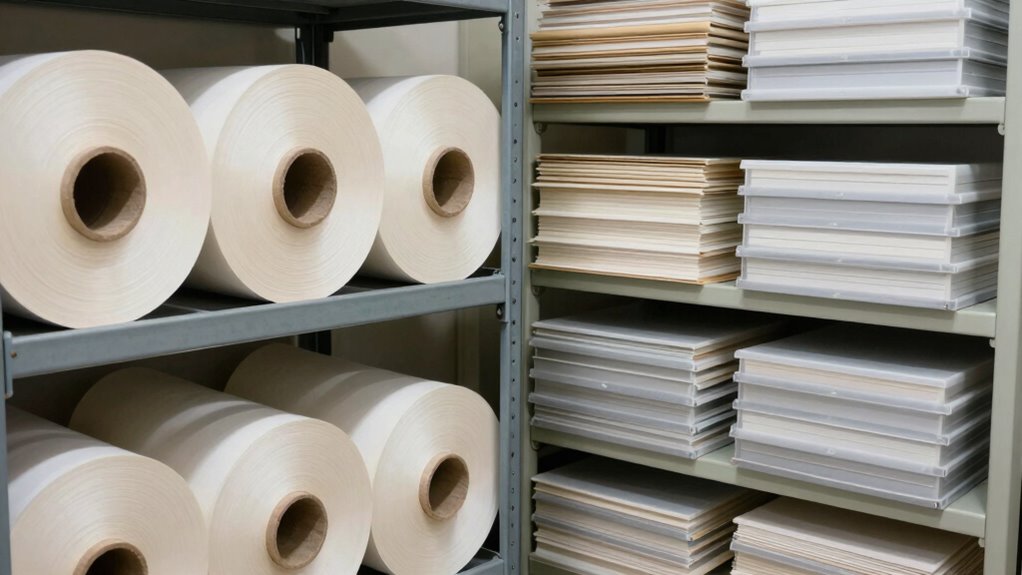
When it comes to preserving paper, choosing the right storage method is essential for preventing damage and ensuring longevity. You need to consider how each method impacts archival durability and cost effectiveness to protect your collection effectively. You should also evaluate how each method affects environmental control, as climate and light exposure significantly influence paper preservation. Both roll storage and flat storage have their advantages, but understanding their differences can help you make the best choice for your needs.
Roll storage involves rolling paper around a core, then storing it in tubes or cylinders. This method is beneficial when you’re working with large or rolled documents, such as maps, blueprints, or posters. Because the paper is rolled, it minimizes surface contact, reducing the risk of creases, tears, or other physical damage. However, for archival durability, rolling can sometimes cause stress on the paper’s fibers, especially if the paper is brittle or fragile. To maintain long-term integrity, you must ensure the paper is rolled loosely and stored in acid-free, inert materials. From a cost effectiveness perspective, roll storage can be economical for large or bulky items since it requires fewer shelves and less space, and the storage containers are relatively inexpensive. Additionally, proper handling techniques are crucial to prevent accidental damage during storage or retrieval. Furthermore, considering the storage environment is vital to ensure the paper remains in optimal condition over time.
Flat storage involves laying paper items flat in storage boxes or drawers. This method is often preferred for preserving documents that need easy access or frequent handling. When stored flat, papers are less prone to creasing or warping, which enhances their archival durability. Proper flat storage also allows you to use acid-free folders and boxes, further protecting your items from environmental damage. It’s especially suitable for delicate or valuable documents because it minimizes physical stress. The downside is that flat storage can take up more space and cost more to implement, especially if you need large or custom-sized containers to accommodate your collection. It’s a worthwhile investment for items you want to preserve in the best possible condition over time. Additionally, understanding the importance of environmental control is crucial, as climate and light exposure significantly affect paper preservation.
acid-free document storage boxes
As an affiliate, we earn on qualifying purchases.
As an affiliate, we earn on qualifying purchases.
Frequently Asked Questions
How Do Humidity Levels Affect Roll and Flat Storage Safety?
Humidity levels greatly impact storage safety, whether you choose roll or flat storage. Fluctuating humidity can cause paper to expand, contract, or warp. To protect your documents, guarantee proper humidity control, maintaining levels around 40-50%. This helps prevent mold growth and deterioration. Consistent humidity management is essential for mold prevention, safeguarding your paper from damage over time, especially in environments with variable moisture levels.
Which Storage Method Is More Cost-Effective Long-Term?
You’ll find that flat storage tends to be more cost-effective long-term because it requires less specialized equipment and materials. With archival quality materials, flat storage minimizes handling damage and degradation. Notably, studies show that proper flat storage can extend paper lifespan by up to 30%. Comparing costs, flat storage generally has lower initial and maintenance expenses, making it a smarter choice if you’re balancing archival quality with budget considerations.
Can Roll Storage Damage Fragile or Brittle Paper?
Yes, roll storage can damage fragile or brittle paper if not done carefully. When you roll delicate documents, you risk causing cracks or tears, which hampers proper preservation. To protect fragile paper, it’s better to use flat storage, ensuring minimal stress and preventing further deterioration. Proper handling and the right storage method are key to maintaining brittle preservation and avoiding unnecessary damage during storage.
How Does Storage Space Efficiency Compare Between the Two Methods?
You’ll find roll storage seems like the space-saving hero, wrapping papers tightly and maximizing storage capacity. Ironically, flat storage spreads your collection out, taking up more space but offering better space utilization for fragile items. If you have limited space, roll storage offers higher efficiency, but flat storage can better preserve your papers’ integrity. So, it’s a trade-off between maximizing space and protecting your delicate treasures.
Are There Specific Types of Paper Better Suited for One Method?
You’ll find that higher-quality paper, like archival or acid-free types, benefits from flat storage because it minimizes bending and creasing, preserving its integrity. Thinner, lightweight paper can be stored in roll form, especially if you’re using durable storage materials like acid-free tubes, to prevent damage. Ultimately, choosing the right storage material and considering your paper’s quality helps guarantee longevity, regardless of whether you opt for roll or flat storage.
large flat storage folders for papers
As an affiliate, we earn on qualifying purchases.
As an affiliate, we earn on qualifying purchases.
Conclusion
Ultimately, choosing between roll and flat storage depends on your paper’s needs, but remember, a good storage method is like a wise old saying—”A stitch in time saves nine.” If you want to protect delicate or valuable papers, flat storage often offers better support and less risk of damage. However, for long-term preservation, consider your specific environment and paper type. Whichever method you choose, prioritizing proper storage will keep your papers safe and sound for years to come.
archival tube for large documents
As an affiliate, we earn on qualifying purchases.
As an affiliate, we earn on qualifying purchases.
As an affiliate, we earn on qualifying purchases.
Fall Picks
fall essentials
As an affiliate, we earn on qualifying purchases.