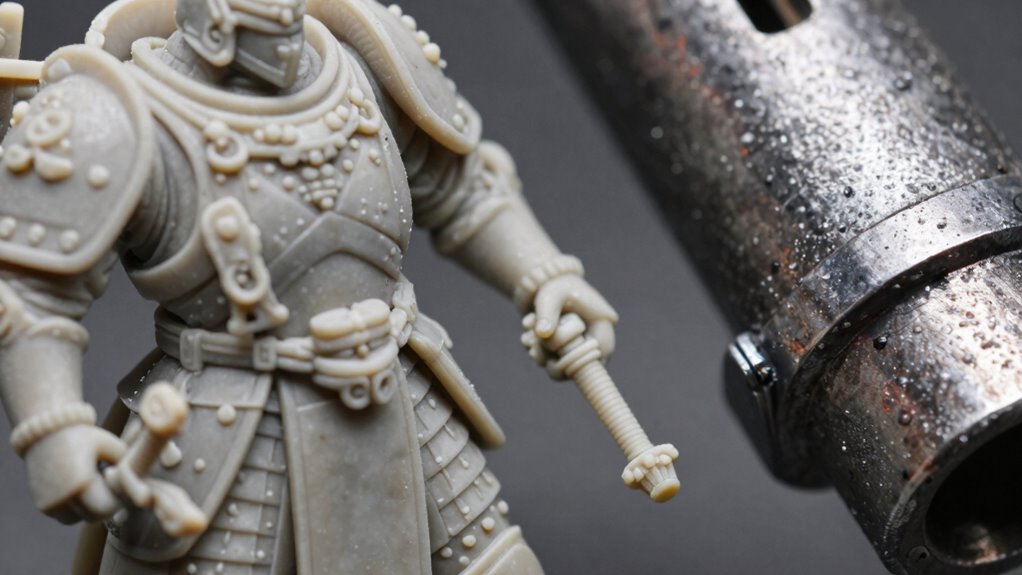

Resin miniatures focus on capturing incredible detail and texture for display and collectibles, making them visually stunning but often more brittle, so they’re not ideal for heavy use. Functional parts prioritize durability and mechanical strength to withstand stress and wear, often using different materials for resilience. Knowing the purpose of your project helps you choose the right option. Keep exploring to uncover how each type can best meet your specific needs and goals.
Key Takeaways
- Resin miniatures prioritize artistic detail and visual quality, while functional parts focus on durability and mechanical strength.
- Resin miniatures are ideal for display and collectibles, whereas functional parts are designed for performance and wear resistance.
- Material choices influence performance, lifespan, and compatibility, essential for either aesthetic or functional applications.
- Resin’s brittleness makes it less suitable for mechanical stress, unlike durable plastics or metals used in functional parts.
- Understanding project goals helps determine whether to select detailed resin miniatures or robust functional components.
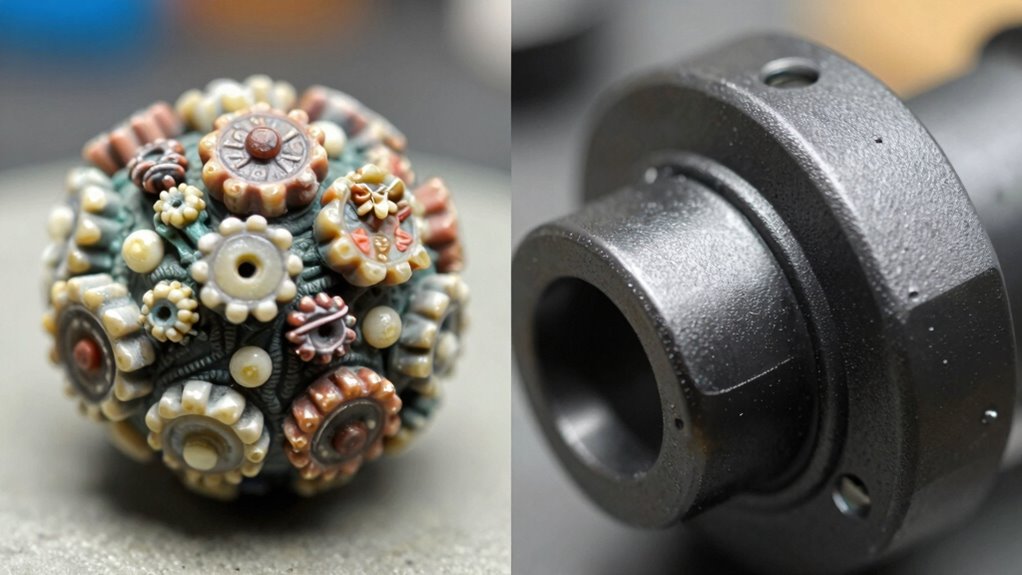
When choosing between resin miniatures and functional parts, understanding their differences can considerably impact your project’s success. Resin miniatures excel in delivering exceptional artistic detail, making them ideal for display pieces, collectibles, or custom models. Their fine resolution captures intricate textures and subtle features that other materials often miss. You’ll notice how every tiny element, from facial expressions to surface textures, feels sharply defined and true to the original design. This level of craftsmanship appeals to hobbyists and artists alike who want their work to stand out visually. However, artistic detail isn’t their only strength; material durability also plays a significant role. Resin miniatures, while lightweight and capable of incredible detail, tend to be more brittle and prone to chipping or cracking under stress. This means they’re best suited for projects where aesthetic quality takes precedence over heavy handling or functional use.
On the other hand, functional parts are designed primarily with durability and practicality in mind. They’re often made from materials like plastics, metals, or composites that withstand wear and tear over time. When you need parts that will be subjected to frequent use, mechanical stress, or environmental exposure, functional components are your best choice. They may not boast the same level of artistic detail as resin miniatures, but they excel at maintaining structural integrity and reliability. These parts are engineered to perform consistently, ensuring that your project functions smoothly without frequent repairs or replacements. If your goal involves creating a machine, tool, or any system requiring regular operation, choosing functional parts guarantees longevity and resilience. Incorporating material selection practices into your planning can help optimize both performance and lifespan. Proper material compatibility is also crucial to prevent issues like corrosion or incompatibility that could compromise the integrity of your project. Understanding the manufacturing process involved in producing these parts can also help you assess their quality and suitability for your needs. Additionally, considering post-processing techniques can further enhance the performance or appearance of functional components.
Deciding between resin miniatures and functional parts ultimately depends on your project’s priorities. If aesthetic appeal and fine craftsmanship are essential, resin miniatures are the way to go. They allow you to showcase intricate details that elevate a display piece or collectible. But if your focus is on durability, efficiency, and dependable performance, functional parts are designed to meet those needs. Both options serve different purposes, and understanding these core differences helps you make informed decisions that align with your project’s goals. By considering artistic detail versus material durability, you set your project up for success, whether that’s creating a stunning display or building a reliable machine.
resin miniatures for 3D printing
As an affiliate, we earn on qualifying purchases.
As an affiliate, we earn on qualifying purchases.
Frequently Asked Questions
How Do Resin Miniatures Handle Wear and Tear Over Time?
Resin miniatures handle wear and tear reasonably well, but their material durability depends on how you care for them. Over time, they may experience aesthetic aging, like slight discoloration or surface scratches, especially if exposed to sunlight or harsh conditions. To maintain their appearance, avoid excessive handling and clean them gently. With proper care, resin miniatures can stay looking great and retain their details longer.
Are Resin Miniatures Suitable for Outdoor Use?
Your resin miniatures aren’t built for outdoor adventures—they’d melt faster than ice cream in July! Resin isn’t weather-resistant and lacks UV durability, so exposure to sun, rain, or wind will cause fading, cracking, and deterioration. If you want outdoor durability, consider materials like metal or specially treated plastics. Resin miniatures are perfect indoors, but for outdoor use, you’ll need something tougher to withstand the elements.
What Are the Environmental Impacts of Resin Miniatures?
Resin miniatures can contribute to environmental degradation since they’re made from plastics that don’t biodegrade easily. Recycling challenges make disposal tough, often leading to plastic waste in landfills or oceans. When you discard resin miniatures improperly, you’re adding to pollution and harming ecosystems. To reduce impact, consider recycling options, using eco-friendly resins, or repurposing your miniatures whenever possible to minimize environmental harm.
Can Resin Miniatures Be Repaired if Damaged?
Yes, resin miniatures can often be repaired if damaged. You can improve miniature durability through resin restoration techniques, like using super glue or resin-filled gaps to fix cracks or breaks. Carefully sanding and repainting the repaired areas helps restore the miniature’s appearance. While repairs depend on the damage’s extent, proper resin restoration methods can extend your miniature’s lifespan, making it look almost as good as new.
How Do Resin Miniatures Compare in Weight to Functional Parts?
Resin miniatures are generally lighter than functional parts because of their material density. You’ll notice that resin miniatures have a lower weight comparison due to the thinner walls and less dense material used in their production. Functional parts, often made from denser materials like metals or rigid plastics, tend to be heavier. So, if weight matters, resin miniatures are a lightweight option, especially compared to more substantial, functional components.
durable functional 3D printed parts
As an affiliate, we earn on qualifying purchases.
As an affiliate, we earn on qualifying purchases.
Conclusion
You might think resin miniatures and functional parts are interchangeable, but the truth is, their differences matter. Resin miniatures prioritize detail and aesthetics, often sacrificing durability, while functional parts need strength and reliability. Trying to apply the same standards to both can lead to problems. It’s like comparing art to engineering—each has its own purpose. Recognizing this isn’t just a theory; it’s essential for choosing the right material for the right job.
As an affiliate, we earn on qualifying purchases.
mechanical strength functional components
As an affiliate, we earn on qualifying purchases.
As an affiliate, we earn on qualifying purchases.