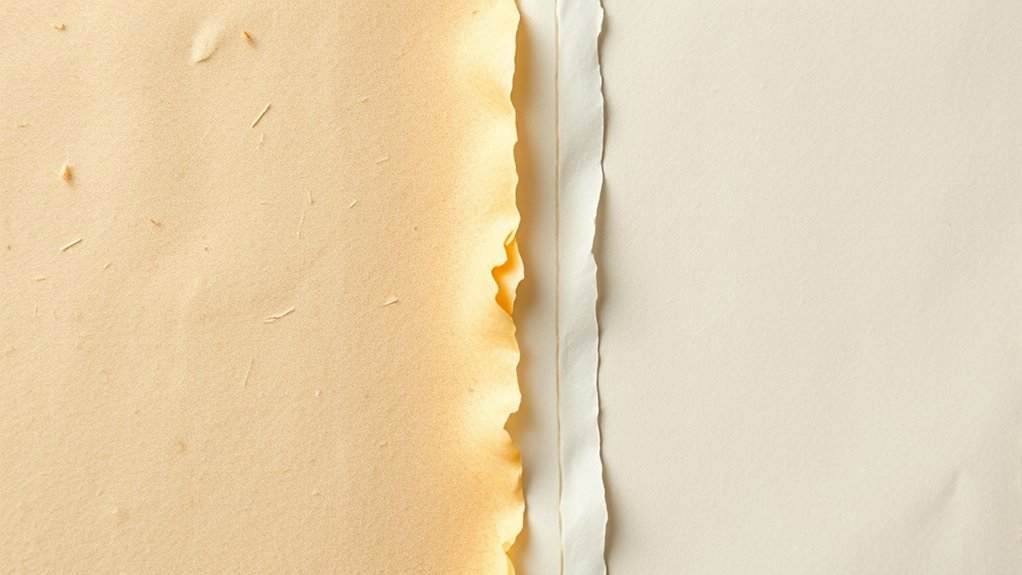

Parchment and vellum are historic writing surfaces made from animal skins, but they differ in quality and animal source. Parchment usually comes from sheep, goat, or calfskins, while vellum specifically refers to high-quality calfskin. Vellum is smoother and more durable, often used for illuminated manuscripts, whereas parchment served for more everyday documents. If you want to understand how these materials impacted medieval craftsmanship and preservation, exploring further reveals fascinating details.
Key Takeaways
- Parchment is made from various animal skins, while vellum specifically refers to high-quality calfskin parchment.
- Both are processed through cleaning, soaking, liming, and stretching, but vellum typically has a smoother, finer surface.
- Vellum was considered a premium material for illuminated manuscripts, whereas parchment from other animals was used for general documents.
- Proper preservation in dry, stable environments ensures the longevity of both materials over centuries.
- The choice between parchment and vellum reflected the manuscript’s importance and quality during the Middle Ages.
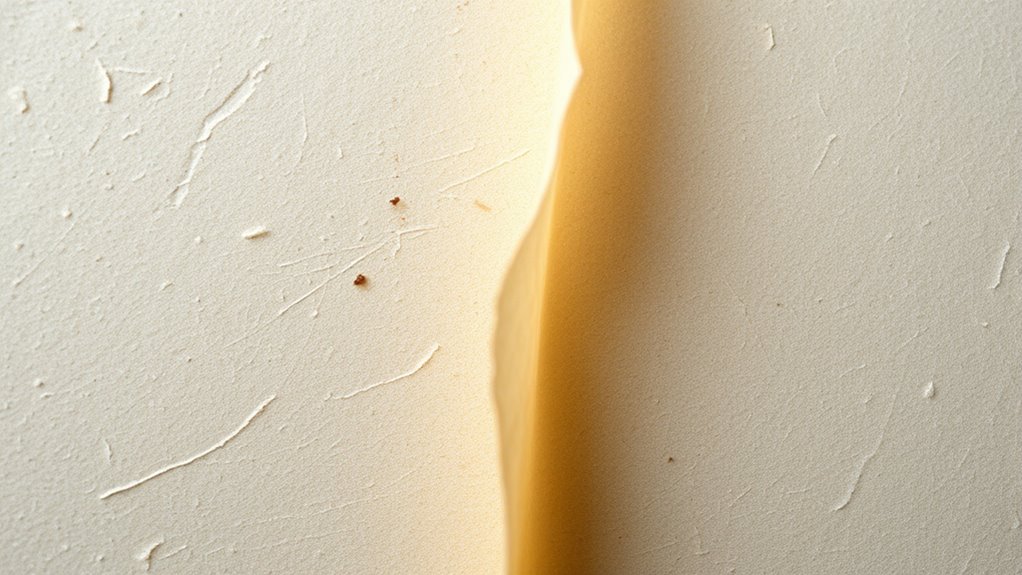
Parchment and vellum are two historic writing surfaces often mistaken for each other, but they actually have distinct differences. If you’re delving into medieval manuscript production, understanding these materials is vital. During the Middle Ages, parchment and vellum were the primary surfaces used for creating manuscripts, and their selection depended heavily on availability, quality, and purpose. Both materials are made from animal skins, but the key difference lies in the specific animal and the processing methods involved. Parchment generally refers to treated animal skins, typically from sheep, goats, or calves, while vellum specifically denotes high-quality parchment made from calfskin. The production process involved meticulous material preservation techniques to guarantee durability. These techniques included cleaning, soaking, liming, and stretching the skins to remove hair, fats, and remaining flesh. Once prepared, the skins were scraped and smoothed to create a fine writing surface suited for ink and illumination. Material processing played a crucial role in ensuring the longevity of these manuscripts, as the thoroughness of preparation directly impacted their durability. In medieval times, the production of parchment and vellum was a labor-intensive craft, often carried out by skilled artisans who understood how to handle these materials properly. The preservation of parchment and vellum was vital because these surfaces could last centuries if cared for correctly. Material preservation techniques, such as storing manuscripts in dry, stable environments and avoiding exposure to moisture and direct sunlight, helped prolong their longevity. The quality of the animal skins and the thoroughness of the processing directly impacted the lifespan of the finished product. For example, well-made vellum, with its smooth, glossy surface, was highly valued for illuminated manuscripts, while parchment from other animals was used for more utilitarian documents. Understanding the distinctions between parchment and vellum, along with their production methods, helps you appreciate the craftsmanship behind medieval manuscripts. These materials were not just passive surfaces; they were carefully prepared, treated, and preserved to withstand the test of time. The techniques used in material preservation played a pivotal role in maintaining the integrity of these documents through centuries of handling and environmental changes. Whether you’re studying historical texts or considering the art of manuscript creation, recognizing the differences in material quality and processing techniques offers valuable insight into the skill and effort that went into producing these treasured artifacts. Essentially, the choice of material and the preservation methods applied directly influenced the durability and beauty of medieval manuscripts, leaving a legacy that continues to fascinate today.
Frequently Asked Questions
How Did Parchment and Vellum Originate Historically?
You might find it interesting that parchment and vellum originated during ancient times, with medieval script on these materials dating back centuries. Ancient parchment, made from animal skins, was initially used in Egypt and the Middle East. Vellum, a finer form of parchment, became popular in medieval Europe for manuscripts and religious texts. Both materials evolved as essential writing surfaces, demonstrating their historical importance in preserving knowledge.
Are There Specific Writing Techniques Unique to Each Material?
You’ll notice that parchment and vellum each influence your calligraphy styles and ink application techniques. With parchment, you might prefer sharper, more precise strokes due to its smooth surface, making detailed calligraphy easier. Vellum’s softer texture allows for more fluid ink application and subtle shading. As you work, adapt your techniques to these materials, enhancing your artistry and creating distinct visual effects that highlight the unique qualities of each surface.
What Modern Uses Still Employ Parchment or Vellum?
You might think parchment and vellum are only for old books, but they still play a role today. Artists use them for calligraphy art, appreciating their texture and durability. Museums also rely on authentic parchment and vellum for reproductions, preserving historical accuracy. Their timeless appeal and unique qualities make them valuable in modern conservation and artistic projects, ensuring these ancient materials remain relevant and cherished.
How Do Preservation Methods Differ Between Parchment and Vellum?
You should know that preservation methods differ for parchment and vellum mainly through chemical treatments and storage conditions. You’ll find that chemical treatments, like deacidification, help neutralize acids that cause deterioration. Additionally, you need to store these materials in controlled environments, avoiding excess humidity and light. Vellum, being more sensitive, requires extra care with temperature and humidity, while parchment’s durability allows slightly more flexibility in storage, but both need careful handling to guarantee longevity.
Can Synthetic Materials Replace Traditional Parchment and Vellum?
You can definitely see synthetic materials like faux leather and synthetic papyrus replacing traditional parchment and vellum. These alternatives offer durability, affordability, and ease of production, making them attractive choices. However, they might lack the authenticity, texture, and historical value of genuine parchment and vellum. While they serve well for modern uses, preserving the unique qualities of traditional materials remains important for historical and artistic purposes.
Conclusion
So, now you see it—parchment and vellum aren’t just ancient writing materials; they’re the secret weapons of history’s greatest scribes! Choosing between them isn’t just a detail, it’s like picking the sword or the shield in a legendary battle. These materials have survived centuries, wars, and fires—standing the test of time! So, next time you hold a piece of parchment or vellum, remember, you’re holding a tiny piece of eternity itself.