
Colorimeters and spectrophotometers both measure color, but they serve different purposes. Colorimeters are quick, simple devices that use filters to match colors accurately in controlled settings, ideal for routine tasks. Spectrophotometers analyze the full spectrum of reflected or emitted light, providing detailed data for complex color matching and research. Knowing their differences makes certain you pick the right tool for your needs. If you want to understand which one fits your goals, keep exploring further.
Listen free for 30 days with Audible
Thousands of audiobooks and originals — cancel anytime.
As an affiliate, we earn on qualifying purchases.
Key Takeaways
- Colorimeters use predefined filters for quick color measurement, while spectrophotometers analyze full spectral data for detailed analysis.
- Colorimeters are ideal for routine, controlled environment checks; spectrophotometers are suited for high-precision, complex color matching.
- Calibration of colorimeters is simpler and requires standard tiles, whereas spectrophotometers need more complex, certified standards calibration.
- Spectrophotometers provide comprehensive spectral data across a broad range, unlike colorimeters with limited wavelength focus.
- Choose a colorimeter for speed and simplicity; opt for a spectrophotometer for accuracy and detailed color analysis.
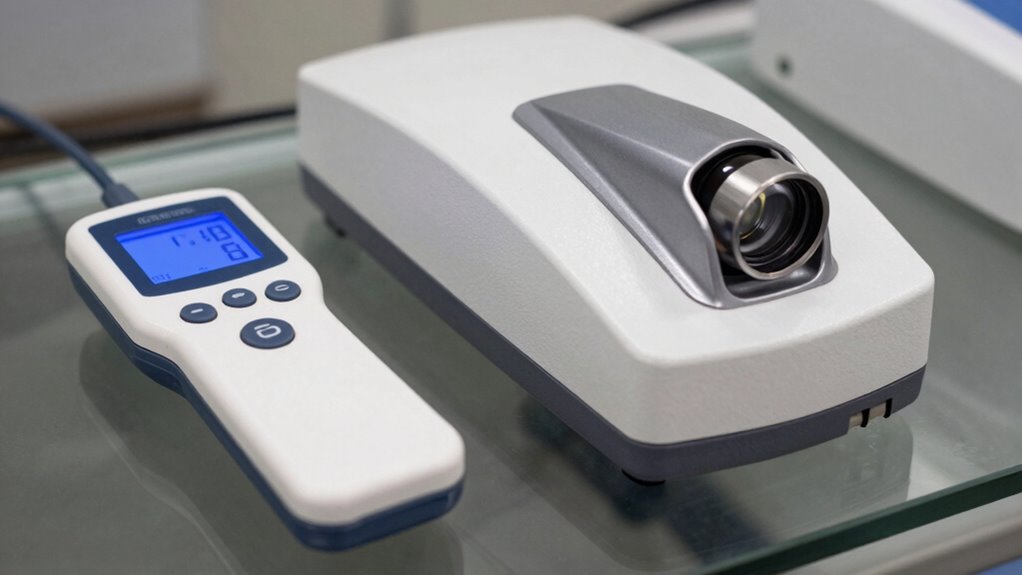
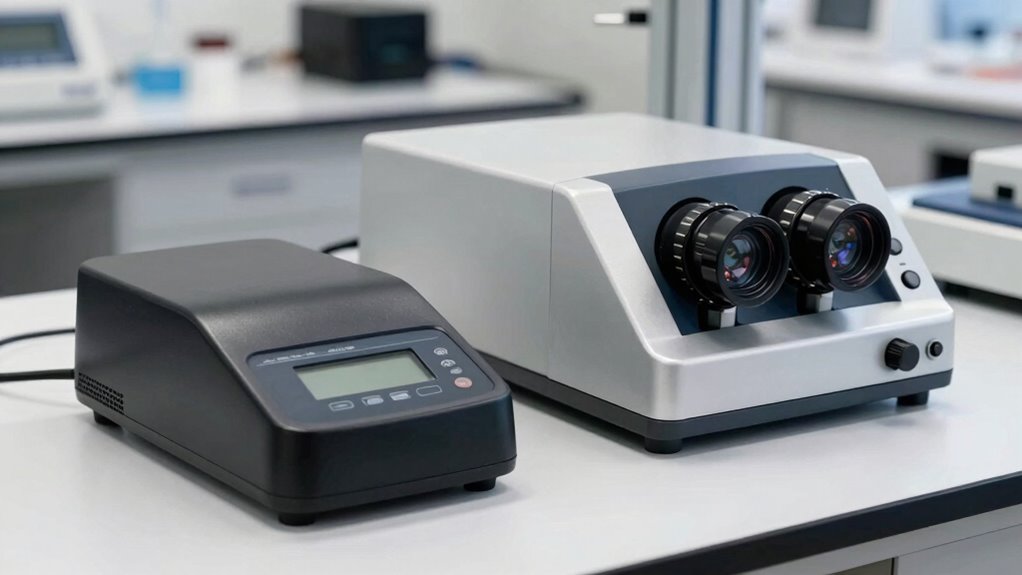
When choosing between colorimeters and spectrophotometers, understanding their key differences can help you make the right decision for your specific needs. Both instruments are essential in color management, but they serve different purposes and vary markedly in how they measure color. A colorimeter typically measures color based on specific color matching techniques, often focusing on a limited range of wavelengths. It’s designed for quick, straightforward color assessments and works well when you need consistent, repeatable results in controlled environments. Spectrophotometers, on the other hand, analyze the full spectrum of light reflected or emitted by a sample. They provide detailed spectral data that allow for precise color analysis, making them suitable for complex color matching and quality control where accuracy is fundamental. Additionally, because spectrophotometers capture extensive spectral data, they are often used in color formulation to develop accurate color standards. When you’re selecting an instrument, consider the level of detail you need. Colorimeters are faster and more user-friendly, ideal for routine color matching tasks like quality control in manufacturing or printing. They use predefined filters to measure color, which simplifies the process but limits precision in some cases. Spectrophotometers, however, capture a wide range of wavelengths, giving you more extensive data about the color’s spectral properties. This makes them invaluable for research, color formulation, and situations where color matching techniques need to be highly accurate. Proper calibration methods are another important factor to consider. Colorometers generally require regular calibration with standard tiles or calibration plates to guarantee consistent readings. Their calibration process is straightforward but must be performed frequently to maintain accuracy, especially if the device is used in different environments. Spectrophotometers also need calibration, but their methods are often more complex, involving calibration against certified standards that account for a broader range of spectral data. This calibration process ensures that the spectral data collected is reliable over time, which is vital for applications demanding high precision. An understanding of the measurement techniques used by each device can help you select the best tool for your application. Recognizing the measurement limitations of each instrument can prevent costly errors in color matching projects. Understanding these differences helps you avoid mixing up the two tools. If your work involves quick, consistent color checks in a controlled setting, a colorimeter may be sufficient. But if you need to perform detailed color analysis or develop precise color matches, a spectrophotometer’s extensive spectral data will serve you better. Proper instrument calibration and mastering color matching techniques are crucial to achieving the most accurate results.
digital colorimeter for manufacturing
As an affiliate, we earn on qualifying purchases.
As an affiliate, we earn on qualifying purchases.
Frequently Asked Questions
Can Colorimeters Measure Multiple Wavelengths Simultaneously?
Colorimeters generally cannot measure multiple wavelengths simultaneously; they focus on a few specific wavelengths for quick, targeted measurements. This makes them ideal for rapid wavelength detection and fast measurement speed in applications like quality control. Spectrophotometers, however, can measure multiple wavelengths at once, providing detailed spectra. If you need quick, specific readings, a colorimeter works well, but for extensive wavelength detection, a spectrophotometer is better.
Are Spectrophotometers More Accurate Than Colorimeters?
Think of spectrophotometers as the eagle soaring above, offering sharper focus. Yes, they’re generally more accurate than colorimeters, delivering superior color accuracy and measurement precision. Their ability to analyze a broader range of wavelengths means you get detailed, reliable data. If your work demands high precision and consistency, spectrophotometers are your best bet—they’re designed to deliver the most accurate readings, ensuring your results stand out.
What Industries Primarily Use Spectrophotometers?
You’ll find spectrophotometers mainly used in industries that require precise color measurement, like textiles, pharmaceuticals, and food production. These industries rely on spectrophotometers for accurate color analysis and instrument calibration, ensuring consistent quality. Their ability to capture detailed spectral data makes them essential for applications demanding high accuracy. You benefit from their reliability when maintaining color standards and ensuring your products meet strict industry regulations.
How Portable Are Typical Colorimeters?
Typical colorimeters are quite portable, making them ideal for on-the-go color matching tasks. You can easily carry them in your pocket or a small bag, allowing you to quickly check colors in various environments. Their compact design prioritizes device portability, so you can perform accurate color measurements anytime and anywhere, streamlining color matching processes whether you’re in a lab, retail, or manufacturing setting.
Do Both Devices Require Calibration Regularly?
While it’s often wise to keep device maintenance in check, both devices do require regular calibration to guarantee accuracy. The calibration frequency depends on usage and environment, but neglecting it can lead to less reliable readings. Spectrophotometers may need more frequent calibration than colorimeters due to their complexity. Staying attentive to calibration schedules helps maintain peak performance and ensures your measurements remain precise over time.
spectrophotometer for color analysis
As an affiliate, we earn on qualifying purchases.
As an affiliate, we earn on qualifying purchases.
Conclusion
Understanding the difference between colorimeters and spectrophotometers is vital for accurate color measurement. Did you know that the global color measurement market is projected to reach $1.8 billion by 2027? By choosing the right device for your needs, you guarantee precise results and avoid costly mistakes. So, next time you’re working with color, remember: a colorimeter for quick, simple tasks, and a spectrophotometer when you need detailed, thorough analysis.
As an affiliate, we earn on qualifying purchases.
As an affiliate, we earn on qualifying purchases.
Flea & tick season Picks
flea and tick prevention
As an affiliate, we earn on qualifying purchases.