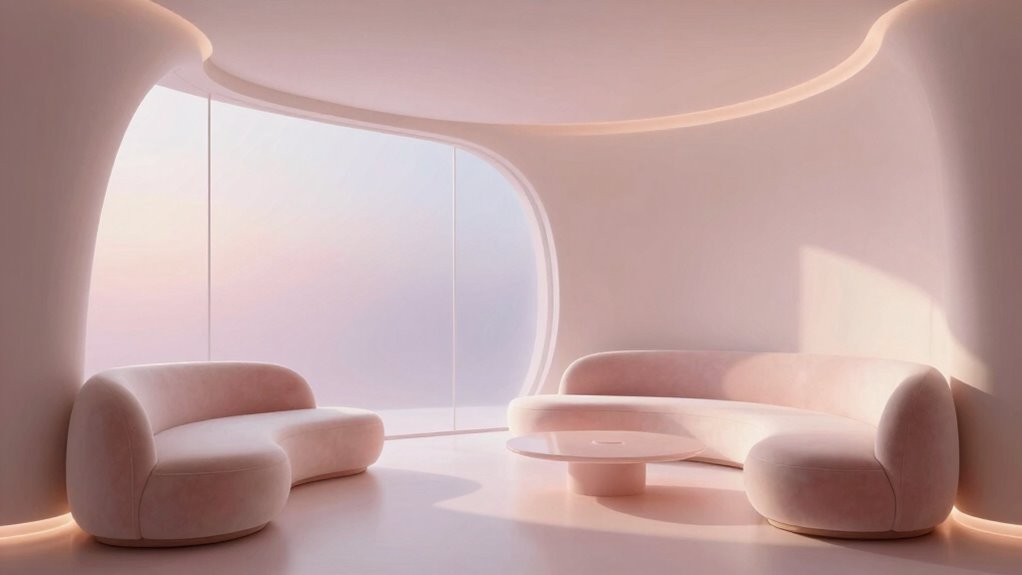

Soft Futurism is changing contemporary design by making spaces feel more intuitive, warm, and human-centered. It combines sleek modern elements with organic shapes and tactile materials, creating a sensory-rich environment that promotes comfort and connection with nature. You’ll notice how this approach replaces cold minimalism with inviting textures and natural integration, fostering well-being. If you keep exploring, you’ll discover how these principles are shaping the future of design to be more nurturing and ecologically balanced.
Key Takeaways
- Soft Futurism emphasizes warm, human-centered environments with organic shapes and tactile materials, moving away from cold, minimalistic design.
- It integrates biophilic elements to connect indoor spaces with nature, enhancing well-being and reducing stress.
- The approach prioritizes multisensory experiences, encouraging interaction through smooth surfaces and natural textures.
- Design language shifts from stark minimalism to approachable, intuitive spaces that foster emotional comfort and familiarity.
- Sustainability and ecological harmony are central, influencing material choices and overall aesthetic to future-proof design.
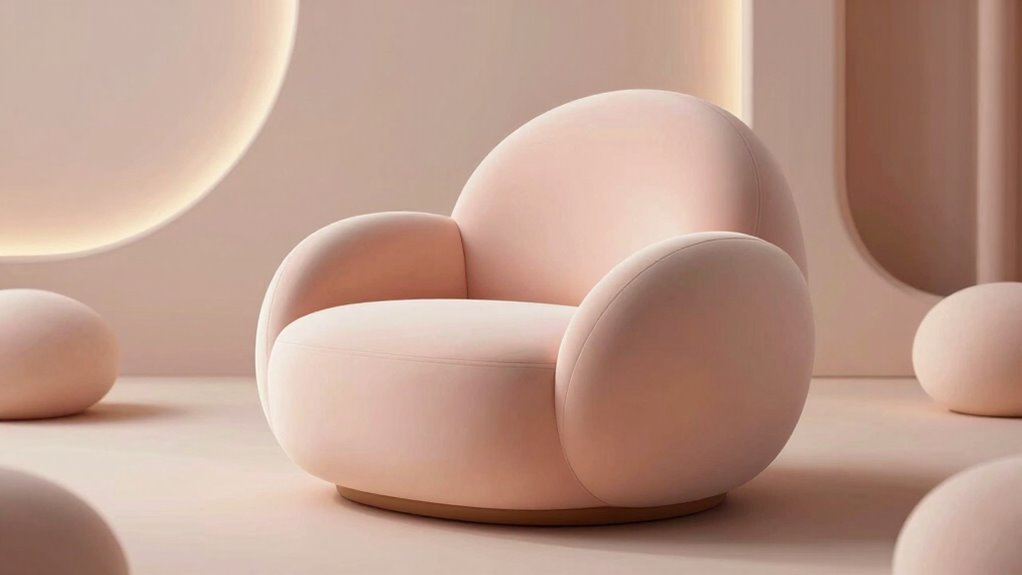
Have you ever wondered how the future of design balances innovation with comfort? Soft Futurism is reshaping the way you experience spaces, blending sleek modernity with a gentle, inviting touch. It’s not about stark minimalism or cold surfaces anymore; instead, it’s about creating environments that feel intuitive, warm, and human-centered. At the core of this movement is biophilic integration, which brings nature closer to you through design. Imagine walls that mimic organic textures, natural light that flows seamlessly, and greenery that feels like an extension of your living space. This approach taps into your innate connection to nature, reducing stress and boosting well-being. It’s about making technology and modern materials feel less alien and more familiar, fostering a sense of harmony. Incorporating sustainable practices also ensures that these designs minimize environmental impact and promote ecological balance for future generations. By emphasizing tactile engagement, designers are encouraging a more interactive and sensory-rich experience with the environment.
Tactile materials also play an essential role in soft futurism. You’re encouraged to touch, feel, and interact with your surroundings, which enhances your emotional connection to a space. Smooth, rounded surfaces replace sharp edges, and textiles or soft finishes soften the overall aesthetic. These tactile elements aren’t just about aesthetics—they’re about creating a sensory experience that grounds you, even amid futuristic design features. Think of plush fabrics, soft molded plastics, or natural wood that invites your touch. This focus on tactile materials makes environments more approachable and human. It’s about designing spaces that don’t just look good on a screen or blueprint but feel good in real life.
The language of contemporary design is shifting from purely visual appeal to a multisensory experience. Soft Futurism embraces this change by prioritizing comfort without sacrificing innovation. You’ll notice smooth, flowing lines, organic shapes, and materials that respond to your touch, all working together to foster a sense of calm and familiarity amid advanced technology. The integration of biophilic elements and tactile textures creates a visual and tactile dialogue—nature-inspired design details that are felt and experienced. This makes spaces more adaptable, emotionally resonant, and sustainable, aligning with your desire for environments that nurture you physically and mentally. In this way, Soft Futurism isn’t just about looking forward; it’s about feeling forward, ensuring that your interaction with space remains meaningful, comfortable, and deeply human.
biophilic design wall panels
As an affiliate, we earn on qualifying purchases.
As an affiliate, we earn on qualifying purchases.
Frequently Asked Questions
How Does Soft Futurism Influence Sustainable Design Practices?
Soft futurism influences sustainable design practices by emphasizing biophilic integration, which connects people with nature through natural materials and organic forms. This approach fosters emotional resonance, making spaces feel more calming and inviting. You’ll see designs that prioritize eco-friendly materials and innovative technologies, creating environments that are not only visually appealing but also environmentally responsible. This style encourages a harmonious balance between future innovation and sustainable living, benefiting both people and the planet.
What Are the Key Materials Used in Soft Futurism?
You’ll notice that soft futurism often uses materials like organic textures and translucent finishes. These elements create a sense of harmony between nature and technology, making spaces feel inviting yet innovative. You might see smooth, tactile surfaces with a gentle, natural feel, or see translucent materials that play with light and transparency. These features help establish a futuristic aesthetic that’s soft, approachable, and deeply connected to sustainable design principles.
How Does Soft Futurism Impact User Experience in Design?
Soft futurism acts like a gentle breeze, transforming your experience by fostering harmony aesthetics and emotional connectivity. You’ll notice designs that feel welcoming and intuitive, making interactions smoother and more engaging. This approach prioritizes comfort and relatability, ensuring users connect emotionally with the environment. As a result, your experience becomes more enjoyable, personalized, and seamless—like a conversation that flows effortlessly, bridging technology and human touch.
Are There Cultural Differences in Adopting Soft Futurism?
Yes, cultural perceptions and aesthetic preferences influence how you adopt soft futurism. In some cultures, you might see a preference for organic shapes and muted colors, aligning with local values of harmony and tradition. In others, you may favor sleek, high-tech elements that symbolize progress. These differences shape your design choices, making soft futurism adaptable and resonant across diverse cultural contexts, ultimately enriching global design dialogue.
What Are Future Trends Predicted Within Soft Futurism?
You can expect future trends in soft futurism to emphasize biophilic aesthetics and tactile textures, creating spaces that feel both natural and inviting. Designers will incorporate organic forms, sustainable materials, and sensory-rich surfaces to foster comfort and connection with nature. This approach aims to blend technology and humanity seamlessly, encouraging well-being. Fundamentally, soft futurism will continue to evolve, prioritizing harmony between environment and design through these sensory and ecological elements.
tactile textured furniture
As an affiliate, we earn on qualifying purchases.
As an affiliate, we earn on qualifying purchases.
Conclusion
As you embrace soft futurism, imagine stepping into a world where tomorrow’s skyline is a gentle curve against a pastel sky, inviting comfort and innovation hand in hand. This design language isn’t just about shapes; it’s a symbol of harmony between technology and humanity. By weaving softness into the future, you create spaces that whisper possibility and warmth, transforming the cold promise of progress into a welcoming embrace. The future’s gentle glow is yours to shape.
natural light LED bulbs
As an affiliate, we earn on qualifying purchases.
As an affiliate, we earn on qualifying purchases.
organic shape home decor
As an affiliate, we earn on qualifying purchases.
As an affiliate, we earn on qualifying purchases.