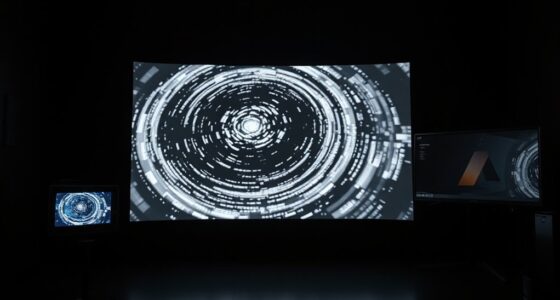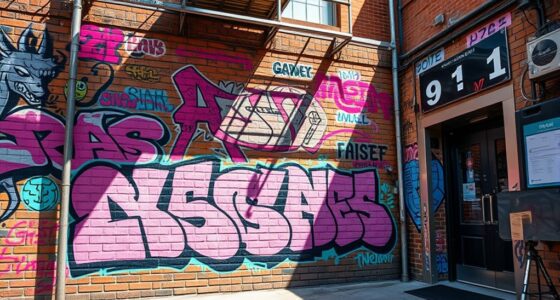
Algorithmic art uses code as a powerful tool for creative expression, blending programming, mathematics, and randomness to generate stunning visuals, patterns, and interactive works. You set rules and parameters, allowing the computer to produce unique, dynamic images that often appear organic and alive. This approach challenges traditional art boundaries and sparks innovation by making creativity accessible through technology. Keep exploring to discover how code can unleash new artistic possibilities and push your creativity further.
Key Takeaways
- Algorithmic art transforms code into visual expressions, merging programming precision with creative exploration.
- It employs generative processes, randomness, and mathematical formulas to create intricate, dynamic artworks.
- Artists set rules and parameters, allowing computers to produce unique, spontaneous visual compositions.
- Technological advancements like AI and data visualization expand possibilities for innovative digital art.
- The approach democratizes creativity, enabling anyone with coding skills to experiment and contribute to the art form.

Have you ever wondered how artists are harnessing technology to create stunning visuals? The answer lies in the fascinating world of algorithmic art, where code becomes a tool for artistic expression. At its core, this art form relies on generative processes—complex systems that produce unique images, patterns, or animations through algorithms. These processes allow artists to push boundaries, blending creativity with the precision of mathematics and programming. Instead of manually crafting each detail, you set the rules and parameters, and the computer generates the artwork automatically. This approach not only accelerates the creative process but also introduces an element of unpredictability, resulting in works that feel organic and alive. When you take a step back, you realize that the art is not just about the final image but the journey of the code itself—how it evolves, adapts, and produces digital aesthetics that captivate viewers. Digital aesthetics in algorithmic art emphasize sleekness, symmetry, and intricate detail, often blurring the line between technology and beauty. These visuals can be minimalistic or wildly complex, but they all share a common trait: they’re born from algorithms that operate behind the scenes. As you explore this domain, you’ll notice how artists leverage generative processes to craft immersive environments, dynamic visualizations, and abstract compositions that challenge traditional notions of art. The beauty of this approach is that it democratizes creativity—anyone with a basic understanding of coding can experiment and produce compelling images. It’s about harnessing the power of logic and randomness to inspire new aesthetic paradigms. Digital aesthetics become a canvas where patterns emerge from the interplay of mathematical formulas, randomness, and user inputs, giving each piece a sense of spontaneity and uniqueness. Furthermore, these artworks often incorporate interactivity, encouraging viewers to engage with the piece directly or influence its evolution. By doing so, artists turn passive viewers into active participants, deepening the connection between the audience and the art. As technology advances, algorithmic art continues to evolve, blending machine learning, artificial intelligence, and data visualization to create even more intricate and expressive works. You don’t have to be a programmer to appreciate this art form; understanding the underlying principles helps you see the creative potential behind the code. Ultimately, algorithmic art exemplifies how technology and creativity can intertwine seamlessly, transforming code into a vibrant, ever-changing visual language that expands the boundaries of artistic expression. Recognizing the role of subconscious power during sleep can inspire artists to incorporate intuitive and dream-inspired elements into their digital creations.

Generative Art: A Practical Guide Using Processing
As an affiliate, we earn on qualifying purchases.
As an affiliate, we earn on qualifying purchases.
Frequently Asked Questions
How Do Algorithms Influence Artistic Originality?
Algorithms influence your artistic originality by enabling machine learning and generative design to create unique, complex works. You can experiment with code, letting algorithms generate unexpected patterns and ideas that push beyond traditional boundaries. This collaboration with technology allows you to explore new aesthetic domains, making your art more innovative. Embracing algorithms doesn’t limit your creativity; instead, it expands your possibilities and helps you craft truly original pieces.
Can Algorithmic Art Be Considered a Form of Human Expression?
You might see algorithmic art as a gentle whisper of human expression, blending digital intuition with aesthetic evolution. It’s a subtle reflection of your creativity, where code becomes a canvas for emotion and ideas. While algorithms guide the process, your unique perspective shapes the outcome, making it a meaningful form of human expression. This evolving art form captures your inner vision, echoing your artistic soul in a new, innovative language.
What Are the Ethical Concerns Surrounding Algorithmic Art?
You should consider the ethical concerns around algorithmic art, like copyright issues and cultural appropriation. When you create or share such art, you risk infringing on original creators’ rights or misappropriating cultural symbols. It’s important to respect intellectual property and be mindful of cultural significance. By doing so, you help guarantee that algorithmic art remains a respectful and fair form of human expression.
How Accessible Is Creating Algorithmic Art for Beginners?
Creating algorithmic art is fairly accessible for beginners thanks to beginner-friendly tools like Processing, p5.js, and RunwayML. These platforms often include coding tutorials that guide you step-by-step, making it easier to understand concepts and start experimenting. With some patience and practice, you can quickly develop your skills and produce compelling digital artworks, even if you’re new to coding or digital art.
What Role Does Randomness Play in Algorithmic Creativity?
Randomness integration plays a essential role in algorithmic creativity by introducing unpredictability in algorithms, making your art more dynamic and unique. When you incorporate randomness, you allow your code to generate surprising variations, pushing creative boundaries. This unpredictability keeps the process exciting and can inspire new ideas. Embracing randomness helps you explore different aesthetics and fosters innovative outcomes, making your algorithmic art more vibrant and engaging.

Understanding Coding Using Scratch: An Introduction to Programming for Children (Ages 7-11) – Create Games and Animations
As an affiliate, we earn on qualifying purchases.
As an affiliate, we earn on qualifying purchases.
Conclusion
As you explore algorithmic art, you subtly discover new dimensions of creativity woven through lines of code. While it may gently challenge traditional notions of artistry, this fusion invites you to embrace a delicate balance between human imagination and machine precision. In doing so, you open yourself to a refined perspective—where innovation gracefully intertwines with tradition—ultimately enriching your understanding of what it means to create in the digital age.
PAINTING IN THE ERA OF AI: WHEN BRUSHSTROKE MEETS THE ALGORITHM
As an affiliate, we earn on qualifying purchases.
As an affiliate, we earn on qualifying purchases.

KiwiCo Pixel Art Kit for Kids Ages 5-8 – DIY Illuminated Arts & Crafts Lightbox – Screen-Free Creative Activity with Reusable Templates – 20+ Designs
Place the pixels into the screen and watch them glow with luminous color! Make brilliant patterns using 12…
As an affiliate, we earn on qualifying purchases.
As an affiliate, we earn on qualifying purchases.