
Limited editions boost the perceived value of prints by making them feel rare and exclusive, which increases their desirability. When you own a limited print, you feel part of a select group, amplifying its emotional and cultural significance. Scarcity triggers a fear of missing out, encouraging quicker purchases and elevating worth beyond just market price. By understanding these effects, you’ll see why limited editions often carry greater prestige—and there’s more to discover if you stay tuned.
Key Takeaways
- Limited editions create a sense of exclusivity, elevating perceived artistic value and making each print feel uniquely desirable.
- Scarcity triggers urgency and fear of missing out, encouraging quicker purchasing decisions.
- The storytelling and emotional connection behind limited prints enhance their cultural and personal significance.
- Social proof and rarity increase the perceived importance and status associated with owning limited editions.
- Overall, limited editions reinforce value through perceived rarity, prestige, and connection to the artist’s vision.
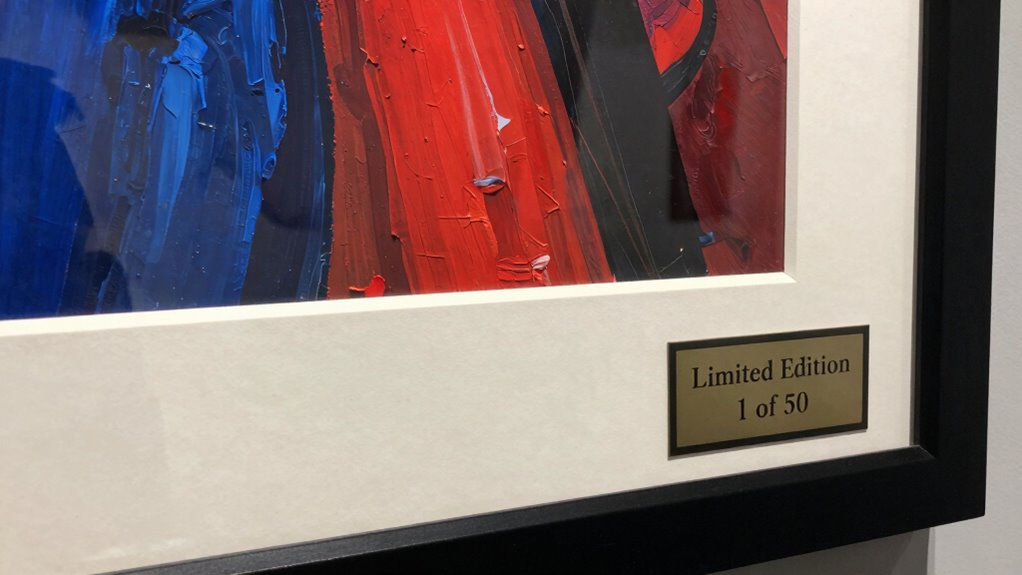
Have you ever wondered why limited edition items often seem so much more desirable? It’s because of a mix of factors that tap into our innate tendencies and perceptions. When it comes to print markets, limited editions play on a sense of artistic exclusivity that makes each piece feel uniquely valuable. You sense that owning a limited print isn’t just about the artwork itself but about being part of a select group that has access to something rare. This feeling elevates the perceived worth far beyond the actual market value, making the piece seem more special. Artistic exclusivity feeds into collector psychology, which is driven by the desire to own something that isn’t widely accessible. You’re not just buying a print; you’re acquiring a piece of a limited story, a tangible connection to the artist’s vision that few others can claim.
Limited editions evoke exclusivity and storytelling, transforming artwork into prized symbols of status and cultural significance.
This psychology is powerful because it creates a sense of urgency and status. When a print is labeled as limited, your mind automatically associates it with rarity, which often correlates with higher value. You might think, “If only a few copies exist, then this must be a significant work,” which boosts its desirability. Moreover, the idea that only a set number of copies are available stokes a fear of missing out, prompting quicker purchasing decisions. As a result, the perceived value of these limited editions isn’t solely rooted in the artwork’s intrinsic qualities but also in the social and psychological implications of owning something scarce. Additionally, the scarcity effect amplifies the desirability of limited editions, making them seem even more valuable simply because they are hard to obtain. This effect is closely tied to our natural tendency to value things that are less accessible, which is a fundamental aspect of biodiversity preservation and sustainable resource use. Recognizing these factors, collectors often seek to preserve these limited editions as part of a strategy for cultural preservation.
You also recognize that limited editions often come with a narrative—an artist’s story behind the creation, the rarity of the print, or the historical moment it captures. This storytelling adds layers of value that go beyond the physical piece. When you see a print labeled as a limited edition, you understand that it’s part of a curated, exclusive collection, which enhances its prestige. This narrative creates a deeper emotional connection and elevates the perceived significance of the artwork. This exclusivity makes buyers feel connected to something unique, elevating the artwork from mere decoration to a collectible investment. Ultimately, this sense of connection encourages more mindful and sustainable consumption practices, emphasizing quality and rarity over mass production.
In the end, the allure of limited editions isn’t just about owning a print; it’s about the experience of belonging to an elite group that appreciates artistic rarity. Your perception of value is heightened as you associate scarcity with significance, and collector psychology amplifies this effect. It’s a clever interplay of exclusivity, storytelling, and social proof that makes limited editions so compelling in the print market, encouraging you to see them as more than just artwork—they’re symbols of status and unique cultural moments.
As an affiliate, we earn on qualifying purchases.
Frequently Asked Questions
How Do Collectors Influence the Value of Limited Editions?
You influence the value of limited editions through your collector motivation and appreciation for edition exclusivity. When collectors seek rare items, their demand increases, boosting perceived value. Your desire for exclusivity makes these editions more desirable, especially if you see them as unique or prestigious. As more collectors share this mindset, the perceived value rises, creating a cycle where collector motivation directly impacts the worth of limited editions.
What Role Does Scarcity Play in Perceived Quality?
Scarcity acts like a magnet pulling your attention, making you see limited editions as more valuable. When something feels rare, your brain interprets it as higher quality, driven by consumer psychology. Perceived rarity fuels desire, making you think the item is special or exclusive. This scarcity creates a sense of urgency, encouraging you to act quickly, believing that once it’s gone, you might miss out on something truly unique.
How Do Pricing Strategies Impact Buyer Perception?
Your pricing strategies directly influence consumer perception through pricing psychology. When you set higher prices, buyers often associate them with higher quality and exclusivity, boosting perceived value. Conversely, lower prices might suggest affordability but can diminish perceived quality. By carefully balancing your pricing, you shape how customers view your limited editions, making them feel special and worth the investment, ultimately enhancing their perception of value and desirability.
Are Limited Editions More Prone to Counterfeiting?
Limited editions are more prone to counterfeiting because their exclusivity drives demand. With over 50% of counterfeit art being of limited editions, authenticity concerns spike among collectors. You should be aware that counterfeit risks increase, making it essential to verify provenance. This heightened vulnerability means buyers must scrutinize authenticity carefully, as counterfeits can devalue the perceived worth of genuine limited edition prints.
How Does Artist Reputation Affect Edition Desirability?
Your perception of an edition’s desirability heavily depends on the artist’s reputation prestige and branding. When an artist is well-known and respected, their limited editions become more sought after because collectors trust the quality and value they represent. Strong artist branding amplifies desirability, making even small editions highly desirable. Conversely, lesser-known artists might struggle to generate the same allure, regardless of edition size, due to lower reputation prestige.
exclusive print collector's edition
As an affiliate, we earn on qualifying purchases.
As an affiliate, we earn on qualifying purchases.
Conclusion
While limited editions can boost perceived value, don’t assume they’re the only way to create exclusivity. True value comes from genuine quality and connection with your audience. Even if you can’t produce limited runs, focus on building a strong, authentic relationship with collectors and fans. Remember, scarcity alone isn’t enough—you need to offer something meaningful. That way, your work remains desirable, valued, and memorable, regardless of edition size.
As an affiliate, we earn on qualifying purchases.
As an affiliate, we earn on qualifying purchases.