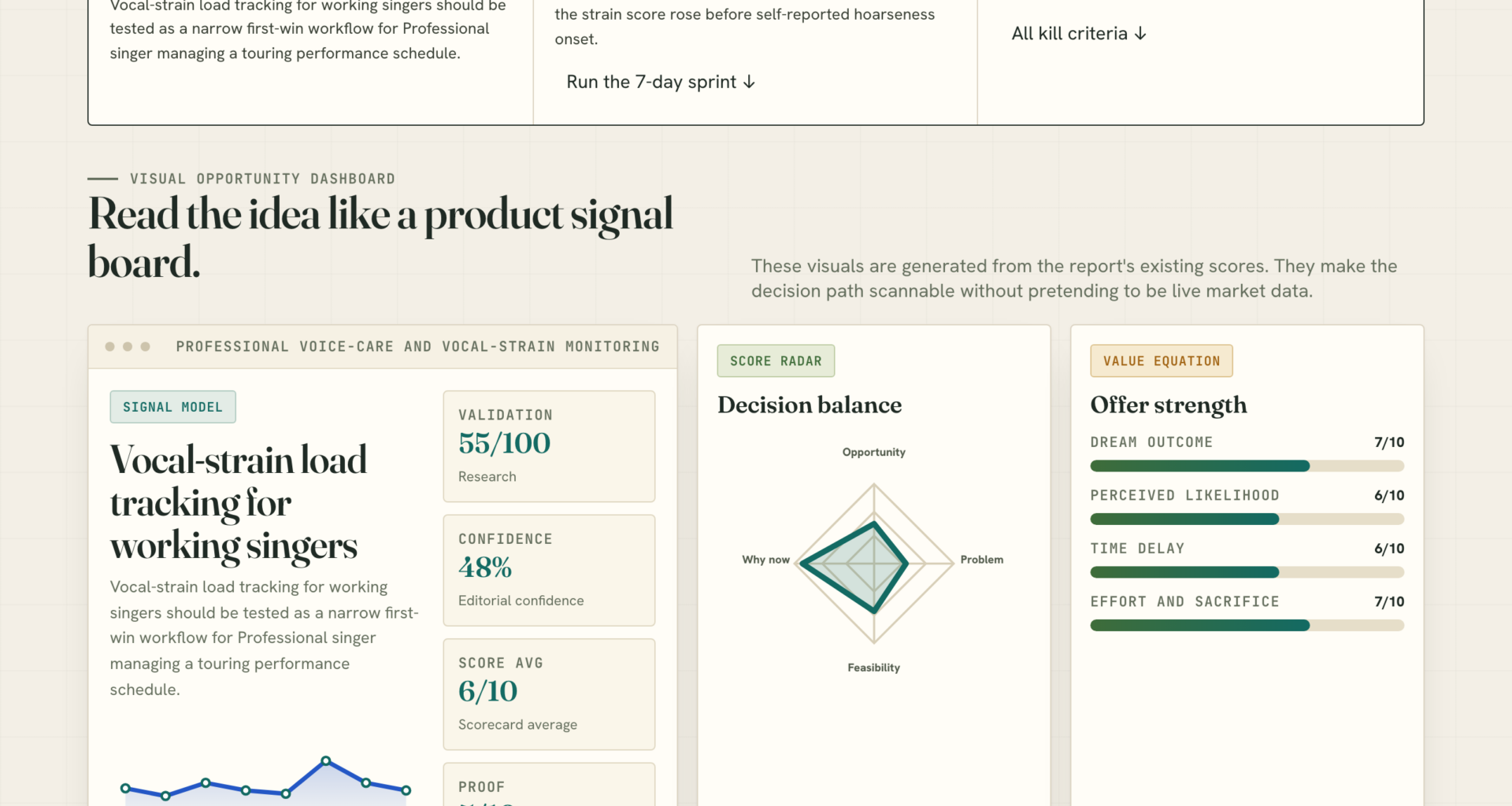

📊 Full opportunity report: Vocal-strain load tracking for working singers on IdeaNavigator AI — validation score, market gap, and execution plan.

Get business pricing on monitors, keyboards and dev gear
- Business-only prices and quantity discounts
- Tax-exempt purchasing
- Multiple users, one account, clear invoices
TL;DR
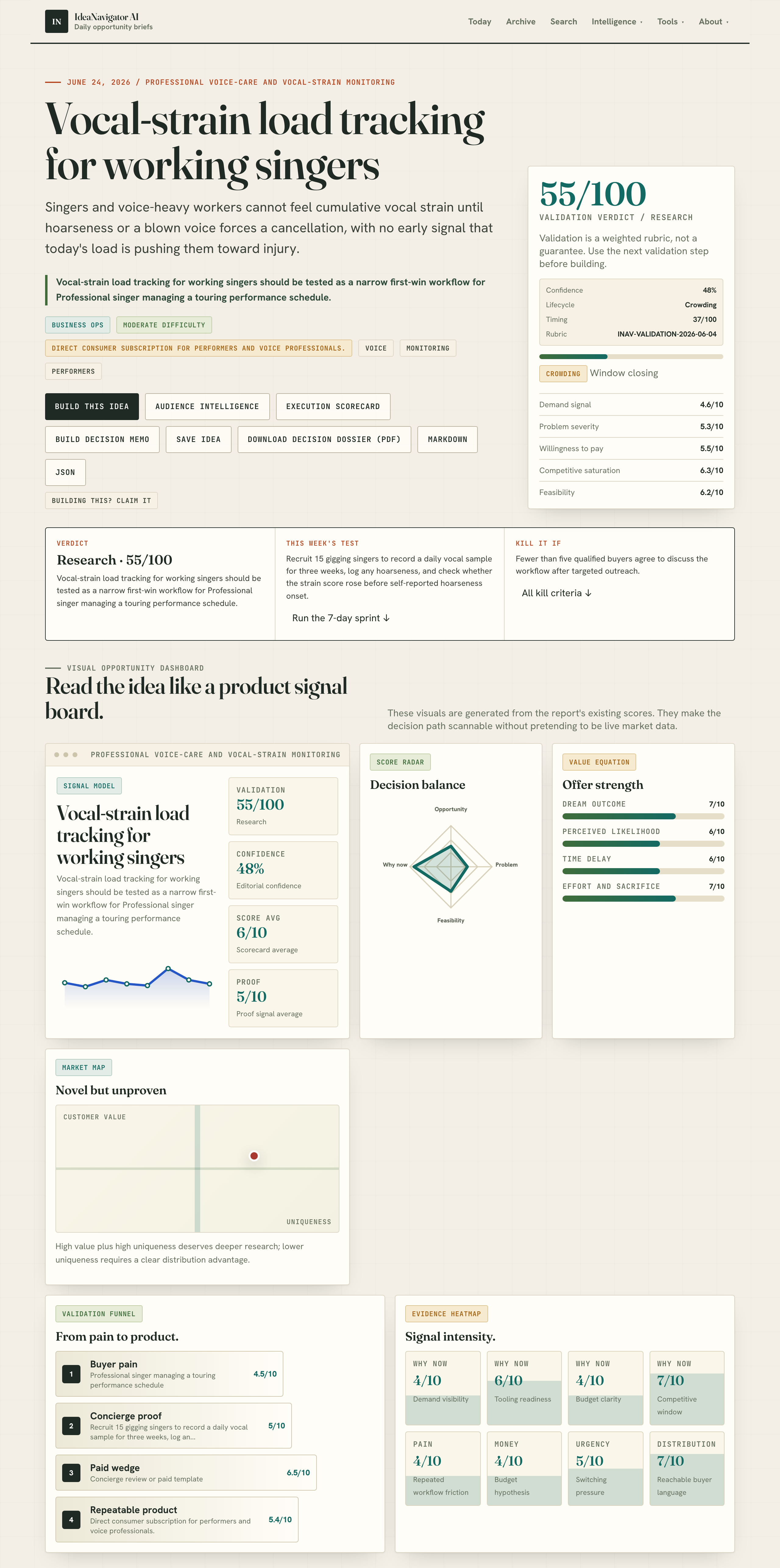
An upcoming vocal strain tracking app for touring singers will analyze voice samples after performances to predict injury risks. Validation is planned with a small pilot group. The development could improve singer health management.
A new vocal strain tracking system designed for professional touring singers is entering preliminary testing, aiming to provide early warnings of vocal fatigue and injury risk after performances.
The proposed system involves singers recording a short vocal sample after each performance, which is then analyzed via an app to score cumulative vocal strain against their personal baseline. The app flags tone shifts that have historically preceded hoarseness or vocal injury, and suggests warm-up routines to reduce risk.
This approach leverages recent advances in on-device audio analysis technology, allowing performers to self-manage their vocal health without immediate access to a vocal coach. The initial validation plan involves recruiting 15 gigging singers to record daily samples over three weeks, tracking any self-reported hoarseness, and assessing whether the app’s strain scores increase prior to vocal issues.
Potential Impact on Vocal Health Management
This development could significantly improve how professional singers monitor and manage their vocal health, especially for those with demanding touring schedules. Early detection of vocal strain could reduce injuries, cancellations, and long-term damage, while empowering performers to take proactive steps based on objective data.
Products Worth Considering

LG UltraGear 32-inch QHD Curved Gaming Monitor, 180Hz, 1ms, AMD FreeSync

Samsung Odyssey OLED G8 34-Inch Curved Ultra WQHD Gaming Monitor

Samsung 27-Inch Odyssey G5 QHD Gaming Monitor (G51F)
As an affiliate, we earn on qualifying purchases.
Advances in Audio Analysis Enable Self-Monitoring Tools
Recent improvements in on-device audio analysis have made it feasible to assess vocal characteristics in real-time. Traditionally, vocal health relied heavily on subjective feedback and occasional coaching; now, technology offers a potential tool for continuous, personalized monitoring. The concept aligns with broader trends in self-care and gig-economy worker management, where performers increasingly self-manage schedules without direct professional oversight.
“This approach could provide singers with a valuable early warning system, reducing the risk of vocal injury before symptoms become severe.”
— an anonymous researcher
Unconfirmed Effectiveness and User Adoption
It remains unclear how accurately the app will predict vocal injury or hoarseness, and whether singers will adopt and consistently use the tool in real-world touring conditions. Validation results from the planned pilot are pending, and user acceptance is still to be tested.
Upcoming Pilot Study and Validation Milestones
The next step involves recruiting 15 gigging singers to participate in a three-week trial, during which their vocal samples, app scores, and self-reported hoarseness will be monitored. Results from this pilot will determine the effectiveness of the tool and inform further development before broader rollout.
Key Questions
How will the app determine vocal strain?
The app will analyze vocal samples for tone shifts and other acoustic features linked to vocal fatigue, comparing them to each singer’s baseline to generate a strain score.
Can this technology prevent vocal injuries?
While it aims to provide early warnings, its effectiveness in preventing injuries depends on accurate analysis and user response. Validation results are still pending.
Will singers need special equipment to use the app?
No, the system is designed to work with standard smartphones, requiring only a brief vocal recording after performances.
When will the app be publicly available?
The app is currently in prototype testing; a broader release depends on validation outcomes and user feedback, likely in the next year.
Source: IdeaNavigator AI