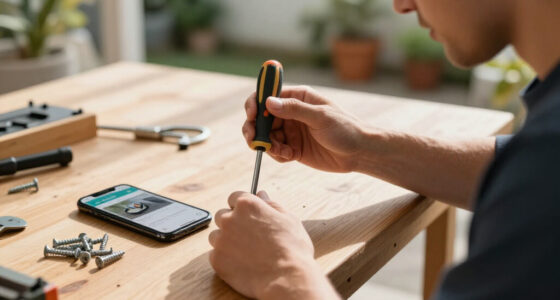
When scanning sculptures, you need to consider the materials and surface qualities to get accurate digital replicas. Different materials like marble, bronze, or wood have unique reflectiveness, textures, and fragility, which require specialized capture techniques. Using the right approach helps preserve surface details, cracks, and patinas for future study and conservation. If you want to discover how to adapt your methods for each material, there’s more to explore on effective sculpture scanning strategies.
Open a free Amazon Business account
Business pricing, bulk buying and tax-exempt orders.
As an affiliate, we earn on qualifying purchases.
Key Takeaways
- Different materials have unique surface properties that require tailored scanning techniques for accurate digital reproduction.
- Reflective and shiny surfaces need specialized lighting or technology to minimize glare and distortion during scanning.
- Fragile sculptures demand non-invasive, minimal-contact methods to prevent damage while capturing detailed surface features.
- Varying end-use applications (study, display, reproduction) require different levels of detail and resolution in scanning.
- Preserving surface textures, cracks, and patinas is essential for maintaining the sculpture’s historical and material integrity.
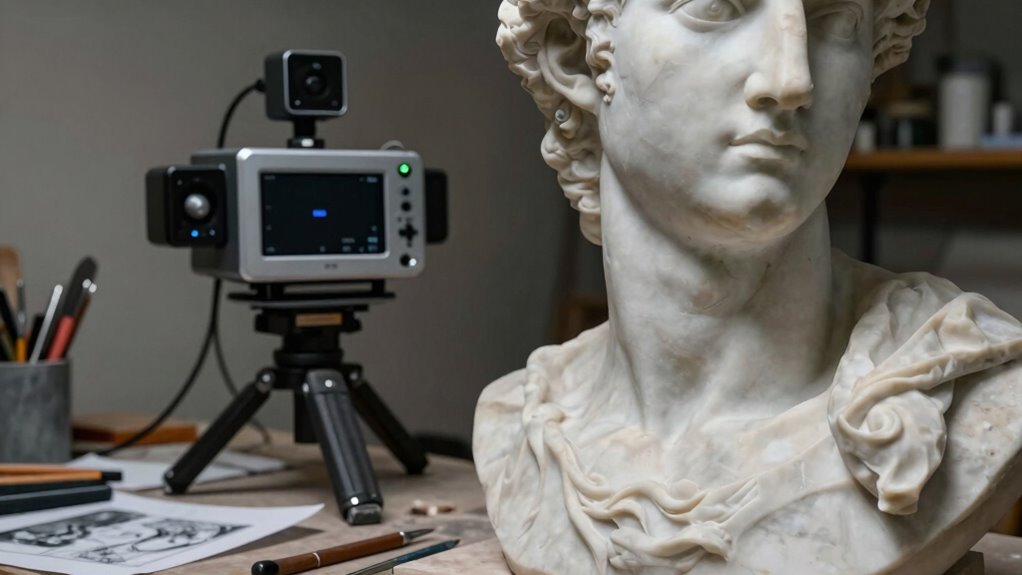
Sculpture scanning and 3D capture have revolutionized the way we preserve, study, and reproduce artwork. When it comes to capturing sculptures, especially for material preservation and digital archiving, you need to think beyond just the basic scanning process. Unlike other objects, sculptures are often made from complex materials—marble, bronze, wood, or mixed media—that each demand different approaches to guarantee accurate digital representations. Your goal isn’t just to create a visually faithful 3D model but to preserve the integrity of the material, capturing subtle details like surface textures, cracks, and patinas that are essential for future study.
Because sculptures are three-dimensional and often fragile, you must adapt your capture strategies to account for their physical characteristics. For example, reflective or shiny surfaces, such as polished bronze, can cause glare or reflections that distort data during scanning. To counter this, you might need to employ specific lighting setups or use different scanning technologies like structured light or laser scanning, each suited for particular surface types. These choices are critical when considering material preservation—preserving the original look, feel, and surface details of the sculpture in the digital archive. Additionally, understanding the material properties of each sculpture is essential to selecting the most suitable scanning method and ensuring accurate digital preservation.
Adapting scanning methods for fragile, reflective sculptures ensures accurate digital preservation of surface details and material integrity.
In digital archiving, the accuracy of your 3D models directly impacts future research and conservation efforts. Different materials respond uniquely to scanning techniques, so you need to think about the nuances of each sculpture. For instance, fragile materials like ancient terracotta or delicate wooden sculptures require careful handling and minimal contact, pushing you to select non-invasive scanning methods. These methods reduce the risk of damaging the original piece while still capturing precise data. This attention to detail ensures that the digital archive remains a faithful, lasting record, accessible for scholars and conservators long after the physical object has aged or deteriorated. Recognizing the importance of material-specific techniques can greatly improve the preservation quality and longevity of digital archives.
Furthermore, you must consider the end use of the digital models. Will they be used for detailed study, virtual exhibitions, or physical reproductions? Each application may require different levels of detail or resolution. You need to think through how to optimize your capture process so that the digital files serve their purpose without losing critical material information. This often involves balancing high resolution with manageable file sizes, ensuring that the digital archive remains practical and accessible for ongoing preservation and research.
In essence, effective sculpture scanning demands a tailored approach that respects the uniqueness of each material and the importance of accurate digital archiving. It’s not just about generating a 3D image—it’s about safeguarding the sculpture’s physical and historical integrity for generations to come.
3D sculpture scanner for marble and bronze
As an affiliate, we earn on qualifying purchases.
As an affiliate, we earn on qualifying purchases.
Frequently Asked Questions
How Does Environmental Lighting Affect Sculpture Scanning Accuracy?
Environmental lighting markedly impacts sculpture scanning accuracy because poor lighting conditions can create shadows or uneven illumination, making surface details hard to capture. Surface reflectivity also plays a role; highly reflective surfaces can distort scan data under certain lighting. You should optimize lighting conditions, using diffuse light to minimize reflections, ensuring consistent illumination. This helps the scanner accurately record surface details, improving overall scan quality and reliability.
What Are the Best Materials for 3D Scanning Sculptures?
Think of materials like a sculpture’s personality—some work better for 3D scanning than others. Matte surfaces are your best friends because they minimize surface reflectivity, ensuring accurate capture. Avoid shiny or transparent materials, which can distort data. Materials like plaster, clay, or certain plastics with matte finishes offer ideal material suitability. Choosing the right material helps your scanner see every detail clearly, making your digital replica more true to life.
How Do You Handle Fragile or Delicate Sculptures During Scanning?
When handling fragile or delicate sculptures during scanning, you carefully support and stabilize the piece using soft, non-invasive materials to prevent damage. You opt for non-contact 3D capture methods like laser or structured light scanning, which preserve fragile materials and delicate detailing. You also work slowly and meticulously, ensuring minimal physical interaction, so the sculpture’s integrity remains intact throughout the process.
Can Scanning Capture Intricate Surface Textures Reliably?
Think of the sculpture’s surface as a delicate tapestry, where every thread matters. Yes, scanning can reliably capture intricate surface textures, thanks to advanced techniques that prioritize texture fidelity. High-resolution scanners and precise algorithms work together like a fine-toothed comb, ensuring that even the tiniest details are preserved. This meticulous process allows you to faithfully reproduce the sculpture’s unique surface, revealing its intricate beauty with remarkable accuracy.
What Are Common Post-Processing Steps After 3D Capture?
After 3D capture, you typically perform post-processing to refine your digital mesh. You’ll clean up the model by removing noise and filling gaps, guaranteeing accuracy. Color correction is essential to match the original sculpture’s appearance, so you adjust textures and hues. These steps enhance detail and realism, making your digital sculpture ready for presentation or further use. Proper post-processing ensures your scan captures both surface detail and authentic color.
non-invasive 3D scanning device for fragile sculptures
As an affiliate, we earn on qualifying purchases.
As an affiliate, we earn on qualifying purchases.
Conclusion
So, next time you approach sculpture scanning, do you really think one-size-fits-all techniques will do? Embrace different 3D capture thinking to truly capture every detail and nuance. Adapting your approach isn’t just smart—it’s vital for accuracy and preservation. After all, isn’t it worth putting in that extra effort to guarantee your scans do justice to the artistry? Remember, in sculpture scanning, thinking differently makes all the difference.
laser 3D scanner for detailed art preservation
As an affiliate, we earn on qualifying purchases.
As an affiliate, we earn on qualifying purchases.
structured light 3D scanner for textured surfaces
As an affiliate, we earn on qualifying purchases.
As an affiliate, we earn on qualifying purchases.
NFL season / tailgating Picks
team gear
As an affiliate, we earn on qualifying purchases.