
TL;DR
Russia’s Mikron is selling collectible framed test wafers as souvenirs, some featuring Russian-made chips like the AMUR MIK32 RISC-V. The wafers can contain up to 120,000 chips and are limited editions. This development highlights Russia’s efforts to promote its semiconductor industry amid sanctions.
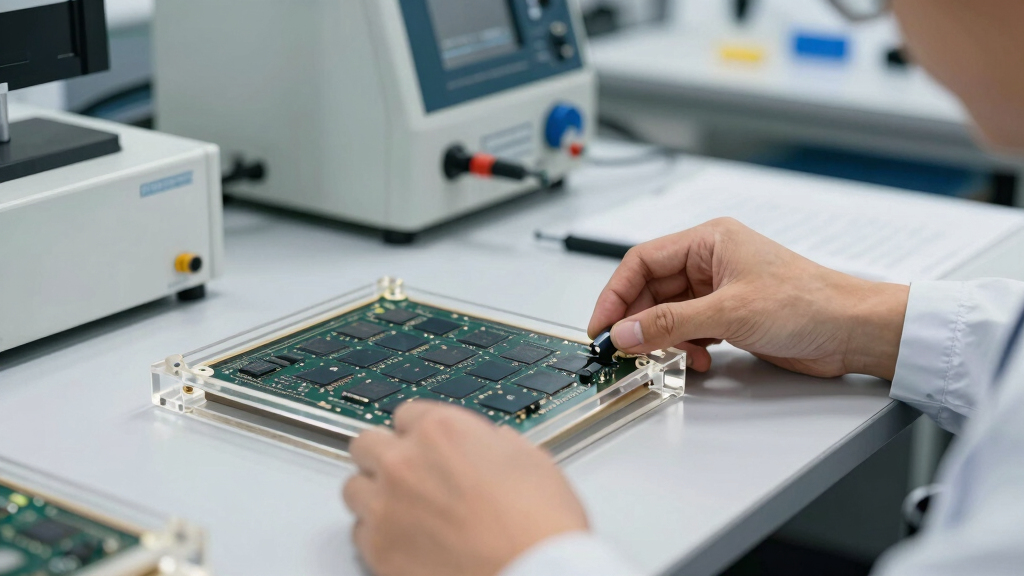
Russia’s Mikron has begun selling limited-edition framed test wafers featuring Russian-made chips, including the AMUR MIK32 RISC-V, as souvenirs. This move underscores the country’s efforts to showcase its semiconductor capabilities amid international sanctions, and the wafers can contain between 30,000 and 120,000 chips.
According to Mikron, a Russian semiconductor manufacturer, these collectible wafers are available in 12 different designs, each priced at approximately 12,500 rubles (~$170). The wafers are 200mm in diameter and are presented in decorative frames, with options ranging from simple black or white to more elaborate themes such as space or lace patterns.
Some of these wafers feature the AMUR MIK32 RISC-V processor, which has been produced in Russia since 2022. Mikron also indicates preparations for a new RISC-V chip, the MIK32-2, are underway. The wafers can contain between 30,000 and 120,000 chips, depending on the design, with one example including chips used in transport cards for the Moscow Metro.
Why It Matters
This initiative highlights Russia’s effort to promote its domestic semiconductor industry and foster national pride through collectible items. It also signals a potential soft power move to showcase technological independence amid ongoing sanctions and export restrictions. For tech enthusiasts and collectors, these wafers serve as unique memorabilia linked to Russia’s chip manufacturing efforts.
However, the actual technological significance of these wafers remains limited, as they are primarily souvenirs. The production of such wafers with high chip counts demonstrates Mikron’s capacity but does not necessarily indicate a shift toward mass commercial chip production for global markets.

6-12 Inches Silicon Wafer with IC Lithography Pattern, Semiconductor CPU Chip Demo Wafer for Education Lab Display Engineering Teaching Tech Collectible Decor (6"Wafer No.3)
- IC Lithography Pattern Sample: Realistic microchip structure visualization
- Multiple Wafer Sizes: Available in 6, 8, 10, and 12 inches
- Educational Semiconductor Tool: Ideal for teaching and demonstrations
As an affiliate, we earn on qualifying purchases.
As an affiliate, we earn on qualifying purchases.
Background
Mikron, based in Zelenograd, Russia, has been developing its semiconductor manufacturing capabilities since the early 2020s, notably producing the AMUR MIK32 RISC-V chip. The company has faced international sanctions that restrict access to advanced foreign semiconductor technology, prompting a focus on domestic development.
In late 2022, Mikron announced the production of the AMUR MIK32, a Russian-designed RISC-V processor. The company’s efforts are part of broader Russian initiatives to build an independent semiconductor industry, though the sector remains relatively small compared to global leaders. The sale of these wafers as souvenirs appears to be a marketing and morale-boosting move rather than a commercial product aimed at international markets.
“These collectible wafers are a celebration of Russian technological progress and our capacity to produce high-density chips domestically.”
— Mikron spokesperson
“The wafers featuring the AMUR MIK32 RISC-V show Russia’s push to develop and showcase its own processor designs despite international restrictions.”
— Dmitrii Kuznetsov, tech enthusiast
framed test wafers with processors
As an affiliate, we earn on qualifying purchases.
As an affiliate, we earn on qualifying purchases.
What Remains Unclear
It is not yet clear how many wafers have been sold or the extent of Mikron’s plans to produce these souvenirs on a larger scale. The actual functionality or technological use of these wafers remains limited, as they are intended primarily as collectibles.
Details about the manufacturing process, the quality of the chips on the wafers, and whether Mikron plans to commercialize such wafers for industrial or consumer use are still emerging.
As an affiliate, we earn on qualifying purchases.
What’s Next
Mikron is expected to continue producing these souvenir wafers and may introduce new designs or chip types, including the upcoming MIK32-2. Monitoring sales figures and company statements will clarify whether this initiative is a one-off marketing stunt or part of a broader strategy to promote Russian semiconductor technology.
Additionally, further developments in Mikron’s chip production capacity and potential collaborations or exports will influence the sector’s trajectory.

Seeedstudio BeagleV – Ahead – RISC-V Processor IP, 4 Tops AI Acceleration, 2.4G Wi-Fi & Bluetooth 5.2, 1 Gagabit Ethernet, mikroBUS™, 2X CSI, 1x HDMI, 1x DSI
- Open-source RISC-V SBC: Powered by TH1520 quad-core processor
- AI Acceleration: 4 TOPS NPU for AI tasks
- Wireless Connectivity: 2.4G Wi-Fi & Bluetooth 5.2
As an affiliate, we earn on qualifying purchases.
As an affiliate, we earn on qualifying purchases.
Key Questions
Are these wafers functional or just collectibles?
They are primarily collectibles and souvenirs, not intended for functional use in electronic devices.
How many chips can be on each wafer?
Depending on the design, each wafer may contain between 30,000 and 120,000 chips.
Does Mikron plan to sell these wafers commercially?
There is no indication that Mikron intends to sell these wafers as commercial components; they are marketed as limited-edition souvenirs.
What chips are featured on these wafers?
Some wafers feature the AMUR MIK32 RISC-V processor, produced in Russia since 2022, with plans for a new MIK32-2 chip.