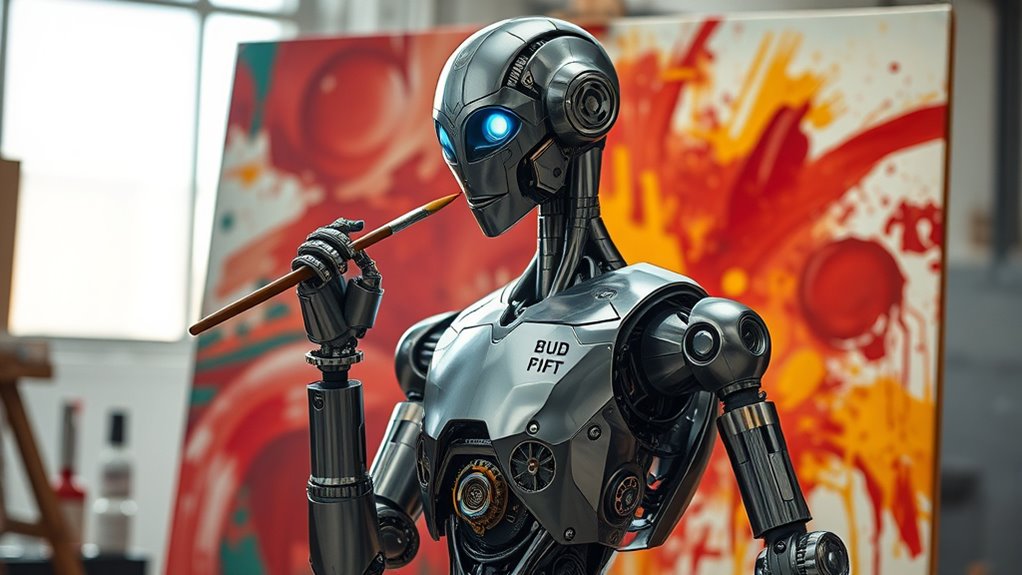

Robot artists blend robotics, artificial intelligence, and human creativity to push artistic boundaries. From ancient automata to modern AI-driven systems, they enable autonomous and collaborative creation, transforming art into interactive experiences. Advances in technology, from generative models to sophisticated robots, reshape how we perceive and engage with art. As these innovations continue to evolve, you’ll discover how the intersection of robotics and creativity is opening exciting new artistic horizons.
Key Takeaways
- Robot artists integrate robotics and AI to create autonomous, interactive artworks that challenge traditional notions of authorship and creativity.
- Advances in machine learning enable robots to produce complex, realistic art and collaborate dynamically with human artists.
- Historical automata laid the foundation for modern robotic art, evolving through technological milestones and innovative performances.
- Exhibitions like ArtBots and “Artists & Robots” showcase robotic art’s expanding diversity, scale, and audience engagement.
- Audience perception is shaped by direct experience and cultural context, influencing appreciation of robotic creativity’s authenticity and impact.
Early Innovations in Robotic Art
Early innovations in robotic art date back thousands of years, with ancient cultures creating mechanical devices that combined artistry and engineering. In Han dynasty China, you’d find mechanical orchestras used in art and theater, featuring hydraulic-powered automata like flying doves, fish, dragons, and automated cup-bearers entertaining emperors. Inventors such as Mo Ti and Yen Chin reportedly crafted automated chariots, showcasing early mechanical craftsmanship. During the Sui dynasty, the *Shai Shih t’u Ching* documented hydraulic automata, emphasizing technical mastery. Tang engineers built mechanical birds, fish-swallowing otters, and automated monks that interacted with performers, blending entertainment with engineering. These early automata laid foundational ideas for automated storytelling, demonstrating a sophisticated understanding of mechanics and art long before modern robotics emerged. Ancient Chinese automata exemplify the remarkable ingenuity of early mechanical art forms, highlighting the historical development of robotics, which was influenced by these inventive automaton designs and their artistic applications. Additionally, the wave and wind principles observed in nature may have inspired some of these mechanical innovations, reflecting a deep connection between natural phenomena and early robotic designs. Interestingly, the integration of natural principles such as flow and movement into mechanical devices shows how early engineers drew inspiration from the environment to enhance their creations. Moreover, the study of biomimicry has helped shape many subsequent robotic innovations inspired by these ancient models.
Key Milestones in the Evolution of Artistic Robots
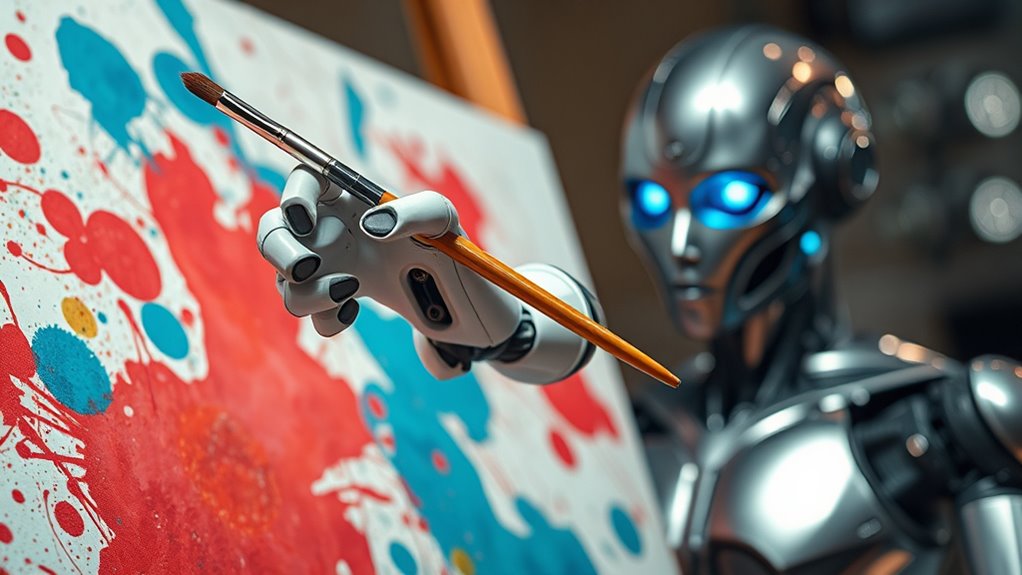
The evolution of artistic robots accelerates in the modern era, marked by groundbreaking innovations that expanded the boundaries of creative expression. In 1955, Akira Kanayama developed a remote-control painting device, pioneering robotic art. A year later, Nicolas Schöffer created CYSP 1, a cybernetic sculpture that interacted with viewers. In 1964, Nam June Paik’s Robot K-456 performed at festivals, showcasing robotic performance. The same decade saw Tom Shannon’s Squat, a robotic sculpture, and Edward Ihnatowicz’s The Senster, which responded to sound. During the 1960s, robotic props and kinetic art gained popularity, influencing interactive performances. Technological milestones like Stanford’s first robotic arm in 1969 and advances in computer vision in the 1980s further fueled creative possibilities. These key moments laid the foundation for contemporary robotic art’s evolution. The development of robotic art has continued to grow, incorporating new materials and digital technologies to push creative boundaries even further, including the integration of textile techniques and innovative material usage. Additionally, emerging digital fabrication methods have enabled artists to craft complex robotic sculptures with unprecedented precision, expanding the scope of artistic expression. The ongoing integration of interactive technologies and artificial intelligence also plays a significant role in shaping the future of robotic artistry, with recent advancements in machine learning opening new avenues for autonomous creative processes.
The Role of Artificial Intelligence in Creative Robotics

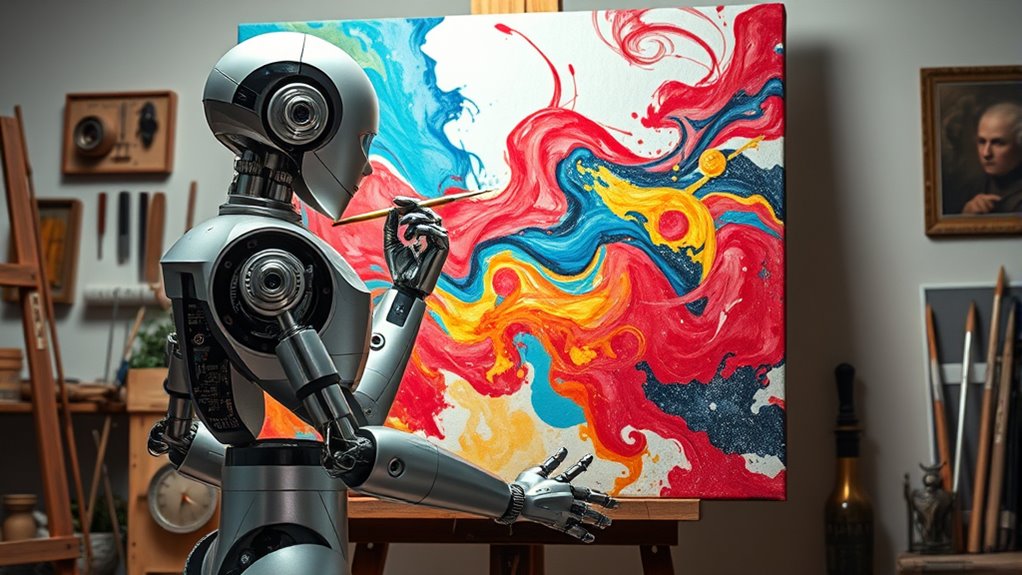
Artificial intelligence drives the creative abilities of robots, enabling them to produce art with minimal human input. Machine learning techniques allow these robots to improve their skills and make autonomous creative decisions over time. This combination pushes the boundaries of artistic expression and opens new opportunities for innovation. AI-powered systems are increasingly capable of generating original artwork, blurring the lines between human and machine creativity.
AI-Driven Artistic Processes
AI plays a pivotal role in shaping creative robotics by acting as a collaborative partner rather than a mere tool. You’ll find that AI complements your intuition and critical thinking by processing data analytically, opening new artistic avenues. Instead of fully autonomous creation, AI often works alongside you, serving as a catalyst or co-creator. This synergy allows for real-time collaboration, such as interactive robotic systems that paint with you, exchanging creative inputs seamlessly. AI also broadens aesthetic and conceptual boundaries, enabling rapid prototyping and hybrid styles that challenge traditional art forms. Beyond machine learning, AI employs rule-based systems and generative design, synthesizing fresh visual forms. By analyzing both historical and contemporary data, AI helps you explore innovative artistic expressions rooted in a blend of technology, intuition, and experimentation. Robotic painting involves complex, embodied challenges that require human-AI collaboration to overcome physical and sensory limitations, which can be further supported by home furnishings that enhance workspace comfort. Incorporating skincare technology like pimple patches into an artist’s environment can promote skin health and focus, fostering a more comfortable creative process. Additionally, integrating ergonomic tools can help reduce physical strain during long creative sessions, further supporting the artist’s wellbeing. Recognizing the importance of Angel Numbers and their messages can inspire artists to embrace spiritual insights, unlocking new dimensions of creativity and intuition. Moreover, AI enhances the creative process by incorporating data analytics, enabling artists to make informed decisions based on vast datasets.
Machine Learning Techniques
Machine learning techniques empower creative robotics by enabling machines to learn and adapt from data, making them more versatile and responsive. You can see how control and navigation improve as robots learn to operate effectively in dynamic environments, even with minimal data. ML methods boost efficiency by allowing quick learning and adaptation, which helps robots handle changing conditions like slippery surfaces or strong winds. Different algorithms serve specific roles: unsupervised learning finds patterns without labels, reinforcement learning teaches through trial and error, and deep learning enhances computer vision tasks like recognizing objects. These techniques also support creative functions, such as tool selection and sequential tool use, enabling robots to innovate and solve problems independently. Additionally, AI security measures are essential to protect sensitive data and ensure safe operation of autonomous systems in complex tasks. Moreover, incorporating learning adaptability allows robots to continually improve their performance over time, leading to more autonomous and intelligent systems. Incorporating training data quality further enhances the effectiveness of machine learning models, ensuring robust and accurate outcomes. A feedback loop is often integrated into these systems to facilitate ongoing performance improvements. Furthermore, understanding the second trimester can provide insights into the developmental stages of the fetus, which can influence how creative robotics might simulate biological growth processes. Overall, machine learning markedly advances robotics’ ability to perform complex, adaptable, and creative tasks.
Autonomous Creative Decision-Making
Autonomous creative decision-making allows robots to independently generate and select artistic actions without human input, opening new possibilities for interactive and adaptive art forms. With this capability, robots can perceive their environment, interpret sensory data, and formulate strategies for creative output. You’ll see AI-driven systems that adapt to audience reactions, changing settings, and real-time feedback. Key aspects include:
- Making independent, context-aware artistic choices
- Balancing creativity with safety and predictability
- Using sensors and AI reasoning for nuanced decisions
- Learning from audience interactions and outcomes
- Collaborating with humans to enhance artistic expression
- Incorporating creative autonomy to allow robots to explore diverse artistic avenues independently. This can be further supported by adaptive algorithms, which enable machines to modify their behavior based on ongoing interactions and environmental cues. This autonomy enables robots to explore diverse creative avenues, pushing the boundaries of art and technology while ensuring safety and trust. It’s a game-changer for interactive, evolving art experiences.
Collaborative Projects Merging Human and Machine Creativity
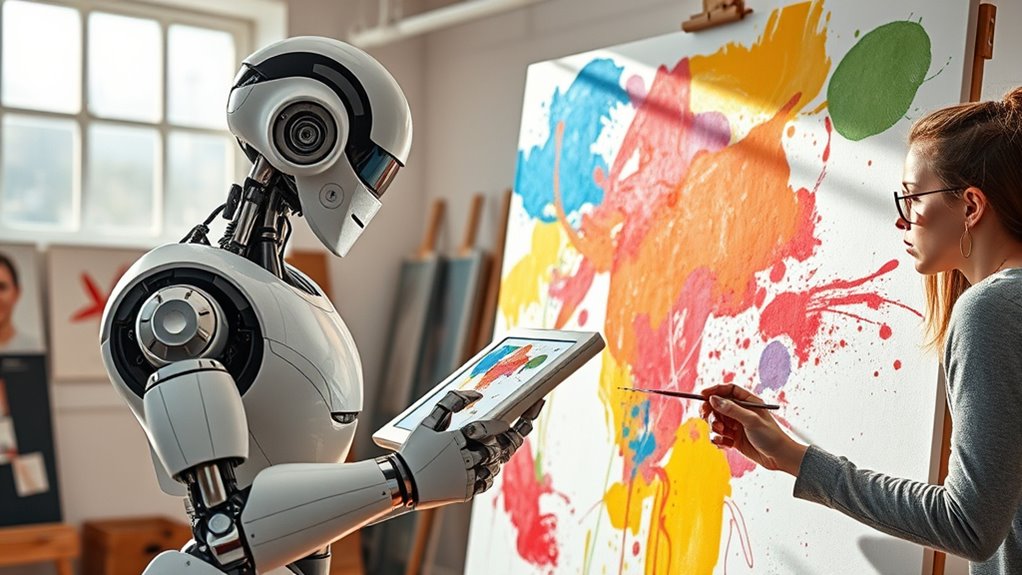
Collaborative projects that merge human and machine creativity are transforming the art world by fostering new forms of expression and interaction. You might explore Sougwen Chung’s “Drawn Operations,” where machine learning and EEG data enable a dialogue between artist and robot. Scott Eaton’s “Artist+AI” combines traditional techniques with AI algorithms to craft lifelike digital portraits, illustrating seamless human-machine integration. Robotics are also used in installations and performances, pushing the boundaries of co-creation. Sofia Crespo’s AI-driven hybrid organisms challenge biological distinctions, sparking philosophical debates. Techniques like EEG biometrics synchronize robot movements with brain activity, enhancing collaboration. These projects not only redefine authorship but also inspire audiences with innovative, interactive experiences that reflect our evolving relationship with technology and art.
Technological Advances Shaping the Future of Robot-Generated Art
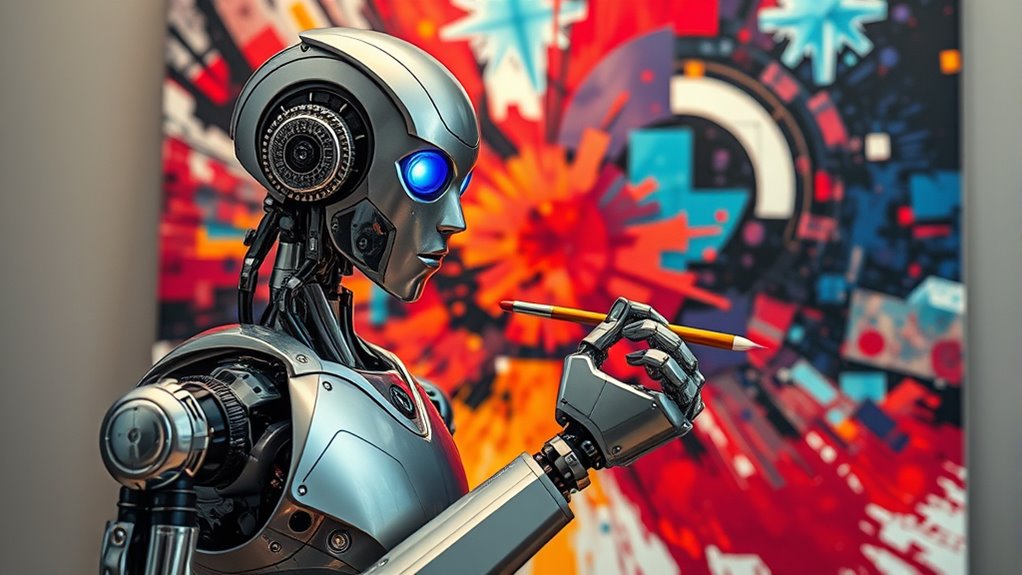
How are technological advancements shaping the future of robot-generated art? They’re driving incredible progress that pushes creative boundaries. AI algorithms now produce highly realistic and detailed artwork, making it hard to distinguish machine from human art. Multimodal integration allows AI to combine text, images, and other media for richer creations. Artistic diversity expands as AI explores unconventional aesthetics and abstract styles. Plus, faster processing speeds enable rapid prototyping and iteration. Here’s what’s changing the game:
- Increased realism and detail in artworks
- Multimodal, multimedia integration
- Exploration of new, unconventional aesthetics
- Rapid, efficient art generation
- Enhanced collaboration between humans and AI
These advancements promise a future where robot artists craft increasingly complex and innovative pieces.
Notable Works and Exhibitions of Robotic Art
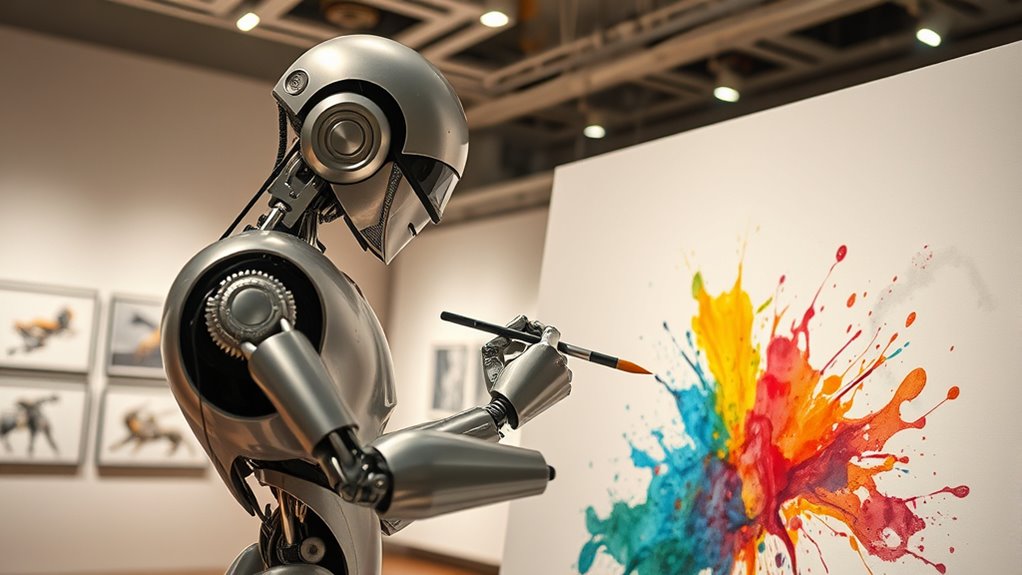
Notable works and exhibitions of robotic art have played a pivotal role in showcasing the field’s evolution and expanding its reach. These events highlight groundbreaking projects and international milestones, revealing how robotic art has grown from early experiments to large-scale installations. For example, the ArtBots exhibitions since 2002 have welcomed diverse robotic works through open calls, fostering innovation. Landmark shows like “BigBots” in Pittsburgh (2008) and “Artists & Robots” at Le Grand Palais, Paris (2018), displayed influential pieces and collaborations. These exhibitions celebrate technological progress and artistic experimentation, emphasizing interaction, scale, and inclusivity. They also document the field’s rich history, inspiring future artists and audiences alike.
| Exhibition | Notable Artists/Works |
|---|---|
| ArtBots (since 2002) | Broad, inclusive robotic art from global creators |
| BigBots (2008) | Golan Levin, “Green Roof Roller Coaster” |
| Robotic Art (2014-2015) | Jean Michel Bruyère, Chico MacMurtrie, others |
| Artists & Robots (2018) | 34 artists, works from 1950s to present |
| Cyberneticzoo Timeline | Documenting global milestones in robotic art |
The Impact of Robotics on Artistic Expression and Perception
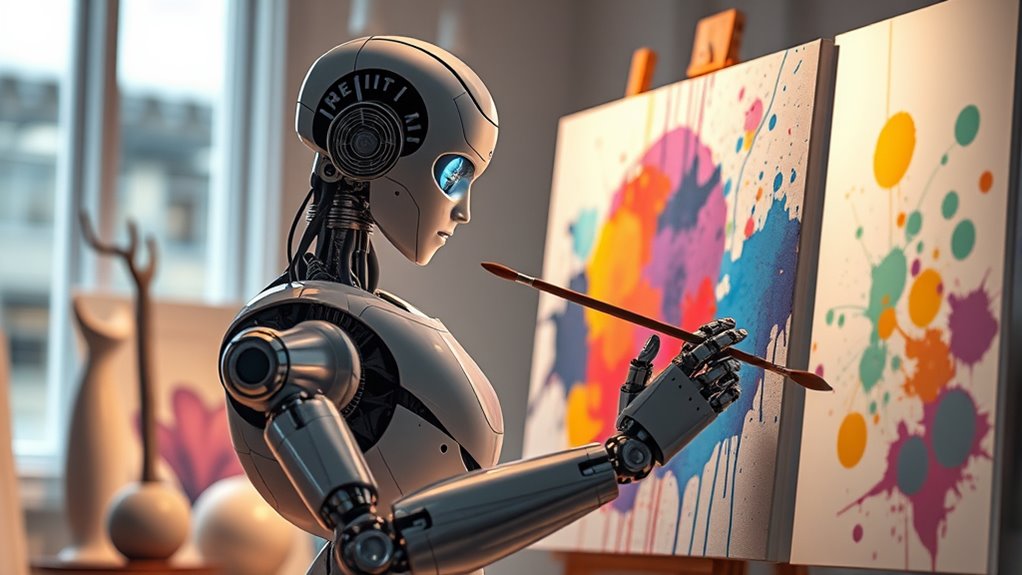
Robotics is transforming how you experience and define art by pushing creative boundaries and introducing new forms of expression. As you engage with robotic works, you’ll notice how collaboration between humans and machines enhances artistic innovation. This shift also changes your perception, making you rethink the relationship between technology and creativity.
Redefining Artistic Boundaries
Robots are transforming artistic boundaries by offering new media, tools, and methods that challenge traditional notions of creativity. They expand what’s possible, blending digital programming with physical movement to produce dynamic, interactive works. You’ll see artists develop specialized robotic hardware, pushing the limits of materials like ink, light, and sensors. This fusion results in hybrid artworks that combine robotics with traditional techniques, creating fresh forms of expression. Furthermore, robotic art shifts perceptions of authorship, making the process collaborative among artist, machine, and audience. You can experience real-time responses—light, sound, movement—that deeply engage viewers.
- Use of unconventional materials and tools
- Development of custom robotic interfaces
- Integration of digital and physical elements
- Emergence of interactive, responsive artworks
- Blurring lines between artist and machine
Enhancing Creative Collaboration
As robotic technology continues to evolve within the art world, it opens new avenues for collaborative creativity that reshape how you and others engage with the creative process. Robots now work alongside artists in drawing, painting, and performance, providing real-time feedback and tangible interaction. You can directly collaborate with robotic tools, making the experience more accessible and meaningful. Interdisciplinary teams—artists, engineers, and technologists—explore new creative frontiers together, resulting in unpredictable, dynamic art. Audience participation also plays a crucial role, involving viewers in live, collaborative projects. This shared engagement fosters collective creativity and transforms perceptions of art. The table below highlights key aspects of this collaborative evolution:
| Aspect | Impact |
|---|---|
| Artist-Robot Interaction | Facilitates meaningful, hands-on creative exchange |
| Audience Engagement | Extends participation beyond traditional viewing |
| Interdisciplinary Teams | Sparks innovative, boundary-breaking art |
| Dynamic Art Models | Enables spontaneous, evolving artistic outcomes |
Shaping Audience Perception
Your perception of robotic art often depends on how you experience it firsthand. When you watch a robot create or perform, you’re more likely to see it as genuinely creative. Observing the process boosts appreciation, especially when you see the robot in action. Keep in mind:
- Audience engagement rises with direct interaction and observation.
- Perceptions of creativity grow when witnessing the creative process.
- Emotional connections tend to favor human-made art, but robotic art can challenge that.
- Performance elements allow your participation to influence the artwork’s meaning.
- Cultural and social context shape how you interpret robotic art.
Your familiarity with technology and the robot’s appearance might not heavily impact your judgment, but your experience and understanding definitely influence how you value robot-generated art.
Prospects and Emerging Trends in Robotic Creativity

Advancements in AI-driven robotics are transforming the landscape of creative expression by enabling machines to generate and collaborate on artistic projects. Generative AI models allow robots to produce innovative, original artworks, expanding possibilities for artistic innovation. Robots can now train in virtual environments, simulating real-world experiences without extensive programming, making their creative development more efficient. AI interfaces facilitate intuitive human-robot collaboration, opening new avenues for joint artistic ventures. Humanoid robots designed to mimic human form can perform a wide range of creative tasks, from painting to performance art, attracting media attention and public interest. Start-ups are pushing the boundaries with versatile humanoids, fostering new forms of robotic artistry. These trends suggest a future where robots become essential collaborators, enhancing artistic exploration and expanding creative horizons.
Frequently Asked Questions
How Do Robots Interpret and Choose Artistic Styles?
You might wonder how robots interpret and choose artistic styles. They analyze visual features like color, texture, brushwork, and composition using deep learning models such as CNNs or Vision Transformers. These models compare artworks against vast labeled datasets, calculating the likelihood of each style. By learning from this data, robots can classify and select styles, effectively mimicking human judgment based on statistical analysis of visual cues.
What Ethical Considerations Arise With Autonomous Robotic Artists?
Have you considered the ethical dilemmas autonomous robotic artists present? You need to think about their societal impact, like job displacement and creative ownership. Are these machines diminishing human creativity? Plus, questions of bias and cultural sensitivity matter, along with transparency and accountability. How do we create clear legal frameworks to govern rights and responsibilities? Addressing these issues guarantees AI art benefits society without compromising ethics or fairness.
Can Robots Possess Genuine Creativity or Only Simulate It?
You wonder if robots can truly be creative or just simulate it. Currently, robots mainly mimic creativity through algorithms and programming, without understanding or experiencing ideas like humans do. They generate novel outputs based on data, but lack the cognitive processes behind genuine creativity. Future advancements might blur this line, yet right now, robots mainly simulate creativity, leaving the essence of real innovation to human minds.
How Do Audiences Perceive Art Created by Robots Versus Humans?
You might notice that audiences often see human-created art as more meaningful and emotionally resonant than robot-made pieces. When people know an artwork is AI-generated, they tend to view it less favorably, but if they’re unaware, they might appreciate it more. Your perception is influenced by biases, familiarity, and how the art is presented. As AI art becomes more common, public opinion could shift, fostering broader acceptance.
What Are the Challenges in Integrating AI With Robotics for Art?
Imagine trying to teach a robot to paint like a master artist—it’s like fitting a square peg into a round hole. You face hurdles like precise movement control, seamless AI integration, and adapting to unpredictable environments. You also wrestle with balancing creativity and technical limits, ensuring the robot’s output resonates emotionally, and managing interdisciplinary teamwork. These challenges make blending AI with robotics for art a complex, ongoing puzzle.
Conclusion
As you explore robotic art’s evolution, you’ll see how machines now create over 60% of artworks in some galleries, transforming creative boundaries. With advances in AI and robotics, you’re witnessing a future where human and machine collaboration unleashes endless artistic possibilities. This fusion not only challenges perceptions but also invites you to imagine a world where technology and creativity intertwine seamlessly, inspiring new forms of expression that captivate and redefine art itself.