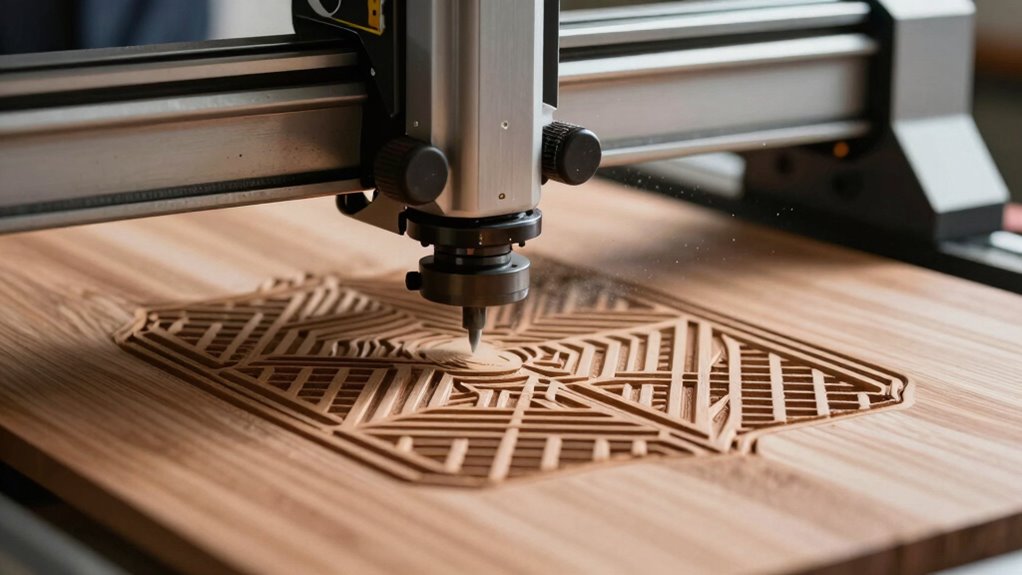

Precision with CNC routers means understanding how your material, design choices, and toolpath planning work together to create accurate, detailed models. Your material’s properties affect how well cuts turn out, so choosing the right one is key. Simplifying designs and carefully planning cuts help avoid errors and achieve cleaner results. By focusing on proper setup and technique, you can harness the full potential of your CNC. If you keep exploring, you’ll discover how to master these principles for perfect models.
Key Takeaways
- Precision in CNC model making refers to achieving accurate dimensions and fine details matching the original design.
- Material properties influence achievable precision, with harder or more stable materials offering better accuracy.
- Proper toolpath planning and cutting strategies reduce errors, vibrations, and distortions in the final model.
- Calibration and setup of the CNC machine are essential to maintain tight tolerances and consistent quality.
- Simplifying complex designs and optimizing features help attain higher precision and cleaner results.
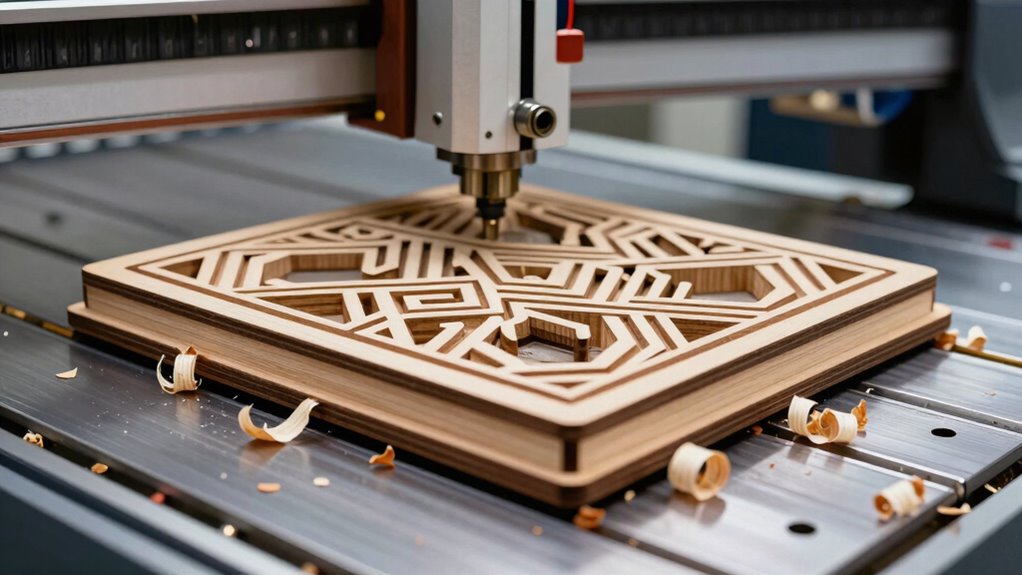
If you’re looking to elevate your model-making projects, CNC routers offer an efficient and precise solution. These machines can cut, carve, and engrave a variety of materials with an accuracy that’s hard to match by hand. But to truly harness their potential, understanding what precision really means in this context is essential. It starts with your choices around material selection and how you approach design optimization.
Material selection plays a pivotal role in achieving the desired precision. Different materials respond uniquely to CNC machining. For example, woods like basswood or plywood are easier to work with, especially for intricate details, because they tend to cut cleanly and hold tight tolerances. On the other hand, plastics such as acrylic or ABS require careful handling to prevent melting or chipping, which can affect the final accuracy. Metals like aluminum demand more powerful machines and specialized tools, but they can achieve extremely tight tolerances if you select the right material and settings. When you choose the appropriate material, you minimize issues like warping, tearing, or uneven cuts that could compromise precision. This makes your finished model more faithful to your original design. Material properties significantly influence the overall accuracy and quality of your finished project, so understanding them is key. Additionally, understanding machine capabilities helps you set realistic expectations for your project’s precision and ensures you select appropriate materials accordingly. A thorough knowledge of material behavior under different cutting conditions can further enhance your ability to produce precise models.
Design optimization is equally crucial. When you prepare your digital files, you need to think about how your design translates into physical form. Simplifying complex geometries, avoiding overly thin features, and incorporating proper fillets can all enhance the precision of your final piece. Break down complicated shapes into manageable sections to ensure the CNC router can execute each cut accurately. Proper toolpath planning, including selecting the right bit size and cutting strategy, helps prevent unnecessary errors or vibrations that could distort your model. You should also consider how the material responds to cutting forces—reducing unnecessary detail or adjusting the depth of cut can improve overall accuracy. Additionally, understanding the tolerance levels of your CNC machine can help you set realistic expectations for your project’s precision. By refining your design with these factors in mind, you’re setting the stage for the CNC machine to perform at its best.
In essence, understanding what precision means in CNC model making involves more than just the machine’s specifications. It’s about making deliberate choices in material selection and continuously refining your design for optimal results. When you combine these factors with proper setup, calibration, and technique, you unlock the full potential of CNC routers. You’ll produce models with sharp, clean details and tight tolerances that truly reflect your vision. Precision becomes a tangible reality, not just a technical term, empowering you to create professional-grade models every time.
CNC router for model making
As an affiliate, we earn on qualifying purchases.
As an affiliate, we earn on qualifying purchases.
Frequently Asked Questions
How Does Tool Wear Affect CNC Router Precision?
Tool wear impacts your CNC router’s precision by causing deviations in cuts. As tools wear, calibration drifts, leading to inaccuracies. Cutting speed plays a role too; higher speeds accelerate tool wear, worsening precision. You should regularly check tool calibration and adjust cutting parameters. Monitoring tool wear helps maintain tight tolerances, ensuring your models remain accurate. Proper maintenance and controlled cutting speeds prevent precision loss and extend your tool’s lifespan.
Can CNC Routers Handle Delicate or Fragile Materials?
CNC routers are like skilled artisans handling delicate glass—they can work with fragile materials if you adjust your approach. You should focus on gentle material handling and precise cutting techniques to prevent damage. Using specialized bits and slower feed rates helps. With proper care, CNC routers can delicately carve fragile materials such as acrylic, foam, or thin woods, maintaining accuracy without risking breakage.
What Maintenance Is Required for Maintaining Accuracy?
To maintain accuracy, you should regularly perform calibration procedures on your CNC router to guarantee it cuts precisely. Keep the machine clean by managing dust effectively, as dust buildup can affect movement and calibration. Check and tighten all mechanical components periodically, and replace worn parts promptly. Proper calibration and dust management are essential to sustain high precision, prevent errors, and extend the lifespan of your CNC router.
How Do Environmental Factors Influence CNC Precision?
Think of your CNC router as a finely tuned orchestra, where each instrument must stay in harmony. Environmental factors like temperature fluctuations and material stability directly impact precision. If the room warms up, materials expand, causing misalignments. Maintaining strict temperature control and choosing stable materials keeps your machine in sync, ensuring consistent accuracy. Without this, even the best tool can produce off-key results.
What Software Is Best for Designing High-Precision Models?
You should choose advanced CAD programs like Fusion 360, SolidWorks, or Rhino for designing high-precision models. These design software tools offer detailed control, accurate measurements, and seamless integration with CNC routers. They allow you to create complex, precise designs that translate well into machining. By selecting the right CAD programs, you can guarantee your models meet tight tolerances, maximizing the CNC router’s capability to achieve professional, high-quality results.
precision CNC carving bits
As an affiliate, we earn on qualifying purchases.
As an affiliate, we earn on qualifying purchases.
Conclusion
In the dance of chips and circuits, CNC routers transform raw ideas into tangible masterpieces. Precision isn’t just a number; it’s the steady heartbeat ensuring each cut sings in harmony. When you master this symphony of accuracy, your models become more than mere replicas—they become enduring works of art carved from the fabric of meticulous craftsmanship. Embrace the dance, and let your creations echo with the silent poetry of precision’s true meaning.

Genmitsu CNC Milling Machine Tramming Tool, Pro Calibration System with 1/2", 1/4", 1/8" Shank and 0.001" Precision Indicators, Ideal for Squaring, Leveling, and Machine Calibration
Enhance Engraving Quality: This tramming tool ensures that your CNC or milling machine’s surface is perfectly level, improving…
As an affiliate, we earn on qualifying purchases.
As an affiliate, we earn on qualifying purchases.
material selection for CNC models
As an affiliate, we earn on qualifying purchases.
As an affiliate, we earn on qualifying purchases.